Kirjojen hintavertailu. Mukana 11 342 296 kirjaa ja 12 kauppaa.

Kirjahaku

Etsi kirjoja tekijän nimen, kirjan nimen tai ISBN:n perusteella.

11 kirjaa tekijältä Geir Lundestad

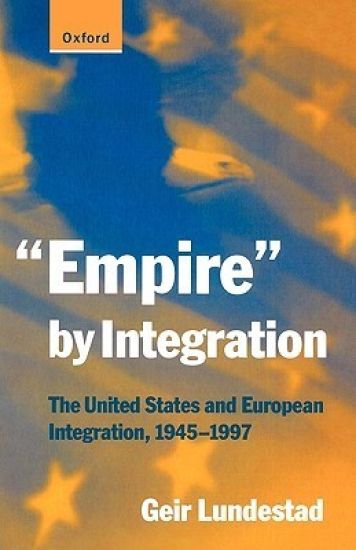
"Empire" by Integration

"Empire" by Integration

Geir Lundestad

Oxford University Press
1997
nidottu
"Empire" by Integration is the first comprehensive survey of the American policy towards European integration from 1945 to the present day. Geir Lundestad argues that, unlike other Great Powers, the United States strongly supported the integration of the most important area under its influence: Western Europe. This integration was, however, to take place within an American-dominated Atlantic framework. In the provocative words of the author this was a policy of "empire" by integration. Professor Lundestad takes a clear, chronological approach to the subject, from the beginnings of European integration after the Second World War, the challenge to American policy on European integration by President Charles de Gaulle, and the modified support for European integration in the Nixon-Kissinger years through to the present revived support for European integration under the Clinton administration. "Empire" by Integration provides a succinct, provocative, and highly readable account of this crucial aspect of American-Western European relations. It will be an ideal textbook for use on courses including International Relations, US Modern History, and European Integration.
The World's Most Prestigious Prize

The World's Most Prestigious Prize

Geir Lundestad

Oxford University Press
2019
sidottu
The World's Most Prestigious Prize: The Inside Story of the Nobel Peace Prize is a fascinating, insider account of the Nobel peace prize. Drawing on unprecedented access to the Norwegian Nobel Institute's vast archive, it offers a gripping account of the founding of the prize, as well as its highs and lows, triumphs and disasters, over the last one-hundred-and-twenty years. But more than that, the book also draws on the author's unique insight during his twenty-five years as Director of the Norwegian Nobel Institute and Secretary of the Norwegian Nobel Committee. It reveals the real story of all the laureates of that period - some of them among the most controversial in the history of the prize (Gorbachev, Arafat, Peres and Rabin, Mandela and De Klerk, Obama, and Liu Xiaobo) - and exactly why they came to receive the prize. Despite all that has been written about the Nobel Peace Prize, this is the first-ever account written by a prominent insider in the Nobel system.
The United States and Western Europe Since 1945

The United States and Western Europe Since 1945

Geir Lundestad

Oxford University Press
2003
sidottu
Based on new and existing research by a world-class scholar, this is the first book in 20 years to examine the entire dynamics ofthe American-European relationship since 1945. The relationship between the United States and Western Europe has always been crucial, and current events dictate that it is becoming ever more so. In this important new work, Geir Lundestad analyses the balance between co-operation and conflict which has characterized this relationship in the post-war period. He examines talk of transatlantic drift, and the strain now apparent between the USA and the nation-states of Western Europe. In the concluding section, Lundestad offers a topical view of the future of transatlantic interaction. Throughout this work, Lundestad's much cited 'empire by invitation' thesis is both put into practice and extended in time and scope. This book is essential reading for anyone interested in one of the most important and enduring international relationships of the last 60 years.
The United States and Western Europe Since 1945

The United States and Western Europe Since 1945

Geir Lundestad

Oxford University Press
2005
nidottu
Based on new and existing research by a world-class scholar, this is the first book in twenty years to examine the dynamics of the entire American-West European relationship since 1945. The relationship between the United States and Western Europe has always been crucial and recent events dictate that it is becoming ever more so. In this important new work, Geir Lundestad analyses the balance between the cooperation and conflict which has characterized this relationship in the post-war period. He examines talk of transatlantic drift, and the strain now apparent between the USA and the nation states of Western Europe. In the concluding section, Lundestad offers a topical view of the future of transatlantic interaction. Throughout the work Lundestad's much cited 'empire by invitation' thesis is both put into practice and extended in time and scope. This book is essential reading for anyone interested in one of the most important and enduring international relationships of the last sixty years.
The Rise and Decline of the American "Empire"

The Rise and Decline of the American "Empire"

Geir Lundestad

Oxford University Press
2012
sidottu
The Rise and Decline of the American "Empire" explores the rapidly growing literature on the rise and fall of the United States. The author argues that after 1945 the US has definitely been the most dominant power the world has seen and that it has successfully met the challenges from, first, the Soviet Union and, then, Japan, and the European Union. Now, however, the United States is in decline: its vast military power is being challenged by asymmetrical wars, its economic growth is slow and its debt is rising rapidly, the political system is proving unable to meet these challenges in a satisfactory way. While the US is still likely to remain the world's leading power for the foreseeable future, it is being challenged by China, particularly economically, and also by several other regional Great Powers. The book also addresses the more theoretical question of what recent superpowers have been able to achieve and what they have not achieved. How could the United States be both the dominant power and at the same time suffer significant defeats? And how could the Soviet Union suddenly collapse? No power has ever been omnipotent. It cannot control events all around the world. The Soviet Union suffered from imperial overstretch; the traditional colonial empires suffered from a growing lack of legitimacy at the international, national, and local levels. The United States has been able to maintain its alliance system, but only in a much reformed way. If a small power simply insists on pursuing its own very different policies, there is normally little the United States and other Great Powers will do. Military intervention is an option that can be used only rarely and most often with strikingly limited results.
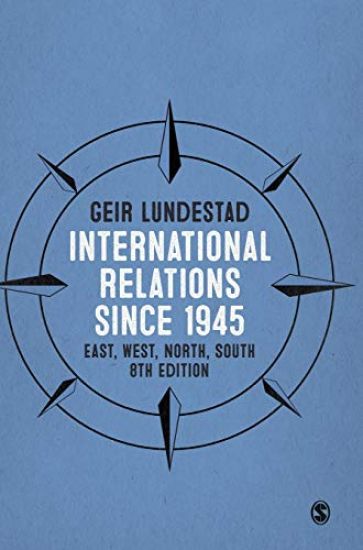
International Relations since 1945

International Relations since 1945

Geir Lundestad

SAGE Publications Ltd
2017
sidottu
Introducing the key events and developments in international relations, this authoritative and engaging book provides students with a clear understanding of the contemporary issues in international politics. Putting the foundations and contexts of International Relations at your fingertips, this Eighth Edition: Provides an account of the world as it has evolved up to 1945Extended coverage of topics including population, gender and the environmentIncludes expanded material on the theory of international relationsIncludes new learning resources, including an ‘alternative perspectives’ box in each chapterSupports research with fully updated and annotated further reading lists Praised for its detail and tone, International Relations since 1945 is ideal for providing undergraduates with a historical background as they approach international relations.
International Relations since 1945

International Relations since 1945

Geir Lundestad

SAGE Publications Ltd
2017
nidottu
Introducing the key events and developments in international relations, this authoritative and engaging book provides students with a clear understanding of the contemporary issues in international politics. Putting the foundations and contexts of International Relations at your fingertips, this Eighth Edition: Provides an account of the world as it has evolved up to 1945Extended coverage of topics including population, gender and the environmentIncludes expanded material on the theory of international relationsIncludes new learning resources, including an ‘alternative perspectives’ box in each chapterSupports research with fully updated and annotated further reading lists Praised for its detail and tone, International Relations since 1945 is ideal for providing undergraduates with a historical background as they approach international relations.
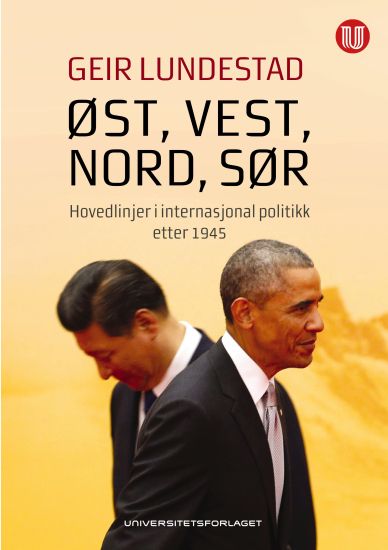
Øst, vest, nord, sør

Øst, vest, nord, sør

Geir Lundestad

Universitetsforlaget
2015
nidottu
«Øst, vest, nord, sør» gir en oversiktlig presentasjon av hovedlinjene i utviklingen av forholdet mellom verdens stormakter etter 1945. «Øst, vest, nord, sør» gir en oversiktlig presentasjon av hovedlinjene i utviklingen av forholdet mellom verdens stormakter etter 1945. Én rød tråd er rivaliseringen mellom supermaktene og virkningene av deres makt og innflytelse selv i de mest fjerntliggende områder. En annen er super- og stormaktenes svekkede stilling med avkolonisering og Sovjetunionens og østblokkens oppløsning. En tredje sentral utviklingslinje er fremveksten av et «nytt» øst: Øst-Asia blir en stadig viktigere region i internasjonale relasjoner.Denne nye utgaven er oppdatert og noe utvidet, særlig om viktige historiske hendelser det siste tiåret.7. utgave gir- oversikt over verden slik den har utviklet seg etter 1945- oversikt over Barack Obamas engasjement i Midtøsten- oversikt over hendelsene i kjølvannet av den arabiske våren- et nytt underkapittel om kjønn, befolkning og klima- nøkkelinfo om supermakter, stater, ikke statlige aktører og global governance«Øst, vest, nord, sør» er en ideell introduksjon for alle studenter i moderne historie og internasjonal politikk. Boka er oversatt til engelsk, kinesisk, russisk, tyrkisk og svensk.Dr.philos. Geir Lundestad var direktør ved Nobelinstituttet fram til 2015 og professor i historie ved Universitetet i Oslo. Han har skrevet en rekke bøker om internasjonal politikk etter 1945.
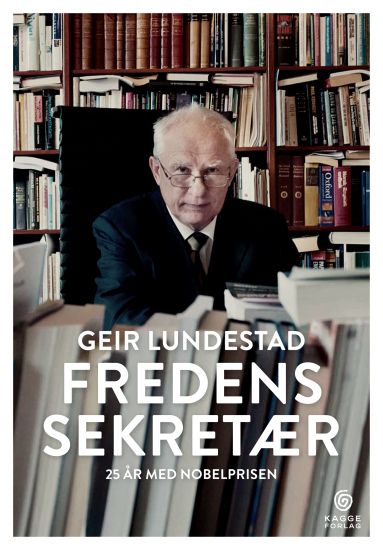
Fredens sekretær; 25 år med nobelprisen
I 25 år har Geir Lundestad jobbet med verdens mest prestisjetunge pris: Nobels fredspris. Som direktør på Det norske nobelinstituttet har Lundestad vært den norske nobelkomiteens sekretær. Han har vært med på alle diskusjonene, han har møtt alle prisvinnerne, fra Dalai Lama til Barack Obama. Fra en unik posisjon har han observert denne delen av vår samtidshistorie. I denne boken forteller han om alle vinnerne, hvem de er, hvorfor de fikk prisen og hvordan det var å møte dem. Han forteller også om samarbeidet med de ulike komitelederne og -medlemmene, og om arbeidet for å styrke fredsprisens posisjon gjennom etableringen av institusjoner som Nobels fredssenter og nobelkonserten.
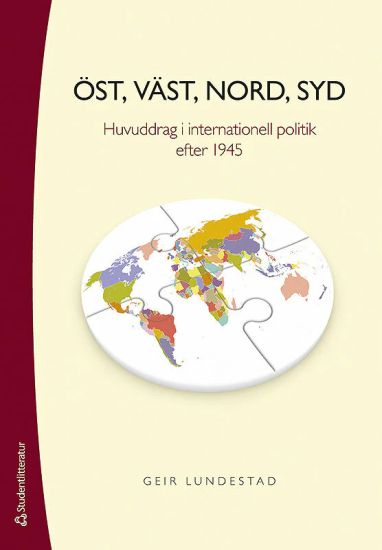
Öst, väst, nord, syd : huvuddrag i internationell politik efter 1945
Öst, väst, nord, syd har etablerat sig som en central redogörelse för efterkrigstidens internationella politiska historia och är en internationell storsäljare. I denna sjunde upplaga har innehållet genomgående reviderats och uppdaterats och nya avsnitt har tillkommit. Innehållet följer två huvudlinjer. Den ena är rivaliteten mellan supermakterna och verkningarna av deras inflytande även i de mest avlägsna områden. Den andra är super- och stormakternas sviktande ställning. Avkolonisering och en utveckling mot Sovjet­unionens och östblockets upplösning resulterade i att USA kvarstod som enda supermakt. Nytt i denna upplaga är en granskning av Barack Obamas enga­gemang i Mellanöstern och en undersökning av händelserna i samband med den Arabiska våren. Ett kapitel om befolkning och miljö har tillkommit. Öst, väst, nord, syd ger en utmärkt introduktion för studenter i modern historia och internationell politik vid universitet och högskolor.