Kirjojen hintavertailu. Mukana 11 342 296 kirjaa ja 12 kauppaa.

Kirjahaku

Etsi kirjoja tekijän nimen, kirjan nimen tai ISBN:n perusteella.

5 kirjaa tekijältä Gen Doy

Seeing and Consciousness

Seeing and Consciousness

Gen Doy

Berg Publishers
1995
sidottu
Through its provocative examination of feminist and Marxist approaches to women's art and female representations, this book challenges the widespread belief that Marxism has nothing valuable to contribute to women's studies. The author argues that, from the French Revolution through to the present, gender and class have shaped visual imagery. She shows how Marxist theory can function to question some of the premises of feminist art histories and to provide a more accurate understanding of the meaning(s) of visual imagery.
Claude Cahun

Claude Cahun

Gen Doy

TAYLOR FRANCIS LTD
2025
sidottu
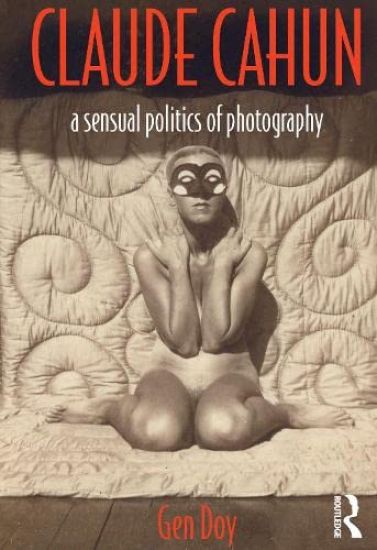
This is the first single-authored book in English on the photographer Claude Cahun, whose work was rediscovered in the 1980s. Doy moves beyond standard postmodern approaches, instead repositioning the artist, born Lucy Schwob, in the context of the turbulent times in which she lived and seeing the photographs as part of Cahun's wider life as an artist and writer, a woman and lesbian and as a political activist in the early twentieth century. Doy rethinks Cahun's approach to dress and masquerade, looking at the images in light of the situation of women at the time and within the prevailing 'beauty' culture. Addressing Cahun's ambivalent relationship with Symbolism and later relationship with Surrealism, this highly readable book also looks at Cahun's unusual approach to the domestic object.
Materializing Art History

Materializing Art History

Gen Doy

Berg Publishers
1998
nidottu
Quite a number of studies have assessed the value of Marxism to literary criticism, but there has been no recent and systematic study of what Marxism has to offer the social history of art. In situating the various strands of Marxist art history and the social history of art within ideological, political and historical contexts, this book represents a significant contribution to the study of visual culture at a time when old trends in Marxist art history are being reappraised. The author argues that the fragmented and confused state of the social history of art is the result of many radical cultural and art historians' move away from, rejection of, or even ignorance of Marxism, and their espousal of postmodern theories without any adequate method to position themselves in relation to these theories. Further, the reasons for this are ultimately to be found in the material conditions of late twentieth century culture and society, in the political disorientation of liberals and most of the Left, or what Jameson and Mandel describe as late capitalism. Focusing on developments in the visual arts over the last eighty years but drawing extensively on historical precedents, this book demonstrates that Marxism is far subtler than is commonly assumed. The author looks at works which appear 'easy' to understand in Marxist terms, but more importantly, non-figurative works and works by women and black artists which Marxists have generally shied away from tackling. Certain to become standard reading on a number of courses, this book clearly and persuasively demonstrates that Marxism can help the art and cultural historian take a more nuanced approach to visual culture.
Picturing the Self

Picturing the Self

Gen Doy

I.B. Tauris
2004
nidottu
Ideas of selfhood, from Descartes' theory of "I think therefore I am" to postmodern notions of the fragmented and de-centred self, have been crucial to the visual arts. Gen Doy explores this relationship, from Holbein's "Ambassadors" and the early modern period up to and beyond Marc Quinn's "Self" (Blood Head). Arguing that the importance of subjectivity for art goes far beyond self-portraits, she explores such topics as self-expression; the self, work and consumption; self-presentation; photography and the theatre of the self; the marginalized - beggars and asylum seekers - and "the real me". A wide range of artists, including Tracey Emin, Jeff Wall, Eugene Palmer and Karen Knorr, are discussed, as well as historical material from earlier periods.