Kirjojen hintavertailu. Mukana 12 390 323 kirjaa ja 12 kauppaa.

Kirjahaku

Etsi kirjoja tekijän nimen, kirjan nimen tai ISBN:n perusteella.

5 kirjaa tekijältä Gene Andrew Jarrett

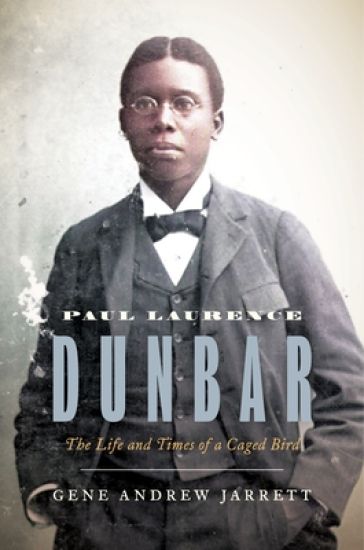
Paul Laurence Dunbar

Paul Laurence Dunbar

Gene Andrew Jarrett

PRINCETON UNIVERSITY PRESS
2022
sidottu
The definitive biography of a pivotal figure in American literary historyA major poet, Paul Laurence Dunbar (1872–1906) was one of the first African American writers to garner international recognition in the wake of emancipation. In this definitive biography, the first full-scale life of Dunbar in half a century, Gene Andrew Jarrett offers a revelatory account of a writer whose Gilded Age celebrity as the “poet laureate of his race” hid the private struggles of a man who, in the words of his famous poem, felt like a “caged bird” that sings.Jarrett tells the fascinating story of how Dunbar, born during Reconstruction to formerly enslaved parents, excelled against all odds to become an accomplished and versatile artist. A prolific and successful poet, novelist, essayist, playwright, and Broadway librettist, he was also a friend of such luminaries as Frederick Douglass and Orville and Wilbur Wright. But while audiences across the United States and Europe flocked to enjoy his literary readings, Dunbar privately bemoaned shouldering the burden of race and catering to minstrel stereotypes to earn fame and money. Inspired by his parents’ survival of slavery, but also agitated by a turbulent public marriage, beholden to influential benefactors, and helpless against his widely reported bouts of tuberculosis and alcoholism, he came to regard his racial notoriety as a curse as well as a blessing before dying at the age of only thirty-three.Beautifully written, meticulously researched, and generously illustrated, this biography presents the richest, most detailed, and most nuanced portrait yet of Dunbar and his work, transforming how we understand the astonishing life and times of a central figure in American literary history.
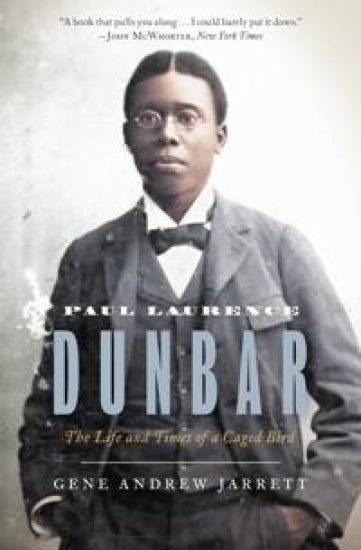
Paul Laurence Dunbar

Paul Laurence Dunbar

Gene Andrew Jarrett

PRINCETON UNIVERSITY PRESS
2023
pokkari
The definitive biography of a pivotal figure in American literary historyA major poet, Paul Laurence Dunbar (1872–1906) was one of the first African American writers to garner international recognition in the wake of emancipation. In this definitive biography, the first full-scale life of Dunbar in half a century, Gene Andrew Jarrett offers a revelatory account of a writer whose Gilded Age celebrity as the “poet laureate of his race” hid the private struggles of a man who, in the words of his famous poem, felt like a “caged bird” that sings.Jarrett tells the fascinating story of how Dunbar, born during Reconstruction to formerly enslaved parents, excelled against all odds to become an accomplished and versatile artist. A prolific and successful poet, novelist, essayist, playwright, and Broadway librettist, he was also a friend of such luminaries as Frederick Douglass and Orville and Wilbur Wright. But while audiences across the United States and Europe flocked to enjoy his literary readings, Dunbar privately bemoaned shouldering the burden of race and catering to minstrel stereotypes to earn fame and money. Inspired by his parents’ survival of slavery, but also agitated by a turbulent public marriage, beholden to influential benefactors, and helpless against his widely reported bouts of tuberculosis and alcoholism, he came to regard his racial notoriety as a curse as well as a blessing before dying at the age of only thirty-three.Beautifully written, meticulously researched, and generously illustrated, this biography presents the richest, most detailed, and most nuanced portrait yet of Dunbar and his work, transforming how we understand the astonishing life and times of a central figure in American literary history.
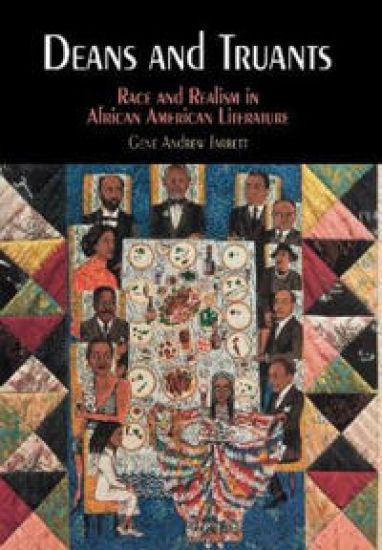
Deans and Truants

Deans and Truants

Gene Andrew Jarrett

University of Pennsylvania Press
2007
sidottu
For a work to be considered African American literature, does it need to focus on black characters or political themes? Must it represent these within a specific stylistic range? Or is it enough for the author to be identified as African American? In Deans and Truants, Gene Andrew Jarrett traces the shifting definitions of African American literature and the authors who wrote beyond those boundaries at the cost of critical dismissal and, at times, obscurity. From the late nineteenth century to the end of the twentieth, de facto deans-critics and authors as different as William Howells, Alain Locke, Richard Wright, and Amiri Baraka-prescribed the shifting parameters of realism and racial subject matter appropriate to authentic African American literature, while truant authors such as Paul Laurence Dunbar, George S. Schuyler, Frank Yerby, and Toni Morrison-perhaps the most celebrated African American author of the twentieth century-wrote literature anomalous to those standards. Jarrett explores the issues at stake when Howells, the "Dean of American Letters," argues in 1896 that only Dunbar's "entirely black verse," written in dialect, "would succeed." Three decades later, Locke, the cultural arbiter of the Harlem Renaissance, stands in contrast to Schuyler, a journalist and novelist who questions the existence of a peculiarly black or "New Negro" art. Next, Wright's 1937 blueprint for African American writing sets the terms of the Chicago Renaissance, but Yerby's version of historical romance approaches race and realism in alternative literary ways. Finally, Deans and Truants measures the gravitational pull of the late 1960s Black Aesthetic in Baraka's editorial silence on Toni Morrison's first and only short story, "Recitatif." Drawing from a wealth of biographical, historical, and literary sources, Deans and Truants describes the changing notions of race, politics, and gender that framed and were framed by the authors and critics of African American culture for more than a century.
Representing the Race

Representing the Race

Gene Andrew Jarrett

New York University Press
2011
sidottu
The political value of African American literature has long been a topic of great debate among American writers, both black and white, from Thomas Jefferson to Barack Obama. In his compelling new book, Representing the Race, Gene Andrew Jarrett traces the genealogy of this topic in order to develop an innovative political history of African American literature. Jarrett examines texts of every sort—pamphlets, autobiographies, cultural criticism, poems, short stories, and novels—to parse the myths of authenticity, popular culture, nationalism, and militancy that have come to define African American political activism in recent decades. He argues that unless we show the diverse and complex ways that African American literature has transformed society, political myths will continue to limit our understanding of this intellectual tradition. Cultural forums ranging from the printing press, schools, and conventions, to parlors, railroad cars, and courtrooms provide the backdrop to this African American literary history, while the foreground is replete with compelling stories, from the debate over racial genius in early American history and the intellectual culture of racial politics after slavery, to the tension between copyright law and free speech in contemporary African American culture, to the political audacity of Barack Obama's creative writing. Erudite yet accessible, Representing the Race is a bold explanation of what's at stake in continuing to politicize African American literature in the new millennium.
Representing the Race

Representing the Race

Gene Andrew Jarrett

New York University Press
2011
pokkari
The political value of African American literature has long been a topic of great debate among American writers, both black and white, from Thomas Jefferson to Barack Obama. In his compelling new book, Representing the Race, Gene Andrew Jarrett traces the genealogy of this topic in order to develop an innovative political history of African American literature. Jarrett examines texts of every sort—pamphlets, autobiographies, cultural criticism, poems, short stories, and novels—to parse the myths of authenticity, popular culture, nationalism, and militancy that have come to define African American political activism in recent decades. He argues that unless we show the diverse and complex ways that African American literature has transformed society, political myths will continue to limit our understanding of this intellectual tradition. Cultural forums ranging from the printing press, schools, and conventions, to parlors, railroad cars, and courtrooms provide the backdrop to this African American literary history, while the foreground is replete with compelling stories, from the debate over racial genius in early American history and the intellectual culture of racial politics after slavery, to the tension between copyright law and free speech in contemporary African American culture, to the political audacity of Barack Obama's creative writing. Erudite yet accessible, Representing the Race is a bold explanation of what's at stake in continuing to politicize African American literature in the new millennium.