Kirjojen hintavertailu. Mukana 11 244 527 kirjaa ja 12 kauppaa.

Kirjahaku

Etsi kirjoja tekijän nimen, kirjan nimen tai ISBN:n perusteella.

8 kirjaa tekijältä Geoff Eley

Forging Democracy

Forging Democracy

Geoff Eley

Oxford University Press Inc
2002
sidottu
Democracy in Europe has been a relatively recent phenomenon. Only in the wake of World War Two did democratic forces become ensconced and, even then, it was to be decades before democracy truly blanketed the continent. How then did liberal democracy become the order of the day? Neither given nor granted, democracy requires conflict, often violent confrontations, and challenges to the existing order. In Europe, Geoff Eley here convincingly illustrates, democracy did not evolve organically out of a postwar consensus, the prosperity of the long boom, or the negative cement of the Cold War. Rather, it was painstakingly crafted, continually expanded, and aggressively defended by a loose conglomeration of socialist, labour, feminist, and Communist movements that underwrote the industrial resurrection of Europe's ruined spirit. These parties of the left organised civil societies rooted in egalitarian ideals that came to from the very fibre of Europe's current democratic traditions. The trajectory of European democracy is thus inextricably connected with the history of the European Left. Seeking neither to valorise nor condemn, Eley has given us the first truly comprehensive history of the European Left's successes and failures; its high watermarks and its low tides; its accomplishments, insufficiencies, and excesses; and, most importantly, its formative, lasting influence on the political landscape of the West. At a time when the influence and legitimacy - the very value - of Leftist democratic principles in frequently called into question, this book stands as a ringing, substantive affirmation of the power of human ideals and of collective organisation.
Forging Democracy: The Left and the Struggle for Democracy in Europe, 1850-2000
Democracy in Europe has been a recent phenomenon. Only in the wake of World War II were democratic frameworks secured, and, even then, it was decades before democracy truly blanketed the continent. Neither given nor granted, democracy requires conflict, often violent confrontations, and challenges to the established political order. In Europe, Geoff Eley convincingly shows, democracy did not evolve organically out of a natural consensus, the achievement of prosperity, or the negative cement of the Cold War. Rather, it was painstakingly crafted, continually expanded, and doggedly defended by varying constellations of socialist, feminist, Communist, and other radical movements that originally blossomed in the later nineteenth century. Parties of the Left championed democracy in the revolutionary crisis after World War I, salvaged it against the threat of fascism, and renewed its growth after 1945. They organised civil societies rooted in egalitarian ideals which came to form the very fibre of Europe's current democratic traditions. The trajectories of European democracy and the history of the European Left are thus inextricably bound together. Geoff Eley has given us the first truly comprehensive history of the European Left--its successes and failures; its high watermarks and its low tides; its accomplishments, insufficiencies, and excesses; and, most importantly, its formative, lasting influence on the European political landscape. At a time when the Left's influence and legitimacy are frequently called into question, Forging Democracy passionately upholds its vital contribution.
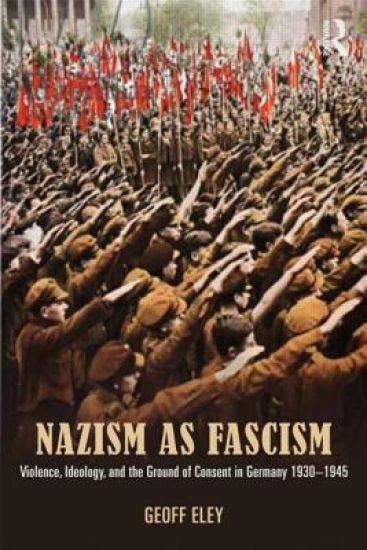
Nazism as Fascism

Nazism as Fascism

Geoff Eley

Routledge
2013
sidottu
Offering a dynamic and wide-ranging examination of the key issues at the heart of the study of German Fascism, Nazism as Fascism brings together a selection of Geoff Eley’s most important writings on Nazism and the Third Reich.Featuring a wealth of revised, updated and new material, Nazism as Fascism analyses the historiography of the Third Reich and its main interpretive approaches. Themes include:Detailed reflection on the tenets and character of Nazi ideology and institutional practicesExamination of the complicated processes that made Germans willing to think of themselves as NazisDiscussion of Nazism’s presence in the everyday lives of the German PeopleConsideration of the place of women under the Third ReichIn addition, this book also looks at the larger questions of the historical legacy of Fascist ideology and charts its influence and development from its origin in 1930’s Germany through to its intellectual and spatial influence on a modern society in crisis.In Nazism as Fascism Geoff Eley engages with Germany’s political past in order to evaluate the politics of the present day and to understand what happens when the basic principles of democracy and community are violated. This book is essential reading not only for students of German history, but for anyone with an interest in history and politics more generally.
Nazism as Fascism

Nazism as Fascism

Geoff Eley

Routledge
2013
nidottu
Offering a dynamic and wide-ranging examination of the key issues at the heart of the study of German Fascism, Nazism as Fascism brings together a selection of Geoff Eley’s most important writings on Nazism and the Third Reich.Featuring a wealth of revised, updated and new material, Nazism as Fascism analyses the historiography of the Third Reich and its main interpretive approaches. Themes include:Detailed reflection on the tenets and character of Nazi ideology and institutional practicesExamination of the complicated processes that made Germans willing to think of themselves as NazisDiscussion of Nazism’s presence in the everyday lives of the German PeopleConsideration of the place of women under the Third ReichIn addition, this book also looks at the larger questions of the historical legacy of Fascist ideology and charts its influence and development from its origin in 1930’s Germany through to its intellectual and spatial influence on a modern society in crisis.In Nazism as Fascism Geoff Eley engages with Germany’s political past in order to evaluate the politics of the present day and to understand what happens when the basic principles of democracy and community are violated. This book is essential reading not only for students of German history, but for anyone with an interest in history and politics more generally.
A Crooked Line

A Crooked Line

Geoff Eley

The University of Michigan Press
2005
nidottu
"Eley brilliantly probes transformations in the historians' craft over the past four decades. I found A Crooked Line engrossing, insightful, and inspiring."--Lizabeth Cohen, author of A Consumers' Republic"A Crooked Line brilliantly captures the most significant shifts in the landscape of historical scholarship that have occurred in the last four decades. Part personal history, part insightful analysis of key methodological and theoretical historiographical tendencies since the late 1960s, always thoughtful and provocative, Eley's book shows us why history matters to him and why it should also matter to us."--Robert Moeller, University of California, Irvine"Part genealogy, part diagnosis, part memoir, Eley's account of the histories of social and cultural history is a tour de force."--Antoinette Burton, Professor of History and Catherine C. and Bruce A. Bastian Professor of Global and Transnational Studies, University of Illinois"Eley's reflections on the changing landscape of academic history in the last forty years will interest and benefit all students of the discipline. Both a native informant and an analyst in this account, Eley combines the two roles superbly to produce one of most engaging and compelling narratives of the recent history of History."--Dipesh Chakrabarty, author of Provincializing EuropeUsing his own intellectual biography as a narrative device, Geoff Eley tracks the evolution of historical understanding in our time from social history through the so-called "cultural turn," and back again to a broad history of society.A gifted writer, Eley carefully winnows unique experiences from the universal, and uses the interplay of the two to draw the reader toward an organic understanding of how historical thinking (particularly the work of European historians) has evolved under the influence of new ideas. His work situates history within History, and offers students, scholars, and general readers alike a richly detailed, readable guide to the enduring value of historical ideas.Geoff Eley is Professor of History at the University of Michigan.
The Modernist Wish

The Modernist Wish

Geoff Eley

Cambridge University Press
2026
sidottu
As the 20th century recedes, how should its history be written? The 1920s and 1930s were a time of paradox, of great conflict and contradiction. If those years were the crucible of a new metropolitan modernity and its possibilities, what were the forward-moving forces and ideas? What were their effects and where did they lead? The Modernist Wish provides a comprehensive, non-hierarchical and integrated history of Europe's early 20th century across the whole of the continent. Uniting social, cultural-intellectual, and political history alongside military-strategic and geopolitical dimensions, Geoff Eley examines the distinctiveness of early-20th century modernity. He draws out the exceptional character of the interwar years and their longer-run social and political fallout, based in the excitements of metropolitan living, the progressive achievements of an industrialized machine world, and the material possibilities for fashioning new forms of selfhood. In presenting a truly European history for our time, this study encompasses both the grand narratives of large-scale transformations, and the everyday realities of individual lived experiences.
History Made Conscious

History Made Conscious

Geoff Eley

Verso Books
2023
nidottu
During the last fifty years, the writing of history underwent two massive transformations. First, powered by Marxism and other materialist sociologies, the great social history wave instated the value of social explanation. Then, responding to new theoretical debates, the cultural turn upset many of those freshly earned certainties. Each challenge was profoundly informed by politics - from issues of class, gender, and race to those of identity, empire, and the postcolonial. The resulting controversies brought historians radically changed possibilities - expanding subject matters, unfamiliar approaches, greater openness to theory and other disciplines, a new place in the public culture. History Made Conscious offers snapshots of a discipline continuously rethinking its charge. How might we understand "the social" and "the cultural" together? How do we collaborate most fruitfully across disciplines? If we take theory seriously, how does that change what historians do? How should we think differently about politics?