Kirjojen hintavertailu. Mukana 11 717 486 kirjaa ja 12 kauppaa.

Kirjahaku

Etsi kirjoja tekijän nimen, kirjan nimen tai ISBN:n perusteella.

14 kirjaa tekijältä Geoff Goodman

Transforming the Internal World and Attachment

Transforming the Internal World and Attachment

Geoff Goodman

Jason Aronson Inc. Publishers
2009
sidottu
Transforming the Internal World and Attachment reviews and discusses four theories about what makes psychotherapy effective across forms of treatment, treatment settings, and diagnostic categories: mindfulness, mentalization, psychological mindedness, and the attachment relationship. Geoff Goodman offers some provisional hypotheses about therapeutic effectiveness and suggests some ways of testing these hypotheses empirically, using sophisticated assessment instruments that measure psychotherapy process and outcome. Managed-care companies are withholding reimbursements for treatments not considered "empirically supported." Instead of engaging in horse races with randomized controlled trials (RCTs), Goodman suggests that we need to establish an empirical basis for the therapeutic effectiveness of all forms of treatment, move beyond examining common factors such as the therapeutic alliance, and turn our collective attention to common factors that psychotherapy researchers often erroneously promote as specific factors. Perhaps these so-called specific factors produce therapeutic change regardless of the brand-name treatment packages through which they are typically delivered. These specific factors might also work better for particular groups of patients with specific problem areas such as affect dysregulation and impulsivity. In Volume I, Goodman explores the empirical and clinical bases of these specific factors and outlines their various influences on psychotherapy process and outcome.

Transforming the Internal World and Attachment

Transforming the Internal World and Attachment

Geoff Goodman

Jason Aronson Inc. Publishers
2009
sidottu
Transforming the Internal World and Attachment reviews and discusses four theories about what makes psychotherapy effective across forms of treatment, treatment settings, and diagnostic categories: mindfulness, mentalization, psychological mindedness, and the attachment relationship. Geoff Goodman offers some provisional hypotheses about therapeutic effectiveness and suggests some ways of testing these hypotheses empirically, using sophisticated assessment instruments that measure psychotherapy process and outcome. Managed-care companies are withholding reimbursements for treatments not considered "empirically supported." Instead of engaging in horse races with randomized controlled trials (RCTs), Geoff Goodman suggests that we need to establish an empirical basis for the therapeutic effectiveness of all forms of treatment, move beyond examining common factors such as the therapeutic alliance, and turn our collective attention to common factors that psychotherapy researchers often erroneously promote as specific factors. Perhaps these so-called specific factors produce therapeutic change regardless of the brand-name treatment packages through which they are typically delivered. These specific factors might also work better for particular groups of patients with specific problem areas such as affect dysregulation and impulsivity. In Volume II, Goodman demonstrates how these specific factors can be implemented in a variety of therapeutic settings with a variety of patients.

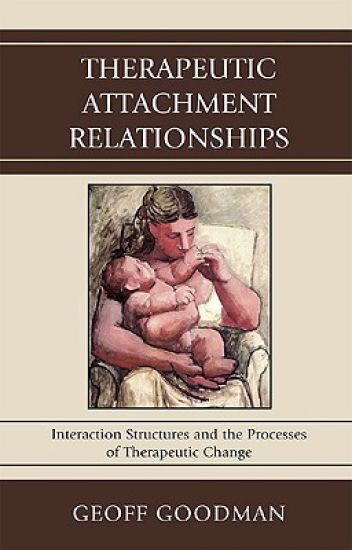
Therapeutic Attachment Relationships

Therapeutic Attachment Relationships

Geoff Goodman

Jason Aronson Inc. Publishers
2009
sidottu
The 75 years that span the writings of Sigmund Freud and John Bowlby—two minds that have significantly shaped thinking about the processes of change in psychotherapy and psychoanalysis—have yielded dramatic changes in the ways in which we conceptualize human relationship as curative. Their different positions reflect changes in our culture, in the philosophy of science, and in contemporary views of human subjectivity. Heisenberg's uncertainty principle—the principle that the position of an electron cannot be determined because the observation of its position affects its position in an indeterminate way—has been appropriated as a metaphor for human interaction. Freud's foundational, technical recommendations, such as abstinence and neutrality, have yielded to mutuality and subjectivity within the therapist-patient dyad. Attachment theory and research have begun to specify the variety of therapist-patient interactions and the relation between the quality of these interactions and patient outcomes. The goal of this book is to contribute to our understanding of these interaction structures and their influence on therapeutic changes in the patient. Geoff Goodman invites the reader to consider the attachment relationship as an often-overlooked specific factor that nevertheless plays a key role in all therapeutic processes. Therapeutic Attachment Relationships explores the attachment relationship as an effective ingredient in all therapeutic change.
The Internal World and Attachment

The Internal World and Attachment

Geoff Goodman

Analytic Press,U.S.
2002
sidottu
How, asks Geoff Goodman in The Internal World and Attachment, can we progress further in integrating the fruits of attachment research with the accumulated clinical wisdom of psychoanalytic theorizing about the internal world of object representations? The key, he answers, is to look more closely at the basic assumptions of each body of theory, especially those assumptions, whether embedded or explicit, that bear on the formation of psychic structure. Drawing on Kernberg's insights into the affective and instinctual substrata of psychic organizations, Goodman proposes that insecure attachment categories can be correlated with particular constellations of self and object representations. Such convergences provide a springboard to further theoretical explanations, most especially to the relations between attachment and adult sexual behavior. Indeed, one outstanding feature of Goodman's proposals is the light they cast on various forms and meanings of sexual psychopathology, as he delineates how both promiscuity and retreats from sexual intimacy can be differentially interpreted depending on the patient's pattern of attachment.Destined to provoke lively debate, The Internal World and Attachment is a powerfully informative attempt to go beyond the researcher's view of attachment as a motivational system. For Goodman, attachment is informed by an internal logic that reflects fantasies and defense, and an appreciation of the interaction of attachment pattern with various constellations of self and object representations can deepen our understanding of the internal world in clinically consequential ways. Keeping his eye resolutely on the clinical texture of attachment observations and the clinical phenomenology expressive of internal object relations, Goodman provides the reader with an experience-near basis for viewing two influential bodies of knowledge as complementary avenues for apprehending the internal meaning of externally observable behavior.
Junk in the Trunk

Junk in the Trunk

Geoff Goodman

Walker Inspirations
2022
pokkari
Children of sex and porn addicts need to know that they are not alone in their suffering, that help is available to them, and that families do get better with treatment. These children need to know that they did not cause their parent's addiction, nor can they control it or cure it. In words and pictures, this book conveys this powerful message for children ages 6 to 10. The only children's book of its kind, Junk in the Trunk is aimed at parents, therapists, pediatricians, and other professionals working with children who might be struggling in the wake of this addiction.
Using Psychoanalytic Techniques to Transform the Attachment Relationship to God
Using Psychoanalytic Techniques to Transform the Attachment Relationship to God demonstrates how clinicians can use Attachment-Informed Psychotherapy (AIP) to enhance clients’ understanding of their relationship to God and significant others.Geoff Goodman discusses four distinct attachment relationships to the God of personal spiritual experience and explains the implications for working with clients in psychotherapy. By asking how therapists can work through clients’ attachment relationship to God as a displacement of their attachment relationships to parents, and how therapists can work through clients’ attachment relationships to parents as a displacement of their attachment relationship to God, this book provides unique insight into the therapeutic process. Goodman’s objective is to enable clinicians to transform these attachment relationships, restoring wholeness and unity—a crucial treatment goal of AIP.This book will be a valuable resource for psychoanalysts, psychotherapists, marriage and family therapists, and pastoral counsellors in practice and in training.
Using Psychoanalytic Techniques to Transform the Attachment Relationship to God
Using Psychoanalytic Techniques to Transform the Attachment Relationship to God demonstrates how clinicians can use Attachment-Informed Psychotherapy (AIP) to enhance clients’ understanding of their relationship to God and significant others.Geoff Goodman discusses four distinct attachment relationships to the God of personal spiritual experience and explains the implications for working with clients in psychotherapy. By asking how therapists can work through clients’ attachment relationship to God as a displacement of their attachment relationships to parents, and how therapists can work through clients’ attachment relationships to parents as a displacement of their attachment relationship to God, this book provides unique insight into the therapeutic process. Goodman’s objective is to enable clinicians to transform these attachment relationships, restoring wholeness and unity—a crucial treatment goal of AIP.This book will be a valuable resource for psychoanalysts, psychotherapists, marriage and family therapists, and pastoral counsellors in practice and in training.
Practical Applications of Transforming the Attachment Relationship to God
Practical Applications of Transforming the Attachment Relationship to God discusses four distinct attachment relationships to the God of personal spiritual experience and considers how each of these relationships has implications for working with clients in psychotherapy.Geoff Goodman uses Attachment-Informed Psychotherapy (AIP) to explore the connection between a relationship to God and a relationship to caregivers during childhood. By analyzing the attachment relationships evident in the lives of four public figures—human rights activist Coretta Scott King, Jewish Holocaust victim Anne Frank, Alcoholics Anonymous co-founder Bill W., and founder of psychoanalysis Sigmund Freud—this book demonstrates how their attachment relationships with their caregivers during childhood helped to determine the quality of their attachment relationship (or nonrelationship) to God in later life. Goodman demonstrates how to use AIP to work with these attachment relationships, formulating a psychotherapeutic treatment plan for each one with the goal of restoring wholeness and unity.This book will be a valuable resource for psychoanalysts, psychotherapists, and marriage and family therapists in practice and in training.
Practical Applications of Transforming the Attachment Relationship to God
Practical Applications of Transforming the Attachment Relationship to God discusses four distinct attachment relationships to the God of personal spiritual experience and considers how each of these relationships has implications for working with clients in psychotherapy.Geoff Goodman uses Attachment-Informed Psychotherapy (AIP) to explore the connection between a relationship to God and a relationship to caregivers during childhood. By analyzing the attachment relationships evident in the lives of four public figures—human rights activist Coretta Scott King, Jewish Holocaust victim Anne Frank, Alcoholics Anonymous co-founder Bill W., and founder of psychoanalysis Sigmund Freud—this book demonstrates how their attachment relationships with their caregivers during childhood helped to determine the quality of their attachment relationship (or nonrelationship) to God in later life. Goodman demonstrates how to use AIP to work with these attachment relationships, formulating a psychotherapeutic treatment plan for each one with the goal of restoring wholeness and unity.This book will be a valuable resource for psychoanalysts, psychotherapists, and marriage and family therapists in practice and in training.
Psychoanalysis, Attachment and the Relationship with God
Using Psychoanalytic Techniques to Transform the Attachment Relationship to God demonstrates how clinicians can use Attachment-Informed Psychotherapy (AIP) to enhance clients’ understanding of their relationship to God and significant others.Geoff Goodman discusses four distinct attachment relationships to the God of personal spiritual experience and explains the implications for working with clients in psychotherapy. By asking how therapists can work through clients’ attachment relationship to God as a displacement of their attachment relationships to parents, and how therapists can work through clients’ attachment relationships to parents as a displacement of their attachment relationship to God, this book provides unique insight into the therapeutic process. Goodman’s objective is to enable clinicians to transform these attachment relationships, restoring and unity – a crucial treatment goal of AIP.Using Psychoanalytic Techniques to Transform the Attachment Relationship to God will be a valuable resource for psychoanalysts, psychotherapists, marriage and family therapists, and pastoral counsellors in practice and in training.Practical Applications of Transforming the Attachment Relationship to God discusses four distinct attachment relationships to the God of personal spiritual experience and considers how each of these relationships has implications for working with clients in psychotherapy.Geoff Goodman uses Attachment-Informed Psychotherapy (AIP) to explore the connection between a relationship to God and a relationship to caregivers during childhood. By analyzing the attachment relationships evident in the lives of four public figures - human rights activist Coretta Scott King, Jewish Holocaust victim Anne Frank, Alcoholics Anonymous co-founder Bill W., and founder of psychoanalysis Sigmund Freud - this book demonstrates how their attachment relationships with their caregivers during childhood helped to determine the quality of their attachment relationship (or non-relationship) to God. Goodman demonstrates how to use AIP to work with these attachment relationships, formulating a psychotherapeutic treatment plan for each one with a goal of restoring wholeness and unity.Practical Applications of Transforming the Attachment Relationship to God will be a valuable resource for psychoanalysts, psychotherapists, and marriage and family therapists in practice and in training.
Spiritual Interventions and Attachment

Spiritual Interventions and Attachment

Geoff Goodman

TAYLOR FRANCIS LTD
2026
nidottu
Spiritual Interventions and Attachment offers a variety of models of lay minister-driven spiritual interventions to which clergy from diverse religious backgrounds might consider referring their congregants. Each chapter reviews a specific model, providing a history, description, inclusion and exclusion criteria, training requirements, and a clinical illustration. The author also provides a critique of each model using attachment theory as the organizing framework. All these models are designed to ease the overwhelming burden of clergy, who are unable to provide appropriately matched pastoral care to all their congregants who experience spiritual and emotional struggles. University course instructors, clergy, chaplains, pastoral counselors, lay ministers, and mental health professionals will benefit from this insightful book.
Spiritual Interventions and Attachment

Spiritual Interventions and Attachment

Geoff Goodman

TAYLOR FRANCIS LTD
2026
sidottu
Spiritual Interventions and Attachment offers a variety of models of lay minister-driven spiritual interventions to which clergy from diverse religious backgrounds might consider referring their congregants. Each chapter reviews a specific model, providing a history, description, inclusion and exclusion criteria, training requirements, and a clinical illustration. The author also provides a critique of each model using attachment theory as the organizing framework. All these models are designed to ease the overwhelming burden of clergy, who are unable to provide appropriately matched pastoral care to all their congregants who experience spiritual and emotional struggles. University course instructors, clergy, chaplains, pastoral counselors, lay ministers, and mental health professionals will benefit from this insightful book.
Psychoanalysis, Attachment and the Relationship with God
Using Psychoanalytic Techniques to Transform the Attachment Relationship to God demonstrates how clinicians can use Attachment-Informed Psychotherapy (AIP) to enhance clients’ understanding of their relationship to God and significant others.Geoff Goodman discusses four distinct attachment relationships to the God of personal spiritual experience and explains the implications for working with clients in psychotherapy. By asking how therapists can work through clients’ attachment relationship to God as a displacement of their attachment relationships to parents, and how therapists can work through clients’ attachment relationships to parents as a displacement of their attachment relationship to God, this book provides unique insight into the therapeutic process. Goodman’s objective is to enable clinicians to transform these attachment relationships, restoring and unity – a crucial treatment goal of AIP.Using Psychoanalytic Techniques to Transform the Attachment Relationship to God will be a valuable resource for psychoanalysts, psychotherapists, marriage and family therapists, and pastoral counsellors in practice and in training.Practical Applications of Transforming the Attachment Relationship to God discusses four distinct attachment relationships to the God of personal spiritual experience and considers how each of these relationships has implications for working with clients in psychotherapy.Geoff Goodman uses Attachment-Informed Psychotherapy (AIP) to explore the connection between a relationship to God and a relationship to caregivers during childhood. By analyzing the attachment relationships evident in the lives of four public figures - human rights activist Coretta Scott King, Jewish Holocaust victim Anne Frank, Alcoholics Anonymous co-founder Bill W., and founder of psychoanalysis Sigmund Freud - this book demonstrates how their attachment relationships with their caregivers during childhood helped to determine the quality of their attachment relationship (or non-relationship) to God. Goodman demonstrates how to use AIP to work with these attachment relationships, formulating a psychotherapeutic treatment plan for each one with a goal of restoring wholeness and unity.Practical Applications of Transforming the Attachment Relationship to God will be a valuable resource for psychoanalysts, psychotherapists, and marriage and family therapists in practice and in training.
The Internal World and Attachment

The Internal World and Attachment

Geoff Goodman

Routledge
2015
nidottu
How, asks Geoff Goodman in The Internal World and Attachment, can we progress further in integrating the fruits of attachment research with the accumulated clinical wisdom of psychoanalytic theorizing about the internal world of object representations? The key, he answers, is to look more closely at the basic assumptions of each body of theory, especially those assumptions, whether embedded or explicit, that bear on the formation of psychic structure. Drawing on Kernberg's insights into the affective and instinctual substrata of psychic organizations, Goodman proposes that insecure attachment categories can be correlated with particular constellations of self and object representations. Such convergences provide a springboard to further theoretical explanations, most especially to the relations between attachment and adult sexual behavior. Indeed, one outstanding feature of Goodman's proposals is the light they cast on various forms and meanings of sexual psychopathology, as he delineates how both promiscuity and retreats from sexual intimacy can be differentially interpreted depending on the patient's pattern of attachment.Destined to provoke lively debate, The Internal World and Attachment is a powerfully informative attempt to go beyond the researcher's view of attachment as a motivational system. For Goodman, attachment is informed by an internal logic that reflects fantasies and defense, and an appreciation of the interaction of attachment pattern with various constellations of self and object representations can deepen our understanding of the internal world in clinically consequential ways. Keeping his eye resolutely on the clinical texture of attachment observations and the clinical phenomenology expressive of internal object relations, Goodman provides the reader with an experience-near basis for viewing two influential bodies of knowledge as complementary avenues for apprehending the internal meaning of externally observable behavior.