Kirjojen hintavertailu. Mukana 11 627 670 kirjaa ja 12 kauppaa.

Kirjahaku

Etsi kirjoja tekijän nimen, kirjan nimen tai ISBN:n perusteella.

3 kirjaa tekijältä Geoff Horn

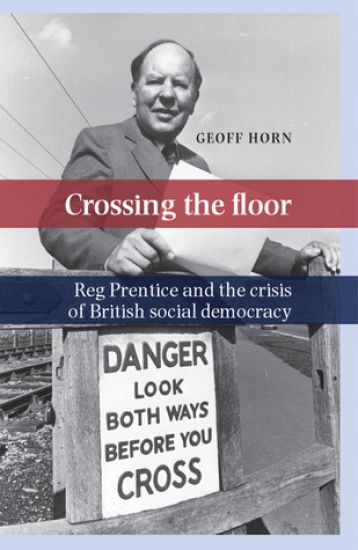
Crossing the Floor

Crossing the Floor

Geoff Horn

Manchester University Press
2013
sidottu
Reg Prentice remains the most high-profile politician to cross the floor of the House of Commons in the post-war period. His defection reflected an important 'sea change' in British politics; the end of the post-war consensus and the beginnings of the Thatcher era. This book examines the key events surrounding Prentice's transition from a front-line Labour politician to a Conservative minister in the first Thatcher government. It focuses on the shifting political climate in Britain during the 1970s, as the post-war settlement came under pressure from adverse economic conditions, militant trade unionism and an assertive New Left. Prentice's story provides an important case study on the crisis that afflicted social democracy, highlighting Labour's left-right divide and the possibility of a realignment of British politics. This study will be invaluable to anyone interested in the turbulent and transitional nature of British politics during a watershed period.

Crossing the Floor

Crossing the Floor

Geoff Horn

Manchester University Press
2015
nidottu
Reg Prentice remains the most high-profile politician to cross the floor of the House of Commons in the post-war period. His defection reflected an important 'sea change' in British politics; the end of the post-war consensus and the beginnings of the Thatcher era. This book examines the key events surrounding Prentice's transition from a front-line Labour politician to a Conservative minister in the first Thatcher government. It focuses on the shifting political climate in Britain during the 1970s, as the post-war settlement came under pressure from adverse economic conditions, militant trade unionism and an assertive New Left. Prentice's story provides an important case study on the crisis that afflicted social democracy, highlighting Labour's left-right divide and the possibility of a realignment of British politics. This study will be invaluable to anyone interested in the turbulent and transitional nature of British politics during a watershed period.
The Battle for British Entry into the European Community, 1971-72

The Battle for British Entry into the European Community, 1971-72

Geoff Horn

Springer International Publishing AG
2025
sidottu
This book offers a new perspective on the parliamentary battle for British entry into the European Community (EC) – the forerunner of the EU. It provides a historical case study of how the whipping operation, overseen by the Chief Whip Francis Pym, played a critical role in securing EC entry in 1971-72. More specifically, it explores how the Conservative Government’s Whips’ Office managed dissent through the concept of ‘loyal dissent,’ a party management approach characterised by tolerance and respect for dissenting views. It addresses key themes that remain relevant in British politics today: how does a whipping operation resolve the tension between toleration of dissent, the imperatives of party loyalty and the overriding objective of consistently securing government majorities in the division lobbies? What subtle or indirect methods of party management can be employed to minimise or nullify dissent, without recourse to punitive sanctions? Is respect for individual conscience the best means of avoiding damaging party splits on controversial and divisive issues? This book highlights the role of the whips during the parliamentary battle for entry into Europe, but it also places a spotlight on Britain’s adversarial politics. Whipping is symptomatic of a culture that emphasises party loyalty and discipline but appears ill-suited to issues of fundamental constitutional principle or individual conscience that go above and beyond normal party politics. It can be argued that Britain’s relationship with Europe belonged in this category. Pym’s whipping operation was critical in securing parliamentary approval for Britain’s entry into Europe, but this success relied on a subtle and skilful circumvention (even subversion) of the rigidities of an adversarial whipping system.