Kirjojen hintavertailu. Mukana 11 699 587 kirjaa ja 12 kauppaa.

Kirjahaku

Etsi kirjoja tekijän nimen, kirjan nimen tai ISBN:n perusteella.

2 kirjaa tekijältä Geoff Quilley

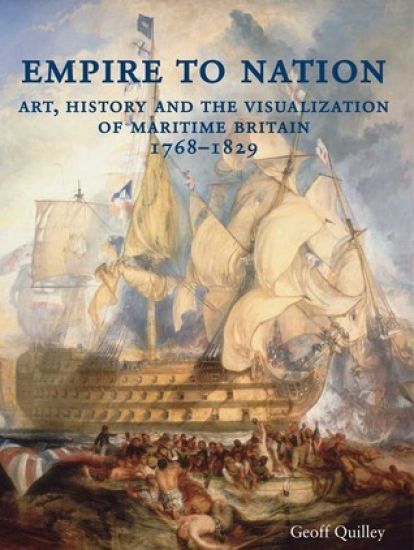
Empire to Nation

Empire to Nation

Geoff Quilley

Yale University Press
2011
sidottu
Empire to Nation offers a new consideration of the image of the sea in British visual culture during a critical period for both the rise of the visual arts in Britain and the expansion of the nation's imperial power. It argues that maritime imagery was central to cultivating a sense of nationhood in relation to rapidly expanding geographical knowledge and burgeoning imperial ambition. At the same time, the growth of the maritime empire presented new opportunities for artistic enterprise. Taking as its starting point the year 1768, which marks the foundation of the Royal Academy and the launch of Captain Cook's first circumnavigation, it asserts that this was not just an interesting coincidence but symptomatic of the relationship between art and empire. This relationship was officially sanctioned in the establishment of the Naval Gallery at Greenwich Hospital and the installation there of J. M. W. Turner's great Battle of Trafalgar in 1829, the year that closes this study. Between these two poles, the book traces a changing historical discourse that informed visual representation of maritime subjectsPublished for the Paul Mellon Centre for Studies in British Art
British Art and the East India Company

British Art and the East India Company

Geoff Quilley

The Boydell Press
2020
sidottu
Examines the role of the East India Company in the production and development of British art, demonstrating how art and related forms of culture were closely tied to commerce and the rise of the commercial state. This book examines the role of the East India Company in the production and development of British art during the eighteenth and early nineteenth centuries, when a new "school" of British art was in its formative stages with the foundation of exhibiting societies and the Royal Academy in 1768. It focuses on the Company's patronage, promotion and uses of art, both in Britain and in India and the Far East, and how the Company and its trade with the East were represented visually, through maritime imagery, landscape, genre painting and print-making. It also considers how, for artists such as William Hodges and Arthur William Devis, the East India Company, and its provision of a wealthy market in British India, provided opportunities for career advancement, through alignment with Company commercial principles. In this light, the book's main concern is to address the conflicted and ambiguous nature of art produced in the service of a corporation that was the "scandal of empire" for most of its existence, and how this has shaped and distorted our understanding of the history of British art in relation to the concomitant rise of Britain as a self-consciously commercial and maritime nation, whose prosperity relied upon global expansion, increasing colonialism and the development of mercantile organisations.