Kirjojen hintavertailu. Mukana 12 016 292 kirjaa ja 12 kauppaa.

Kirjahaku

Etsi kirjoja tekijän nimen, kirjan nimen tai ISBN:n perusteella.

14 kirjaa tekijältä Geoffrey Ashe

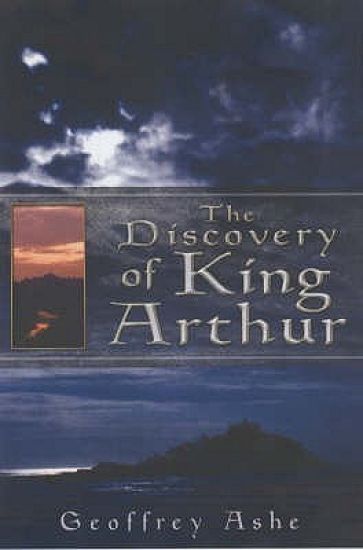
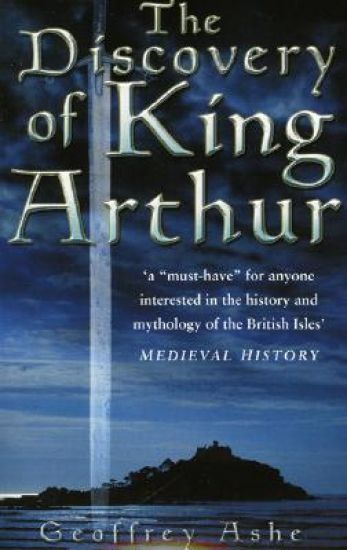
The Discovery of King Arthur

The Discovery of King Arthur

Geoffrey Ashe

The History Press Ltd
2003
sidottu
This title presents an investigation that broke the deadlock that earlier research had reached. Arthur emerged from it with a firmer status in history. The author insists that if we line up the legend with the facts as we know them today, the problem of Arthur's identity can be solved.
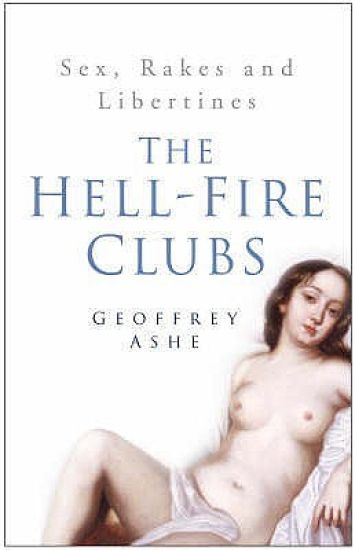
The Hell-Fire Clubs

The Hell-Fire Clubs

Geoffrey Ashe

The History Press Ltd
2005
nidottu
Geoffrey Ashe has assembled an account of the Hell-Fire Clubs and of their antecedents and descendants. It follows the libertarian tradition through de Sade and into the 20th century, with discussions of Aleister Crowley, Charles Manson and Timothy Leary.
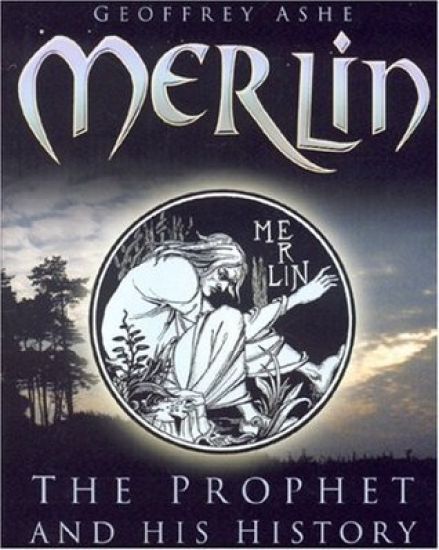
Merlin

Merlin

Geoffrey Ashe

The History Press Ltd
2006
nidottu
Merlin, seer and wonder-worker at King Arthur's court, makes his debut in the "History of the Kings of Britain". One of the most influential books of the Middle Ages, it planted Arthur himself in European minds. Despite his 'supernatural' status, it is Merlin, of all the great characters of the Arthurian world, who has the claims to having existed.
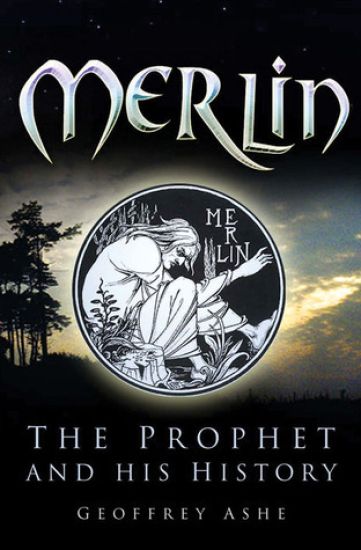
Merlin

Merlin

Geoffrey Ashe

The History Press Ltd
2008
nidottu
Geoffrey Ashe's book on this legendary figure offers a succession of surprises. The Merlin of legend was born to be a magician. He was 'immaculately' conceived and was able to interpret dreams and utter prophecies. Even his fate was imbued with magic. Like Arthur, he acquired immortality and sleeps on Bardsey Island, in a subterranean chamber with nine companions. Ashe reveals the man behind the myth, establishing beyond doubt the historicity of a Welsh prophet called Myrddin Emrys. Despite his 'supernatural' status it is Merlin, of all the great characters of the Arthurian world, who has the strongest claim to have existed.
The Discovery of King Arthur

The Discovery of King Arthur

Geoffrey Ashe

The History Press Ltd
2005
nidottu
Attempts to find the person (if any) behind the legend of King Arthur have been going on for a long time. The search has revealed many interesting facts and it has also led to sharp disagreements. By the 1980s, the search was more or less abandoned, having reached a dead-end.The Discovery of King Arthur presents an investigation that broke the deadlock. Arthur emerged from it with a firmer status in history. He was also more interesting - more like his legend - than once appeared likely. It became possible to see better why he became the kind of figure he did. The delay in running him to earth was due to the nature of the problem he posed.Medieval authors who gave him his literary grandeur fitted him into what they claimed was Britain's history several centuries later. Not much of that history can stand up in the light of present day knowledge - it is mostly legend. So historians who looked for Arthur swept the medieval matter aside and searched for him in the scanty older records. But the search was inconclusive. A convincing answer called for a different approach.This books shows that the Arthurian legend itself needs to be taken seriously and sifted for clues. The right questions to ask are not the direct ones, 'Who was Arthur?' or 'Did he exist?', but 'Where did his legend come from?' and 'What facts is the legend rooted in?'. If we line up the legend side by side with the facts as we know them today, the problem of Arthur's identity can be solved.
King Arthur's Avalon

King Arthur's Avalon

Geoffrey Ashe

The History Press Ltd
2007
nidottu
2007 was the 50th anniversary of the publication of King Arthur's Avalon, which sold 100,000 copies, and is credited widely with a major share in the growth of Glastonbury's fame and the international renewal of Arthurian interests. This edition gives the original text, unchanged and unabridged, with a new Preface by the author putting it in a present-day perspective. He reviews developments in the past half-century and his own contributions to them.
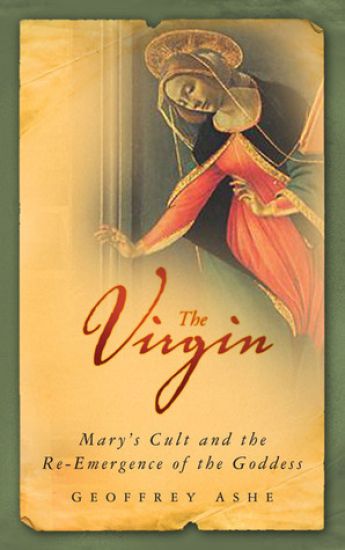
The Virgin

The Virgin

Geoffrey Ashe

The History Press Ltd
2008
nidottu
Following recent interest in Mary Magdalene and the Da Vinci code, The Virgin unravels Mary's story. The mother of Christ has taken various forms throughout the centuries: among them are the Blessed Virgin, the Queen of Heaven, the Madonna and the spiritual mother of all the faithful. Yet despite her high enthronement in the Catholic Church, Mary, as both chaste goddess and earth mother, has her origins in pre-Christian religions, of which the chief deities were female. In this masterly exploration of the cult of Mary, Geoffrey Ashe examines ancient myths, theology, history, literature and feminine spirituality to throw new light on the role of Mary in today's Church, which is only partly derived from the Gopels.Tracing the cult from its origins to the present day with the re-subordination of Mary to Christ, The Virgin also illuminates the spiritual battle of the sexes, a conflict that remains unresolved to this day.
Encyclopedia of Prophecy

Encyclopedia of Prophecy

Geoffrey Ashe

ABC-CLIO
2001
sidottu
A definitive, factual, A–Z reference guide offering a global perspective on the role of prophecy in world history, religion, folklore, and literature.From at least 1200 B.C. and probably long before, prophets have attempted to see into the future. Most—from ancient oracles to modern astrologers, from doomsday sects to telephone psychics—have been wrong the majority of the time, says British researcher Geoffrey Ashe. True foreknowledge is rare, but those rare occurrences are impressive.In this fascinating reference work, the first to encompass the entire 3,000 year span of recorded prophecy, Ashe examines the predictions of both good prophets and bad, including seers like Jacques Cazotte, who forecast the Reign of Terror in the French Revolution, and Morgan Robertson, who described the Titanic disaster 14 years before it happened. He refutes many of the far-fetched claims of Nostradamus, and highlights those that foreshadow events after his lifetime. He also examines failed prophecies that have been influential, including the many end-of-the-world forecasts, along with the surprisingly accurate visions of some science-fiction authors.More than 100 entries on prophets and prophecies from the Antichrist to Yevgeny Zamyatin, the Russian author whose writings influenced Aldous Huxley's Brave New World and George Orwell's 1984Extensive illustrations with drawings and diagrams including engravings from William Blake's so-called prophetic books and depictions of the ten incarnations of VishnuNumerous photographs of writers such as D. H. Lawrence, H. G. Wells, and E. M. Forster; spiritual leaders such as Madame Blavatsky, founder of Theosophy; and Theodor Herzl, founder of ZionismA bibliography as a guide for extended research
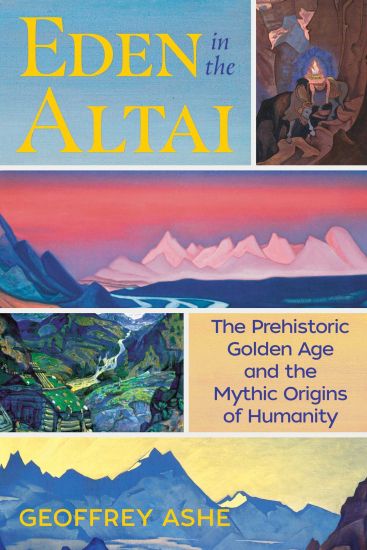
Eden in the Altai

Eden in the Altai

Geoffrey Ashe

Bear Company
2019
pokkari
Reveals how humanity’s first advanced culture originated in the Altai-Baikal region of southern Siberia Myths of a Golden Age, a paradise at the beginning of human existence, are nearly universal in all cultures. But where was this “Eden” located? Refuting the traditional assumption that the cultures of the Middle East and Mycenae filtered northward into Europe and North Asia, noted historian Geoffrey Ashe instead identifies the northern Altai mountain range and Lake Baikal region of southern Siberia as the true cultural home of humanity and the source of the widespread myths of a prehistoric Golden Age. With evidence dating back as far as 24,000 BC, Ashe shows how the culture of prehistoric southern Siberia was matrifocal, Goddess-worshiping, and heavily shamanic and served as the progenitor of advanced ancient culture in the Western world, the missing link that later influenced Indian, Middle Eastern, Native American, and European society, culture, and religion. He reveals how ancient Altaic culture was the source of the pervasive mythic symbolism of the number 7, found in cosmologies and mythological traditions around the world, as well as reverence for the seven stars of Ursa Major, the Big Dipper, and the idea of a “sacred mountain to the North.” Ashe reveals how this transmission of beliefs had a profound influence on the seven-note musical scale, the seven astrological planets, and the seven vowels of the Greek alphabet, as well as the development of seven as a sacred number in Judaism. Offering proof that advanced cultures existed in Europe before the immigration of Eastern peoples, Ashe shows that early societies did not look into the future for perfection but to the past, to the Golden Age of peace in the sacred northern mountains.
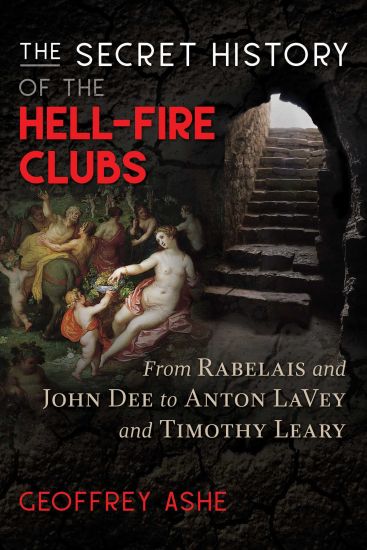
The Secret History of the Hell-Fire Clubs
An exploration of the origins, influences, and legacy of the scandalous Hell-Fire Clubs of the 18th century and beyond • Reveals the club’s origins in the work of Rabelais and the magical practices of John Dee and how their motto, “Do What You Will,” deeply influenced Aleister Crowley • Explores the cross-fertilization of liberty and libertinage within these clubs that influenced both U.S. and French Revolutions • Examines the debaucherous activities and famous members of many Hell-Fire Clubs, including Sir Francis Dashwood’s Monks of Medmenham Mention the Hell-Fire Clubs and you conjure up an image of aristocratic rakes cutting a swath through the village maidens. Which is true, but not the whole truth. The activities of these clubs of upper-class Englishmen revolved around not only debauchery but also blasphemy, ritual, quasi-magical pursuits, and political intrigue. Providing a history of these infamous clubs, Geoffrey Ashe reveals their origins in the work of François Rabelais and the activities of John Dee. He shows how the Hell-Fire Clubs’ anything-goes philosophy of “Do what you will”--also Aleister Crowley’s famous motto--and community template were drawn directly from Rabelais. The author looks at the very first Hell-Fire Club, founded by Philip, Duke of Wharton, in 1720 and then at the Society of the Dilettanti, a fraternity formed in 1732. Ashe examines the life, travels, and influences of Sir Francis Dashwood, founding member of the Society of the Dilettanti and the scandalous Permissive Society at Medmenham, also known as the Monks of Medmenham. He also explores other Hell-Fire clubs the movement inspired throughout England, Scotland, and Ireland, including the violence-prone Mohocks and the Appalling Club. He shows how many illustrious figures of the day were members of these societies, such as Lord Byron. He also examines the rumors that Benjamin Franklin was a member, an allegation that can be neither confirmed nor denied. Exploring the political and magical ideas that fueled this movement, the author shows how the cross-fertilization of liberty and libertinage within the Hell-Fire Clubs went on to influence both the U.S. and French revolutions, as well as the hippie movement of the 1960s, the Church of Satan founded by Anton LaVey, and the motorcycle club known as the Hell’s Angels. The legacy of the Hell-Fire Clubs continues to impact society, beckoning both elite and outsider to cast aside social norms and “do what you will.”
Mythology of the British Isles
An unforgettable and illuminating exploration of the legends of the British Isles.From the misty centuries of British and Irish prehistory to the height of the dark age, comes tales of giants and fairy-folk, druids and saints. From King Lear and King Arthur, to Fingal, Beowulf, Gwendolen and Guinevere these are the legendary characters who shaped the nation.But who were they?In Mythology of the British Isles, Geoffrey Ashe explores these compelling and ancient stories, seeing how they have taken on fresh significance as historical and archaeological research has uncovered the truth behind each legend.
Camelot and the Vision of Albion

Camelot and the Vision of Albion

Geoffrey Ashe

Aeon Books Ltd
2015
nidottu
When archaeologists dug up the hill of Cadbury in Somerset, the reputed site of King Arthur's Camelot, thousands of visitors came to watch. They never saw anything resembling the Camelot of romance. Yet they kept coming, year after year.Why does Arthur fascinate? In this book, the secretary of the Cad bury project (himself an authority on the legend) looks for an answer. Drawing on varied researches, and on the insight embodied in William Blake's symbol of the shadowy 'Giant Albion' behind Arthur, he plunges into the psychological depths that underlie the tale of the enchanted King, his city Camelot, his mysterious departure to Avalon, his promised return.The enquiry starts from the solid facts of Cadbury. But it opens vistas on a strange world of gods and mortals and immemorial yearnings. The same universal dream that created the legendary Arthur is shown reappearing through many centuries, inspiring many thinkers: Blake himself; Virgil, Confucius, Rousseau, Gandhi; even such supposed rationalists as Robert Owen and Lenin.All the paths converge on a central problem of the human condition, which, the author suggests, must be solved if mankind is to achieve a workable humanist philosophy. It turns out that Arthur remains startlingly relevant: that the prophecy of his return has a serious meaning.