Kirjojen hintavertailu. Mukana 11 244 527 kirjaa ja 12 kauppaa.

Kirjahaku

Etsi kirjoja tekijän nimen, kirjan nimen tai ISBN:n perusteella.

11 kirjaa tekijältä Geoffrey Baker

Le Corbusier - An Analysis of Form

Le Corbusier - An Analysis of Form

Geoffrey Baker

Spon Press
1996
nidottu
This unique appraisal of the famous Swiss architect's major works have now been expanded to include two more buildings. The Villa Shodhan and the Pavilion Suisse round out the coverage of Le Corbusier's significant works. The author critically examines Le Corbusier's achievements helping student and professional alike to appreciate the elements of successful design. The narrative and fine illustration cover the key buildings from each of the four developmental stages of his work, making it an excellent guide for practicing architects and students.
Realism's Empire

Realism's Empire

Geoffrey Baker

Ohio State University Press
2020
pokkari
If realist novels are the literary avatars of secular science and rational progress, then why are so many canonical realist works organized around a fear of that progress? Realism is openly indebted, at the level of form and content, to imperialist and scientific advances. However, critical emphasis on this has obscured the extent to which major novelists of the period openly worried about the fate of mystery and the dissolution of tradition that accompanied science's shrinking of the world. Realism's modernization is inseparable from nostalgia. In Realism's Empire: Empiricism and Enchantment in the Nineteenth-Century Novel, Geoffrey Baker demonstrates that realist fiction's stance toward both progress and the foreign or supernatural is much more complex than established scholarship has assumed. The work of Honor de Balzac, Anthony Trollope, and Theodor Fontane explicitly laments the loss of mystery in the world due to increased knowledge and exploration. To counter this loss and to generate the complications required for narrative, these three authors import peripheral, usually colonial figures into the metropolitan centers they otherwise depict as disenchanted and rationalized: Paris, London, and Berlin. Baker's book examines the consequences of this duel for realist narrative and readers' understandings of its historical moment. In so doing, Baker shows Balzac, Trollope, and Fontane grappling with new realities that frustrate their inherited means of representation and oversee a significant shift in the development of the novel.
Imposing Harmony

Imposing Harmony

Geoffrey Baker

Duke University Press
2008
sidottu
Imposing Harmony is a groundbreaking analysis of the role of music and musicians in the social and political life of colonial Cuzco. Challenging musicology’s cathedral-centered approach to the history of music in colonial Latin America, Geoffrey Baker demonstrates that rather than being dominated by the cathedral, Cuzco’s musical culture was remarkably decentralized. He shows that institutions such as parish churches and monasteries employed indigenous professional musicians, rivaling Cuzco Cathedral in the scale and frequency of the musical performances they staged.Building on recent scholarship by social historians and urban musicologists and drawing on extensive archival research, Baker highlights European music as a significant vehicle for reproducing and contesting power relations in Cuzco. He examines how Andean communities embraced European music, creating an extraordinary cultural florescence, at the same time that Spanish missionaries used the music as a mechanism of colonialization and control. Uncovering a musical life of considerable and unexpected richness throughout the diocese of Cuzco, Baker describes a musical culture sustained by both Hispanic institutional patrons and the upper strata of indigenous society. Mastery of European music enabled elite Andeans to consolidate their position within the colonial social hierarchy. Indigenous professional musicians distinguished themselves by fulfilling important functions in colonial society, acting as educators, religious leaders, and mediators between the Catholic Church and indigenous communities.
Imposing Harmony

Imposing Harmony

Geoffrey Baker

Duke University Press
2008
pokkari
Imposing Harmony is a groundbreaking analysis of the role of music and musicians in the social and political life of colonial Cuzco. Challenging musicology’s cathedral-centered approach to the history of music in colonial Latin America, Geoffrey Baker demonstrates that rather than being dominated by the cathedral, Cuzco’s musical culture was remarkably decentralized. He shows that institutions such as parish churches and monasteries employed indigenous professional musicians, rivaling Cuzco Cathedral in the scale and frequency of the musical performances they staged.Building on recent scholarship by social historians and urban musicologists and drawing on extensive archival research, Baker highlights European music as a significant vehicle for reproducing and contesting power relations in Cuzco. He examines how Andean communities embraced European music, creating an extraordinary cultural florescence, at the same time that Spanish missionaries used the music as a mechanism of colonialization and control. Uncovering a musical life of considerable and unexpected richness throughout the diocese of Cuzco, Baker describes a musical culture sustained by both Hispanic institutional patrons and the upper strata of indigenous society. Mastery of European music enabled elite Andeans to consolidate their position within the colonial social hierarchy. Indigenous professional musicians distinguished themselves by fulfilling important functions in colonial society, acting as educators, religious leaders, and mediators between the Catholic Church and indigenous communities.
Buena Vista in the Club

Buena Vista in the Club

Geoffrey Baker

Duke University Press
2011
sidottu
In Buena Vista in the Club, Geoffrey Baker traces the trajectory of the Havana hip hop scene from the late 1980s to the present and analyzes its partial eclipse by reggaetón. While Cuban officials initially rejected rap as “the music of the enemy,” leading figures in the hip hop scene soon convinced certain cultural institutions to accept and then promote rap as part of Cuba’s national culture. Culminating in the creation of the state-run Cuban Rap Agency, this process of “nationalization” drew on the shared ideological roots of hip hop and the Cuban nation and the historical connections between Cubans and African Americans. At the same time, young Havana rappers used hip hop, the music of urban inequality par excellence, to critique the rapid changes occurring in Havana since the early 1990s, when the Soviet Union fell, its subsidy of Cuba ceased, and a tourism-based economy emerged. Baker considers the explosion of reggaetón in the early 2000s as a reflection of the “new materialism” that accompanied the influx of foreign consumer goods and cultural priorities into “sociocapitalist” Havana. Exploring the transnational dimensions of Cuba’s urban music, he examines how foreigners supported and documented Havana’s growing hip hop scene starting in the late 1990s and represented it in print and on film and CD. He argues that the discursive framing of Cuban rap played a crucial part in its success.
Buena Vista in the Club

Buena Vista in the Club

Geoffrey Baker

Duke University Press
2011
pokkari
In Buena Vista in the Club, Geoffrey Baker traces the trajectory of the Havana hip hop scene from the late 1980s to the present and analyzes its partial eclipse by reggaetón. While Cuban officials initially rejected rap as “the music of the enemy,” leading figures in the hip hop scene soon convinced certain cultural institutions to accept and then promote rap as part of Cuba’s national culture. Culminating in the creation of the state-run Cuban Rap Agency, this process of “nationalization” drew on the shared ideological roots of hip hop and the Cuban nation and the historical connections between Cubans and African Americans. At the same time, young Havana rappers used hip hop, the music of urban inequality par excellence, to critique the rapid changes occurring in Havana since the early 1990s, when the Soviet Union fell, its subsidy of Cuba ceased, and a tourism-based economy emerged. Baker considers the explosion of reggaetón in the early 2000s as a reflection of the “new materialism” that accompanied the influx of foreign consumer goods and cultural priorities into “sociocapitalist” Havana. Exploring the transnational dimensions of Cuba’s urban music, he examines how foreigners supported and documented Havana’s growing hip hop scene starting in the late 1990s and represented it in print and on film and CD. He argues that the discursive framing of Cuban rap played a crucial part in its success.
Le Corbusier - An Analysis of Form

Le Corbusier - An Analysis of Form

Geoffrey Baker

CRC Press
2017
sidottu
This unique appraisal of the famous Swiss architect's major works have now been expanded to include two more buildings. The Villa Shodhan and the Pavilion Suisse round out the coverage of Le Corbusier's significant works. The author critically examines Le Corbusier's achievements helping student and professional alike to appreciate the elements of successful design. The narrative and fine illustration cover the key buildings from each of the four developmental stages of his work, making it an excellent guide for practicing architects and students.
Rethinking Social Action through Music

Rethinking Social Action through Music

Geoffrey Baker

Open Book Publishers
2021
pokkari
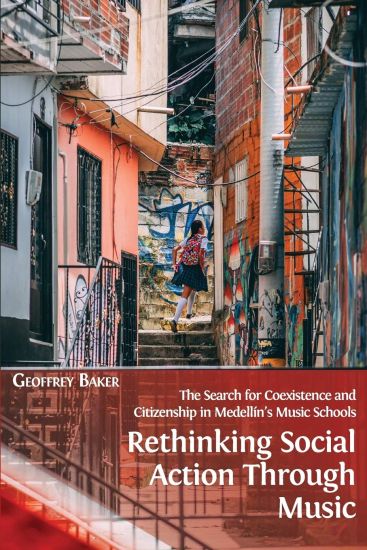
How can we better understand the past, present and future of Social Action through Music (SATM)?This ground-breaking book examines the development of the Red de Escuelas de M sica de Medell n (the Network of Music Schools of Medell n), a network of 27 schools founded in Colombia's second city in 1996 as a response to its reputation as the most dangerous city on Earth. Inspired by El Sistema, the foundational Venezuelan music education program, the Red is nonetheless markedly different: its history is one of multiple reinventions and a continual search to improve its educational offering and better realise its social goals. Its internal reflections and attempts at transformation shed valuable light on the past, present, and future of SATM.Based on a year of intensive fieldwork in Colombia and written by Geoffrey Baker, the author of El Sistema: Orchestrating Venezuela's Youth (2014), this important volume offers fresh insights on SATM and its evolution both in scholarship and in practice. It will be of interest to a very varied readership: employees and leaders of SATM programs; music educators; funders and policy-makers; and students and scholars of SATM, music education, ethnomusicology, and other related fields.
Rethinking Social Action through Music

Rethinking Social Action through Music

Geoffrey Baker

Open Book Publishers
2021
sidottu
How can we better understand the past, present and future of Social Action through Music (SATM)?This ground-breaking book examines the development of the Red de Escuelas de M sica de Medell n (the Network of Music Schools of Medell n), a network of 27 schools founded in Colombia's second city in 1996 as a response to its reputation as the most dangerous city on Earth. Inspired by El Sistema, the foundational Venezuelan music education program, the Red is nonetheless markedly different: its history is one of multiple reinventions and a continual search to improve its educational offering and better realise its social goals. Its internal reflections and attempts at transformation shed valuable light on the past, present, and future of SATM.Based on a year of intensive fieldwork in Colombia and written by Geoffrey Baker, the author of El Sistema: Orchestrating Venezuela's Youth (2014), this important volume offers fresh insights on SATM and its evolution both in scholarship and in practice. It will be of interest to a very varied readership: employees and leaders of SATM programs; music educators; funders and policy-makers; and students and scholars of SATM, music education, ethnomusicology, and other related fields.
Replanteando la acción social por la música

Replanteando la acción social por la música

Geoffrey Baker

Open Book Publishers
2022
pokkari
C mo podemos comprender mejor el pasado, el presente y el futuro de la Acci n Social por la M sica (ASPM)?Este libro pionero examina el desarrollo de La Red de Escuelas de M sica de Medell n, una red de 27 escuelas fundada en 1996 en la segunda ciudad principal de Colombia como respuesta a su reputaci n como la ciudad m s peligrosa en la Tierra. Inspirada en El Sistema, el programa venezolano fundacional de educaci n musical, La Red es, no obstante, notablemente diferente: su historia es una de m ltiples reinvenciones y de una b squeda continua para mejorar su oferta educativa y alcanzar mejor sus objetivos sociales. Sus reflexiones internas e intentos de transformaci n arrojan luz valiosa sobre el pasado, el presente y el futuro de ASPM.Basado en un a o de trabajo de campo intensivo en Colombia y escrito por Geoffrey Baker, autor de El Sistema: Orchestrating Venezuela's Youth (2014), este importante volumen ofrece nuevas perspectivas sobre ASPM y su evoluci n tanto en el mbito acad mico como en la pr ctica. Ser de inter s para un p blico muy variado: empleados y l deres de programas ASPM; educadores musicales; patrocinadores y responsables pol ticos; y estudiantes y acad micos de campos como ASPM, la educaci n musical, la etnomusicolog a y otros campos relacionados.
Replanteando la acción social por la música

Replanteando la acción social por la música

Geoffrey Baker

Open Book Publishers
2022
sidottu
C mo podemos comprender mejor el pasado, el presente y el futuro de la Acci n Social por la M sica (ASPM)?Este libro pionero examina el desarrollo de La Red de Escuelas de M sica de Medell n, una red de 27 escuelas fundada en 1996 en la segunda ciudad principal de Colombia como respuesta a su reputaci n como la ciudad m s peligrosa en la Tierra. Inspirada en El Sistema, el programa venezolano fundacional de educaci n musical, La Red es, no obstante, notablemente diferente: su historia es una de m ltiples reinvenciones y de una b squeda continua para mejorar su oferta educativa y alcanzar mejor sus objetivos sociales. Sus reflexiones internas e intentos de transformaci n arrojan luz valiosa sobre el pasado, el presente y el futuro de ASPM.Basado en un a o de trabajo de campo intensivo en Colombia y escrito por Geoffrey Baker, autor de El Sistema: Orchestrating Venezuela's Youth (2014), este importante volumen ofrece nuevas perspectivas sobre ASPM y su evoluci n tanto en el mbito acad mico como en la pr ctica. Ser de inter s para un p blico muy variado: empleados y l deres de programas ASPM; educadores musicales; patrocinadores y responsables pol ticos; y estudiantes y acad micos de campos como ASPM, la educaci n musical, la etnomusicolog a y otros campos relacionados.