Kirjojen hintavertailu. Mukana 11 342 296 kirjaa ja 12 kauppaa.

Kirjahaku

Etsi kirjoja tekijän nimen, kirjan nimen tai ISBN:n perusteella.

7 kirjaa tekijältä Geoffrey Batchen

Burning with Desire

Burning with Desire

Geoffrey Batchen

MIT Press
1999
pokkari
In an 1828 letter to his partner, Nicephore Niepce, Louis Daguerre wrote, "I am burning with desire to see your experiments from nature." In this book, Geoffrey Batchen analyzes the desire to photograph as it emerged within the philosophical and scientific milieus that preceded the actual invention of photography. Recent accounts of photography's identity tend to divide between the postmodern view that all identity is determined by context and a formalist effort to define the fundamental characteristics of photography as a medium. Batchen critiques both approaches by way of a detailed discussion of photography's conception in the late eighteenth and early nineteenth centuries. He examines the output of the various nominees for "first photographer," then incorporates this information into a mode of historical criticism informed by the work of Michel Foucault and Jacques Derrida. The result is a way of thinking about photography that persuasively accords with the medium's undeniable conceptual, political, and historical complexity.
Negative/Positive

Negative/Positive

Geoffrey Batchen

Routledge
2020
nidottu
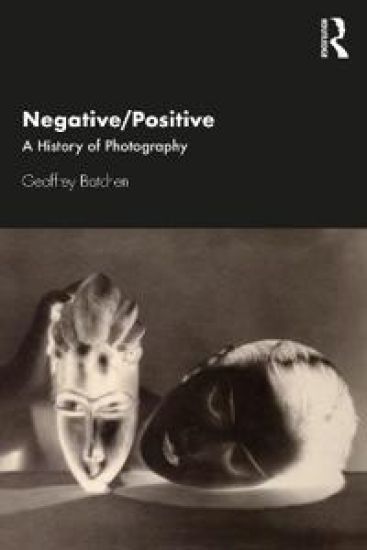
As its title suggests, Negative/Positive begins with the negative, a foundational element of analog photography that is nonetheless usually ignored, and uses this to tell a representative, rather than comprehensive, history of the medium. The fact that a photograph is split between negative and positive manifestations means that its identity is always simultaneously divided and multiplied. The interaction of these two components was often spread out over time and space and could involve more than one person, giving photography the capacity to produce multiple copies of a given image and for that image to have many different looks, sizes and makers. This book traces these complications for canonical images by such figures as William Henry Fox Talbot, Kusakabe Kimbei, Dorothea Lange, Man Ray, Seydou Keïta, Richard Avedon, and Andreas Gursky. But it also considers a number of related issues crucial to any understanding of photography, from the business practices of professional photographers to the repetition of pose and setting that is so central to certain familiar photographic genres. Ranging from the daguerreotype to the digital image, the end result is a kind of little history of photography, partial and episodic, but no less significant a rendition of the photographic experience for being so. This book represents a summation of Batchen’s work to date, making it be essential reading for students and scholars of photography and for all those interested in the history of the medium
Negative/Positive

Negative/Positive

Geoffrey Batchen

Routledge
2020
sidottu
As its title suggests, Negative/Positive begins with the negative, a foundational element of analog photography that is nonetheless usually ignored, and uses this to tell a representative, rather than comprehensive, history of the medium. The fact that a photograph is split between negative and positive manifestations means that its identity is always simultaneously divided and multiplied. The interaction of these two components was often spread out over time and space and could involve more than one person, giving photography the capacity to produce multiple copies of a given image and for that image to have many different looks, sizes and makers. This book traces these complications for canonical images by such figures as William Henry Fox Talbot, Kusakabe Kimbei, Dorothea Lange, Man Ray, Seydou Keïta, Richard Avedon, and Andreas Gursky. But it also considers a number of related issues crucial to any understanding of photography, from the business practices of professional photographers to the repetition of pose and setting that is so central to certain familiar photographic genres. Ranging from the daguerreotype to the digital image, the end result is a kind of little history of photography, partial and episodic, but no less significant a rendition of the photographic experience for being so. This book represents a summation of Batchen’s work to date, making it be essential reading for students and scholars of photography and for all those interested in the history of the medium
The Forms of Nameless Things

The Forms of Nameless Things

Geoffrey Batchen

BODLEIAN LIBRARY
2022
sidottu
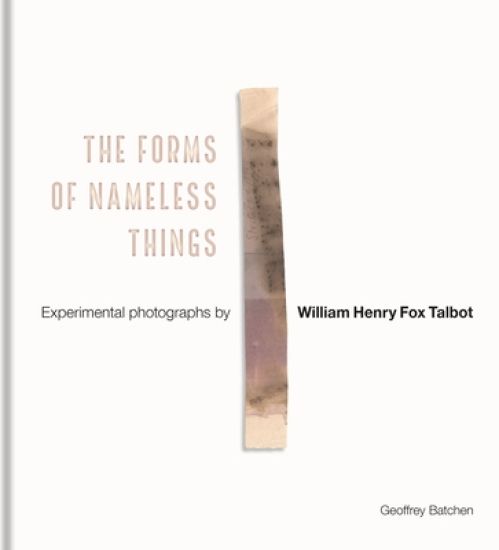
William Henry Fox Talbot, the English inventor of photography, created around 15,000 photographs in the nineteenth century, most of them attempts to produce compelling scientific documents or pictorial records of the world around him. However, among those that have survived are also prints in which an image has been obscured, obliterated or simply failed to register. Borrowing its intriguing title from a poem written by Talbot, this book features twenty-four of these prints, his most experimental photographs. Originally intended as test prints or creative exercises, all that remains on these shaped pieces of photographic paper are chemical stains or imprinted patterns or shapes. Offered to the reader as enigmatic physical artefacts, these failed or ruined photographs are here reanimated as objects of beauty, mystery and promise, as artworks that speak of photography’s most fundamental attributes and potentials. An accompanying essay illustrated with comparative images places these photographs in a broad historical context leading up to the present, revealing what relevance Talbot’s experiments have to contemporary concepts of the art of photography.
Inventing Photography

Inventing Photography

Geoffrey Batchen

BODLEIAN LIBRARY
2023
sidottu
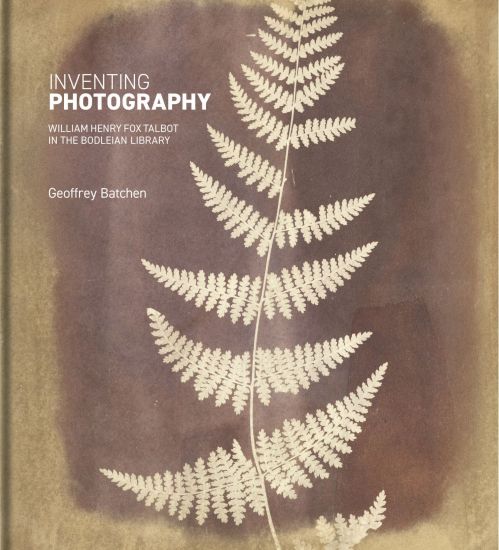
William Henry Fox Talbot is celebrated today as one of the English inventors of photography. He made early photographic experiments in the 1830s, released the details of his photogenic drawing process in January 1839, and introduced important innovations to the medium in the 1840s and 1850s. Drawing on archive material in the Bodleian Library, including three albums given by Talbot to his sister, Horatia Feilding, as well as his illustrated books, Sun Pictures in Scotland and The Pencil of Nature, this volume shows how Talbot was continually inventing photography anew. A selection of eighty full-page plates provides a thematic survey of Talbot’s work, reproducing images that document his travels, his home and his family, as well as his intellectual interests, from science to literature to ancient languages. An illustrated introduction places Talbot’s work within the context of a modernising Britain, as well as within his own social and intellectual milieu, and explores how the competing daguerreotype process spurred Talbot to improve his own techniques and seek new functions and uses for paper-based photographs. This evocative selection is testament to Talbot’s constant quest for new photographic advances, offering a compelling window into the archives of an extraordinarily determined and creative man.
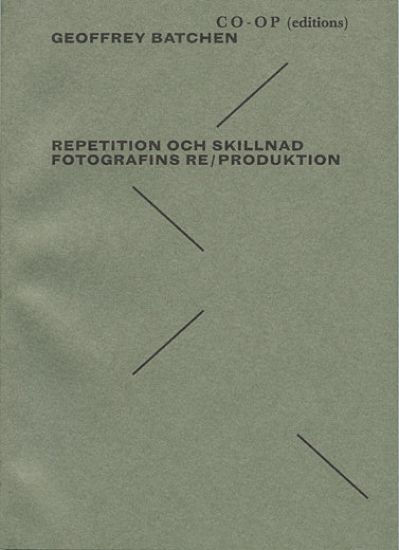
Repetition och skillnad. Fotografins re-produktion
I Repetition och skillnad tar sig fotografihistorikern Geoffrey Batchen an frågan om fotografins historieskrivning utifrån reproduktionens figur. Trots mediets inneboende potential för reproducerbarhet och spridning, har just denna aspekt inte blivit föremål för någon mer omfattande uppmärksamhet; den har bokstavligen befunnit sig på mediets skuggsida. I denna bok belyser och utforskar Batchen effekterna av fotografins reproducerbarhet inom en mängd olika fotografiska discipliner: från Richard Avedon och Cindy Sherman till cartes de visite och amatörsnapshots; från fotografins konception till våra samtida praktiker. Fotografins reproduktion blir hos Batchen en optik som öppnar för ett annat sätt att betrakta fotografin, och som insisterar på nya former för dess historieskrivning.