Kirjojen hintavertailu. Mukana 11 244 527 kirjaa ja 12 kauppaa.

Kirjahaku

Etsi kirjoja tekijän nimen, kirjan nimen tai ISBN:n perusteella.

18 kirjaa tekijältä Geoffrey Beattie

Trophy Hunting

Trophy Hunting

Geoffrey Beattie

Routledge
2019
nidottu
This book explores the psychology of trophy hunting from a critical perspective and considers the reasons why some people engage in the controversial activity of killing often endangered animals for sport. Recent highly charged debate, reaching a peak with the killing of Cecil the lion in 2015, has brought trophy hunting under unprecedented public scrutiny, and yet the psychology of trophy hunting crucially remains under-explored. Considering all related issues from the evolutionary perspective and ‘inclusive fitness’, to personality and individual factors like narcissism, empathy, and the Duchenne smiles of hunters posing with their prey, Professor Beattie makes connections between a variety of indicators of prestige and dominance, showing how trophy hunting is inherently linked to a desire for status. He argues that we need to identify, analyse and deconstruct the factors that hold the behaviour of trophy hunting in place if we are to understand why it continues, and indeed why it flourishes, in an age of collapsing ecosystems and dwindling species populations.The first book of its kind to examine current research critically to determine whether there really is an evolutionary argument for trophy hunting, and what range of motivations and personality traits may be linked to this activity. This is essential reading for students and academics in psychology, geography, business, environmental studies, animal welfare as well as policy makers and charities in these and related areas. It is of major relevance for anyone who cares about the future of our planet and the species that inhabit it.
Trophy Hunting

Trophy Hunting

Geoffrey Beattie

Routledge
2019
sidottu
This book explores the psychology of trophy hunting from a critical perspective and considers the reasons why some people engage in the controversial activity of killing often endangered animals for sport. Recent highly charged debate, reaching a peak with the killing of Cecil the lion in 2015, has brought trophy hunting under unprecedented public scrutiny, and yet the psychology of trophy hunting crucially remains under-explored. Considering all related issues from the evolutionary perspective and ‘inclusive fitness’, to personality and individual factors like narcissism, empathy, and the Duchenne smiles of hunters posing with their prey, Professor Beattie makes connections between a variety of indicators of prestige and dominance, showing how trophy hunting is inherently linked to a desire for status. He argues that we need to identify, analyse and deconstruct the factors that hold the behaviour of trophy hunting in place if we are to understand why it continues, and indeed why it flourishes, in an age of collapsing ecosystems and dwindling species populations.The first book of its kind to examine current research critically to determine whether there really is an evolutionary argument for trophy hunting, and what range of motivations and personality traits may be linked to this activity. This is essential reading for students and academics in psychology, geography, business, environmental studies, animal welfare as well as policy makers and charities in these and related areas. It is of major relevance for anyone who cares about the future of our planet and the species that inhabit it.
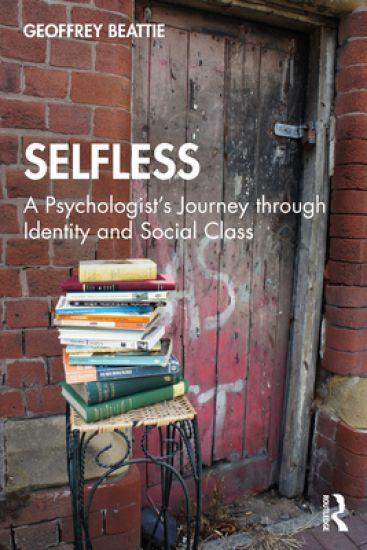
Selfless: A Psychologist's Journey through Identity and Social Class
Selfless is a memoir, reflecting on identity, social class, mobility, education, and on psychology itself; how psychology as a discipline is conducted, how it prioritises objects of study, how it uncovers psychological truths about the world.Geoffrey Beattie takes the reader on a journey through his early life in working-class Belfast, his Ph.D. at Trinity College Cambridge and subsequent academic and professional career, to explore fundamental issues within psychology about social class and social identity. Beattie discusses the difficulties inherent in this process of education and change, and how social background affects how you view academic work and the subject matter of one’s discipline. This book movingly details a life and how it is changed by the processes of education, the psychological pressures when abandoning those close to you, the dissonance within and how it feels and operates. The book takes a critical look at psychology from the other side, and examines the process of becoming ‘selfless’, meaning having little sense of self rather than being overly concerned with the wishes and needs of others.Showing how our early experiences and their influence continues throughout life, Beattie’s emotionally engaging, entertaining, and witty text offers general readers, students, and academics fresh insights into psychology, adaptation and personal change.
Selfless: A Psychologist's Journey through Identity and Social Class
Selfless is a memoir, reflecting on identity, social class, mobility, education, and on psychology itself; how psychology as a discipline is conducted, how it prioritises objects of study, how it uncovers psychological truths about the world.Geoffrey Beattie takes the reader on a journey through his early life in working-class Belfast, his Ph.D. at Trinity College Cambridge and subsequent academic and professional career, to explore fundamental issues within psychology about social class and social identity. Beattie discusses the difficulties inherent in this process of education and change, and how social background affects how you view academic work and the subject matter of one’s discipline. This book movingly details a life and how it is changed by the processes of education, the psychological pressures when abandoning those close to you, the dissonance within and how it feels and operates. The book takes a critical look at psychology from the other side, and examines the process of becoming ‘selfless’, meaning having little sense of self rather than being overly concerned with the wishes and needs of others.Showing how our early experiences and their influence continues throughout life, Beattie’s emotionally engaging, entertaining, and witty text offers general readers, students, and academics fresh insights into psychology, adaptation and personal change.
Visible Thought

Visible Thought

Geoffrey Beattie

Routledge
2003
nidottu
Are you saying one thing whilst your hands reveal another? Are you influenced by other people's body language without even knowing it? Darting through examples found anywhere from the controlled psychology laboratory to modern advertising and the Big Brother TV phenomenon, official Big Brother psychologist Geoffrey Beattie takes on the issue of what our everyday gestures mean and how they affect our relationships with other people. For a long time psychologists have misunderstood body language as an emotional nonverbal side effect. In this book Geoffrey Beattie ranges across the history of communication from Cicero to Chomsky to demonstrate that by adding to or even contradicting what we say, gestures literally make our true thoughts visible. A unique blend of popular examples and scientific research presented in language that everybody can understand, Visible Thought is an accessible and groundbreaking text that will appeal to those interested in social psychology and anyone who wants to delve beneath the surface of human interaction. Geoffrey Beattie is the official Big Brother psychologist and Professor at the Department of Psychology, University of Manchester. He is a recipient of the Spearman Medal awarded by the British Psychological Society for 'published psychological work of outstanding merit'.
Rethinking Body Language

Rethinking Body Language

Geoffrey Beattie

Routledge
2016
sidottu
Challenging all of our old assumptions about the subject, Rethinking Body Language builds on the most recent cutting-edge research to offer a new theoretical perspective on this subject that will transform the way we look at other people. In contrast to the traditional view that body language is primarily concerned with the expression of emotions and the negotiation of social relationships, author Geoff Beattie argues instead that gestures reflect aspects of our thinking but in a different way to verbal language. Critically, the spontaneous hand movements that people make when they talk often communicate a good deal more than they intend. This ground-breaking book takes body language analysis to a whole new level. Engagingly written by one of the leading experts in the field, it shows how we can detect deception in gesture–speech mismatches and how these unconscious movements can give us real insight into people's underlying implicit attitudes.
Rethinking Body Language

Rethinking Body Language

Geoffrey Beattie

Routledge
2016
nidottu
Challenging all of our old assumptions about the subject, Rethinking Body Language builds on the most recent cutting-edge research to offer a new theoretical perspective on this subject that will transform the way we look at other people. In contrast to the traditional view that body language is primarily concerned with the expression of emotions and the negotiation of social relationships, author Geoff Beattie argues instead that gestures reflect aspects of our thinking but in a different way to verbal language. Critically, the spontaneous hand movements that people make when they talk often communicate a good deal more than they intend. This ground-breaking book takes body language analysis to a whole new level. Engagingly written by one of the leading experts in the field, it shows how we can detect deception in gesture–speech mismatches and how these unconscious movements can give us real insight into people's underlying implicit attitudes.
Why Aren't We Saving the Planet?

Why Aren't We Saving the Planet?

Geoffrey Beattie

Routledge
2010
sidottu
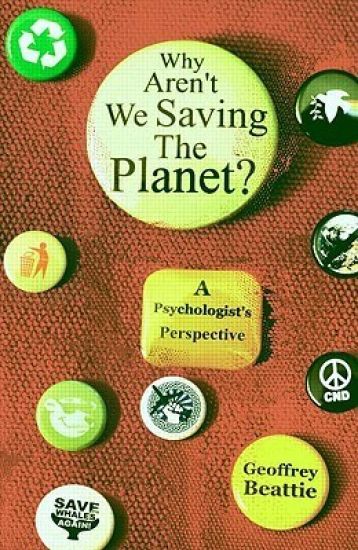
Global warming. Many of us believe that it is somebody else’s problem, that it will affect other people and that other people will come up with the solution. This is not true. "Global" warming is a global problem: it will affect every single one of us and will only be stopped by a huge shift in our individual attitudes and behaviour. Each time one of us switches on a light, reaches for something in a supermarket, gets into a car or bus, or even chooses what clothes to buy, we are making a choice that can affect the environment. We already know that we need to start making better choices for the sake of our natural world, now.So why aren’t we already saving the planet? This book follows one psychologist’s mission to find some answers to this question. Challenged by a student to use psychology to find the root of the problem, Geoffrey Beattie (an environmental "unbeliever") begins a personal and life-changing journey of discovery. The reader is invited to accompany him as he uses psychological methods to examine people’s attitudes to global warming. Along the way we find the author’s own attitudes being challenged, as well as our own.This ground-breaking book reflects new and innovative research being carried out into how to change attitudes to the environment and how to encourage sustainable behaviour. It is eminently readable and interesting and, as such, should be read by anyone who is concerned about the future of our planet. In fact, you should also read it if you’re not concerned about our planet.
Why Aren't We Saving the Planet?

Why Aren't We Saving the Planet?

Geoffrey Beattie

Routledge
2010
nidottu
Global warming. Many of us believe that it is somebody else’s problem, that it will affect other people and that other people will come up with the solution. This is not true. "Global" warming is a global problem: it will affect every single one of us and will only be stopped by a huge shift in our individual attitudes and behaviour. Each time one of us switches on a light, reaches for something in a supermarket, gets into a car or bus, or even chooses what clothes to buy, we are making a choice that can affect the environment. We already know that we need to start making better choices for the sake of our natural world, now.So why aren’t we already saving the planet? This book follows one psychologist’s mission to find some answers to this question. Challenged by a student to use psychology to find the root of the problem, Geoffrey Beattie (an environmental "unbeliever") begins a personal and life-changing journey of discovery. The reader is invited to accompany him as he uses psychological methods to examine people’s attitudes to global warming. Along the way we find the author’s own attitudes being challenged, as well as our own.This ground-breaking book reflects new and innovative research being carried out into how to change attitudes to the environment and how to encourage sustainable behaviour. It is eminently readable and interesting and, as such, should be read by anyone who is concerned about the future of our planet. In fact, you should also read it if you’re not concerned about our planet.
Our Racist Heart?

Our Racist Heart?

Geoffrey Beattie

Routledge
2012
sidottu
Few people today would admit to being a racist, or to making assumptions about individuals based on their skin colour, or on their gender or social class. In this book, leading psychologist Geoffrey Beattie asks if prejudice, more subtle than before, is still a major part of our everyday lives.Beattie suggests that implicit biases based around race are not just found in small sections of our society, but that they also exist in the psyches of even the most liberal, educated and fair-minded of us. More importantly, the book outlines how these ‘hidden’ attitudes and prejudices can be revealed and measured, and how they in turn predict behaviours in a number of important social situations.Our Racist Heart? takes a fresh look at our racial attitudes, using new technology and experimental approaches to show how unconscious biases influence our everyday actions and thinking. These groundbreaking results are brought to life using the author’s own experiences of class and religious prejudice in Northern Ireland, and are also discussed in relation to the history of race, racism and social psychological theory.
Our Racist Heart?

Our Racist Heart?

Geoffrey Beattie

Routledge
2012
nidottu
Few people today would admit to being a racist, or to making assumptions about individuals based on their skin colour, or on their gender or social class. In this book, leading psychologist Geoffrey Beattie asks if prejudice, more subtle than before, is still a major part of our everyday lives.Beattie suggests that implicit biases based around race are not just found in small sections of our society, but that they also exist in the psyches of even the most liberal, educated and fair-minded of us. More importantly, the book outlines how these ‘hidden’ attitudes and prejudices can be revealed and measured, and how they in turn predict behaviours in a number of important social situations.Our Racist Heart? takes a fresh look at our racial attitudes, using new technology and experimental approaches to show how unconscious biases influence our everyday actions and thinking. These groundbreaking results are brought to life using the author’s own experiences of class and religious prejudice in Northern Ireland, and are also discussed in relation to the history of race, racism and social psychological theory.
Doubt

Doubt

Geoffrey Beattie

TAYLOR FRANCIS LTD
2022
nidottu
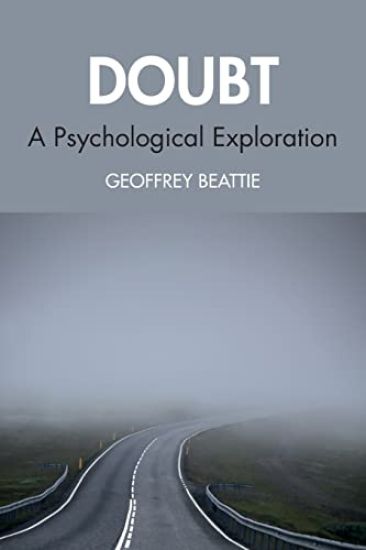
Blending the latest academic research with case studies of famous figures, this highly insightful book presents ‘doubt’ as a central concept for psychology. It is a concept which has been oddly neglected in the past, despite its ubiquitous nature and far-reaching influence. Exploring everything from self-doubt and impostor syndrome to the weaponisation of doubt with respect to climate change and the marketing of cigarettes, bestselling author Geoffrey Beattie navigates readers through the various ways doubt can start and develop, changing the individual in the process. Written in Beattie’s distinctive and engaging style, Doubt takes the reader into the lives of transformational thinkers, artists, scientists and writers to explore how and why doubt was crucial in their lives and how the likes of Kafka, Jung, Picasso and Turing succumbed to doubt or learned to control it. Beattie argues that doubt is central to the self; it can be either a safeguarding mechanism or a distraction, rational or irrational, systematic or random, healthy or pathological, productive or non-productive. The book helps readers to recognise how doubt may have been operating in their own lives and to identify how and when it has been used against us – for example, to prevent climate action – and at what personal and societal cost.Presenting a compelling case for why doubt cannot be ignored, this book is of major interest to academics from a wide range of disciplines, including social and cognitive psychology, clinical and counselling psychology, sport psychology, sociology, business studies, politics, art and literature, as well as the general public, who may well see something of themselves in its pages.
Doubt

Doubt

Geoffrey Beattie

TAYLOR FRANCIS LTD
2022
sidottu
Blending the latest academic research with case studies of famous figures, this highly insightful book presents ‘doubt’ as a central concept for psychology. It is a concept which has been oddly neglected in the past, despite its ubiquitous nature and far-reaching influence. Exploring everything from self-doubt and impostor syndrome to the weaponisation of doubt with respect to climate change and the marketing of cigarettes, bestselling author Geoffrey Beattie navigates readers through the various ways doubt can start and develop, changing the individual in the process. Written in Beattie’s distinctive and engaging style, Doubt takes the reader into the lives of transformational thinkers, artists, scientists and writers to explore how and why doubt was crucial in their lives and how the likes of Kafka, Jung, Picasso and Turing succumbed to doubt or learned to control it. Beattie argues that doubt is central to the self; it can be either a safeguarding mechanism or a distraction, rational or irrational, systematic or random, healthy or pathological, productive or non-productive. The book helps readers to recognise how doubt may have been operating in their own lives and to identify how and when it has been used against us – for example, to prevent climate action – and at what personal and societal cost.Presenting a compelling case for why doubt cannot be ignored, this book is of major interest to academics from a wide range of disciplines, including social and cognitive psychology, clinical and counselling psychology, sport psychology, sociology, business studies, politics, art and literature, as well as the general public, who may well see something of themselves in its pages.
Lies, Lying and Liars

Lies, Lying and Liars

Geoffrey Beattie

TAYLOR FRANCIS LTD
2024
nidottu
Lies, Lying and Liars: A Psychological Analysis delves into the psychology of lies, exploring the processes of lying and its far-reaching consequences.The author’s unique approach considers the ways in which lying sculpts our realities when used by public figures such as politicians, as well as how lying is woven into our everyday life. This book dissects lies in natural social contexts, from the innocent childhood fibs to the more nefarious fabrications of con artists, cheats, and adulterers. Drawing from a rich tapestry of psychology and sociobiology, as well as research and literature from philosophy and the social sciences, this book discusses the role of lying and liars in day-to-day life. It offers profound insights into the strategies of deceit, the presence or absence of remorse, emotion and rationalisations, pathological liars, the development of lying, its connection to narcissism, the functional utility of lies, and lie detection. Lies, the book argues, are a part of the social structures inherent in everyday social life, and there is a need to explore their psychological significance in a range of natural, everyday contexts.Written in Beattie’s unique and engaging style by using elements of personal narrative and self-reflection, this is a fascinating read for students and scholars of psychology, sociology, and politics, and other disciplines of the behavioural and social sciences, as well as anyone interested in the phenomenon of lying.
Lies, Lying and Liars

Lies, Lying and Liars

Geoffrey Beattie

TAYLOR FRANCIS LTD
2024
sidottu
Lies, Lying and Liars: A Psychological Analysis delves into the psychology of lies, exploring the processes of lying and its far-reaching consequences.The author’s unique approach considers the ways in which lying sculpts our realities when used by public figures such as politicians, as well as how lying is woven into our everyday life. This book dissects lies in natural social contexts, from the innocent childhood fibs to the more nefarious fabrications of con artists, cheats, and adulterers. Drawing from a rich tapestry of psychology and sociobiology, as well as research and literature from philosophy and the social sciences, this book discusses the role of lying and liars in day-to-day life. It offers profound insights into the strategies of deceit, the presence or absence of remorse, emotion and rationalisations, pathological liars, the development of lying, its connection to narcissism, the functional utility of lies, and lie detection. Lies, the book argues, are a part of the social structures inherent in everyday social life, and there is a need to explore their psychological significance in a range of natural, everyday contexts.Written in Beattie’s unique and engaging style by using elements of personal narrative and self-reflection, this is a fascinating read for students and scholars of psychology, sociology, and politics, and other disciplines of the behavioural and social sciences, as well as anyone interested in the phenomenon of lying.
The Conflicted Mind

The Conflicted Mind

Geoffrey Beattie

Routledge
2017
sidottu
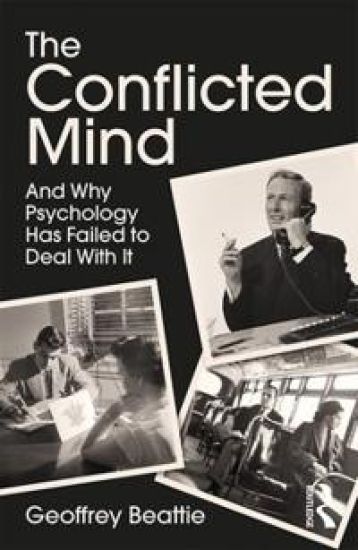
One of the greatest paradoxes of human behavior is our tendency to say one thing and do something completely different. We think of ourselves as positive and fair-minded, caring about other people and our environment, yet our behavior lets us down time and time again. Part of the reason for this is that we may have two separate 'selves': two separate and dissociated mental systems - one conscious, reflective and rational, and one whose motives and instincts are rooted in the unconscious and whose operation resists reflection, no matter how hard we try. In all kinds of areas of our life – love, politics, race, smoking, survival - one system seems to make very different sorts of judgements to the other, and is subject to distinct, hidden biases. The Conflicted Mind explores how and why this system operates as it does and how we may use that knowledge to promote positive behaviour change. However, the ‘conflicted mind’ is a broader concept than just the clash between potential (hypothetical) systems of thinking, because in one form or another it forms the very pillars on which the edifice of social psychology is built. This unique book therefore examines key social psychology theories and research in a new light, including Festinger’s concept of cognitive dissonance, Milgram’s obedience experiments, Bateson’s description of conflict in communications, and Bartlett’s explorations of the constructive nature of human memory. Geoffrey Beattie argues that although these classic studies were sometimes great and imaginative beginnings, they were also full of flaws, which social psychology must remedy if it is to make the kind of impact it aspires to. In doing so, he offers a ground breaking perspective on why we think and act in the way we do, to see what lessons can be learned for the discipline of social psychology going forward. Written in the author’s distinct open and engaging style, The Conflicted Mind is a fascinating resource for researchers, specialists, and students in the field, as well as the general reader.
The Conflicted Mind

The Conflicted Mind

Geoffrey Beattie

Routledge
2017
nidottu
One of the greatest paradoxes of human behavior is our tendency to say one thing and do something completely different. We think of ourselves as positive and fair-minded, caring about other people and our environment, yet our behavior lets us down time and time again. Part of the reason for this is that we may have two separate 'selves': two separate and dissociated mental systems - one conscious, reflective and rational, and one whose motives and instincts are rooted in the unconscious and whose operation resists reflection, no matter how hard we try. In all kinds of areas of our life – love, politics, race, smoking, survival - one system seems to make very different sorts of judgements to the other, and is subject to distinct, hidden biases. The Conflicted Mind explores how and why this system operates as it does and how we may use that knowledge to promote positive behaviour change. However, the ‘conflicted mind’ is a broader concept than just the clash between potential (hypothetical) systems of thinking, because in one form or another it forms the very pillars on which the edifice of social psychology is built. This unique book therefore examines key social psychology theories and research in a new light, including Festinger’s concept of cognitive dissonance, Milgram’s obedience experiments, Bateson’s description of conflict in communications, and Bartlett’s explorations of the constructive nature of human memory. Geoffrey Beattie argues that although these classic studies were sometimes great and imaginative beginnings, they were also full of flaws, which social psychology must remedy if it is to make the kind of impact it aspires to. In doing so, he offers a ground breaking perspective on why we think and act in the way we do, to see what lessons can be learned for the discipline of social psychology going forward. Written in the author’s distinct open and engaging style, The Conflicted Mind is a fascinating resource for researchers, specialists, and students in the field, as well as the general reader.