Kirjojen hintavertailu. Mukana 11 717 486 kirjaa ja 12 kauppaa.

Kirjahaku

Etsi kirjoja tekijän nimen, kirjan nimen tai ISBN:n perusteella.

2 kirjaa tekijältä Geoffrey Durrant

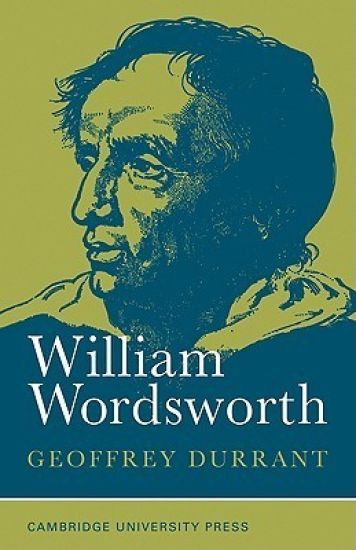
William Wordsworth

William Wordsworth

Geoffrey Durrant

Cambridge University Press
1969
pokkari
Most people agree, perhaps without enthusiasm, that Wordsworth is 'great'; it is not easy to say why. Professor Durrant sets out to show this clearly, freshly and forcibly, with detailed reference to particular poems. He accepts that the great creative period of Wordsworth's life was from 1798 to 1805; that in those few years he produced the poems in which his genius was realised; that these poems express a particular vision, which later faded. The vision was of the life of man in the universe of Newtonian science, subject to its universal laws, finding poignancy, even tragedy, in this acquiescence, but winning strength from the acceptance. After a general introduction, individual chapters examine representative poems in close detail: particularly such lyrics as 'I wandered lonely as a cloud', 'Tintern Abbey' the 'Immortality' ode, 'The Prelude' and the sonnets. Professor Durrant builds up from the details of these poems a cumulative sense of Wordsworth's preoccupations, how his mind worked, his characteristic imagery, how original and successful he was and how relevant his poetry still is.
Wordsworth and the Great System

Wordsworth and the Great System

Geoffrey Durrant

Cambridge University Press
2010
pokkari
Professor Durrant has two aims in his book, First, he shows that Wordsworth was less hostile to the world-view of the scientist than has been supposed: on the contrary, his poetic vision is from one point of view a translation into terms of feeling and perception of a systematic view of the universe. Second, examination of individual poems reveals a poetic language in which that system is translated into images: star, rock, flower, tree, mountain, cloud, lake, sea. The poems are not sentimental anecdotes, they are 'acts of mind', which turn this world-view into feelings, expressed in a language not far from that of every day. This is inherently a tragic insight; for it sees the individual's consciousness as delight in the natural order, which inevitably brings the death which ends the consciousness. In his great period, from 1798 to 1805, Wordsworth held that vision steadily and whole.