
Kirjahaku
Etsi kirjoja tekijän nimen, kirjan nimen tai ISBN:n perusteella.
10 kirjaa tekijältä Geoffrey Hartman
One of our most incisive critics asks where the assault against the canons of Western culture has led us. Engaging a wide range of literature and criticism, Hartman considers the term "culture" and its many uses, and calls for the restoration of literature to its place as the focus of thinking about culture and for the renewal of aesthetic education to help ensure the balance between art, culture, and politics. Lost among the shouts and skirmishes of the "culture wars" is the very idea of culture itself. In this illuminating book, one of our most distinguished critics and scholars asks what the assault against the canons of Western culture has left in its place. If art and literature are largely the products of ideology and interest, how do they matter? And what does the idea of culture mean in today's sprawling, fragmented, critical world where everything -poetry or pornography- gets "read" in the same way? Engaging an extraordinary range of literature, philosophy, social criticism, and popular culture, Geoffrey Hartman probes the meanings and uses of culture in contemporary society. The triumph of cultural studies -and its critiques of bourgeois Eurocentric tradition- is largely complete, Hartman writes. Against the political appropriation of culture, he posits, instead, a definition of culture as public conversation, intellectual and social debate among diverse communities. And against reactionary pressures to impose -or reinstate- a singular culture, or to seek in art or literature an affirmation of group identity, Hartman sketches new roles for human imagination in a postmodern world. For Hartman, the fusion of culture and politics, of whatever ideology, is disastrous. At a time of abstraction, fragmentation, and alienation, art and literature offer wholeness and meaning. But the promise is frought with danger, Hartman argues, in a provocative discussion of the uses of culture as exemplified in the Romantic legacy. He pays special attention to literature's role in reconnecting us to the world. The choice is ours: Wordsworth or Heidegger, literature as shared experience or as reactionary ideology. Hartman ranges widely in these elegant pages. He confronts the shock to the universalistic sense of culture from the Holocaust, as well as the problematic responses of such critic as Adorno and Derrida; explores the poetry of Wordsworth both as a diagnostic and a counter-model to the desensitization of modern life; and addresses the impact of politics of inclusion and diversity on the claims of high culture. Perhaps Hartman's most publicly engaged book, The Fateful Question of Culture embraces both the masterworks of European literature and art and the signs and symbols of popular media and daily life. It is a powerful reaffirmation of the liberating discourses that have always been at the very center of the Western tradition.
The drama of consciousness and maturation in the growth of a poet's mind is traced from Wordsworth's earliest poems to The Excursion of 1814. Mr. Hartman follows Wordsworth's growth into self-consciousness, his realization of the autonomy of the spirit, and his turning back to nature. The apocalyptic bias is brought out, perhaps for the first time since Bradley's Oxford Lectures, and without slighting in any way his greatness as a nature poet. Rather, a dialectical relation is established between his visionary temper and the slow and vacillating growth of the humanized or sympathetic imagination. Mr. Hartman presents a phenomenology of the mind with important bearings on the Romantic movement as a whole and as confirmation of Wordsworth's crucial position in the history of English poetry. Mr. Hartman is professor of English and comparative literature at the University of Iowa. "A most distinguished book, subtle, penetrating, profound."—Rene Wellek. "If it is the purpose of criticism to illuminate, to evaluate, and to send the reader back to the text for a fresh reading, Hartman has succeeded in establishing the grounds for such a renewal of appreciation of Wordsworth."—Donald Weeks, Journal of Aesthetics and Art Criticism.
Why should we be excluded from the history and literature of Judaism because the world of our fathers and mothers became a secularized one, Geoffrey Hartman asks, or because religious literacy, whatever our faith or community affiliation, has gone into relative decline? And why, he asks, do those who have no trouble finding pleasure and intellectual profit in the Greek and Roman classics or in the literary and artistic productions of two millennia of Western Christianity not easily find equal resonance and reward in the major texts in the Jewish tradition? For if Christianity and the classical inheritance stand as two pillars of Western civilization, surely the third pillar is the Jewish tradition. In The Third Pillar Hartman, one of the most influential scholars and teachers of English and comparative literature of recent decades, has brought together some of the most important and eloquent essays he has written since the 1980s on the major texts of the Jewish tradition. In three groupings, on Bible, Midrash, and education, Hartman clarifies the relevance of contemporary literary criticism to canonical texts in the tradition, while demonstrating what has been-and what still remains to be-learned from the Midrash to enrich the interpretation of commentary and art, sacred or secular. "The map of the discipline [of Jewish studies] is still being drawn," Hartman writes. "Barely known areas tempt the explorer, and major reinterpretations remain possible. This third pillar of our civilization . . . is only now being fully excavated: we have discovered something but not everything about its structure and upholding function."
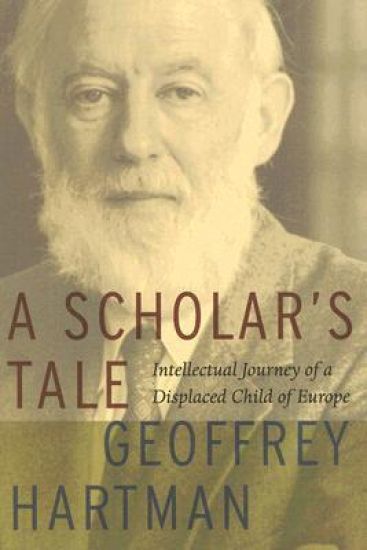
For more than fifty years, Geoffrey Hartman has been a pivotal figure in the humanities. In his first book, in 1954, he helped establish the study of Romanticism as key to the problems of modernity. Later, his writings were crucial to the explosive developments in literary theory in the late seventies, and he was a pioneer in Jewish studies, trauma studies, and studies of the Holocaust. At Yale, he was a founder of its Judaic Studies program, as well as of the first major video archive for Holocaust testimonies. Generations of students have benefited from Hartman's generosity, his penetrating and incisive questioning, the wizardry of his close reading, and his sense that the work of a literary scholar, no less than that of an artist, is a creative act. All these qualities shine forth in this intellectual memoir, which will stand as his autobiography. Hartman describes his early education, uncanny sense of vocation, and development as a literary scholar and cultural critic. He looks back at how his career was influenced by his experience, at the age of nine, of being a refugee from Nazi Germany in the Kindertransport. He spent the next six years at school in England, where he developed his love of English literature and the English countryside, before leaving to join his mother in America. Hartman treats us to a "biobibliography" of his engagements with the major trends in literary criticism. He covers the exciting period at Yale handled so controversially by the media and gives us vivid portraits, in particular, of Harold Bloom, Paul de Man, and Jacques Derrida. All this is set in the context of his gradual self-awareness of what scholarship implies and how his personal displacements strengthened his calling to mediate between European and American literary cultures. Anyone looking for a rich, intelligible account of the last half-century of combative literary studies will want to read Geoffrey Hartman's unapologetic scholar's tale.
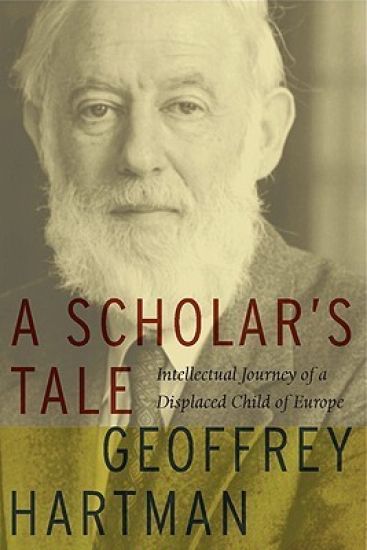
For more than fifty years, Geoffrey Hartman has been a pivotal figure in the humanities. In his first book, in 1954, he helped establish the study of Romanticism as key to the problems of modernity. Later, his writings were crucial to the explosive developments in literary theory in the late seventies, and he was a pioneer in Jewish studies, trauma studies, and studies of the Holocaust. At Yale, he was a founder of its Judaic Studies program, as well as of the first major video archive for Holocaust testimonies. Generations of students have benefited from Hartman's generosity, his penetrating and incisive questioning, the wizardry of his close reading, and his sense that the work of a literary scholar, no less than that of an artist, is a creative act. All these qualities shine forth in this intellectual memoir, which will stand as his autobiography. Hartman describes his early education, uncanny sense of vocation, and development as a literary scholar and cultural critic. He looks back at how his career was influenced by his experience, at the age of nine, of being a refugee from Nazi Germany in the Kindertransport. He spent the next six years at school in England, where he developed his love of English literature and the English countryside, before leaving to join his mother in America. Hartman treats us to a "biobibliography" of his engagements with the major trends in literary criticism. He covers the exciting period at Yale handled so controversially by the media and gives us vivid portraits, in particular, of Harold Bloom, Paul de Man, and Jacques Derrida. All this is set in the context of his gradual self-awareness of what scholarship implies and how his personal displacements strengthened his calling to mediate between European and American literary cultures. Anyone looking for a rich, intelligible account of the last half-century of combative literary studies will want to read Geoffrey Hartman's unapologetic scholar's tale.
Geoffrey Hartman is best known as one of the most eminent literary scholars and theorists of the past half century, going back to his first book, The Unmediated Vision (1954). His book on Wordsworth, published ten years later, remains a standard work, perhaps the single most searching study of Wordsworth’s poetry to appear in the twentieth century. That Hartman has also written and published poetry is not so widely known, previously publishing two small volumes, Akiba’s Children (1978) and The Bible in Italy (2004). These works represents a hidden, more personal side of this major literary figure. They show him engaging with Judaism and the Bible in ways that surfaced only much later in his critical prose. Through his poetry Hartman has been able to express more fully and imaginatively his thoughts about life, religion, and poetry itself. The Eighth Day combines never-before-seen poems with most of those of his previous two volumes. Altogether, these poems reveal a facet of Hartman’s work that students and scholars of poetry will find most illuminating.
Scars of the Spirit: The Struggle Against Inauthenticity
Geoffrey Hartman
St. Martin's Griffin
2004
nidottu
In this fascinating collection of essays, noted cultural critic Geoffrey Hartman raises the essential question of where we can find the real or authentic in today's world, and how this affects the way we can understand our human predicament. Hartman explores such issues as the fantasy of total and perfect information available on the Internet, the biographical excesses of tell-all daytime talk shows, and how we can understand what is "true" in biographical and testimonial writing. And, what, he asks, is the ethical point of all this personal testimony? What has it really taught us? Underlying the entire book is a question of how the Holocaust has shaped the possibilities for truth and for the writing of an authentic life story in today's world, and how we can approach the world in a meaningful way. Hartman produces a meditation on how an appreciation of the aesthetic qualities of art and writing may help us to answer these questions of meaning.
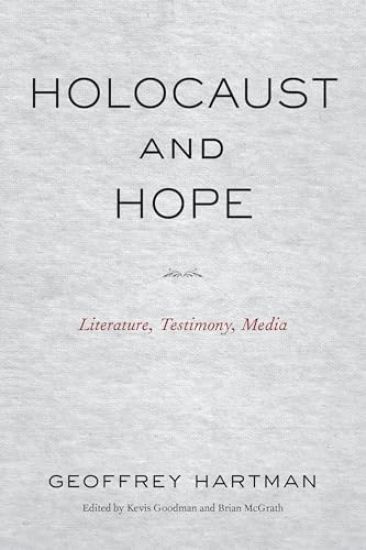
Holocaust and Hope shows one of our preeminent critics grappling with a subject to which he had returned for decades: literary, cultural, political, and historiographical implications of the Holocaust and its aftermath in Europe and America. In his last planned book, Geoffrey Hartman confronts contradictions that pose a challenge for our present and future. The passing of Holocaust survivors and their immediate families makes continued acts of witnessing more necessary even as distance in time makes the identities and acts of future witnessing more complicated. In addition, the particular kinds of amplification that we may be accustomed to or expect from our contemporary media environment can call forth not an intensity of response but rather an inertia, an "unreality effect," that can come unexpectedly from the heightening of the real, or the hyperreality of too much, too fast, too strong. Holocaust and Hope takes seriously the difference between our coming after Auschwitz and our being past it. With characteristic intensity and humanity, Hartman's essays explore the full complexity of how to transmit knowledge of the Holocaust to the future in ways that avoid simplification, the illusion of synthesis, or the aspiration to final closure, on the one hand, or compulsive repetition on the other. A significant part of the answer, for Hartman, requires special attention to the role of literary and audiovisual forms in promoting an active witnessing to extreme suffering that is relevant both for our time and the encroaching future.
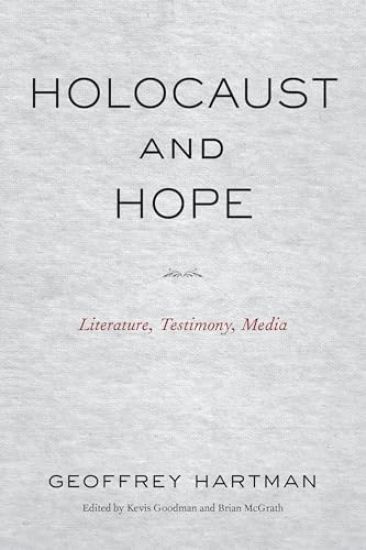
Holocaust and Hope shows one of our preeminent critics grappling with a subject to which he had returned for decades: literary, cultural, political, and historiographical implications of the Holocaust and its aftermath in Europe and America. In his last planned book, Geoffrey Hartman confronts contradictions that pose a challenge for our present and future. The passing of Holocaust survivors and their immediate families makes continued acts of witnessing more necessary even as distance in time makes the identities and acts of future witnessing more complicated. In addition, the particular kinds of amplification that we may be accustomed to or expect from our contemporary media environment can call forth not an intensity of response but rather an inertia, an "unreality effect," that can come unexpectedly from the heightening of the real, or the hyperreality of too much, too fast, too strong. Holocaust and Hope takes seriously the difference between our coming after Auschwitz and our being past it. With characteristic intensity and humanity, Hartman's essays explore the full complexity of how to transmit knowledge of the Holocaust to the future in ways that avoid simplification, the illusion of synthesis, or the aspiration to final closure, on the one hand, or compulsive repetition on the other. A significant part of the answer, for Hartman, requires special attention to the role of literary and audiovisual forms in promoting an active witnessing to extreme suffering that is relevant both for our time and the encroaching future.