Kirjojen hintavertailu. Mukana 11 342 296 kirjaa ja 12 kauppaa.

Kirjahaku

Etsi kirjoja tekijän nimen, kirjan nimen tai ISBN:n perusteella.

11 kirjaa tekijältä Geoffrey Hill

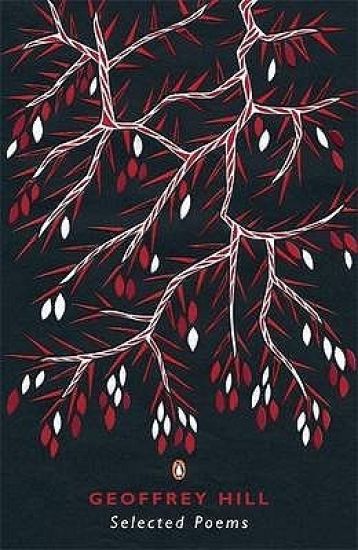
Selected Poems

Selected Poems

Geoffrey Hill

Penguin Books Ltd
2006
pokkari
This first selection of Geoffrey Hill's poetry charts the evolution of a complex, uncompromising, visionary body of work over fifty years. It includes poems from Hill's astonishing debut, For the Unfallen, through the verset-sequence Mercian Hymns, to acclaimed recent work, including The Orchards of Syon and Without Title.
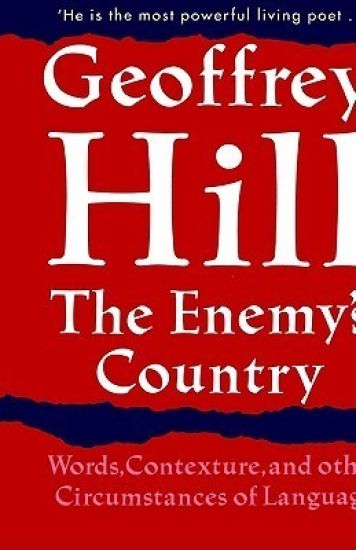
The Enemy's Country

The Enemy's Country

Geoffrey Hill

Clarendon Press
1991
sidottu
Geoffrey Hill is University Professor at Boston University. He holds an honorary D. Litt. from the University of Leeds and is an Honorary Fellow of both Keble College, Oxford and Emmanuel College, Cambridge. Amongst many other recognitions of his work as a poet, he has received the Hawthornden Prize and the Whitbread Award. He gave the Clark Lectures, on which this book is based, in 1986. `Well done!' is a familiar cry with a complex sense. It may applaud the merest knack, patronize a decent competence, or squarely recognize something at once finely-achieved and morally just. The language of true valuing is constantly shadowed by parodies of itself - sales-talk, sociable politeness, or gush. The Enemy's Country is concerned with the ways in which judgement is conveyed through language, and with the difficulty of clearing the terms of judgement not from but for the pressures of circumstance so that what is said may be fitting. Poetry has sometimes been credited with a special place as a form of conduct in language, as if it were a world of words of its own from which the poet masterfully dispenses a distinctly free speech. These essays enquire whether such high praises, even when sincere, are apt to the real conditions of poets' work, to their share of drudgery, their fears of misapprehension or their need to please, to the entanglements of meaning in historical communities. The 'sheer perfection' of lyric utterance is shown to involve a recognition and acceptance of the poet's place in `the scheme of things', a scheme of business and accommodation which is not ideally clean but which remains a ground of the art's refinement. Dryden is at the centre of the book. Around his exemplary figure, Geoffrey Hill describes with biting erudition and minutely sympathetic imagination the perplexities and felicity of genius in writers such as Donne, Hobbes, and Marvell. The book closes with a study of Pound's `Envoi:1919' in which Hill, characteristically, brings together humour, scrupulousness, and enquiring commitment to the hopes of poetry. The Enemy's Country enacts `virtue's struggle to clear and maintain its own meaning amid the commonplace approximation, the common practice of men'.
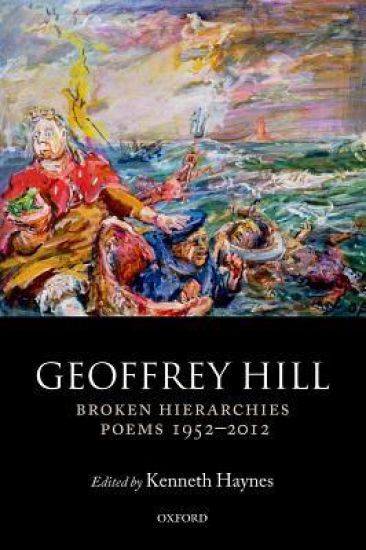
Broken Hierarchies

Broken Hierarchies

Geoffrey Hill

Oxford University Press
2015
nidottu
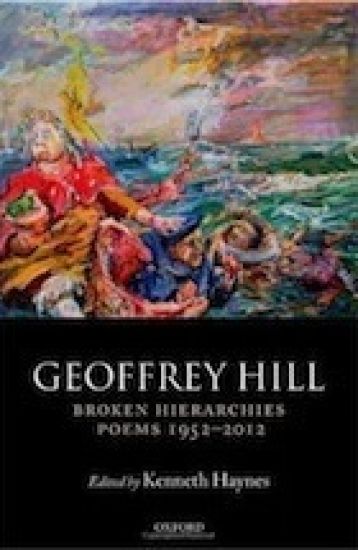
Broken Hierarchies collects twenty books of poems by Geoffrey Hill, written over sixty years, and presents them in their definitive form. Four of these books (Ludo, Expostulations on the Volcano, Liber Illustrium Virorum, and Al Tempo de' Tremuoti) have never before appeared in print, and three of them (Hymns to Our Lady of Chartres, Pindarics, and Clavics) have been greatly revised and expanded.
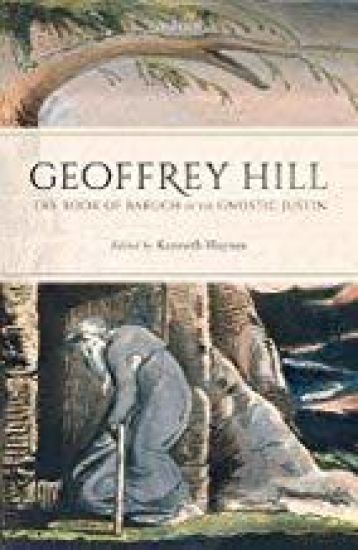
The Book of Baruch by the Gnostic Justin

The Book of Baruch by the Gnostic Justin

Geoffrey Hill

Oxford University Press
2019
sidottu
At his death in 2016, Geoffrey Hill left behind The Book of Baruch by the Gnostic Justin, his last work, a sequence of more than 270 poems, to be published posthumously as his final statement. Written in long lines of variable length, with much off-rhyme and internal rhyme, the verse-form of the book stands at the opposite end from the ones developed in the late Daybooks of Broken Hierarchies (2013), where he explored highly taut constructions such as Sapphic meter, figure-poems, fixed rhyming strophes, and others. The looser metrical plan of the new book admits an enormous range of tones of voices. Thematically, the work is a summa of a lifetime's meditation on the nature of poetry. A riot of similes about the poetic art makes a passionate claim for the enduring strangeness of poetry in the midst of its evident helplessness. The relation between art and spirituality is another connecting thread. In antiquity, Justin's gnostic Book of Baruch was identified as the 'worst of heresies,' and the use of it in Hill's poem, as well as the references to alchemy, heterodox theological speculation, and the formal logics of mathematics, music, and philosophy are made coolly, as art and as emblems for our inadequate and perplexed grasp of time, fate, and eternity. A final set of themes is autobiographical, including Hill's childhood, the bombing of London, his late trip to Germany, his alarm and anger at Brexit, and his sense of decline and of death close at hand. It is a great work, and in Hill's oeuvre it is a uniquely welcoming work, open to all comers.
Collected Critical Writings

Collected Critical Writings

Geoffrey Hill

Oxford University Press
2009
nidottu
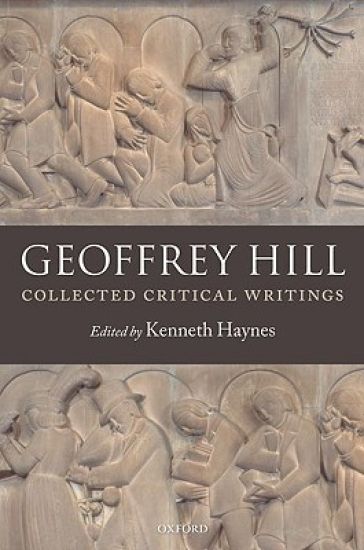
The Collected Critical Writings of Geoffrey Hill gathers more than forty years of Hill's published criticism, in a revised final form, and also adds much new work. It will serve as the canonical volume of criticism by Hill, the pre-eminent poet-critic whom A. N. Wilson has called 'probably the best writer alive, in verse or in prose'. In his criticism Hill ranges widely, investigating both poets (including Jonson, Dryden, Hopkins, Whitman, Eliot, and Yeats ) and prose writers (such as Tyndale, Clarendon, Hobbes, Burton, Emerson, and F. H. Bradley). He is also steeped in the historical context - political, poetic, and religious - of the writers he studies. Most importantly, he brings texts and contexts into new and telling relations, neither reducing texts to the circumstances of their utterance nor imagining that they can float free of them. A number of the essays have already established themselves as essential reading on particular subjects, such as his analysis of Vaughan's 'The Night', his discussion of Gurney's poetry, and his critical account of The Oxford English Dictionary. Others confront the problems of language and the nature of value directly, as in 'Our Word is Our Bond', 'Language, Suffering, and Value', and 'Poetry and Value'. In all his criticism, Hill reveals literature to be an essential arena of civic intelligence.
Broken Hierarchies

Broken Hierarchies

Geoffrey Hill

Oxford University Press
2013
sidottu
Broken Hierarchies collects twenty books of poems by Geoffrey Hill, written over sixty years, and presents them in their definitive form. Four of these books (Ludo, Expostulations on the Volcano, Liber Illustrium Virorum, and Al Tempo de' Tremuoti) have never before appeared in print, and three of them (Hymns to Our Lady of Chartres, Pindarics, and Clavics) have been greatly revised and expanded.
Canaan

Canaan

Geoffrey Hill

HOUGHTON MIFFLIN
2001
nidottu
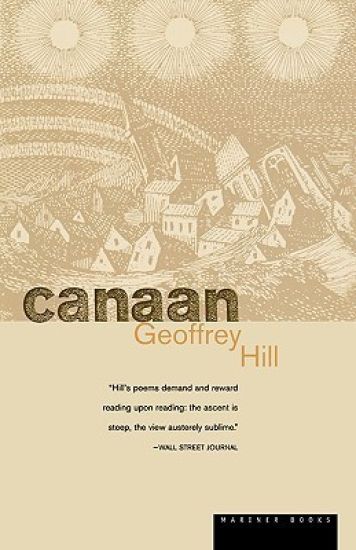
Here is public poetry of uncommon moral urgency: it bears witness to the sufferings of the innocent at the hands of history and to the martyrdom of those who have dared look history in the eye. "Rich, quarrelsome...handsome and brutish...Hill's poetry is the major achievement of late-twentieth-century verse," says The New Criterion. "Canaan is one of the few serious books we will have to mark the millennium."
The Triumph of Love

The Triumph of Love

Geoffrey Hill

Houghton Mifflin (Trade)
2003
nidottu
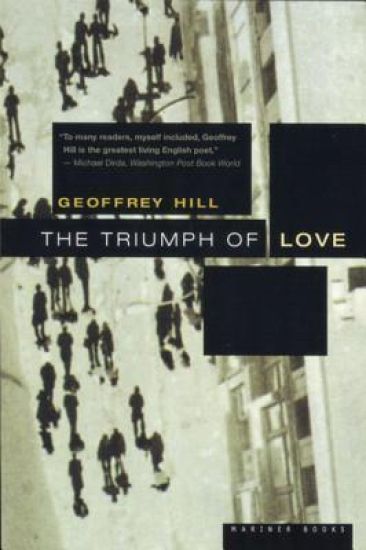
Geoffrey Hill is a moralist, and his subject is pain -- the suffering of man at the hands of man. He judges us all -- for the enormities of this sordid century and our cowardly responses to them, for our lack of self-understanding, for our inability to acknowledge what is properly owed the dead. He judges us for our failings, but he judges himself more fiercely. He prays for divine forgiveness, and for the grace that we need to begin to forgive ourselves.
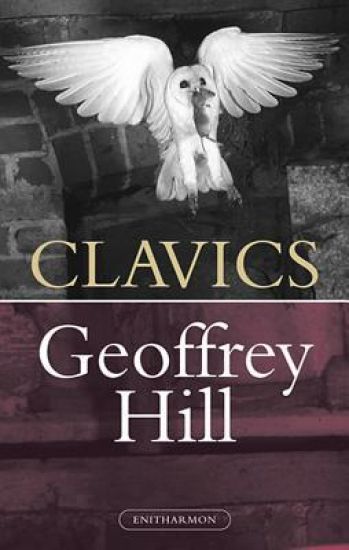
Clavics

Clavics

Geoffrey Hill

Enitharmon Press
2013
nidottu
'Over 32 poems Geoffrey Hill traces an elegiac sequence for William Lawes and his music, intermingling the historical events around his death with flashes of the everyday. The result is a collection that delights in eccentric incongruities. Ben Jonson will appear a line after a popular instant coffee blend has been mentioned, Dante will be found next to a mime artist, Marcel Marceau, and Lawes himself figures auditioning for Ronnie Scott. Mr Hill actively seeks out such juxtapositions. He will audaciously rhyme "haruspex", an Etruscan soothsayer who saw prophecies in the entrails of victims, with "bad sex", his poetry delighting in "a dissonance to make them wince". Yet, as Mr Hill writes, when speaking of Lawes's tendency to jar different musical themes, "the grace of music is its dissonance." This discordance is part of his wider belief in the public nature of poetry. Refusing to be a "light entertainer" like the hypocrites in Dante's inferno, Mr Hill presents a difficult world as he sees it. His gift lies in making such difficulty momentarily understood.' THE ECONOMIST