Kirjojen hintavertailu. Mukana 11 627 220 kirjaa ja 12 kauppaa.

Kirjahaku

Etsi kirjoja tekijän nimen, kirjan nimen tai ISBN:n perusteella.

10 kirjaa tekijältä Geoffrey Hosking

History of the Soviet Union

History of the Soviet Union

Geoffrey Hosking

HARPERCOLLINS PUBLISHERS
1992
nidottu
The author traces the evolution of the Soviet political system from its origins in 1917 to the present day. He shows how power has rarely been devolved outside a particularly tightly-knit ruling elite. Special emphasis is placed on the experience of the peasantry, urban workers and professionals.
Trust

Trust

Geoffrey Hosking

Oxford University Press
2014
sidottu
Today there is much talk of a 'crisis of trust'; a crisis which is almost certainly genuine, but usually misunderstood. Trust: A History offers a new perspective on the ways in which trust and distrust have functioned in past societies, providing an empirical and historical basis against which the present crisis can be examined, and suggesting ways in which the concept of trust can be used as a tool to understand our own and other societies. Geoffrey Hosking argues that social trust is mediated through symbolic systems, such as religion and money, and the institutions associated with them, such as churches and banks. Historically these institutions have nourished trust, but the resulting trust networks have tended to create quite tough boundaries around themselves, across which distrust is projected against outsiders. Hosking also shows how nation-states have been particularly good at absorbing symbolic systems and generating trust among large numbers of people, while also erecting distinct boundaries around themselves, despite an increasingly global economy. He asserts that in the modern world it has become common to entrust major resources to institutions we know little about, and suggests that we need to learn from historical experience and temper this with more traditional forms of trust, or become an ever more distrustful society, with potentially very destabilising consequences.
Russian History

Russian History

Geoffrey Hosking

Oxford University Press
2012
nidottu
Spanning the divide between Europe and Asia, Russia is a multi-ethnic empire with a huge territory, strategically placed and abundantly provided with natural resources. But Russia's territory has a harsh climate, is cut off from most maritime contact with the outside world, and has open and vulnerable land frontiers. It has therefore had to devote much of its wealth to the armed forces, and the sheer size of the empire has made it difficult to mobilise resources and to govern effectively, especially given the diversity of its people. In this Very Short Introduction, Geoffrey Hosking discusses all aspects of Russian history, from the struggle by the state to control society, the transformation of the empire into a multi-ethnic empire, Russia's relationship with the West/Europe, the Soviet experience, and the post-Soviet era. ABOUT THE SERIES: The Very Short Introductions series from Oxford University Press contains hundreds of titles in almost every subject area. These pocket-sized books are the perfect way to get ahead in a new subject quickly. Our expert authors combine facts, analysis, perspective, new ideas, and enthusiasm to make interesting and challenging topics highly readable.
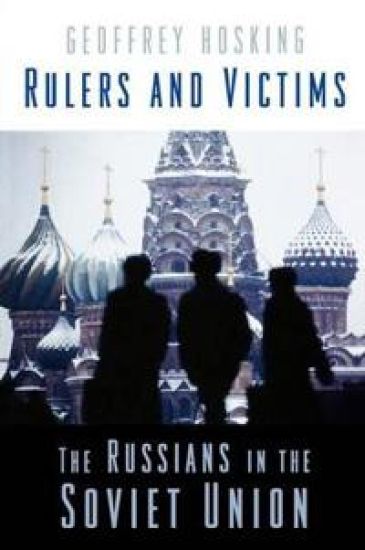
Rulers and Victims

Rulers and Victims

Geoffrey Hosking

The Belknap Press
2008
nidottu
Many westerners used to call the Soviet Union "Russia." Russians too regarded it as their country, but that did not mean they were entirely happy with it. In the end, in fact, Russia actually destroyed the Soviet Union. How did this happen, and what kind of Russia emerged?In this illuminating book, Geoffrey Hosking explores what the Soviet experience meant for Russians. One of the keys lies in messianism--the idea rooted in Russian Orthodoxy that the Russians were a "chosen people." The communists reshaped this notion into messianic socialism, in which the Soviet order would lead the world in a new direction. Neither vision, however, fit the "community spirit" of the Russian people, and the resulting clash defined the Soviet world.Hosking analyzes how the Soviet state molded Russian identity, beginning with the impact of the Bolshevik Revolution and civil war. He discusses the severe dislocations resulting from collectivization and industrialization; the relationship between ethnic Russians and other Soviet peoples; the dramatic effects of World War II on ideas of homeland and patriotism; the separation of "Russian" and "Soviet" culture; leadership and the cult of personality; and the importance of technology in the Soviet world view.At the heart of this penetrating work is the fundamental question of what happens to a people who place their nationhood at the service of empire. There is no surer guide than Geoffrey Hosking to reveal the historical forces forging Russian identity in the post-communist world.
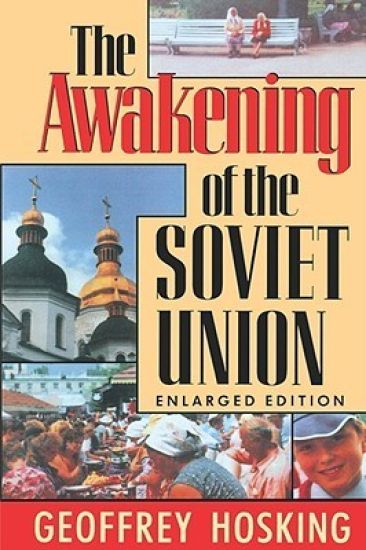
The Awakening of the Soviet Union

The Awakening of the Soviet Union

Geoffrey Hosking

Harvard University Press
1991
pokkari
Written by a long-time student of the Soviet Union and one with many personal contacts there, this is a guide to the rapid changes taking place in that country. Hosking's analysis illuminates the social, cultural and historical developments that have created the need - and openness - for sweeping political and economic change.
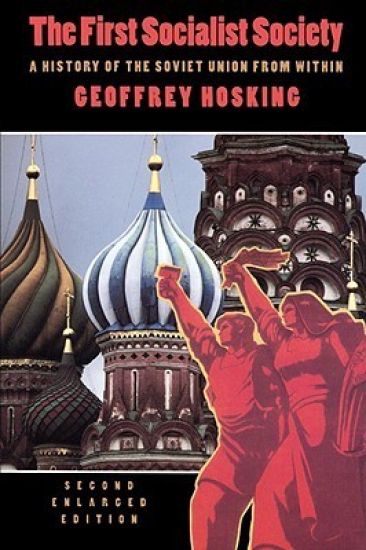
The First Socialist Society: A History of the Soviet Union from Within, Second Enlarged Edition
The First Socialist Society is the compelling and often tragic history of what Soviet citizens lived through from 1917 to 1993, told with great sympathy and perception. Tracing the evolution of the Soviet political system from its origins in 1917, Geoffrey Hosking shows how power has rarely been transmitted outside a tightly knit ruling elite and explains the forms of contact that have existed between rulers and ruled. He emphasizes the experience of the peasantry, urban workers, and professional people, showing how, more often than is commonly realized in the West, they have resisted repression and deprivation. He ranges over the character and role of religion, law, education, and literature within Soviet society; and the significance and fate of various national groups. As the story unfolds, we come to understand how the ideas of Marxism changed, taking on almost unrecognizable forms by unique political and economic circumstances. Hosking's analysis of this vast and complex country begins by asking how it was that the first socialist revolution took place in backward, autocratic Russia. Why were the Bolsheviks able to seize power and hold on to it? The core of the book lies in the years of Stalin's rule: how did he exercise such unlimited power, and how did the various strata of society survive and come to terms with his tyranny? Later chapters recount Khrushchev's efforts to reform the worst features of Stalinism and the unpredictable effects of his attempts within the East European satellite countries, bringing out elements of socialism that had been obscured or overlaid in the Soviet Union itself. In this second enlarged edition, Hosking charts the remarkable events following the fall of the Berlin Wall in November 1989 through the formation of the Commonwealth of Independent States in December 1991, relating these momentous changes to earlier Soviet history. From changes in style in the early days of glasnost to changes in substance as the reforms under perestroika transformed the political system, Hosking shows the boldness of Gorbachev's program as well as its ultimate result: the dissolution of the Soviet Union.
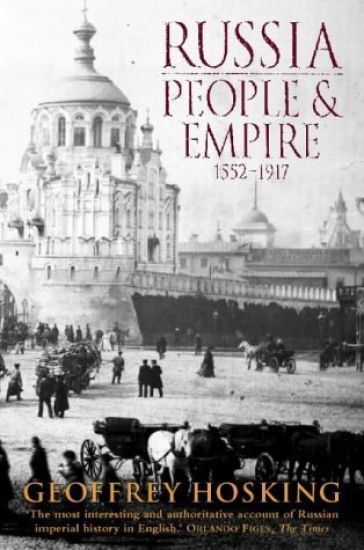
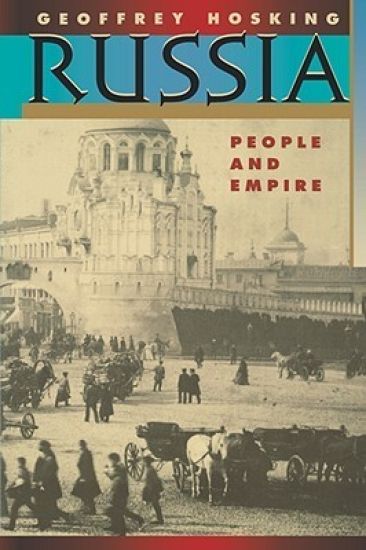
Russia: People and Empire, 1552-1917, Enlarged Edition

Russia: People and Empire, 1552-1917, Enlarged Edition

Geoffrey Hosking

HARVARD UNIVERSITY PRESS
1998
nidottu
The Soviet Union crumbles and Russia rises from the rubble, once again the great nation--a perfect scenario, but for one point: Russia was never a nation. And this, says the eminent historian Geoffrey Hosking, is at the heart of the Russians' dilemma today, as they grapple with the rudiments of nationhood. His book is about the Russia that never was, a three-hundred-year history of empire building at the expense of national identity. Russia begins in the sixteenth century, with the inception of one of the most extensive and diverse empires in history. Hosking shows how this undertaking, the effort of conquering, defending, and administering such a huge mixture of territories and peoples, exhausted the productive powers of the common people and enfeebled their civic institutions. Neither church nor state was able to project an image of "Russian-ness" that could unite elites and masses in a consciousness of belonging to the same nation. Hosking depicts two Russias, that of the gentry and of the peasantry, and reveals how the gap between them, widened by the Tsarist state's repudiation of the Orthodox messianic myth, continued to grow throughout the eighteenth and nineteenth centuries. Here we see how this myth, on which the empire was originally based, returned centuries later in the form of the revolutionary movement, which eventually swept away the Tsarist Empire but replaced it with an even more universalist one. Hosking concludes his story in 1917, but shows how the conflict he describes continues to affect Russia right up to the present day.
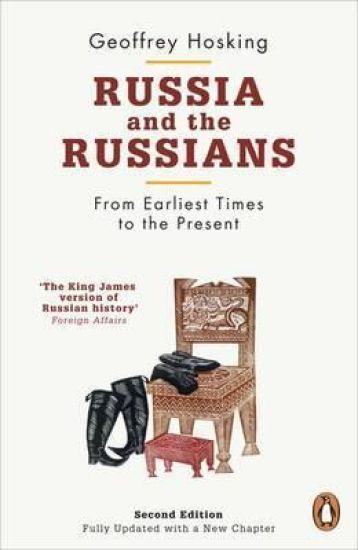
Russia and the Russians

Russia and the Russians

Geoffrey Hosking

Penguin Books Ltd
2012
pokkari
Geoffrey Hosking is one of the foremost historians of Russia and its people. The result of a lifetime's knowledge, this monumental and authoritative work has been acclaimed as the definitive single-volume history of Russia, tracing its story from the settlement of Kiev through to the present day. This second edition is updated throughout, with a new chapter on the recent role of Putin and Medvedev, and their impact on Russia's economy, politics and its citizens.
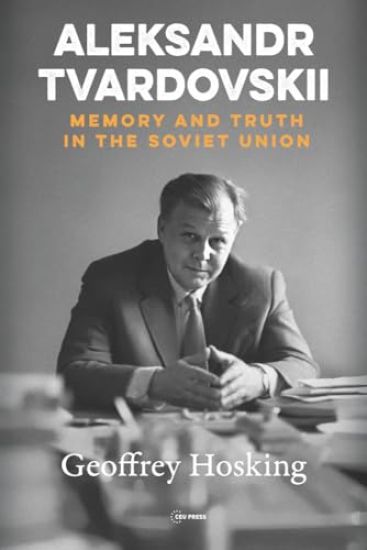
Aleksandr Tvardovskii

Aleksandr Tvardovskii

Geoffrey Hosking

CENTRAL EUROPEAN UNIVERSITY PRESS
2025
sidottu
Aleksandr Tvardovskii was not only one of the finest, most popular and most important poets of his epoch, but also the editor of Novyi mir, the most prominent Soviet literary journal of the postwar period until the 1970s. This book is a detailed biography of the writer and journal editor who probably changed the literary culture of the Soviet Union more than any other person in the two decades after Stalin's death. Geoffrey Hosking shows how Tvardovskii gradually evolved from being an ardent Stalinist who renounced his own so-called “kulak” family to becoming a convinced advocate of tolerance, an all-human morality, civil rights, and free literary creativity. By giving a balanced account of his strengths and weaknesses, his achievements and failures, the author succeeds in giving the fullest picture available anywhere of a controversial man who turns out to be more complex than he has been portrayed so far. To understand him better is to understand why the Soviet intelligentsia changed so fundamentally in the USSR’s final decades, a change that helps to explain the rise of Gorbachev twenty years later. The study—which includes an in-depth analysis of Tvardovskii’s major works—also helps to better understand the fate of culture under an authoritarian regime and the intricacies of the struggle against censorship.