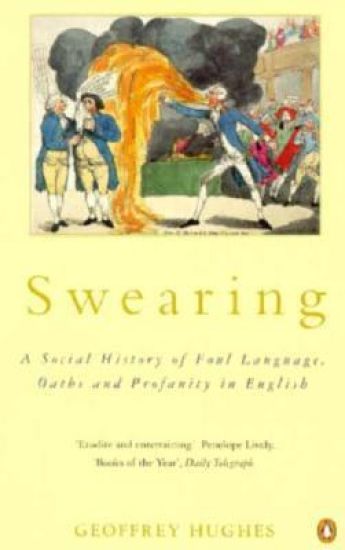
Tracing the history of swearing from ancient Anglo-Saxon traditions and those of the Middle Ages, through Shakespeare, the Enlightenment and the Victorians, to the Lady Chatterley trial and various current trends, Geoffrey Hughes explores a fascinating, little discussed yet irrespressible part of our linguistic heritage. This second edition contains a Postscript updating various contemporary developments, such as the growth of Political Correctness.
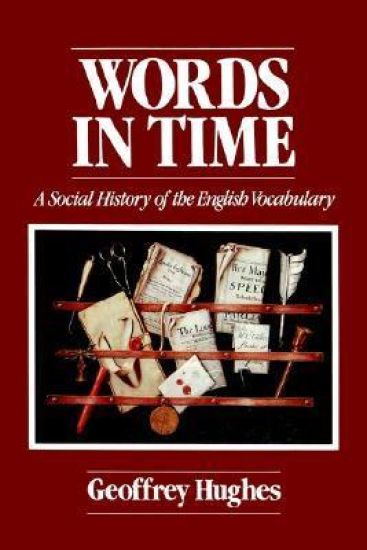
The transformation of words over timeThe English language has evolved with history, and vocabulary changes have coincided with historic changes. Words in Time: A Social History of English Vocabulary traces how the meanings of English words have changed along with social transformations. The book lets you follow words that represented eras in British history, the emergence of capitalism, and the evolution of democracy. See examples of how printing and mass media have generated changes in language at a remarkable rate, as well as how words are used to advance political propaganda.
This book traces the remarkable reconfigurations that English lexis has undergone in the past millennium. The vocabulary is studied as an indicator of social change, a symbol reflecting different social dynamics between speech communities, on models of dominance, cohabitation, colonialism and globalisation. Comprehensive guide to the evolution of the English vocabulary.Well known passages from literature are used to illustrate the variety of English words.Accessible discussion of Latin, Greek, Germanic and Norman-French languages.Contains original research into the make-up of the current lexical core of English.
This is the only encyclopedia and social history of swearing and foul language in the English-speaking world. It covers the various social dynamics that generate swearing, foul language, and insults in the entire range of the English language. While the emphasis is on American and British English, the different major global varieties, such as Australian, Canadian, South African, and Caribbean English are also covered. A-Z entries cover the full range of swearing and foul language in English, including fascinating details on the history and origins of each term and the social context in which it found expression. Categories include blasphemy, obscenity, profanity, the categorization of women and races, and modal varieties, such as the ritual insults of Renaissance "flyting" and modern "sounding" or "playing the dozens." Entries cover the historical dimension of the language, from Anglo-Saxon heroic oaths and the surprising power of medieval profanity, to the strict censorship of the Renaissance and the vibrant, modern language of the streets. Social factors, such as stereotyping, xenophobia, and the dynamics of ethnic slurs, as well as age and gender differences in swearing are also addressed, along with the major taboo words and the complex and changing nature of religious, sexual, and racial taboos.
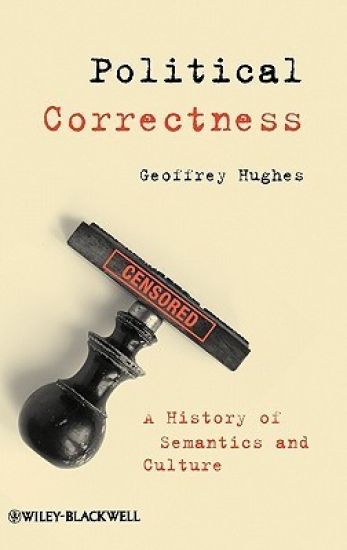
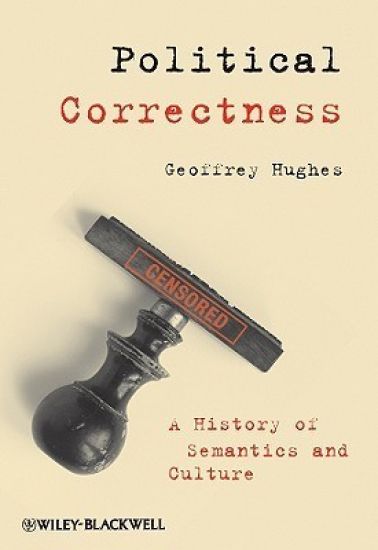
Political Correctness “Geoffrey Hughes has brought together with great panache the very many manifestations of political correctness, both absurd and vicious, and shown how they express a single collective mind-set. His book establishes beyond doubt that there is such a phenomenon, that it has become dominant in our culture, and that it represents a growing tendency to censor public debate and to prevent people from questioning orthodoxies which we all know to be false.” Roger Scruton, American Enterprise Institute “What a joy this book is! Hughes’ study traces, with unflagging zest, the modern history of PC. Sumptuous in data, in judgment precise, this is the latest and fullest of Hughes’ series on the social history of language.” Walter Nash, Professor Emeritus, University of Nottingham Political Correctness is now an everyday phrase and part of the modern mindset. Everyone thinks they know what it means, but its own meaning constantly shifts. Its surprising origins have led to it becoming integrated into contemporary culture in ways that are both idealistic and ridiculous. Originally grounded in respect for difference and sensitivity to suffering, it has often become a distraction and even a silencer of genuine issues, provoking satire and parody. In this carefully researched, thought-provoking book, Geoffrey Hughes examines the trajectory of political correctness and its impact on public life. Exploring the origins, progress, content, and style of PC, Hughes’ journey leads us through authors as diverse as Chaucer, Shakespeare and Swift; Philip Larkin, David Mamet, and J.M. Coetzee; from nursery rhymes to Spike Lee films. Focusing on the historical, semantic, and cultural aspects of political correctness, this outstanding and unique work will intrigue anyone interested in this ongoing debate.
Political Correctness “Geoffrey Hughes has brought together with great panache the very many manifestations of political correctness, both absurd and vicious, and shown how they express a single collective mind-set. His book establishes beyond doubt that there is such a phenomenon, that it has become dominant in our culture, and that it represents a growing tendency to censor public debate and to prevent people from questioning orthodoxies which we all know to be false.” Roger Scruton, American Enterprise Institute “What a joy this book is! Hughes’ study traces, with unflagging zest, the modern history of PC. Sumptuous in data, in judgment precise, this is the latest and fullest of Hughes’ series on the social history of language.” Walter Nash, Professor Emeritus, University of Nottingham Political Correctness is now an everyday phrase and part of the modern mindset. Everyone thinks they know what it means, but its own meaning constantly shifts. Its surprising origins have led to it becoming integrated into contemporary culture in ways that are both idealistic and ridiculous. Originally grounded in respect for difference and sensitivity to suffering, it has often become a distraction and even a silencer of genuine issues, provoking satire and parody. In this carefully researched, thought-provoking book, Geoffrey Hughes examines the trajectory of political correctness and its impact on public life. Exploring the origins, progress, content, and style of PC, Hughes’ journey leads us through authors as diverse as Chaucer, Shakespeare and Swift; Philip Larkin, David Mamet, and J.M. Coetzee; from nursery rhymes to Spike Lee films. Focusing on the historical, semantic, and cultural aspects of political correctness, this outstanding and unique work will intrigue anyone interested in this ongoing debate.
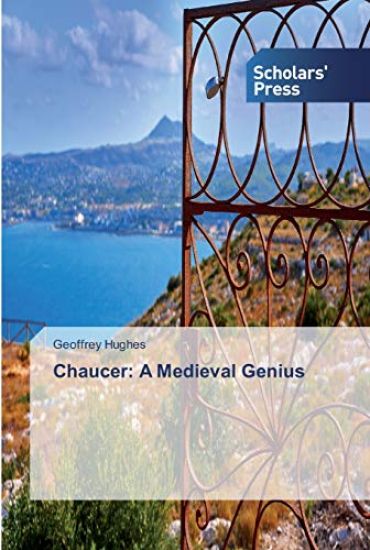
Why another book on Chaucer? He has, after all, become a considerable academic zone of industry. This book is offered primarily as an appreciation and a reappraisal of Chaucer's genius, rather than as a contribution to current Chaucer scholarship. It seeks to appeal to those increasing numbers who know little of our first major poet, and to persuade all readers, amateur and professional, of his unique brilliance. Chaucer used to be something of a national treasure. To make such claim for him now might seem a preposterous in an age when the title is awarded to mediated "celebrities", "personalities", broadcasters, eccentrics and assiduous self-promoters, as well as a few worthy claimants. But he was recognized as such in his own time, in the great range of eulogistic obituaries from major authors both at home and abroad, and for several centuries after he died in 1400. It is a measure of his status that he is the first English poet to be depicted in a formal image reading his work to his king and a courtly audience. (There is no equivalent image of Shakespeare.) And, of course, he is the founder member of Poets' Corner in Westminster Abbey.