Kirjojen hintavertailu. Mukana 11 628 315 kirjaa ja 12 kauppaa.

Kirjahaku

Etsi kirjoja tekijän nimen, kirjan nimen tai ISBN:n perusteella.

7 kirjaa tekijältä Geoffrey Lloyd

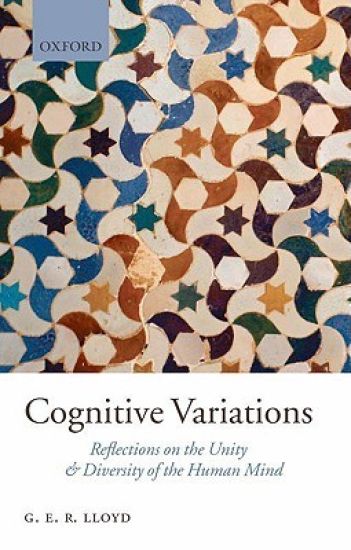
Cognitive Variations

Cognitive Variations

Geoffrey Lloyd

Clarendon Press
2007
sidottu
Sir Geoffrey Lloyd presents a cross-disciplinary study of the problems posed by the unity and diversity of the human mind. On the one hand, as humans we all share broadly the same anatomy, physiology, biochemistry, and certain psychological capabilities - the capacity to learn a language, for instance. On the other, different individuals and groups have very different talents, tastes, and beliefs, for instance about how they see themselves, other humans and the world around them. These issues are highly charged, for any denial of psychic unity savours of racism, while many assertions of psychic diversity raise the spectres of arbitrary relativism, the incommensurability of beliefs systems and their mutual unintelligibility. Lloyd surveys a fascinating range of subjects, examining where different types of arguments, scientific, philosophical, anthropological and historical can take us. He discusses colour perception, spatial cognition, animal and plant taxonomy, the emotions, ideas of health and well-being, concepts of the self, agency and causation, varying perceptions of the distinction between nature and culture, and reasoning itself. To avoid the pitfalls of misleading dichotomies (especially between cross-cultural universalism and cultural relativism) he pays due attention to the multidimensionality of the phenomena to be apprehended and to the diversity of manners, or styles, of apprehending them. The weight to be given to different factors, physical, biological, psychological, cultural, ideological, varies as between different subject-areas and sometimes even within a single area. He uses recent work in social anthropology, linguistics, cognitive science, neurophysiology, and the history of ideas to redefine the problems and clarify how our evident psychic diversity can be reconciled with our shared humanity.

Ancient Worlds, Modern Reflections

Ancient Worlds, Modern Reflections

Geoffrey Lloyd

Oxford University Press
2004
sidottu
Geoffrey Lloyd engages in a wide-ranging exploration of what we can learn from the study of ancient civilisations that is relevant to fundamental problems, both intellectual and moral, that we still face today. How far is it possible to arrive at an understanding of alien systems of belief? Is it possible to talk meaningfully of 'science' and of its various constituent disciplines, 'astronomy', 'geography', 'anatomy', and so on, in the ancient world? Are logic and its laws universal? Is there one ontology - a single world - to which all attempts at understanding must be considered to be directed? When we encounter apparently very different views of reality, how far can that be put down to a difference in conceptions of what needs explaining, or of what counts as an explanation, or to different preferred modes of reasoning or styles of inquiry? Do the notions of truth and belief represent reliable cross-cultural universals? In another area, what can ancient history teach us about today's social and political problems? Are the discourses of human nature and of human rights universally applicable? What political institutions do we need to help secure equity and justice within nation states and between them? Lloyd sets out to answer all these questions, and to convince us that the science and culture of ancient Greece and China provide precious resources to advance modern debates.
Ancient Worlds, Modern Reflections

Ancient Worlds, Modern Reflections

Geoffrey Lloyd

Clarendon Press
2006
nidottu
Geoffrey Lloyd engages in a wide-ranging exploration of what we can learn from the study of ancient civilisations that is relevant to fundamental problems, both intellectual and moral, that we still face today. How far is it possible to arrive at an understanding of alien systems of belief? Is it possible to talk meaningfully of 'science' and of its various constituent disciplines, 'astronomy', 'geography', 'anatomy', and so on, in the ancient world? Are logic and its laws universal? Is there one ontology - a single world - to which all attempts at understanding must be considered to be directed? When we encounter apparently very different views of reality, how far can that be put down to a difference in conceptions of what needs explaining, or of what counts as an explanation, or to different preferred modes of reasoning or styles of inquiry? Do the notions of truth and belief represent reliable cross-cultural universals? In another area, what can ancient history teach us about today's social and political problems? Are the discourses of human nature and of human rights universally applicable? What political institutions do we need to help secure equity and justice within nation states and between them? Lloyd sets out to answer all these questions, and to convince us that the science and culture of ancient Greece and China provide precious resources to advance modern debates.
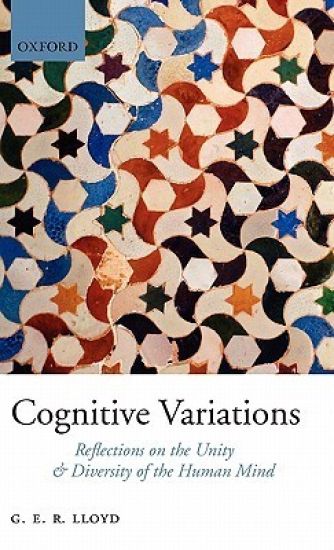
Cognitive Variations

Cognitive Variations

Geoffrey Lloyd

Oxford University Press
2009
nidottu
Sir Geoffrey Lloyd presents a cross-disciplinary study of the problems posed by the unity and diversity of the human mind. On the one hand, as humans we all share broadly the same anatomy, physiology, biochemistry, and certain psychological capabilities - the capacity to learn a language, for instance. On the other, different individuals and groups have very different talents, tastes, and beliefs, for instance about how they see themselves, other humans and the world around them. These issues are highly charged, for any denial of psychic unity savours of racism, while many assertions of psychic diversity raise the spectres of arbitrary relativism, the incommensurability of beliefs systems and their mutual unintelligibility. Lloyd surveys a fascinating range of subjects, examining where different types of arguments, scientific, philosophical, anthropological and historical can take us. He discusses colour perception, spatial cognition, animal and plant taxonomy, the emotions, ideas of health and well-being, concepts of the self, agency and causation, varying perceptions of the distinction between nature and culture, and reasoning itself. To avoid the pitfalls of misleading dichotomies (especially between cross-cultural universalism and cultural relativism) he pays due attention to the multidimensionality of the phenomena to be apprehended and to the diversity of manners, or styles, of apprehending them. The weight to be given to different factors, physical, biological, psychological, cultural, ideological, varies as between different subject-areas and sometimes even within a single area. He uses recent work in social anthropology, linguistics, cognitive science, neurophysiology, and the history of ideas to redefine the problems and clarify how our evident psychic diversity can be reconciled with our shared humanity.