Kirjojen hintavertailu. Mukana 11 244 527 kirjaa ja 12 kauppaa.

Kirjahaku

Etsi kirjoja tekijän nimen, kirjan nimen tai ISBN:n perusteella.

19 kirjaa tekijältä Geoffrey M. Hodgson

Wrong Turnings

Wrong Turnings

Geoffrey M. Hodgson

University of Chicago Press
2018
sidottu
The Left is in crisis. Despite global economic turbulence, left-wing political parties in many countries have failed to make progress in part because they have grown too ideologically fragmented. Today, the term Left is associated with state intervention and public ownership, but this has little in common with the original meaning of the term. What caused what we mean by the Left to change, and how has that hindered progress? With Wrong-Turnings, Geoffrey M. Hodgson tracks changes in the meaning of the Left and offers suggestions for how the Left might reclaim some of its core values. The term Left originated during the French Revolution, when revolutionaries sought to abolish the monarchy and privilege and to introduce a new society based on liberty, equality, fraternity, and universal rights. Over time, however, the meaning radically changed, especially through the influence of socialism and collectivism. Hodgson argues that the Left must rediscover its roots in the Enlightenment and readopt Enlightenment values it has abandoned, such as those concerning democracy and universal human rights. Only then will it be prepared to address contemporary problems of inequality and the survival of democracy. Possible measures could include enhanced educational provisions, a guaranteed basic income, and a viable mechanism for fair distribution of wealth.Wrong-Turnings is a truly pathbreaking work from one of our most prolific and respected institutional theorists. It will change our understanding of how the left got lost.
Wrong Turnings

Wrong Turnings

Geoffrey M. Hodgson

University of Chicago Press
2018
nidottu
The Left is in crisis. Despite global economic turbulence, left-wing political parties in many countries have failed to make progress in part because they have grown too ideologically fragmented. Today, the term Left is associated with state intervention and public ownership, but this has little in common with the original meaning of the term. What caused what we mean by the Left to change, and how has that hindered progress? With Wrong-Turnings, Geoffrey M. Hodgson tracks changes in the meaning of the Left and offers suggestions for how the Left might reclaim some of its core values. The term Left originated during the French Revolution, when revolutionaries sought to abolish the monarchy and privilege and to introduce a new society based on liberty, equality, fraternity, and universal rights. Over time, however, the meaning radically changed, especially through the influence of socialism and collectivism. Hodgson argues that the Left must rediscover its roots in the Enlightenment and readopt Enlightenment values it has abandoned, such as those concerning democracy and universal human rights. Only then will it be prepared to address contemporary problems of inequality and the survival of democracy. Possible measures could include enhanced educational provisions, a guaranteed basic income, and a viable mechanism for fair distribution of wealth.Wrong-Turnings is a truly pathbreaking work from one of our most prolific and respected institutional theorists. It will change our understanding of how the left got lost.
From Pleasure Machines to Moral Communities

From Pleasure Machines to Moral Communities

Geoffrey M. Hodgson

University of Chicago Press
2012
sidottu
Are humans at their core seekers of their own pleasure or cooperative members of society? Paradoxically, they are both. Pleasure seeking can take place only within the context of what works within a defined community, and central to any community are the evolved codes and principles guiding appropriate behavior or morality. The complex interaction of morality and self-interest is at the heart of Geoffrey M. Hodgson's approach to evolutionary economics, which is designed to bring about a better understanding of human behavior. In "From Pleasure Machines to Moral Communities", Hodgson casts a critical eye on neoclassical individualism, its foundations and flaws, and turns to recent insights from research on the evolutionary bases of human behavior. He focuses his attention on the evolution of morality, its meaning, why it came about, and how it influences human attitudes and behavior. This more nuanced understanding sets the stage for a fascinating investigation of its implications for a range of pressing issues drawn from diverse environments, including the business world and crucial policy realms like health care and ecology. This book provides a valuable complement to Hodgson's earlier work with Thorbjorn Knudsen on evolutionary economics in Darwin's Conjecture, extending the evolutionary outlook to include moral and policy-related issues.
After Marx and Sraffa

After Marx and Sraffa

Geoffrey M. Hodgson

Palgrave Macmillan
1991
sidottu
Recent events in Eastern Europe have underlined the limitations of Marxian economic and political theory. In this collection of essays Hodgson subjects Marxian economic theory to critical examination and shows which elements retain their modern relevance. After analysing the contribution of Sraffa, and indicating its critical potential and theoretical limitations, Hodgson points to a new synthesis embracing Marx, Keynes and Veblen.
The Wealth of a Nation

The Wealth of a Nation

Geoffrey M. Hodgson

PRINCETON UNIVERSITY PRESS
2023
sidottu
How the development of legal and financial institutions transformed Britain into the world’s first capitalist countryModern capitalism emerged in England in the eighteenth century and ushered in the Industrial Revolution, though scholars have long debated why. Some attribute the causes to technological change while others point to the Protestant ethic, liberal ideas, and cultural change. The Wealth of a Nation reveals the crucial developments in legal and financial institutions in the seventeenth and eighteenth centuries that help to explain this dramatic transformation.Offering new perspectives on the early history of capitalism, Geoffrey Hodgson describes how, for the emerging British economy, pressures from without were as important as evolution from within. He shows how intensive military conflicts overseas forced the state to undertake major financial, administrative, legal, and political reforms. The resulting institutional changes not only bolstered the British war machine—they fostered the Industrial Revolution. Hodgson traces how Britain’s war capitalism led to an expansion of its empire and a staggering increase in the slave trade, and how the institutional innovations that radically transformed the British economy were copied and adapted by countries around the world.A landmark work of scholarship, The Wealth of a Nation sheds light on how external factors such as war gave rise to institutional arrangements that facilitated finance, banking, and investment, and offers a conceptual framework for further research into the origins and consolidation of capitalism in England.
The Wealth of a Nation

The Wealth of a Nation

Geoffrey M. Hodgson

PRINCETON UNIVERSITY PRESS
2025
pokkari
How the development of legal and financial institutions transformed Britain into the world’s first capitalist countryModern capitalism emerged in England in the eighteenth century and ushered in the Industrial Revolution, though scholars have long debated why. Some attribute the causes to technological change while others point to the Protestant ethic, liberal ideas, and cultural change. The Wealth of a Nation reveals the crucial developments in legal and financial institutions in the seventeenth and eighteenth centuries that help to explain this dramatic transformation.Offering new perspectives on the early history of capitalism, Geoffrey Hodgson describes how, for the emerging British economy, pressures from without were as important as evolution from within. He shows how intensive military conflicts overseas forced the state to undertake major financial, administrative, legal, and political reforms. The resulting institutional changes not only bolstered the British war machine—they fostered the Industrial Revolution. Hodgson traces how Britain’s war capitalism led to an expansion of its empire and a staggering increase in the slave trade, and how the institutional innovations that radically transformed the British economy were copied and adapted by countries around the world.A landmark work of scholarship, The Wealth of a Nation sheds light on how external factors such as war gave rise to institutional arrangements that facilitated finance, banking, and investment, and offers a conceptual framework for further research into the origins and consolidation of capitalism in England.
Economics and Institutions

Economics and Institutions

Geoffrey M. Hodgson

Polity Press
1989
nidottu
Traditionally, economists have attributed consistency and rational calculation to the action of ‘economic man’. In a powerful challenge to orthodox thinking, Geoffrey Hodgson maintains that social institutions play a central and essential role in molding preferences and guiding action: institutions are regarded as enabling action rather than merely providing constraints. From this perspective, the author takes on the ‘free marketers’ such as Milton Friedman and the ‘new institutionalism’ of Oliver Williamson. He argues against the neo-classical and Austrian views of the operation of markets, offering instead a convincing new synthesis of the work of Keynes, Veblen, Simon and Marx. Taking up the implications of his argument, Hodgson calls for a radically new policy perspective based on structural reform and institutional intervention. This work will be required reading for economics students in their second and third years and will be of interest to students and academics throughout the social sciences.
From Marx to Markets

From Marx to Markets

Geoffrey M. Hodgson

EDWARD ELGAR PUBLISHING LTD
2025
sidottu
In this revealing and eminently readable book, Geoffrey M. Hodgson takes readers on an intellectual odyssey through his distinguished career and his work as one of the leading institutional and evolutionary economists. Depicting his life throughout the Cold War, grappling with the military and economic rivalry of two different systems and the threat of nuclear war, to becoming an economist in the 1970s, and his ventures into institutional and evolutionary economics.Examining the evolution of Hodgson’s thinking and citing the events and experiences that helped to transform his vision, chapters cover the impact of the Cold War and subsequent events on Hodgson's thinking. He summarizes his main written contributions, with suggestions for the reform of economics and the development of its theoretical foundations. The book also calls for the development of better theories and policies in economics, helping to yield more effective outcomes to enhance human wellbeing and build a better and fairer world.Showcasing some of the problems and potentialities of the discipline, From Marx to Markets is a useful resource for students considering, or having embarked on, the study of economics. It is also an essential read for academics in the social sciences and law.
Evolutionary Economics

Evolutionary Economics

Geoffrey M. Hodgson

Cambridge University Press
2019
pokkari
This Element examines the historical emergence of evolutionary economics, its development into a strong research theme after 1980, and how it has hosted a diverse set of approaches. Its focus on complexity, economic dynamics and bounded rationality is underlined. Its core ideas are compared with those of mainstream economics. But while evolutionary economics has inspired research in a number of areas in business studies and social science, these have become specialized and fragmented. Evolutionary economics lacks a sufficiently-developed core theory that might promote greater conversation across these fields. A possible unifying framework is generalized Darwinism. Stronger links could also be made with other areas of evolutionary research, such as with evolutionary anthropology and evolutionary psychology. As evolutionary economics has migrated from departments of economics to business schools, institutes of innovation studies and elsewhere, it also needs to address the problem of its lack of a single disciplinary location within academia.
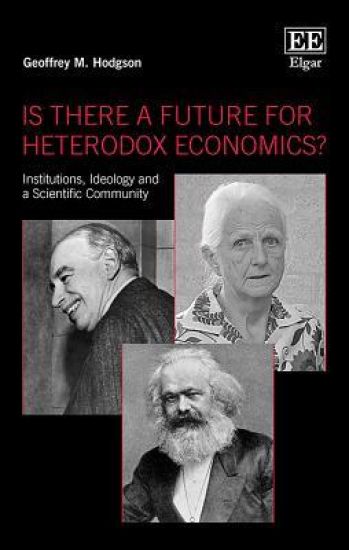
Is There a Future for Heterodox Economics?

Is There a Future for Heterodox Economics?

Geoffrey M. Hodgson

Edward Elgar Publishing Ltd
2019
sidottu
'Hodgson's masterful review of orthodoxies and heterodoxies focuses on the absurdity of recommending planning, or scorning it, without answering the empirical question asked in the 1930s by the ''socialist calculation debate.'' How well does planning or the market work? Idealism assumes the answer without actually doing the science. - Deirdre N. McCloskey, University of Illinois at Chicago, US 'Every young heterodox scholar should read this book, as should veteran heterodox economists who are puzzled about why important heterodox contributions have not had the impact they deserved to have. The book provides a compelling account of the challenges that heterodox economists have faced, and continue to face, and it leaves the reader with a strong sense that things could have been, and could be, much better if more heterodox economists strove to integrate compatible aspects of the many diverse approaches that constitute heterodox economics.' - Peter E. Earl, University of Queensland, Australia 'Is there a future for the alternatives to mainstream economics? Dealing with this important question does not only require a deep understanding of the current economic theories and of the history of economic thought. It demands also a careful analysis of the institutional mechanisms by which scientific communities commit themselves to certain paradigms and change these commitments. In this excellent book Hodgson deals with all the dimensions of this complex issue.' - Ugo Pagano, University of Siena, Italy 'Drawing a well-balanced picture of heterodox economics with its many political shades and theoretical nuances is no easy task. Professor Hodgson's mastery in solving the task sets new standards. His compelling analysis of the state and the future of the field is a ''must read'' for everyone in the heterodox camp and an invaluable source of information for all scholars in the history, philosophy, and sociology of economics.' - Ulrich Witt, Max Planck Institute for the Science of Human History, Germany and Griffith University, Australia Over the last 50 years, and particularly since the financial crash in 2008, the community of heterodox economists has expanded, and its publications have proliferated. But its power in departments of economics has waned. Addressing this paradox, Geoffrey M. Hodgson argues that heterodox economists are defined more by a left ideology than by a shared understanding of the nature of orthodox economics and of what should replace it. Heterodox economists cannot agree on what heterodoxy means. Employing insights from the sociology and philosophy of science, the author explores the marginalization of heterodox economics in the academic community and its exclusion from positions of power. This perceptive book also shows how the weaknesses of a particular version of heterodoxy stemming from the Cambridge economics of the 1970s have been replicated globally in much of contemporary heterodox economics. The author considers how the field can adapt in order to improve and sustain its presence in academia. Social scientists and economists will find this book both enlightening and useful. In particular, it will be invaluable to student networks and others critical of mainstream economics, and to those teaching economics at undergraduate and postgraduate level.
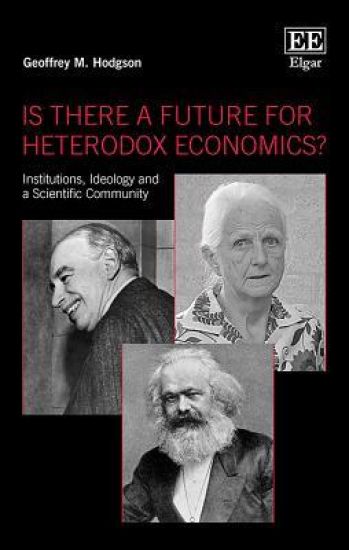
Is There a Future for Heterodox Economics?

Is There a Future for Heterodox Economics?

Geoffrey M. Hodgson

Edward Elgar Publishing Ltd
2019
nidottu
'Hodgson's masterful review of orthodoxies and heterodoxies focuses on the absurdity of recommending planning, or scorning it, without answering the empirical question asked in the 1930s by the ''socialist calculation debate.'' How well does planning or the market work? Idealism assumes the answer without actually doing the science. - Deirdre N. McCloskey, University of Illinois at Chicago, US 'Every young heterodox scholar should read this book, as should veteran heterodox economists who are puzzled about why important heterodox contributions have not had the impact they deserved to have. The book provides a compelling account of the challenges that heterodox economists have faced, and continue to face, and it leaves the reader with a strong sense that things could have been, and could be, much better if more heterodox economists strove to integrate compatible aspects of the many diverse approaches that constitute heterodox economics.' - Peter E. Earl, University of Queensland, Australia 'Is there a future for the alternatives to mainstream economics? Dealing with this important question does not only require a deep understanding of the current economic theories and of the history of economic thought. It demands also a careful analysis of the institutional mechanisms by which scientific communities commit themselves to certain paradigms and change these commitments. In this excellent book Hodgson deals with all the dimensions of this complex issue.' - Ugo Pagano, University of Siena, Italy 'Drawing a well-balanced picture of heterodox economics with its many political shades and theoretical nuances is no easy task. Professor Hodgson's mastery in solving the task sets new standards. His compelling analysis of the state and the future of the field is a ''must read'' for everyone in the heterodox camp and an invaluable source of information for all scholars in the history, philosophy, and sociology of economics.' - Ulrich Witt, Max Planck Institute for the Science of Human History, Germany and Griffith University, Australia Over the last 50 years, and particularly since the financial crash in 2008, the community of heterodox economists has expanded, and its publications have proliferated. But its power in departments of economics has waned. Addressing this paradox, Geoffrey M. Hodgson argues that heterodox economists are defined more by a left ideology than by a shared understanding of the nature of orthodox economics and of what should replace it. Heterodox economists cannot agree on what heterodoxy means. Employing insights from the sociology and philosophy of science, the author explores the marginalization of heterodox economics in the academic community and its exclusion from positions of power. This perceptive book also shows how the weaknesses of a particular version of heterodoxy stemming from the Cambridge economics of the 1970s have been replicated globally in much of contemporary heterodox economics. The author considers how the field can adapt in order to improve and sustain its presence in academia. Social scientists and economists will find this book both enlightening and useful. In particular, it will be invaluable to student networks and others critical of mainstream economics, and to those teaching economics at undergraduate and postgraduate level.
Is Socialism Feasible?

Is Socialism Feasible?

Geoffrey M. Hodgson

Edward Elgar Publishing Ltd
2019
sidottu
After being proclaimed dead, there is now a major revival of socialist ideology in the West. But what does socialism mean? This book shows that it is irretrievably associated with common ownership. The twentieth-century experience of comprehensive national planning with state ownership has been disastrous, and in no case has democracy endured within large-scale socialism. This volume explains why. The alternative socialist option of worker-owned cooperatives must accept a major role for markets that many socialists reject. Featuring theoretical arguments and practical investigations, Geoffrey M. Hodgson interrogates the failures of socialist states, scrutinizing the impact and outcomes of a centralized politico-economic system. This timely and convincing book offers insight into the twentieth-century experience of comprehensive national planning, deploying less-well-known criticisms from Albert Schaffle and Michael Polanyi. Hodgson's nuanced approach brings together small-scale socialist praxis and principles of liberal solidarity, exploring an experimental approach to political and economic reform. Provocative, insightful and accessible, this book is of considerable interest to any reader with an appetite for the history of socialist theory, as well as those keen to explore new insights to heterodox economics. Students and academics of the social sciences and humanities will benefit from this book's rigorous empirical approach to historic and contemporary socialist states and its in-depth discussion of Austrian school theory.
Is Socialism Feasible?

Is Socialism Feasible?

Geoffrey M. Hodgson

Edward Elgar Publishing Ltd
2019
nidottu
After being proclaimed dead, there is now a major revival of socialist ideology in the West. But what does socialism mean? This book shows that it is irretrievably associated with common ownership. The twentieth-century experience of comprehensive national planning with state ownership has been disastrous, and in no case has democracy endured within large-scale socialism. This volume explains why. The alternative socialist option of worker-owned cooperatives must accept a major role for markets that many socialists reject. Featuring theoretical arguments and practical investigations, Geoffrey M. Hodgson interrogates the failures of socialist states, scrutinizing the impact and outcomes of a centralized politico-economic system. This timely and convincing book offers insight into the twentieth-century experience of comprehensive national planning, deploying less-well-known criticisms from Albert Schaffle and Michael Polanyi. Hodgson's nuanced approach brings together small-scale socialist praxis and principles of liberal solidarity, exploring an experimental approach to political and economic reform. Provocative, insightful and accessible, this book is of considerable interest to any reader with an appetite for the history of socialist theory, as well as those keen to explore new insights to heterodox economics. Students and academics of the social sciences and humanities will benefit from this book's rigorous empirical approach to historic and contemporary socialist states and its in-depth discussion of Austrian school theory.
Liberal Solidarity

Liberal Solidarity

Geoffrey M. Hodgson

Edward Elgar Publishing Ltd
2021
sidottu
The twenty-first century has seen major challenges to freedom and democracy. Authoritarianism is on the rise and democracy is in retreat. Some promote individualism and markets as the solution to almost every problem. On the other side there are those who champion collectivism and full public ownership. Neither side is convincing. Unrestrained capitalism has exacerbated inequality. Socialism in practice has ended democracy. Effective defenders of liberty and human flourishing must find a different course. This book argues for a pragmatic, social democratic liberalism that avoids unrealistic extremes and tackles major problems such as inequality and climate change.This book is a topical and powerful statement of social democratic liberalism. It will be of interest to anyone concerned about modern politics, including those in universities and political parties
Liberal Solidarity

Liberal Solidarity

Geoffrey M. Hodgson

Edward Elgar Publishing Ltd
2021
nidottu
The twenty-first century has seen major challenges to freedom and democracy. Authoritarianism is on the rise and democracy is in retreat. Some promote individualism and markets as the solution to almost every problem. On the other side there are those who champion collectivism and full public ownership. Neither side is convincing. Unrestrained capitalism has exacerbated inequality. Socialism in practice has ended democracy. Effective defenders of liberty and human flourishing must find a different course. This book argues for a pragmatic, social democratic liberalism that avoids unrealistic extremes and tackles major problems such as inequality and climate change.This book is a topical and powerful statement of social democratic liberalism. It will be of interest to anyone concerned about modern politics, including those in universities and political parties
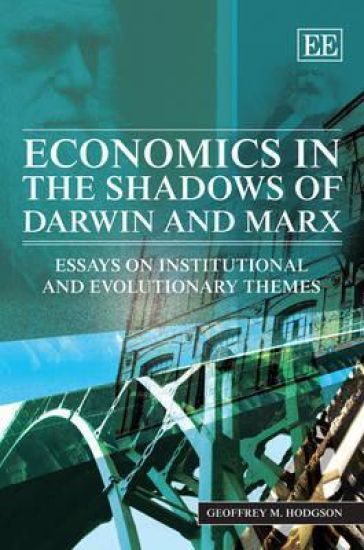
Economics in the Shadows of Darwin and Marx

Economics in the Shadows of Darwin and Marx

Geoffrey M. Hodgson

Edward Elgar Publishing Ltd
2006
sidottu
Economics in the Shadows of Darwin and Marx examines the legacies of these two giants of thought for the social sciences in the twenty-first century.Darwin and Marx stand out as the supreme theorists of structural change in complex living systems. Yet their analytical approaches are very different, and the idea that Darwinism has application to the social sciences is not widely appreciated. This collection of essays establishes the importance of Darwinism for economics and other social sciences, and compares the Darwinian legacy with that of Marx. Critical realism is just one of the tendencies within economics influenced by Marxism that is dissected here. The final part of the book adopts a Darwinian evolutionary approach to the analysis of institutions and routines. Geoffrey Hodgson's book will be warmly welcomed and received by evolutionary and institutional economists, methodologists of economics and other social sciences, heterodox economists as well as other social scientists including economic sociologists, organisation scientists and political scientists.
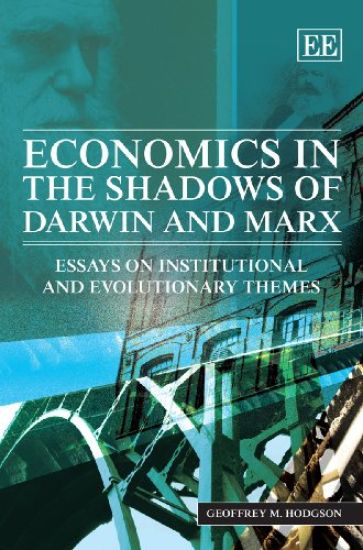
Economics in the Shadows of Darwin and Marx

Economics in the Shadows of Darwin and Marx

Geoffrey M. Hodgson

Edward Elgar Publishing Ltd
2007
nidottu
Economics in the Shadows of Darwin and Marx examines the legacies of these two giants of thought for the social sciences in the twenty-first century.Darwin and Marx stand out as the supreme theorists of structural change in complex living systems. Yet their analytical approaches are very different, and the idea that Darwinism has application to the social sciences is not widely appreciated. This collection of essays establishes the importance of Darwinism for economics and other social sciences, and compares the Darwinian legacy with that of Marx. Critical realism is just one of the tendencies within economics influenced by Marxism that is dissected here. The final part of the book adopts a Darwinian evolutionary approach to the analysis of institutions and routines. Geoffrey Hodgson's book will be warmly welcomed and received by evolutionary and institutional economists, methodologists of economics and other social sciences, heterodox economists as well as other social scientists including economic sociologists, organisation scientists and political scientists.
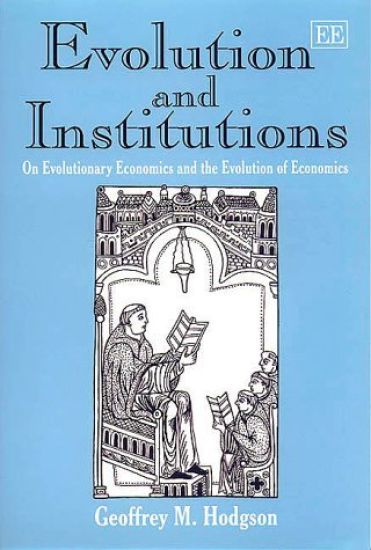
Evolution and Institutions

Evolution and Institutions

Geoffrey M. Hodgson

Edward Elgar Publishing Ltd
1999
sidottu
Geoff Hodgson's innovative and important new book is about the future of economics as a viable discipline. It examines not only evolutionary economics but the development of economic theory during the twentieth century. The book reflects on the origins and consequences of the narrowing and increasing irrelevance of mainstream economics, suggesting that it will be inadequate to cope with the complex ideas of the new millennium.Geoff Hodgson analyses some of the attempts to redirect theoretical economics to real world issues. He proposes a move away from mathematical formalization, greater tolerance given to different approaches and the possibility of learning from other sciences especially biology. He suggests that the toleration of a plurality of theoretical approaches in economics - including institutional and evolutionary approaches - based on a common orientation towards real world economies is the best overall strategy for future theoretical advance.A unique and important contribution to our understanding, it will be welcomed by academics and researchers working in all fields of economics, especially evolutionary economics as well as by other social scientists.
Evolution and Institutions

Evolution and Institutions

Geoffrey M. Hodgson

Edward Elgar Publishing Ltd
2000
nidottu
Geoff Hodgson's innovative and important new book is about the future of economics as a viable discipline. It examines not only evolutionary economics but the development of economic theory during the twentieth century. The book reflects on the origins and consequences of the narrowing and increasing irrelevance of mainstream economics, suggesting that it will be inadequate to cope with the complex ideas of the new millennium.Geoff Hodgson analyses some of the attempts to redirect theoretical economics to real world issues. He proposes a move away from mathematical formalization, greater tolerance given to different approaches and the possibility of learning from other sciences especially biology. He suggests that the toleration of a plurality of theoretical approaches in economics - including institutional and evolutionary approaches - based on a common orientation towards real world economies is the best overall strategy for future theoretical advance.A unique and important contribution to our understanding, it will be welcomed by academics and researchers working in all fields of economics, especially evolutionary economics as well as by other social scientists.