Kirjojen hintavertailu. Mukana 11 699 587 kirjaa ja 12 kauppaa.

Kirjahaku

Etsi kirjoja tekijän nimen, kirjan nimen tai ISBN:n perusteella.

9 kirjaa tekijältä Geoffrey Miller

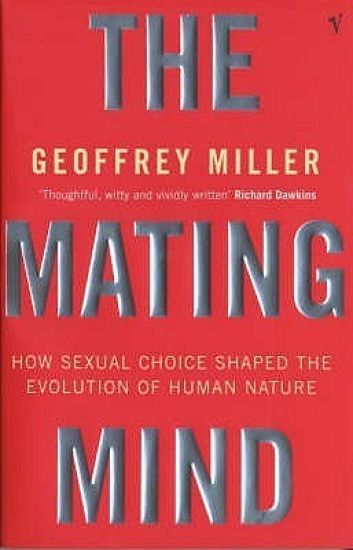
Mating Mind

Mating Mind

Geoffrey Miller

Vintage
2001
pokkari
An intelligently provocative book about Darwinâ??s â??otherâ?? theory discusses the curious ways in which sexual attraction has influenced the evolution of the human mind. Many aspects of the human mind remain mysterious.
Must-Have

Must-Have

Geoffrey Miller

Vintage
2010
pokkari
And what can the story of Aladdin teach us about today's world?In this brilliantly original, provocative and witty book, Geoffrey Miller - acclaimed author of The Mating Mind - takes us on a journey through the surreal wonderlands of marketing, advertising, and media to explore the hidden instincts behind our choices.
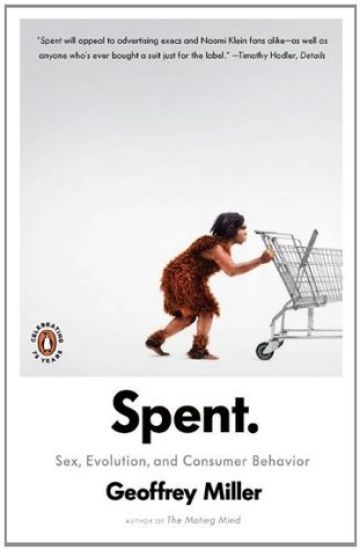
Spent: Sex, Evolution, and Consumer Behavior
A leading evolutionary psychologist probes the unconscious instincts behind American consumer culture Illuminating the hidden reasons for why we buy what we do, Spent applies evolutionary psychology to the sensual wonderland of marketing and perceived status that is American consumer culture. Geoffrey Miller starts with the theory that we purchase things to advertise ourselves to others, and then examines other factors that dictate what we spend money on. With humor and insight, Miller analyzes an array of product choices and deciphers what our decisions say about ourselves, giving us access to a new way of understanding-and improving-our behaviors to become happier consumers.
Extreme Prematurity

Extreme Prematurity

Geoffrey Miller

Cambridge University Press
2006
pokkari
Extreme Prematurity examines the controversial issues surrounding the clinical management of this group of neonates by the intervention of modern neonatal intensive care. The foregoing of life-sustaining treatment is of particular importance. The subject matter is very relevant because of the alarming increase in multiple and preterm births, due to the increase in women who are undergoing assisted reproductive procedures, and the large increase in premature labor. No recent book covers the subject in such comparable breadth. The first section of this very timely monograph covers the epidemiology and practices in different parts of the world; the second section covers bioethics considerations, including ethical theories, moral principles and quality of life issues; the third section covers national and international guidelines; the last section covers medical law aspects in the US and around the world.
Extreme Prematurity

Extreme Prematurity

Geoffrey Miller

Cambridge University Press
2006
sidottu
Extreme Prematurity examines the controversial issues surrounding the clinical management of this group of neonates by the intervention of modern neonatal intensive care. The foregoing of life-sustaining treatment is of particular importance. The subject matter is very relevant because of the alarming increase in multiple and preterm births, due to the increase in women who are undergoing assisted reproductive procedures, and the large increase in premature labor. No recent book covers the subject in such comparable breadth. The first section of this very timely monograph covers the epidemiology and practices in different parts of the world; the second section covers bioethics considerations, including ethical theories, moral principles and quality of life issues; the third section covers national and international guidelines; the last section covers medical law aspects in the US and around the world.
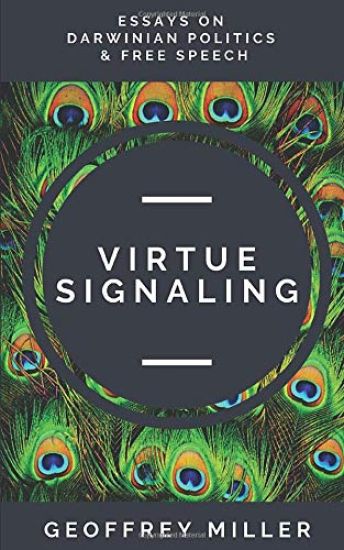
Virtue Signaling: Essays on Darwinian Politics & Free Speech
'Virtue signaling' is the phrase that got popular on social media during the 2016 election as a way of derogating political opponents. But what is virtue signaling, really? How does it work, where does it come from, and is it really a bad thing? How can it help people to virtue signaling better -- when you're doing it, and when your friends, family, colleagues, and mates are doing it? This short, thoughtful, easy-to-read book is about how we can better understand people's instincts to show off our moral virtues, personality traits, ideologies, political attitudes, and lifestyle choices through our public behavior and language, from dating to street protests to social media to academic censorship. It shows how virtue signaling is the key to understanding current debates about free speech and viewpoint diversity on campuses, in corporations, and throughout society. Understanding virtue signaling is a social superpower, like understanding body language, or personality traits, or sex differences. Are you curious why politics and religion lead to so many bitter debates around the Thanksgiving dinner table -- even among relatives who get along in every other domain? Or why so many single people put 'No Trump supporters ' or 'No Libtards ' on the dating profiles -- when politics plays such a small role in day-to-day relationships? Or why Gen Z college students want to censor ideas they think are evil -- when they're supposed to be exposing themselves to diverse perspectives?Virtue signaling is one of those concepts that's easy to understand, but that most people don't bother to face -- because we're all doing it all the time, and acknowledging our own virtue signaling makes us feel embarrassed and hypocritical.Let's face the reality of virtue signaling. This book offers a scientifically grounded, practical, non-partisan set of insights so you understand your own ideological passions, your relationships, and your society much more easily. If you don't understand your own virtue signaling, then your ideologies and signaling habits, not your conscious mind, are running your life. If you don't understand other people's virtue signaling, then it's hard to take their point of view and to find common ground with them. If you don't understanding virtue signaling in the political realm, it's hard to convince other citizens to support your causes, policies, and candidates.This book collects seven essays written from 1996 through 2018. They're all focused around the evolutionary psychology of politics, ethics, and language. It includes a new preface, new introductions that give the backstory to each essay, and a new list of further readings (including about 100 books by other people). The book is about 32,000 words, or about 85-130 pages depending on your reader format. The author, Geoffrey Miller, is a tenured evolutionary psychology professor at University of New Mexico. He's been writing and teaching about the origins and functions of moral virtues for decades. His previous books include The Mating Mind, Spent, Mating Intelligence, and What Women Want. He got his B.A. from Columbia University, and his Ph.D. from Stanford University. He's also worked at NYU Stern Business School, UCLA, University College London, and the London School of Economics. He has over 110 publications about sexual selection, mate choice, signaling theory, fitness indicators, consumer behavior, marketing, intelligence, creativity, language, art, music, humor, emotions, personality, psychopathology, and behavior genetics. He has also given 200 talks in 16 countries, and his research has been featured in Nature, Science, The New York Times, The Washington Post, New Scientist, and The Economist, on NPR and BBC radio, and in documentaries on CNN, PBS, Discovery Channel, National Geographic Channel, and BBC.
Die sexuelle Evolution

Die sexuelle Evolution

Geoffrey Miller

Spektrum Akademischer Verlag
2009
nidottu
Die Zahl vor jeder Anmerkung bezeichnet die betreffende Buchseite. Kapitel 1 Allgemeine Literatur Sexuelle Selektion: popularwissenschaftlicher Uberblick: Gould & Gould (1997); Lehrbuch: Andersson (1994); Geschichte: Cronin (1991); sexuelle Evolution: Michod (1995). Popularwissenschaftliche Werke zur sexuellen Selektion beim Menschen: Buss (1994), Etcoff (1999), Hersey (1996), Ridley (1993). Wissenschaftliche Werke zur sexuellen Selektion beim Menschen: Abramson & Pinkerton (1995), Baker & Bellis (1995), Barkow (1989), Betzig (1986, 1997), Betzig et al. (1988), Buss (1999), Daly & Wilson (1988), Knight (1995), Symons (1979). Fruhere Modelle zur sexuellen Selektion beim Menschen: Darwin (1871), Ellis (1905, 1934), Parker (1987), Sloman & Sloman (1988), Baum (1996). Popularwissenschaftliche Einfuhrungen in die Evolutionspsychologie: Buss (1994), Pinker (1994, 1997), Ridley (1993), Wright (1994). Neues Lehrbuch zur Evolutionspsychologie: Buss (1999). Wissenschaftliche Werke zur Evolutionspsychologie: Barkow (1989), Barkow et al. (1992), Buss (1999), Cosmides & Tooby (1994), Crawford & Krebs (1998), Cummings & Allen (1998), Hirschfeld & Gelman (1994), Simpson & Kenrick (1997). 504 DIE SEXUELLE EVOLUTION Anmerkungen 10. Theorie, nach der sich der Geist fur die Werkzeugherstellung und andere nutzliche Technologien entwickelte: Byrne (1995), Gibson & Ingold (1993), Kingdon (1993). 11. Charles Darwin zur sexuellen Selektion durch Partnerwahl: Darwin (1859, 1871). 12. Pfauenschwanze: Petrie et al. (1991). 14. Steven Pinker uber Kunst, Musik etc. als Begleiterscheinungen: Pinker (1997, Kapitel 8). 14. Pinker-Zitat -Der Geist ist ein neuronaler Computer ...-: Pinker (1997, S. 534; deutsch 1998, S. 650). 14. Pinker-Zitat -Wenn Musik aber . . .-: Pinker (1997, S. 544; deutsch 1998, S. 663)."