Kirjojen hintavertailu. Mukana 12 016 292 kirjaa ja 12 kauppaa.

Kirjahaku

Etsi kirjoja tekijän nimen, kirjan nimen tai ISBN:n perusteella.

16 kirjaa tekijältä Geoffrey Parker

The Grand Strategy of Philip II

The Grand Strategy of Philip II

Geoffrey Parker

Yale University Press
2000
pokkari
From 1556 until his death in 1598, Philip II of Spain ruled the first global empire in history, yet no one so far has analyzed precisely how he accomplished this feat. The author investigates the strengths and weaknesses of Philip’s strategic vision, the priorities that underlay his policies, the practices and prejudices that influenced his decision-making, and the external factors that affected the achievement of his goals.Geoffrey Parker begins by defining the characteristics of Spain’s strategic culture: the king’s distinctive system of government, the “information overload” that threatened to engulf it, and the various strategic priorities and assumptions used to overcome the disparity between aims and means. He then explores the surviving documentation (from the Habsburgs, their allies, and their adversaries) on the formation of strategy in three crucial case studies: Philip’s unsuccessful efforts to maintain his authority in the Netherlands, his defective peacetime management of foreign relations with Scotland and England, and his failed Armada campaign against England. Finally Parker examines the small but fatal flaws in the execution of Philip’s Grand Strategy, assesses the response of the king and his ministers to their failures, and questions whether the outcome might have been different with other policy options, another ruler, or a different strategic culture. Pointing to modern parallels between Philip’s problems of governance and those facing Hitler and Churchill, or Kennedy and Johnson, this powerfully argued book provides a fascinating commentary on the nature of empires and the decision-making process as practiced by great powers.
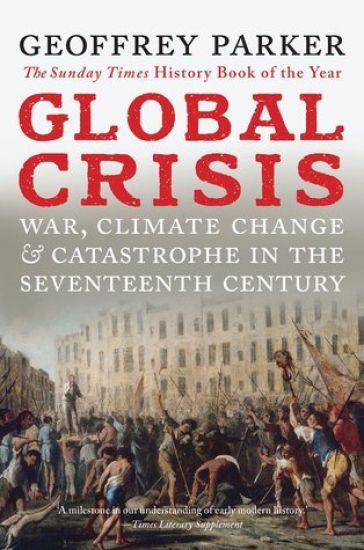
Global Crisis

Global Crisis

Geoffrey Parker

Yale University Press
2014
pokkari
How to account for decades of worldwide war, revolution, and human suffering in the seventeenth century? A master historian uncovers the disturbing answer. Revolutions, droughts, famines, invasions, wars, regicides – the calamities of the mid-seventeenth century were not only unprecedented, they were agonisingly widespread. A global crisis extended from England to Japan, and from the Russian Empire to sub-Saharan Africa. North and South America, too, suffered turbulence. The distinguished historian Geoffrey Parker examines first-hand accounts of men and women throughout the world describing what they saw and suffered during a sequence of political, economic and social crises that stretched from 1618 to the 1680s. Parker also deploys scientific evidence concerning climate conditions of the period, and his use of ‘natural’ as well as ‘human’ archives transforms our understanding of the World Crisis. Changes in the prevailing weather patterns during the 1640s and 1650s – longer and harsher winters, and cooler and wetter summers – disrupted growing seasons, causing dearth, malnutrition, and disease, along with more deaths and fewer births. Some contemporaries estimated that one-third of the world died, and much of the surviving historical evidence supports their pessimism. Parker’s demonstration of the link between climate change and worldwide catastrophe 350 years ago stands as an extraordinary historical achievement. And the contemporary implications of his study are equally important: are we at all prepared today for the catastrophes that climate change could bring tomorrow?
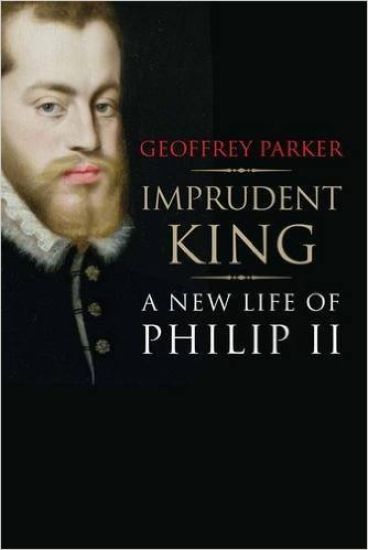
Imprudent King

Imprudent King

Geoffrey Parker

Yale University Press
2015
pokkari
A vast archive of documents, unread since the sixteenth century, revises the portrait of Philip II, Spain’s best-known king"A superbly informed narrative of Philip II’s long career as Europe’s most powerful king."—Henry Kamen, Little Reviews"This authoritative, intelligently revisionist biography must stand now as the primary reference."—Iain Finlayson, The Times Philip II (1527-1598) is not only the most famous king in Spanish history, but one of the most famous monarchs in English history: the man who married Mary Tudor and later launched the Spanish Armada against her sister Elizabeth I. This compelling biography of the most powerful European monarch of his day begins with his conception (1526) and ends with his ascent to Paradise (1603), two occurrences surprisingly well documented by contemporaries. Eminent historian Geoffrey Parker draws on four decades of research on Philip as well as a recent, extraordinary archival discovery—a trove of 3,000 documents in the vaults of the Hispanic Society of America in New York City, unread since crossing Philip’s own desk more than four centuries ago. Many of them change significantly what we know about the king. The book examines Philip’s long apprenticeship; his three principal interests (work, play, and religion); and the major political, military, and personal challenges he faced during his long reign. Parker offers fresh insights into the causes of Philip’s leadership failures: was his empire simply too big to manage, or would a monarch with different talents and temperament have fared better?
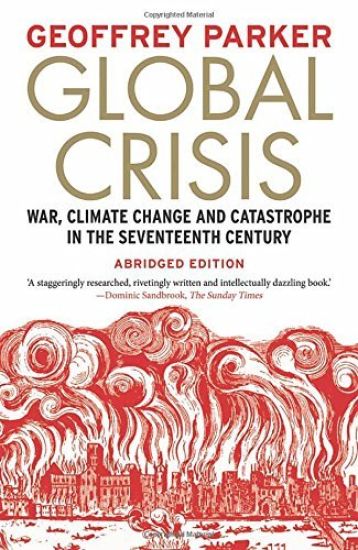
Global Crisis

Global Crisis

Geoffrey Parker

Yale University Press
2017
pokkari
An accessible synthesis of the prescient best seller exploring seventeenth-century catastrophe and the impact of climate change First published in 2013, Geoffrey Parker’s prize-winning best seller Global Crisis analyzes the unprecedented calamities—revolutions, droughts, famines, invasions, wars, and regicides—that befell the mid-seventeenth-century world and wiped out as much as one-third of the global population, and reveals climate change to be the root cause. Examining firsthand accounts of the crises and scrutinizing the prevailing weather patterns during the 1640s and 1650s—longer and harsher winters, and cooler and wetter summers—Parker reveals evidence of disrupted growing seasons causing malnutrition, disease, a higher death toll, and fewer births. This new abridged edition distills the original book’s prodigious research for a broader audience while retaining and indeed emphasizing Parker’s extraordinary historical achievement: his dazzling demonstration of the link between climate change and worldwide catastrophe 350 years ago. Yet, the contemporary implications of his study are equally important: are we prepared today for the catastrophes that climate change could bring tomorrow? At half the original length, this user-friendly abridgment is ideal for students and general readers seeking a rapid handle on the key issues.
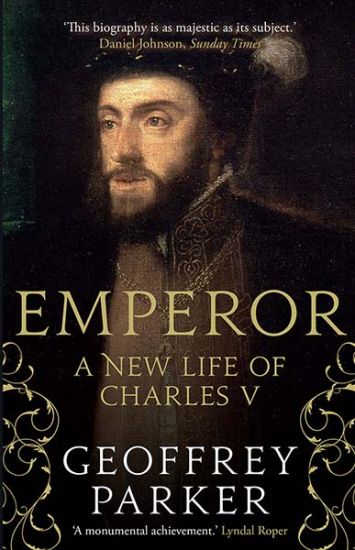
Emperor

Emperor

Geoffrey Parker

Yale University Press
2020
pokkari
Drawing on vital new evidence, a top historian dramatically reinterprets the life and reign of Holy Roman Emperor Charles V, ruler of the world’s first transatlantic empire “Masterly.”—William Anthony Hay, Wall Street Journal “Seldom does one find a work of such profound scholarship delivered in such elegant and engaging prose. Drawing deftly on an astonishing volume of documentary evidence, Parker has produced a masterpiece: an epic, detailed and vivid life of this complex man and his impossibly large empire.”—Susannah Lipscomb, Financial Times Selected as a book of the year (2020) by Simon Sebag Montefiore in Aspects of History magazine The life of Emperor Charles V (1500–1558), ruler of Spain, Germany, the Netherlands, and much of Italy and Central and South America, has long intrigued biographers. But the elusive nature of the man (despite an abundance of documentation), his relentless travel and the control of his own image, together with the complexity of governing the world’s first transatlantic empire, complicate the task. Geoffrey Parker, one of the world’s leading historians of early modern Europe, has examined the surviving written sources in Dutch, French, German, Italian, Latin, and Spanish, as well as visual and material evidence. He explores the crucial decisions that created and preserved this vast empire, analyzes Charles’s achievements within the context of both personal and structural factors, and scrutinizes the intimate details of the ruler’s life for clues to his character and inclinations. The result is a unique biography that interrogates every dimension of Charles’s reign and views the world through the emperor’s own eyes.
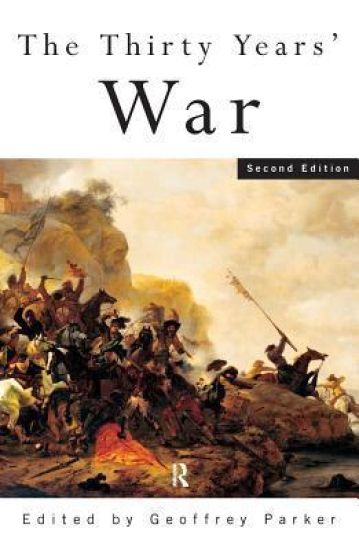
The Thirty Years' War

The Thirty Years' War

Geoffrey Parker

Routledge
1997
nidottu
The first edition of The Thirty Years' War offered an unrivalled survey of a central period in European history. Drawing on a huge body of source material from different languages and countries throughout Europe, it provided a clear and comprehensive narrative and analytical account of the subject. It has established itself as the classic text with reviewers, students and the general reader.This second edition has been thoroughly revised to include the very latest research. The updated bibliographical information provides an invaluable resource, synthesising the major work in the field, in all languages, up to 1996.Written with great clarity and liveliness, the book brings alive the period in all its aspects. It covers the horrors of the war and the contorted politics of the period. It deals with all the major figures, including Wallerstein and Richelieu, Gustavus Adolphus and Tilly, the Winter King and the Habsburg emperors. For range and depth of coverage there is no other work like it. It has become the definitive book on the subject.
The Thirty Years' War

The Thirty Years' War

Geoffrey Parker

Routledge
1997
sidottu
The first edition of The Thirty Years' War offered an unrivalled survey of a central period in European history. Drawing on a huge body of source material from different languages and countries throughout Europe, it provided a clear and comprehensive narrative and analytical account of the subject. It has established itself as the classic text with reviewers, students and the general reader.This second edition has been thoroughly revised to include the very latest research. The updated bibliographical information provides an invaluable resource, synthesising the major work in the field, in all languages, up to 1996.Written with great clarity and liveliness, the book brings alive the period in all its aspects. It covers the horrors of the war and the contorted politics of the period. It deals with all the major figures, including Wallerstein and Richelieu, Gustavus Adolphus and Tilly, the Winter King and the Habsburg emperors. For range and depth of coverage there is no other work like it. It has become the definitive book on the subject.
The Military Revolution

The Military Revolution

Geoffrey Parker

Cambridge University Press
1996
pokkari
This is a new edition of Geoffrey Parker’s much-admired illustrated account of how the West, so small and so deficient in natural resources in 1500, had by 1800 come to control over one-third of the world. Parker argues that the rapid development of military practice in the West constituted a ‘military revolution’ which gave Westerners an insurmountable advantage over the peoples of other continents. This edition incorporates new material, including a substantial ‘Afterword’ which summarises the debate which developed after the book’s first publication.
Europe in Crisis

Europe in Crisis

Geoffrey Parker

Blackwell Publishers
2001
sidottu
In the new edition of this classic book, Geoffrey Parker draws on material from all over Europe to provide an authoritative and exciting account of the eventful first half of the seventeenth century.
Europe in Crisis

Europe in Crisis

Geoffrey Parker

Blackwell Publishers
2001
nidottu
In the new edition of this classic book, Geoffrey Parker draws on material from all over Europe to provide an authoritative and exciting account of the eventful first half of the seventeenth century.
Philip II

Philip II

Geoffrey Parker

Open Court Publishing Co ,U.S.
2002
pokkari
In order to understand Spanish America, one must begin with Philip II, who at one time controlled a quarter of the world's population. This new edition is brought up to date with new material including photos, map and charts, and an essay in which the author evaluates new works about this "obsessed personality." "A well-managed and impressively clear story." - The New York Times
Western Geopolitical Thought in the Twentieth Century (Routledge Library Editions: Political Geography)
This book surveys the development of geo-political thought in the twentieth century and relates it to international political developments, as well as examining how sound geopolitical theories are. It considers the work of Mackinder, Hartshorne, and Haushofer and his disciples in Germany who influenced the Nazis; and of more recent developments including Marxist geographical writing.
Western Geopolitical Thought in the Twentieth Century (Routledge Library Editions: Political Geography)
This book surveys the development of geo-political thought in the twentieth century and relates it to international political developments, as well as examining how sound geopolitical theories are. It considers the work of Mackinder, Hartshorne, and Haushofer and his disciples in Germany who influenced the Nazis; and of more recent developments including Marxist geographical writing.
The Geopolitics of Domination (Routledge Library Editions: Political Geography)
Using the examples of the Ottoman Empire, Spain, Austria, France and Germany, this book describes the principal geopolitical features of the expansionist state. It then presents a model of the operation of the expansionist process over space and time. It goes on to apply the geopolitical characteristics of the model to the period after 1945 in order to assess the extent to which the Soviet Union might be considered as being an expansionist state, either actually or potentially. This latter question is obviously once more extremely relevant with the current events in Ukraine.
The Geopolitics of Domination (Routledge Library Editions: Political Geography)
Using the examples of the Ottoman Empire, Spain, Austria, France and Germany, this book describes the principal geopolitical features of the expansionist state. It then presents a model of the operation of the expansionist process over space and time. It goes on to apply the geopolitical characteristics of the model to the period after 1945 in order to assess the extent to which the Soviet Union might be considered as being an expansionist state, either actually or potentially. This latter question is obviously once more extremely relevant with the current events in Ukraine.
Imperaator. karl v elulugu

Imperaator. karl v elulugu

Geoffrey Parker

Argo
2022
sidottu
Tema impeeriumis ei loojunud päike mitte kunagi.Saksa-Rooma keisri Karl V (1500-1558), Hispaania, Saksamaa, Madalmaade ja suure osa Itaalia ning Kesk- ja Lõuna-Ameerika valitseja elu ja tegevus on sajandeid ajaloolasi intrigeerinud ja neile mõtteainet pakkunud. Kuid hoolimata säilinud dokumentide rohkusest on elulookirjutajate ülesannet alati raskendanud keisri eraklik loomus, pidev ringireisimine oma valduste vahel ning maailma esimese transatlantilise impeeriumi valitsemise äärmine komplitseeritus.Maailma juhtivaid teadlasi varauusaegse Euroopa ajaloo alal Geoffrey Parker on läbi töötanud tohutul hulgal hollandi-, prantsus-, saksa-, itaalia-, ladina- ja hispaaniakeelseid allikaid ning uurinud põhjalikult muidki visuaalseid ja materiaalseid tõendeid. Ta käsitleb neid otsuseid, mille abil valitseti seda ulatuslikku impeeriumi, analüüsib Karli saavutusi nii isiklike kui ka struktuuriliste asjaolude kontekstis ja vaatleb lähemalt valitseja elu intiimsemaid üksikasju, leidmaks võtit tema iseloomu ja tegutsemismotiivide juurde.Geoffrey Parker (s 1943) on kaasaja tuntumaid ja tunnustatumaid ajaloolasi. Lõpetanud Cambridge'i ülikooli ja töötanud õppejõuna Illinoisi, St Andrewsi ja Yale'i ülikoolis, õpetab ta praegu ajalugu Ohio ülikoolis. Tema peamised uurimisteemad on Lääne-Euroopa ja eriti Hispaania ajalugu ning varauusaegsed sõjad. Geoffrey Parkeri sulest on ilmunud arvukalt teaduslikke uurimusi ja ajalooalaseid teoseid, muu hulgas "The Dutch Revolt" (1977), "Europe in Crisis, 1598-1648" (1979, 2001), "Western Geopolitical Thought in the Twentieth Century" (1985), "The Spanish Armada" (1988), "The Military Revolution: Military Innovation and the Rise of the West, 1500-1800" (1988, 1996), "Empire, War and Faith in Early Modern Europe" (2002), "Global Crisis: War, Climate Change and Catastrophe in the Seventeenth Century" (2013), "Imprudent King: A New Life of Philip II" (2014).