Kirjojen hintavertailu. Mukana 11 342 296 kirjaa ja 12 kauppaa.

Kirjahaku

Etsi kirjoja tekijän nimen, kirjan nimen tai ISBN:n perusteella.

10 kirjaa tekijältä Geoffrey Roberts

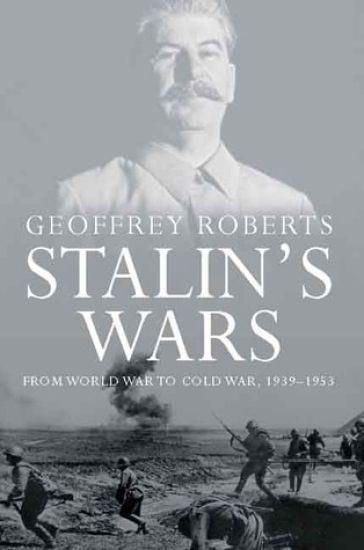
Stalin's Wars

Stalin's Wars

Geoffrey Roberts

Yale University Press
2008
pokkari
A provocative reassessment of Stalin’s military and political leadership during the most important years of his career This breakthrough book provides a detailed reconstruction of Stalin’s leadership from the outbreak of the Second World War in 1939 to his death in 1953. Making use of a wealth of new material from Russian archives, Geoffrey Roberts challenges a long list of standard perceptions of Stalin: his qualities as a leader; his relationships with his own generals and with other great world leaders; his foreign policy; and his role in instigating the Cold War. While frankly exploring the full extent of Stalin’s brutalities and their impact on the Soviet people, Roberts also uncovers evidence leading to the stunning conclusion that Stalin was both the greatest military leader of the twentieth century and a remarkable politician who sought to avoid the Cold War and establish a long-term detente with the capitalist world. By means of an integrated military, political, and diplomatic narrative, the author draws a sustained and compelling personal portrait of the Soviet leader. The resulting picture is fascinating and contradictory, and it will inevitably change the way we understand Stalin and his place in history. Roberts depicts a despot who helped save the world for democracy, a personal charmer who disciplined mercilessly, a utopian ideologue who could be a practical realist, and a warlord who undertook the role of architect of post-war peace.
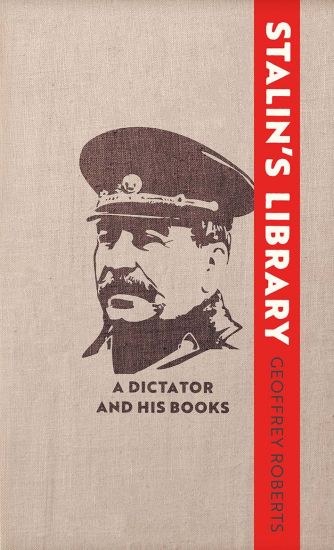
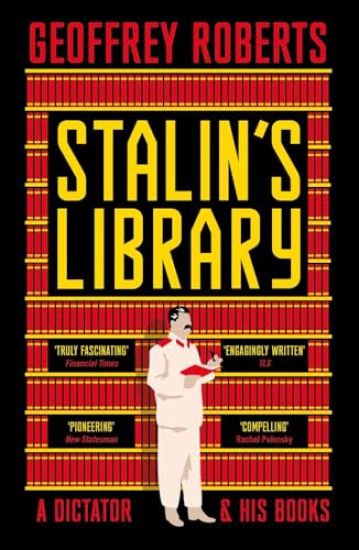
Stalin's Library

Stalin's Library

Geoffrey Roberts

YALE UNIVERSITY PRESS
2022
sidottu
A compelling intellectual biography of Stalin told through his personal library “[A] fascinating new study.”—Michael O’Donnell, Wall Street Journal In this engaging life of the twentieth century’s most self-consciously learned dictator, Geoffrey Roberts explores the books Stalin read, how he read them, and what they taught him. Stalin firmly believed in the transformative potential of words, and his voracious appetite for reading guided him throughout his years. A biography as well as an intellectual portrait, this book explores all aspects of Stalin’s tumultuous life and politics. Stalin, an avid reader from an early age, amassed a surprisingly diverse personal collection of thousands of books, many of which he marked and annotated, revealing his intimate thoughts, feelings, and beliefs. Based on his wide-ranging research in Russian archives, Roberts tells the story of the creation, fragmentation, and resurrection of Stalin’s personal library. As a true believer in communist ideology, Stalin was a fanatical idealist who hated his enemies—the bourgeoisie, kulaks, capitalists, imperialists, reactionaries, counter-revolutionaries, traitors—but detested their ideas even more.
Stalin's Library

Stalin's Library

Geoffrey Roberts

YALE UNIVERSITY PRESS
2025
pokkari
A compelling intellectual biography of Stalin told through his personal library “[A] fascinating new study.”—Michael O’Donnell, Wall Street Journal In this engaging life of the twentieth century’s most self-consciously learned dictator, Geoffrey Roberts explores the books Stalin read, how he read them, and what they taught him. Stalin firmly believed in the transformative potential of words, and his voracious appetite for reading guided him throughout his years. A biography as well as an intellectual portrait, this book explores all aspects of Stalin’s tumultuous life and politics. Stalin, an avid reader from an early age, amassed a surprisingly diverse personal collection of thousands of books, many of which he marked and annotated, revealing his intimate thoughts, feelings, and beliefs. Based on his wide-ranging research in Russian archives, Roberts tells the story of the creation, fragmentation, and resurrection of Stalin’s personal library. As a true believer in communist ideology, Stalin was a fanatical idealist who hated his enemies—the bourgeoisie, kulaks, capitalists, imperialists, reactionaries, counter-revolutionaries, traitors—but detested their ideas even more.
The Soviet Union in World Politics

The Soviet Union in World Politics

Geoffrey Roberts

Routledge
1998
nidottu
The Soviet Union in World Politics provides an introductory history of Soviet foreign policy and international relations from 1945 to the end of the Cold War and the break up of the USSR. The book summarizes historical and political controversies about Soviet foreign policy and brings the latest research to bear on these debates.The Soviet Union in World Politics interprets the latest evidence available from the Soviet archives and includes* summaries of the main events in Soviet Policy from 1917-1945* a framework for student discussion of relevant issues* guides to further reading and research* exploration of the role of ideology in the Cold War* discussion of Stalin's role in the formulation of policy.
The Soviet Union in World Politics

The Soviet Union in World Politics

Geoffrey Roberts

Routledge
1998
sidottu
The Soviet Union in World Politics provides an introductory history of Soviet foreign policy and international relations from 1945 to the end of the Cold War and the break up of the USSR. The book summarizes historical and political controversies about Soviet foreign policy and brings the latest research to bear on these debates.The Soviet Union in World Politics interprets the latest evidence available from the Soviet archives and includes* summaries of the main events in Soviet Policy from 1917-1945* a framework for student discussion of relevant issues* guides to further reading and research* exploration of the role of ideology in the Cold War* discussion of Stalin's role in the formulation of policy.
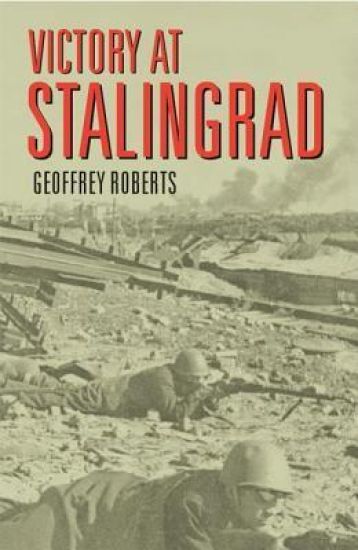
Victory at Stalingrad

Victory at Stalingrad

Geoffrey Roberts

Routledge
2002
nidottu
Victory at Stalingrad tells the gripping strategic and military story of that battle. The hard-won Soviet victory prevented Hitler from waging the Second World War for another ten years and set the Germans on the road to defeat. The Soviet victory also prevented the Nazis from completing the Final Solution, the wholesale destruction of European Jewry, which began with Hitler's "War of Annihilation" against the Soviets on the Eastern Front. Geoffrey Roberts places the conflict in the context of the clash between two mighty powers:their world views and their leaders. He presents a great human drama, highlighting the contribution made by political and military leaders on both sides. He shows that the real story of the battle was the Soviets' failure to achieve their greatest ambition: to deliver an immediate, war-winning knockout blow to the Germans.This provocative reassessment presents new evidence and challenges the myths and legends that surround both the battle and the key personalities who led and planned it.
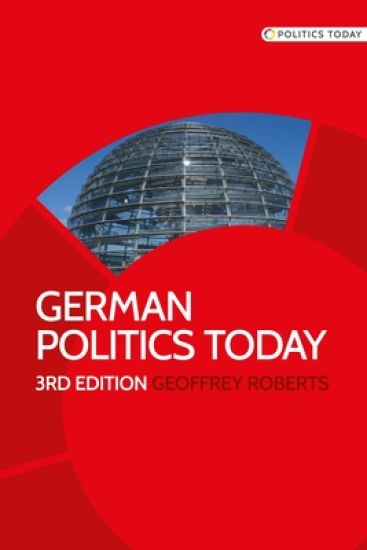
German Politics Today

German Politics Today

Geoffrey Roberts

Manchester University Press
2016
nidottu
This revised and updated third edition provides readers with a comprehensive description and analysis of the German political system, and of the political behaviour within the context of that system. It surveys the historical development of German politics, including the background, processes and political consequences of reunification, and recent changes to the electoral system, party system and recent Bundestag and Land elections.This authoritative yet accessible textbook presents certain specialised topics, such as the career of Angela Merkel and the Eurozone crisis, in separate sections within the relevant chapters, and provides tables for key information including election results, the membership of trade unions and lists of presidents and chancellors. The appendices include a review of significant constitutional court cases, a survey of the more important political features of each of the sixteen Länder, and the Bundestag election campaigns since 1949. Each chapter also offers suggestions for further reading.This new edition of German politics today offers a sound foundation for undergraduate courses focused on, or involving, study of the German political system.
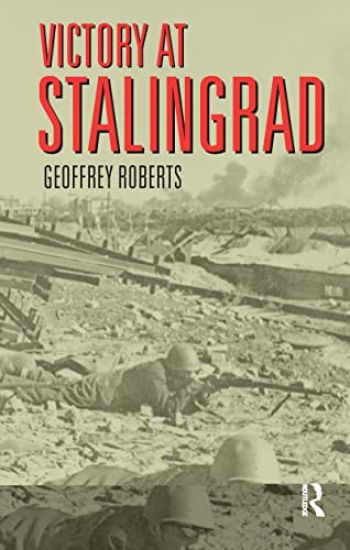
Victory at Stalingrad

Victory at Stalingrad

Geoffrey Roberts

Routledge
2016
sidottu
Victory at Stalingrad tells the gripping strategic and military story of that battle. The hard-won Soviet victory prevented Hitler from waging the Second World War for another ten years and set the Germans on the road to defeat. The Soviet victory also prevented the Nazis from completing the Final Solution, the wholesale destruction of European Jewry, which began with Hitler’s "War of Annihilation" against the Soviets on the Eastern Front.Geoffrey Roberts places the conflict in the context of the clash between two mighty powers:their world views and their leaders. He presents a great human drama, highlighting the contribution made by political and military leaders on both sides. He shows that the real story of the battle was the Soviets’ failure to achieve their greatest ambition: to deliver an immediate, war-winning knockout blow to the Germans.This provocative reassessment presents new evidence and challenges the myths and legends that surround both the battle and the key personalities who led and planned it.
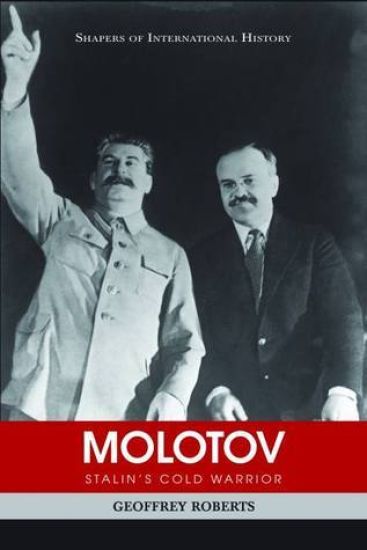
Molotov

Molotov

Geoffrey Roberts

Potomac Books Inc
2011
sidottu
The orthodox view of Vyacheslav Molotov is that he was no more than Stalin's faithful servant; a dogmatic conservative communist of little or no imagination. Molotov was, indeed, Stalin's right-hand man while from the 1920s the two men presided over a brutal, authoritarian communist system that led to the deaths of millions of people. But their partnership was far more complex. In this engaging biography, Geoffrey Roberts proposes a radical reappraisal of Molotov's life and career. He argues that although as Soviet foreign minister from 1939 Molotov was indeed Stalin's cold warrior, his personal preference was for détente and peaceful coexistence with the West. The differences and tensions between Molotov and Stalin came to a head in 1949 when Molotov's wife was arrested and imprisoned because of her activities with the Soviet Jewish Anti-Fascist Committee. Molotov refused to condemn her and was removed as foreign minister but was reappointed to the post after Stalin's death in 1953. Molotov renewed his efforts to curtail the Cold War and campaigned for the establishment of a pan-European system of collective security to halt polarization of the continent into competing military-political blocs. His attempts to negotiate an end to the Cold War were stymied by Soviet and Western hard-liners. Nevertheless his campaign for European collective security paved the way to the détente of the 1960s and 1970s and abolition of the Cold War in the 1980s and 1990s.In 1957 Molotov was ousted from the Soviet leadership following his attempted political coup against Nikita Khrushchev, Stalin's successor as the leader of the Communist Party. He was expelled from the Party and ended his diplomatic career as ambassador to Mongolia and as Soviet representative at the International Atomic Energy Agency in Vienna.
German Politics Today

German Politics Today

Geoffrey Roberts

Manchester University Press
2016
sidottu
This revised and updated third edition provides readers with a comprehensive description and analysis of the German political system, and of the political behaviour within the context of that system. It surveys the historical development of German politics, including the background, processes and political consequences of reunification, and recent changes to the electoral system, party system and recent Bundestag and Land elections.This authoritative yet accessible textbook presents certain specialised topics, such as the career of Angela Merkel and the Eurozone crisis, in separate sections within the relevant chapters, and provides tables for key information including election results, the membership of trade unions and lists of presidents and chancellors. The appendices include a review of significant constitutional court cases, a survey of the more important political features of each of the sixteen Länder, and the Bundestag election campaigns since 1949. Each chapter also offers suggestions for further reading.This new edition of German politics today offers a sound foundation for undergraduate courses focused on, or involving, study of the German political system.