Kirjojen hintavertailu. Mukana 11 244 527 kirjaa ja 12 kauppaa.

Kirjahaku

Etsi kirjoja tekijän nimen, kirjan nimen tai ISBN:n perusteella.

10 kirjaa tekijältä Geoffrey Swain

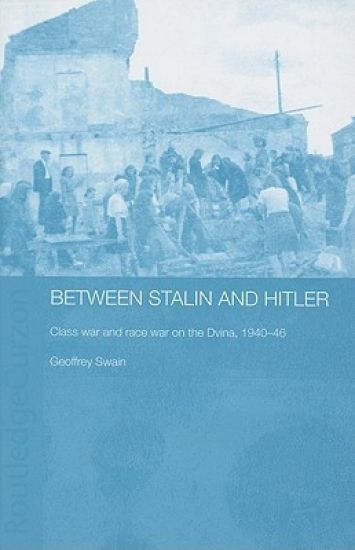
Between Stalin and Hitler

Between Stalin and Hitler

Geoffrey Swain

Routledge
2004
sidottu
Covering the horrors that took place in Latvia from the beginning of the Second World War until 1947, this book focuses on the heart of the 20th century: Stalinist industrialization, collectivization and political annihilation; Nazi expansionism and genocide; with local nationalism, local nationalist rivalries, and local anti-Semitism. The author traces the developments in one particular region of Latvia, Daugavpils. There, the dilemma of Hitler or Stalin, the ideological struggle of fascism or communism was more acute than anywhere else in Europe since the population was actively involved in establishing both.
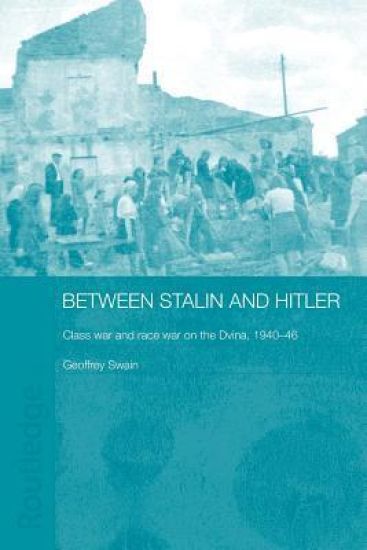
Between Stalin and Hitler

Between Stalin and Hitler

Geoffrey Swain

Routledge
2009
nidottu
Covering the horrors that took place in Latvia from the beginning of the Second World War until 1947, this book focuses on the heart of the 20th century: Stalinist industrialization, collectivization and political annihilation; Nazi expansionism and genocide; with local nationalism, local nationalist rivalries, and local anti-Semitism. The author traces the developments in one particular region of Latvia, Daugavpils. There, the dilemma of Hitler or Stalin, the ideological struggle of fascism or communism was more acute than anywhere else in Europe since the population was actively involved in establishing both.
Trotsky and the Russian Revolution

Trotsky and the Russian Revolution

Geoffrey Swain

Routledge
2014
sidottu
Supporters of Stalin saw Trotsky as a traitor and renegade. Trotsky’s own supporters saw him as the only true Leninist. In Trotsky and the Russian Revolution, Geoffrey Swain restores Trotsky to his real and central role in the Russian Revolution. In this succinct and comprehensive study, Swain contests that: In the years between 1903 and 1917, it was the ideas of Trotsky, rather than Lenin, which shaped the nascent Bolshevik Party and prepared it for the overthrow of the Tsar. During the autumn of 1917 workers supported Trotsky’s idea of an insurrection carried out by the soviet, rather than Lenin’s demand for a party orchestrated coup d’etat. During the Russian Civil War, Trotsky persuaded a sceptical Lenin that the only way to victory was through the employment of officers trained in the Tsar’s army.As well as examining Trotsky’s critique of Stalin’s Russia in the 1930s, this seminar reader probes deeper to explore the ideas which drove Trotsky forward during his years of influence over Russia’s revolutionary politics, exploring such key concepts as how to construct a revolutionary party, how to stage a successful insurrection, how to fight a revolutionary war, and how to build a socialist state.
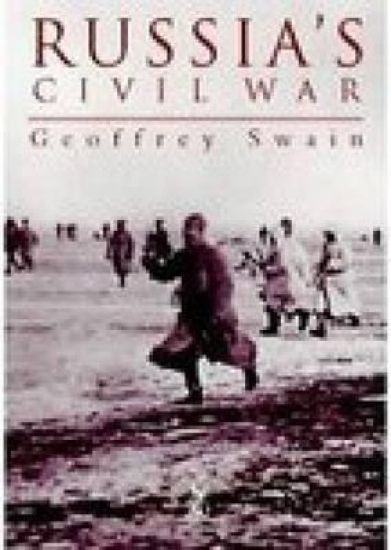
Russia's Civil War

Russia's Civil War

Geoffrey Swain

The History Press Ltd
2000
nidottu
During the Red Army's first major war, its ill-equipped, starving troops fought fellow countrymen and an invasion force of 10,000 American, British, and French soldiers in the freezing wastelands of Siberia and the Ukraine. A brutal and fast moving war, sieges were broken by fiercely armoured trains immortalized in "Dr. Zhivago." Land battles in the frozen east of Europe such as Kazan and Kakhovka were very different from those fought in the west - as the Nazis would also learn to their cost.
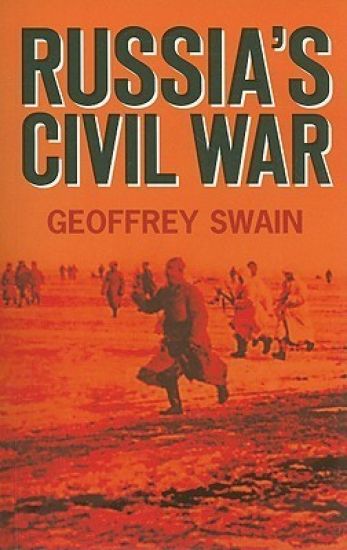
Russia's Civil War

Russia's Civil War

Geoffrey Swain

The History Press Ltd
2008
nidottu
The Russian Civil War was the Red Army’s first major conflict. Its ill-equipped, starving troops fought fellow countrymen and an invasion force of 10,000 American, British and French soldiers in the freezing wastelands of Siberia and the Ukraine. A brutal and fast moving war, sieges were broken by fiercely armoured trains immortalised in Dr Zhivago.Great land battles in the frozen east of Europe such as Kazan and Kakhovka proved very different from those fought in the west (something the Nazis would also learn to their cost twenty years later). However, the Allied armies together with the forces of Cossack warlords penetrated deep into Russia from Vladivostok towards Moscow conquering an area the size of Britain before being retreating in the face of a decisive counter-offensive. Likewise the Red Army did not fight alone. Its victory was achieved in alliance with peasant partisans. Unwilling to share his victory, Lenin began a struggle for the soul of the Russian peasantry; this bloody stalemate was only ended by Stalin a decade later through a terror in which millions Russians perished.
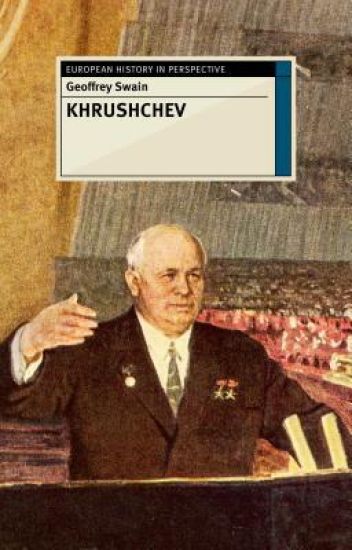
Khrushchev

Khrushchev

Geoffrey Swain

Red Globe Press
2015
nidottu
This concise, approachable introduction to Khrushchev explores the innovative theme of Khrushchev as reformer, arguing that the 'bumbling' nature of those reforms only partly reflected Khrushchev's uncertainty about how to act. Swain provides a cogent account of Khrushchev's political career and of his wider role in Soviet and world politics.
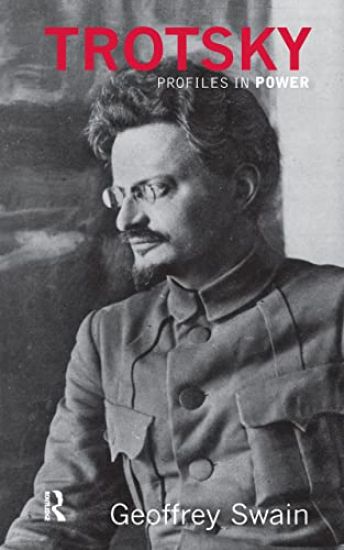
Trotsky

Trotsky

Geoffrey Swain

Routledge
2016
sidottu
Without Trotsky there would have been no Bolshevik Revolution, but Trotsky was no Bolshevik.Providing a full account of Trotsky’s role during the Russian Civil War and concentrating on his time as an active participant in Russian revolutionary politics, rather than his ideological writings of emigration, Swain gives the student a very different picture of the Bolshevik Commissar of War. This radically new interpretation of Trotsky’s career spanning 1905-1917 incorporates the tense relationship between Trotsky and Lenin until 1917, and pays particular attention to the Russian Civil War and Trotsky’s military organisation and contribution to the war.Swain argues critically that Trotsky achieved where Lenin would have failed, suggesting that Trotsky was in the main part responsible for the Bolshevik Revolution.
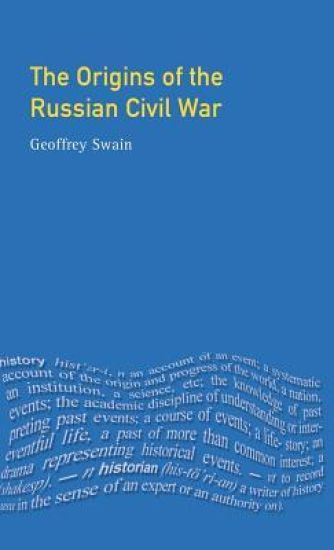
The Origins of the Russian Civil War
Concentrating on the turbulent months from February 1917 to November 1918, Geoffrey Swain explores the origins of the Civil War against the wider background of revolutionary Russia. He examines the aims of the anti-Bolshevik insurgents themselves; but he also shows how far the fear of civil war governed the action of the Provisional Government, and even the plans of the Bolsheviks. If the war itself can seem a fairly straightforward line-up of revolutionaries and counter-revolutionaries, this study reveals how complex were the motives of the people who precipitated it.
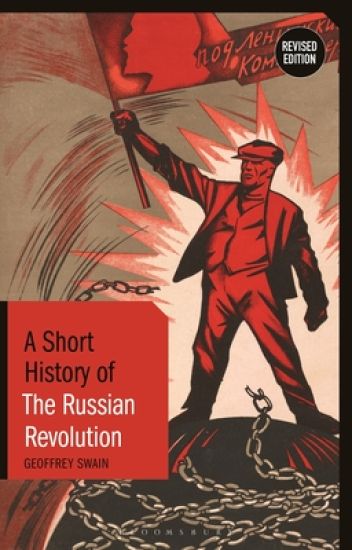
A Short History of the Russian Revolution

A Short History of the Russian Revolution

Geoffrey Swain

BLOOMSBURY PUBLISHING PLC
2022
nidottu
The 1917 Revolution sent shockwaves throughout the globe, setting a chain of events in motion that would change the entire course of the 20th century. With the overthrow of the Romanov Dynasty, Russia was plunged into the political unknown and, from the crucible of social unrest, ideological conflict and violent civil war, the world’s first communist state was forged. In this revised edition, Geoffrey Swain provides an incisive overview of one of the most complex and turbulent periods in modern history, tracing key moments from the abdication of Tsar Nicolas II to the Bolshevik seizure of power. A leading authority on Russia and Eastern Europe, Geoffrey Swain highlights the important legacies of 1905, demonstrating how early revolutionary ambitions among the masses culminated in the events of 1917. Challenging conventions in Soviet scholarship, this revised edition shows that the Bolshevik concepts of discipline and ideology that had mobilised the revolution, set an unnecessary course towards dictatorship and terror. Covering new historiography in the field, this revised edition places a renewed emphasis on the social and cultural upheaval experienced in Russia amid the nation’s political turmoil.
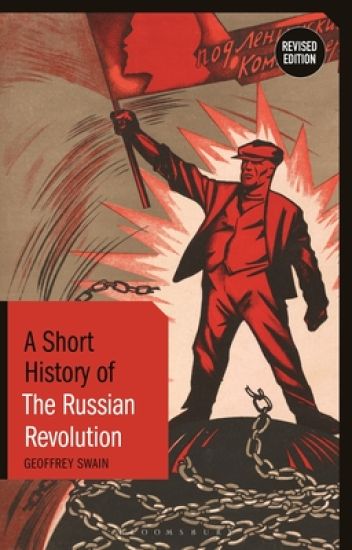
A Short History of the Russian Revolution

A Short History of the Russian Revolution

Geoffrey Swain

BLOOMSBURY PUBLISHING PLC
2022
sidottu
The 1917 Revolution sent shockwaves throughout the globe, setting a chain of events in motion that would change the entire course of the 20th century. With the overthrow of the Romanov Dynasty, Russia was plunged into the political unknown and, from the crucible of social unrest, ideological conflict and violent civil war, the world’s first communist state was forged. In this revised edition, Geoffrey Swain provides an incisive overview of one of the most complex and turbulent periods in modern history, tracing key moments from the abdication of Tsar Nicolas II to the Bolshevik seizure of power. A leading authority on Russia and Eastern Europe, Geoffrey Swain highlights the important legacies of 1905, demonstrating how early revolutionary ambitions among the masses culminated in the events of 1917. Challenging conventions in Soviet scholarship, this revised edition shows that the Bolshevik concepts of discipline and ideology that had mobilised the revolution, set an unnecessary course towards dictatorship and terror. Covering new historiography in the field, this revised edition places a renewed emphasis on the social and cultural upheaval experienced in Russia amid the nation’s political turmoil.