Kirjojen hintavertailu. Mukana 11 342 296 kirjaa ja 12 kauppaa.

Kirjahaku

Etsi kirjoja tekijän nimen, kirjan nimen tai ISBN:n perusteella.

11 kirjaa tekijältä Geoffrey Till

Understanding Victory

Understanding Victory

Geoffrey Till

Praeger Publishers Inc
2014
sidottu
Using four warship-centered examples, this book shows how naval battles are won or lost—and how technological advantage is rarely as decisive in defeat or victory as is often claimed.Providing a unique assessment of naval strategy and historic outcomes across centuries of warfare, Understanding Victory: Naval Operations from Trafalgar to the Falklands presents four case studies that examine each ship-based battle narrative to expose and analyze the factors that contributed to each side's success or defeat. The work opens with an overview of the general causes of success and failure in naval operations. Each case study starts with a detailed narrative of the battle and then reviews the conflict from the key perspectives identified in the introduction. These classic examples of naval warfare underscore how the outcome of naval operations is often predetermined by the clarity and quality of the mission aim, and point out striking constants in naval warfare despite the obvious differences in military technologies over a long span of time.
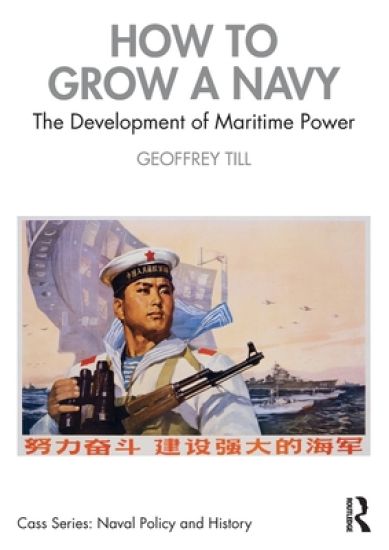
How to Grow a Navy

How to Grow a Navy

Geoffrey Till

TAYLOR FRANCIS LTD
2022
nidottu
This book examines the large but neglected topic of the development of maritime power from both an historical and a contemporary point of view.Navies have never been more important than they are now, in a century becoming, as widely expected, increasingly and profoundly maritime. The growing competition between China and Russia with the United States and its allies and partners around the world is essentially sea-based. The sea is also central to the world's globalised trading system and to its environmental health. Most current crises are either sea-based or have a critical maritime element to them. What happens at sea will help shape our future. Against that background, this book uses both history and contemporary events to analyse how maritime power and naval strength has been, and is being, developed. In a reader-friendly way, it seeks to show what has worked and what has not, and to uncover the recurring patterns in maritime and naval development which explain past, present and future success - and failure. It reflects on the historical experience of all navies, but in particular it poses the question of whether China is following the same pattern of naval development illustrated by Britain at the start of the 18th century, which led to two centuries of naval dominance.This book will be of much interest to students of maritime power, naval studies, and strategic studies, as well as to naval professionals around the world.
How to Grow a Navy

How to Grow a Navy

Geoffrey Till

TAYLOR FRANCIS LTD
2022
sidottu
This book examines the large but neglected topic of the development of maritime power from both an historical and a contemporary point of view.Navies have never been more important than they are now, in a century becoming, as widely expected, increasingly and profoundly maritime. The growing competition between China and Russia with the United States and its allies and partners around the world is essentially sea-based. The sea is also central to the world's globalised trading system and to its environmental health. Most current crises are either sea-based or have a critical maritime element to them. What happens at sea will help shape our future. Against that background, this book uses both history and contemporary events to analyse how maritime power and naval strength has been, and is being, developed. In a reader-friendly way, it seeks to show what has worked and what has not, and to uncover the recurring patterns in maritime and naval development which explain past, present and future success - and failure. It reflects on the historical experience of all navies, but in particular it poses the question of whether China is following the same pattern of naval development illustrated by Britain at the start of the 18th century, which led to two centuries of naval dominance.This book will be of much interest to students of maritime power, naval studies, and strategic studies, as well as to naval professionals around the world.
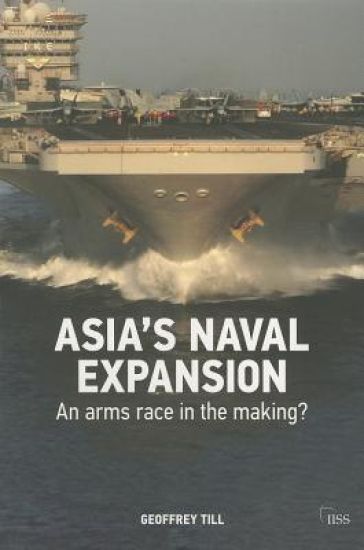
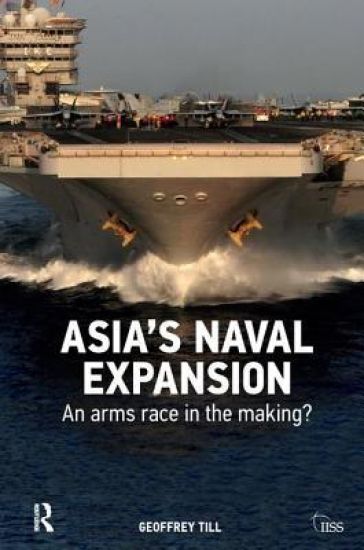
Asia’s Naval Expansion

Asia’s Naval Expansion

Geoffrey Till

Routledge
2012
nidottu
The navies of China, India and to a lesser extent Japan are expanding rapidly at present. This has the potential to alter the US-dominated naval balance in Asia-Pacific but it also raises a question: are the region’s powers involved in a naval arms race?Naval development is and always has been a crucial indicator of economic and political development. It shows the emergence of a significant shift in strategic weight from West to East. But within the Asia-Pacific Region, alongside growing economic and institutional integration, there are geo-political tensions that threaten the regions stability and peace. The balance between the two determines the form that naval development in that region is taking. Some aspects of this suggest the beginnings of a naval arms race that would have profound consequences for the region and the world.
Seapower

Seapower

Geoffrey Till

TAYLOR FRANCIS LTD
2026
nidottu
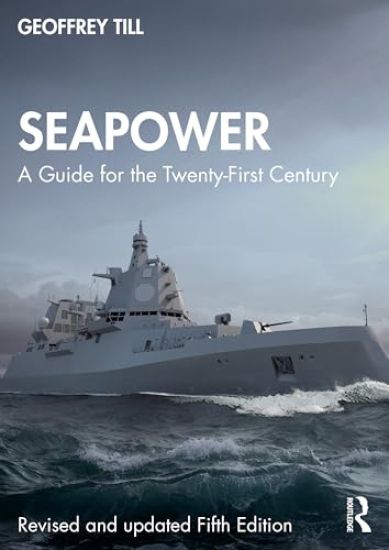
This is the 5th, revised and updated, edition of Seapower: A Guide for the Twenty-First Century. The sea has always provided the basis for humankind's prosperity and security. With the emergence of an increasingly globalized world trading system in the early part of the 21st century, this became ever more obvious, Contemporary conditions have therefore required navies to adapt and to expand the range of their interests, activities and responsibilities. The Houthi assault on international shipping in the Red Sea and the need to monitor sanctions and ‘dark fleet’ operations shows that these tasks are important and developing fast. Even so, and especially with the re-emergence of potentially de-stabilising great power competition, traditional hard power naval concerns still predominate. This book investigates the consequences of all this for the developing nature, composition and functions of the world's navies, and provides a guide for the changing but crucial role of seapower in the 21st century. This edition contains new material on the Russia-Ukraine and Gaza wars, tensions in the Indo-Pacific, the Arctic and North Atlantic, the emerging concept of ‘seabed control’, as well as the extent that technological innovations and other recent strategic developments are challenging traditional concepts of maritime strategy and the roles of navies. This book is essential reading for students of naval power, maritime security and naval history, and highly recommended for students of strategic studies, international security and International Relations.
Seapower

Seapower

Geoffrey Till

TAYLOR FRANCIS LTD
2026
sidottu
This is the 5th, revised and updated, edition of Seapower: A Guide for the Twenty-First Century. The sea has always provided the basis for humankind's prosperity and security. With the emergence of an increasingly globalized world trading system in the early part of the 21st century, this became ever more obvious, Contemporary conditions have therefore required navies to adapt and to expand the range of their interests, activities and responsibilities. The Houthi assault on international shipping in the Red Sea and the need to monitor sanctions and ‘dark fleet’ operations shows that these tasks are important and developing fast. Even so, and especially with the re-emergence of potentially de-stabilising great power competition, traditional hard power naval concerns still predominate. This book investigates the consequences of all this for the developing nature, composition and functions of the world's navies, and provides a guide for the changing but crucial role of seapower in the 21st century. This edition contains new material on the Russia-Ukraine and Gaza wars, tensions in the Indo-Pacific, the Arctic and North Atlantic, the emerging concept of ‘seabed control’, as well as the extent that technological innovations and other recent strategic developments are challenging traditional concepts of maritime strategy and the roles of navies. This book is essential reading for students of naval power, maritime security and naval history, and highly recommended for students of strategic studies, international security and International Relations.
Asia’s Naval Expansion

Asia’s Naval Expansion

Geoffrey Till

Routledge
2017
sidottu
The navies of China, India and to a lesser extent Japan are expanding rapidly at present. This has the potential to alter the US-dominated naval balance in Asia-Pacific but it also raises a question: are the region‘s powers involved in a naval arms race? Naval development is and always has been a crucial indicator of economic and political development. It shows the emergence of a significant shift in strategic weight from West to East. But within the Asia-Pacific Region, alongside growing economic and institutional integration, there are geo-political tensions that threaten the regions stability and peace. The balance between the two determines the form that naval development in that region is taking. Some aspects of this suggest the beginnings of a naval arms race that would have profound consequences for the region and the world.
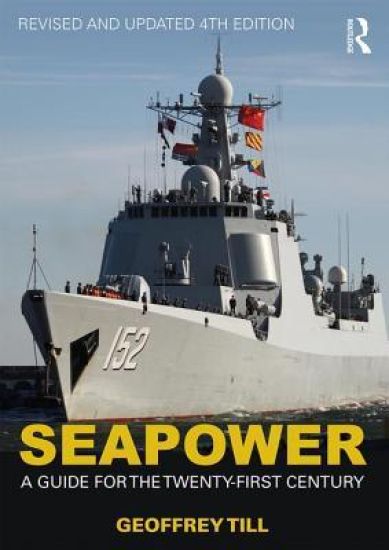
Seapower

Seapower

Geoffrey Till

Routledge
2018
sidottu
This is the fourth, revised and updated, edition of Geoffrey Till's Seapower: A Guide for the Twenty-first Century.The rise of the Chinese and other Asian navies, worsening quarrels over maritime jurisdiction and the United States’ maritime pivot towards the Asia-Pacific region reminds us that the sea has always been central to human development as a source of resources, and as a means of transportation, information-exchange and strategic dominion. It has provided the basis for mankind's prosperity and security, and this is even more true in the early twenty-first century, with the emergence of an increasingly globalised world trading system. Navies have always provided a way of policing, and sometimes exploiting, the system. In contemporary conditions, navies, and other forms of maritime power, are having to adapt, in order to exert the maximum power ashore in the company of others and to expand the range of their interests, activities and responsibilities. While these new tasks are developing fast, traditional ones still predominate. Deterrence remains the first duty of today’s navies, backed up by the need to ‘fight and win’ if necessary. How navies and their states balance these two imperatives will tell us a great deal about our future in this increasingly maritime century. This book investigates the consequences of all this for the developing nature, composition and functions of all the world's significant navies, and provides a guide for anyone interested in the changing and crucial role of seapower in the twenty-first century.Seapower is essential reading for all students of naval power, maritime security and naval history, and highly recommended for students of strategic studies, international security and international relations.
Seapower

Seapower

Geoffrey Till

Routledge
2018
nidottu
This is the fourth, revised and updated, edition of Geoffrey Till's Seapower: A Guide for the Twenty-first Century.The rise of the Chinese and other Asian navies, worsening quarrels over maritime jurisdiction and the United States’ maritime pivot towards the Asia-Pacific region reminds us that the sea has always been central to human development as a source of resources, and as a means of transportation, information-exchange and strategic dominion. It has provided the basis for mankind's prosperity and security, and this is even more true in the early twenty-first century, with the emergence of an increasingly globalised world trading system. Navies have always provided a way of policing, and sometimes exploiting, the system. In contemporary conditions, navies, and other forms of maritime power, are having to adapt, in order to exert the maximum power ashore in the company of others and to expand the range of their interests, activities and responsibilities. While these new tasks are developing fast, traditional ones still predominate. Deterrence remains the first duty of today’s navies, backed up by the need to ‘fight and win’ if necessary. How navies and their states balance these two imperatives will tell us a great deal about our future in this increasingly maritime century. This book investigates the consequences of all this for the developing nature, composition and functions of all the world's significant navies, and provides a guide for anyone interested in the changing and crucial role of seapower in the twenty-first century.Seapower is essential reading for all students of naval power, maritime security and naval history, and highly recommended for students of strategic studies, international security and international relations.