Kirjojen hintavertailu. Mukana 11 627 630 kirjaa ja 12 kauppaa.

Kirjahaku

Etsi kirjoja tekijän nimen, kirjan nimen tai ISBN:n perusteella.

148 kirjaa tekijältä Georg Simmel

Georg Simmel

Georg Simmel

Georg Simmel

University of Chicago Press
2020
sidottu
Georg Simmel is one of the most original German thinkers of the twentieth century and is considered a founding architect of the modern discipline of sociology. Ranging over fundamental questions of the relationship of self and society, his influential writings on money, modernity, and the metropolis continue to provoke debate today. Fascinated by the relationship between culture, society, and economic life, Simmel took an interest in myriad phenomena of aesthetics and the arts. A friend of writers and artists such as Auguste Rodin, Rainer Maria Rilke, and Stefan George, he wrote dozens of pieces engaging with topics such as the work of Michelangelo, Rembrandt, and Rodin, Japanese art, naturalism and symbolism, Goethe, "art for art's sake", art exhibitions, and the aesthetics of the picture frame. This is the first collection to bring together Simmel's finest writing on art and aesthetics, and many of the items appear in English in this volume for the first time. The more than forty essays show the protean breadth of Simmel's reflections, covering landscape painting, portraiture, sculpture, poetry, theater, form, style, and representation. An extensive introduction by Austin Harrington gives an overview of Simmel's themes and elucidates the significance of his work for the many theorists who would be inspired by his ideas. Something of an outsider to the formal academic world of his day, Simmel wrote creatively with the flair of an essayist. This expansive collection of translations, many of them prepared by the editor, preserves the narrative ease of Simmel's prose and will be a vital source for readers with an interest in Simmel's trailblazing ideas in modern European philosophy, sociology, and cultural theory.
Georg Simmel

Georg Simmel

Georg Simmel

University of Chicago Press
2020
pokkari
Georg Simmel is one of the most original German thinkers of the twentieth century and is considered a founding architect of the modern discipline of sociology. Ranging over fundamental questions of the relationship of self and society, his influential writings on money, modernity, and the metropolis continue to provoke debate today. Fascinated by the relationship between culture, society, and economic life, Simmel took an interest in myriad phenomena of aesthetics and the arts. A friend of writers and artists such as Auguste Rodin, Rainer Maria Rilke, and Stefan George, he wrote dozens of pieces engaging with topics such as the work of Michelangelo, Rembrandt, and Rodin, Japanese art, naturalism and symbolism, Goethe, "art for art's sake", art exhibitions, and the aesthetics of the picture frame. This is the first collection to bring together Simmel's finest writing on art and aesthetics, and many of the items appear in English in this volume for the first time. The more than forty essays show the protean breadth of Simmel's reflections, covering landscape painting, portraiture, sculpture, poetry, theater, form, style, and representation. An extensive introduction by Austin Harrington gives an overview of Simmel's themes and elucidates the significance of his work for the many theorists who would be inspired by his ideas. Something of an outsider to the formal academic world of his day, Simmel wrote creatively with the flair of an essayist. This expansive collection of translations, many of them prepared by the editor, preserves the narrative ease of Simmel's prose and will be a vital source for readers with an interest in Simmel's trailblazing ideas in modern European philosophy, sociology, and cultural theory.
Georg Simmel on Individuality and Social Forms

Georg Simmel on Individuality and Social Forms

Georg Simmel

University of Chicago Press
1972
nidottu
"Of those who created the intellectual capital used to launch the enterprise of professional sociology, Georg Simmel was perhaps the most original and fecund. In search of a subject matter for sociology that would distinguish it from all other social sciences and humanistic disciplines, he charted a new field for discovery and proceeded to explore a world of novel topics in works that have guided and anticipated the thinking of generations of sociologists. Such distinctive concepts of contemporary sociology as social distance, marginality, urbanism as a way of life, role-playing, social behavior as exchange, conflict as an integrating process, dyadic encounter, circular interaction, reference groups as perspectives, and sociological ambivalence embody ideas which Simmel adumbrated more than six decades ago."—Donald N. Levine Half of the material included in this edition of Simmel's writings represents new translations. This includes Simmel's important, lengthy, and previously untranslated "Group Expansion and Development of Individuality," as well as three selections from his most neglected work, Philosophy of Money; in addition, the introduction to Probleme der Geschichtsphilosophie, chapter one of the Lebensanschauung, and three essays are translated for the first time.
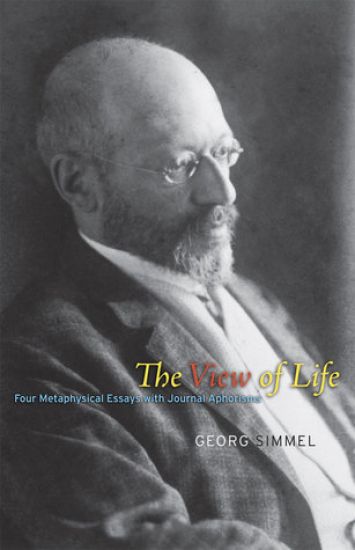
The View of Life

The View of Life

Georg Simmel

University of Chicago Press
2015
nidottu
Published in 1918, The View of Life is Georg Simmel's final work. Famously deemed "the brightest man in Europe" by George Santayana, Simmel addressed diverse topics across his essayistic writings, which influenced scholars in aesthetics, epistemology, and sociology. Nevertheless, certain core issues emerged over the course of his career - the genesis, structure, and transcendence of social and cultural forms, and the nature and conditions of authentic individuality, including the role of mindfulness regarding mortality. Composed not long before his death, The View of Life was, Simmel wrote, his "testament," a capstone work of profound metaphysical inquiry intended to formulate his conception of life in its entirety. Now Anglophone readers can at last read in full the work that shaped the argument of Heidegger's Being and Time and whose extraordinary impact on European intellectual life between the wars was extolled by Jurgen Habermas. Presented alongside these seminal essays are aphoristic fragments from Simmel's last journal, providing a beguiling look into the mind of one of the twentieth century's greatest thinkers.
The View of Life

The View of Life

Georg Simmel

University of Chicago Press
2011
sidottu
Published in 1918, "The View of Life" is Georg Simmel's final work. Famously deemed 'the brightest man in Europe by George Santayana, Simmel addressed a variety of topics across his essayistic writings, which have influenced scholars in aesthetics, ethics, epistemology, and sociology. Nevertheless, a set of core issues emerged over the course of his career, most centrally the genesis, structure, and transcendence of social and cultural forms and the nature and genesis of authentic individuality. Composed in the years before his death, "The View of Life" was, according to Simmel, his 'testament', a capstone work of profound metaphysical inquiry intended to formulate his conception of life in its entirety. Now Anglophone readers can at last read in full the work that shaped the argument of Heidegger's "Being and Time" and whose extraordinary impact on European intellectual life between the wars has been extolled by Jurgen Habermas. Presented alongside these seminal essays are aphoristic fragments from Simmel's last journal, providing a beguiling look into the mind of one of the twentieth century's greatest thinkers.
Schopenhauer and Nietzsche

Schopenhauer and Nietzsche

Georg Simmel

University of Illinois Press
1991
nidottu
Anticipating contemporary deconstructive readings of philosophical texts, Georg Simmel pits the two German masters of philosophy of life against each other in a play of opposition and supplementation. This first English translation of Simmel's work includes an extensive introduction, providing the reader with ready access to the text by mapping its discursive strategies.
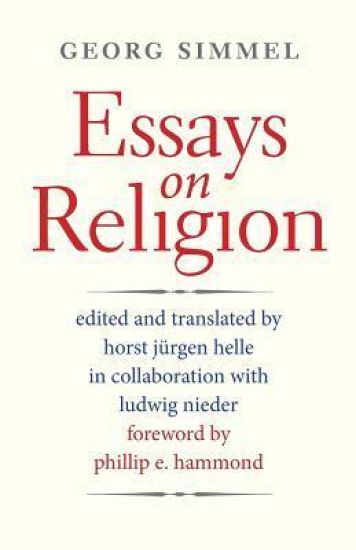
Essays on Religion

Essays on Religion

Georg Simmel

Yale University Press
2013
pokkari
The noted German sociologist and philosopher Georg Simmel wrote a number of essays that deal directly with religion as a fundamental process in human life. These essays set forth Simmel's mature reflections on religion and its relation to modernity, personality, art, sociology, psychology, philosophy, and science. They also include his views on methods in the study of religion and his thoughts on achieving a broader perspective on religion. Originally published between 1898 and 1918, the last twenty years of Simmel's life, the essays are collected here in English for the first time.The essays provide an excellent picture of the development of the characteristic doctrines of Simmel's thought as applied to religion, based on phenomenological analysis of human experience that emphasizes the subjective dimensions of life. The collection shows that Simmel was interested less in the forms that religions take than in what he calls a "particular spiritual quality" or "attitude of the soul"--a feeling of religiousness that precedes the forms of religion and may later be projected onto them. Viewing religion as primarily a quality of social relationships that can be analyzed in various contexts, Simmel makes a unique contribution to the sociological analysis of religion, as well as offering valuable insights for scientific consideration.Published by arrangement with the Society for the Scientific Study of Religion
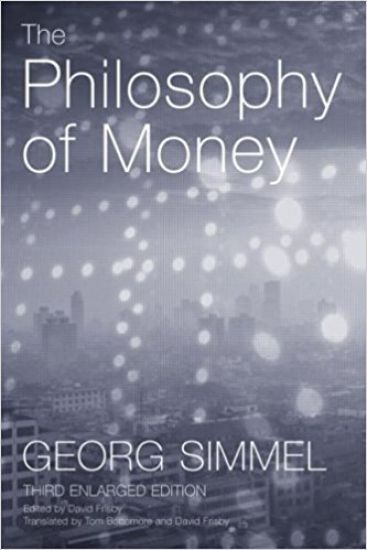
The Philosophy of Money

The Philosophy of Money

Georg Simmel

Routledge
2004
nidottu
'I have lost interest ... in all that I have written prior to The Philosophy of Money. This one is really my book, the others appear to me colourless and seem as if they could have been written by anyone else.' - Georg Simmel to Heinrich Rickert (1904)In The Philosophy of Money, Simmel provides us with a remarkably wide-ranging discussion of the social, psychological and philosophical aspects of the money economy, full of brilliant insights into the forms that social relationships take. He analyzes the relationships of money to exchange, the human personality, the position of women, individual freedom and many other areas of human existence. Later he provides us with an account of the consequences of the modern money economy and the division of labour, which examines the processes of alienation and reification in work, urban life and elsewhere. Perhaps, more than any of his other sociological works, The Philosophy of Money gives us an example of his comprehensive analysis of the interrelationships between the most diverse and seemingly connected social phenomena.This revised edition of the translation by Tom Bottomore and David Frisby, includes a new Preface by David Frisby.
The Philosophy of Money

The Philosophy of Money

Georg Simmel

Routledge
2004
sidottu
'I have lost interest ...in all that I have written prior to The Philosophy of Money . This one is really my book, the others appear to me colourless and seem as if they could have been written by anyone else.' - Georg Simmel to Heinrich Rickert (1904) In The Philosophy of Money , Simmel provides us with a remarkably wide-ranging discussion of the social, psychological and philosophical aspects of the money economy, full of brilliant insights into the forms that social relationships take. He analyzes the relationships of money to exchange, the human personality, the position of women, individual freedom and many other areas of human existence. Later he provides us with an account of the consequences of the modern money economy and the division of labour, which examines the processes of alienation and reification in work, urban life and elsewhere. Perhaps, more than any of his other sociological works, The Philosophy of Money gives us an example of his comprehensive analysis of the interrelationships between the most diverse and seemingly connected social phenomena. This revised edition of the translation by Tom Bottomore and David Frisby, includes a new Preface by Davi
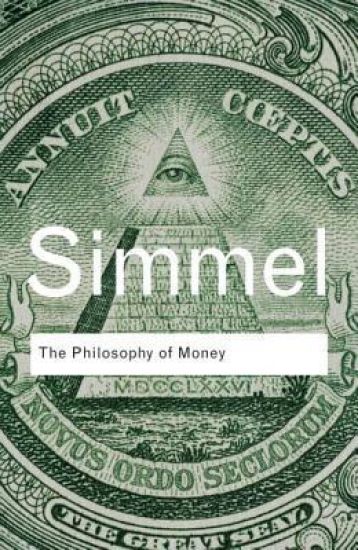
The Philosophy of Money

The Philosophy of Money

Georg Simmel

Routledge
2011
nidottu
With a new foreword by Charles Lemert'Its greatness...lies in ceaseless and varied use of the money form to unearth and conceptually reveal incommensurabilities of all kinds, in social reality fully as much as in thought itself.' - Fredric JamesonIn The Philosophy of Money, Georg Simmel puts money on the couch. He provides us with a classic analysis of the social, psychological and philosophical aspects of the money economy, full of brilliant insights into the forms that social relationships take. He analyzes the relationships of money to exchange, human personality, the position of women, and individual freedom. Simmel also offers us prophetic insights into the consequences of the modern money economy and the division of labour, in particular the processes of alienation and reification in work and urban life. An immense and profound piece of work it demands to be read today and for years to come as a stunning account of the meaning, use and culture of money.Georg Simmel (1858-1918) was born in Berlin, the youngest of seven children. He studied philosophy and history at the University of Berlin and was one of the first generation of great German sociologists that included Max Weber.
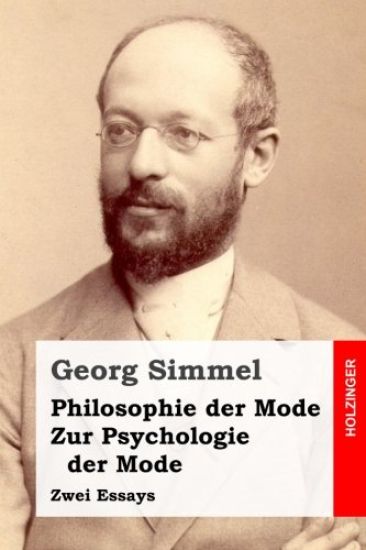
Philosophie der Mode / Zur Psychologie der Mode: Zwei Essays

Philosophie der Mode / Zur Psychologie der Mode: Zwei Essays

Georg Simmel

Createspace Independent Publishing Platform
2014
nidottu
Georg Simmel: Philosophie der Mode / Zur Psychologie der Mode. Zwei Essays Edition Holzinger. Taschenbuch Berliner Ausgabe, 2016, 5. Auflage Vollst ndiger, durchgesehener Neusatz mit einer Biographie des Autors bearbeitet und eingerichtet von Michael Holzinger Philosophie der Mode: Aus: Moderne Zeitfragen, herausgegeben von Hans Landsberg, No. 11, Berlin: Pan-Verlag o. J. (1905), S. 5-41 Zur Psychologie der Mode: Aus: Die Zeit. Wiener Wochenschrift f r Politik, Volkswirtschaft, Wissenschaft und Kunst. 5. Band 1895, Nr. 54 vom 12.10.1895; S. 22-24. Herausgeber der Reihe: Michael Holzinger Reihengestaltung: Viktor Harvion Gesetzt aus der Minion Pro, 12 pt.
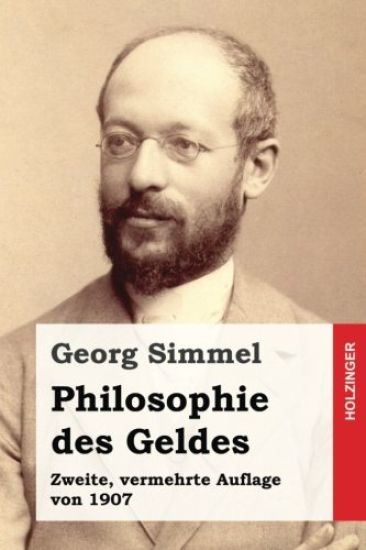
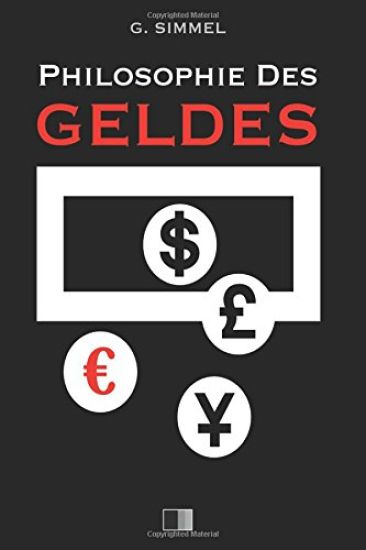
Philosophie des Geldes: Zweite, vermehrte Auflage von 1907

Philosophie des Geldes: Zweite, vermehrte Auflage von 1907

Georg Simmel

Createspace Independent Publishing Platform
2016
nidottu
Georg Simmel: Philosophie des Geldes. Zweite, vermehrte Auflage von 1907 Edition Holzinger. Taschenbuch Berliner Ausgabe, 2016 Vollst ndiger, durchgesehener Neusatz mit einer Biographie des Autors bearbeitet und eingerichtet von Michael Holzinger Erstdruck: Leipzig (Duncker & Humblot) 1900. Der Text folgt der 2., vermehrten Auflage von 1907. Das annotierte Inhaltsverzeichnis wurde aufgel st und den jeweiligen Abschnitten vorangestellt. Textgrundlage ist die Ausgabe: Georg Simmel: Philosophie des Geldes. Dritte, unver nderte Auflage, M nchen und Leipzig, Duncker & Humblot, 1920. Herausgeber der Reihe: Michael Holzinger Reihengestaltung: Viktor Harvion Gesetzt aus der Minion Pro, 11 pt.
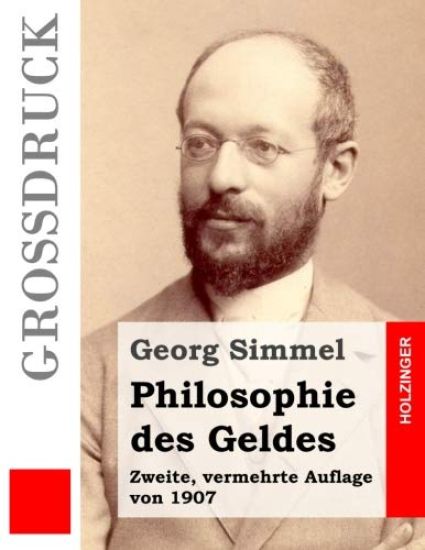
Philosophie des Geldes (Großdruck): Zweite, vermehrte Auflage von 1907

Philosophie des Geldes (Großdruck): Zweite, vermehrte Auflage von 1907

Georg Simmel

Createspace Independent Publishing Platform
2016
nidottu
Georg Simmel: Philosophie des Geldes. Zweite, vermehrte Auflage von 1907 Lesefreundlicher Gro druck in 16-pt-Schrift Edition Holzinger. Gro format, 216 x 279 mm Berliner Ausgabe, 2016 Vollst ndiger, durchgesehener Neusatz mit einer Biographie des Autors bearbeitet und eingerichtet von Michael Holzinger Erstdruck: Leipzig (Duncker & Humblot) 1900. Der Text folgt der 2., vermehrten Auflage von 1907. Das annotierte Inhaltsverzeichnis wurde aufgel st und den jeweiligen Abschnitten vorangestellt. Textgrundlage ist die Ausgabe: Georg Simmel: Philosophie des Geldes. Dritte, unver nderte Auflage, M nchen und Leipzig, Duncker & Humblot, 1920. Herausgeber der Reihe: Michael Holzinger Reihengestaltung: Viktor Harvion Gesetzt aus der Minion Pro, 16 pt.
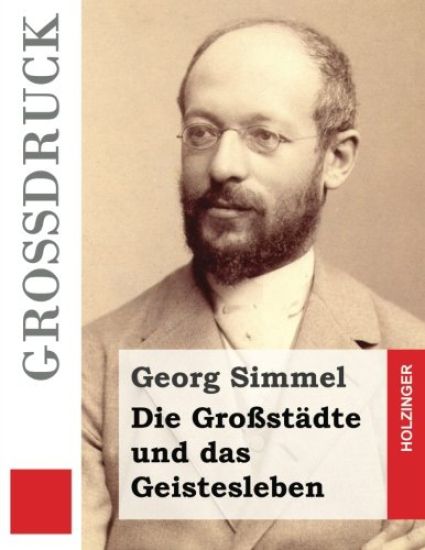
Die Großstädte und das Geistesleben (Großdruck)

Die Großstädte und das Geistesleben (Großdruck)

Georg Simmel

Createspace Independent Publishing Platform
2016
nidottu
Georg Simmel: Die Gro st dte und das Geistesleben Lesefreundlicher Gro druck in 16-pt-Schrift Edition Holzinger. Gro format, 216 x 279 mm Berliner Ausgabe, 2016 Vollst ndiger, durchgesehener Neusatz mit einer Biographie des Autors bearbeitet und eingerichtet von Michael Holzinger Aus: Die Gro stadt. Vortr ge und Aufs tze zur St dteausstellung. (Jahrbuch der Gehe-Stiftung Dresden, hrsg. von Th. Petermann, Band 9, 1903, S. 185-206, Dresden) Herausgeber der Reihe: Michael Holzinger Reihengestaltung: Viktor Harvion Gesetzt aus der Minion Pro, 16 pt.