Kirjojen hintavertailu. Mukana 12 390 323 kirjaa ja 12 kauppaa.

Kirjahaku

Etsi kirjoja tekijän nimen, kirjan nimen tai ISBN:n perusteella.

19 kirjaa tekijältä George Allan

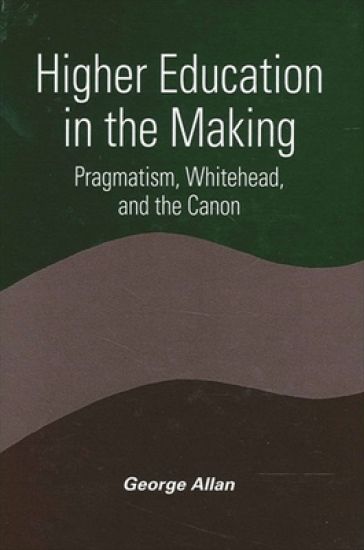
Higher Education in the Making

Higher Education in the Making

George Allan

State University of New York Press
2004
pokkari
Argues for a pragmatic canon always in need of renovation.George Allan argues that the so-called "culture wars" in higher education are the result of the dogmatic and unyielding certainty that both canonists and anti-canonists bring to any discussion of how best to organize an undergraduate curriculum. He then proposes a middle way. Drawing from William James, John Dewey, and Alfred North Whitehead, he contrasts the absolutist claims of both canonists and anti-canonists with a fallibilist approach and argues for a more pragmatic canon that is normative and always in need of renovation.A wide variety of voices are heard in Allan's conversation about the nature and meaning of an education canon, including philosophers Aristotle, Descartes, Arthur Lovejoy, Hannah Arendt, Spengler, Emerson, Lyotard, and Rorty. Contemporary voices include Eva Brann, Charles Anderson, Francis Oakley, Martha Nussbaum, Gerald Graff, Henry Louis Gates Jr., and Bill Readings.
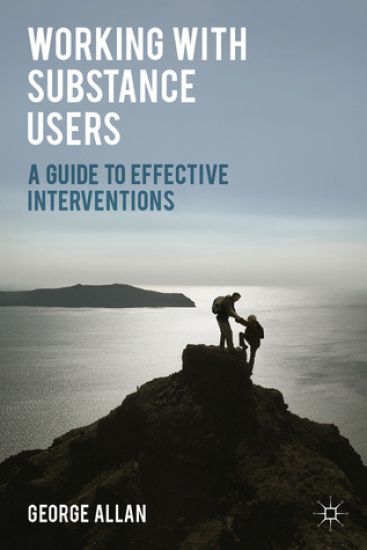
Working with Substance Users

Working with Substance Users

George Allan

Red Globe Press
2014
nidottu
Social care and health professionals encounter people with drug and alcohol problems on a daily basis, but many feel ill-equipped to respond. Although people working across different professions will approach substance users from various perspectives, the knowledge and skills needed to intervene effectively are the same for all.With a strong emphasis on the core skills needed for practice, this up-to-date and accessible text provides a complete guide to working with substance users and their relatives. It covers the nature of problematic use and introduces theories as to why people experience substance problems and why people change. The book moves on to examine a number of effective interventions and how they can be applied, including assessment and care planning, pharmacological treatments and cognitive behavioural therapy. Distinctively, in addition to chapters on working with specific groups such as adolescents and involuntary service users, it also addresses the implications of parental problems for children and explores ways of helping adults affected by a relative's substance use.Supported throughout by case examples and activities to help apply theories and concepts to practice, this comprehensive text equips readers with the knowledge and skills needed to work with substance users.
A Sketch of the Life & Character of the Right Honourable and Reverend Richard Trevor Lord Bishop of Durham. With a Particular Account of his Last Illness
The 18th century was a wealth of knowledge, exploration and rapidly growing technology and expanding record-keeping made possible by advances in the printing press. In its determination to preserve the century of revolution, Gale initiated a revolution of its own: digitization of epic proportions to preserve these invaluable works in the largest archive of its kind. Now for the first time these high-quality digital copies of original 18th century manuscripts are available in print, making them highly accessible to libraries, undergraduate students, and independent scholars.The Age of Enlightenment profoundly enriched religious and philosophical understanding and continues to influence present-day thinking. Works collected here include masterpieces by David Hume, Immanuel Kant, and Jean-Jacques Rousseau, as well as religious sermons and moral debates on the issues of the day, such as the slave trade. The Age of Reason saw conflict between Protestantism and Catholicism transformed into one between faith and logic -- a debate that continues in the twenty-first century.++++The below data was compiled from various identification fields in the bibliographic record of this title. This data is provided as an additional tool in helping to insure edition identification: ++++British LibraryT066094Anonymous. By George Allan. In this edition, "To the reader" at the head of the second leaf is in bold type. With an errata slip pasted to the verso of the final leaf. Also issued as part of: 'Collectanea ad statum civilem et ecclesiasticum comitatus DDarlington: printed by Messrs. Darnton & Smith, 1776. 4],13, 1]p., plate: port.; 4
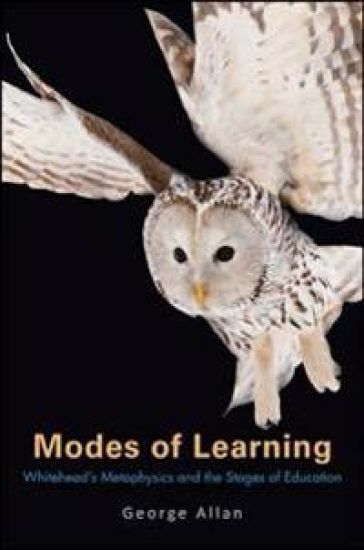
Modes of Learning

Modes of Learning

George Allan

State University of New York Press
2013
pokkari
A highly accessible reading of Whitehead's writings on education and their connection to his metaphysics.Educators are familiar with Alfred North Whitehead's three stages of education: romance, precision, and generalization. Philosophers are familiar with his metaphysical theories about the primacy of temporal processes. In Modes of Learning, George Allan brings these two sides of Whitehead's thought together for the first time in a book suitable for both those initially approaching Whitehead's metaphysics and experts alike.Allan develops a series of analogies between Whitehead's ideas about how we learn and key concepts in his later metaphysical writings, demonstrating that both how we learn and how the world changes involve a tension between open-ended exploration and systematic organization. Novel ideas free us from the blinders imposed by old habits and beliefs. Yet only when these ideas are integrated with the old ways are we able to improve our individual and collective lives-until changing circumstances call for further new ideas and fresh integrations.Using a rich variety of examples, Allan illuminates the metaphysical ideas he explores by tethering them concretely to the educational practices in which they are rooted. This shows a key but neglected feature of Whitehead's thought: his pragmatic theory of truth, with its functionalist approach to experience and its humanistic appreciation of the frailty of all human endeavors.
Whitehead’s Radically Temporalist Metaphysics
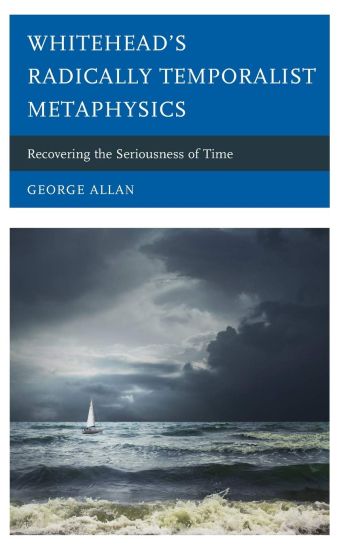
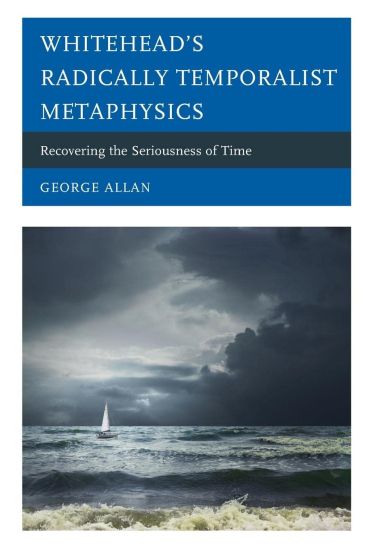
In Whitehead's Radically Temporalist Metaphysics: Recovering the Seriousness of Time, George Allan argues that Whitehead’s introduction of God into his process metaphysics renders his metaphysics incoherent. This notion of God, who is the reason for both stability and progressive change in the world and who is both the infinite source of novel possibilities and the everlasting repository for the finite values, inserts into a reality that is supposedly composed solely of finite entities an entity both infinite and everlasting. By eliminating this notion of God, Allan draws on the temporalist foundation of Whitehead’s views to recover a metaphysics that takes time seriously. By turning to Whitehead’s later writings, Allan shows how this interpretation is developed into an expanded version of the radically temporalist hypothesis, emphasizing the power of finite entities, individually and collectively, to create, sustain, and enhance the dynamic world of which we are a creative part.
Whitehead’s Radically Temporalist Metaphysics

Whitehead’s Radically Temporalist Metaphysics

George Allan

BLOOMSBURY PUBLISHING PLC
2022
nidottu
In Whitehead's Radically Temporalist Metaphysics: Recovering the Seriousness of Time, George Allan argues that Whitehead’s introduction of God into his process metaphysics renders his metaphysics incoherent. This notion of God, who is the reason for both stability and progressive change in the world and who is both the infinite source of novel possibilities and the everlasting repository for the finite values, inserts into a reality that is supposedly composed solely of finite entities an entity both infinite and everlasting. By eliminating this notion of God, Allan draws on the temporalist foundation of Whitehead’s views to recover a metaphysics that takes time seriously. By turning to Whitehead’s later writings, Allan shows how this interpretation is developed into an expanded version of the radically temporalist hypothesis, emphasizing the power of finite entities, individually and collectively, to create, sustain, and enhance the dynamic world of which we are a creative part.