Kirjojen hintavertailu. Mukana 11 342 296 kirjaa ja 12 kauppaa.

Kirjahaku

Etsi kirjoja tekijän nimen, kirjan nimen tai ISBN:n perusteella.

18 kirjaa tekijältä George Bowering

Barefoot Gringo

Barefoot Gringo

George Bowering

On Point Press
2026
nidottu
Bringing a seasoned and highly regarded Canadian voice to the travel writing tradition, George Bowering unveils a deep love of life, food, and all things Mexico. Drawing on his time spent as a foreigner in Latin America, Bowering traces his footsteps to linger on the joy found in the little things. Barefoot Gringo, set against a Mexican backdrop, ventures beyond travel and into engaging discussions of literature, politics, the art of aging gracefully and humorously, and, of course, Bowering's life as a writer. With his classic tongue-in-cheek humour, Bowering reflects on his growth, both in his personal and professional life, poignantly capturing his passion and appreciation for those who surround him and the world he inhabits. An anthem to Bowering's insatiable appetite for life, Barefoot Gringo provides snapshots of daily life in a small Mexican fishing village through Canadian eyes, rendering his memoir a love letter for travellers, writers, and long-time readers alike.
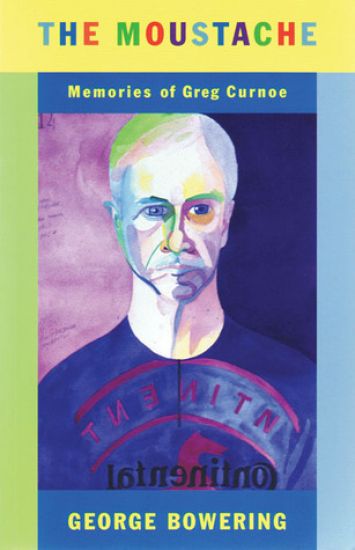
The Moustache

The Moustache

George Bowering

Talon Books,Canada
1993
pokkari
George Bowering and Greg Curnoe became friends in London, Ontario, in 1966. Bowering was a 30-year-old poet and university student and Curnoe was a 29-year-old painter who had dropped out of art school in Toronto to return to his place of birth. Their art was in its youth, their eyes and ears were wide open and their stomachs could withstand pots and pots of strong, black coffee. For 26 years they grew up parallel, inside each other's work. Greg Curnoe was killed on his bicycle late in 1992, struck down in the middle of his bright career. This memoir was begun in London, Ontario, on November 20, 1992.
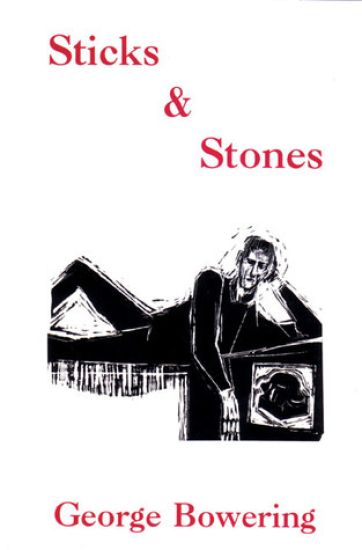
Sticks & Stones

Sticks & Stones

George Bowering

Talonbooks
1989
pokkari
The publication of Sticks & Stones, George Bowering's first book of poems, has been one of Canada's great literary mysteries for almost three decades. Rumoured to have been published by the Rattlesnake Press in 1962, yet only ever found in the darkened vaults of secretive bibliophiles in the form of imperfectly collated, incomplete press proofs, sans cover, several poems and original drawings by Gordon Payne, this book has remained hidden from public view while Bowering's literary career blossomed. Here, for the first time, is the complete unabridged publication of Sticks & Stones, including all the poems, with the original drawings by Gordon Payne and the preface by Robert Creeley in place. Roy Miki, author of the definitive critical bibliography of George Bowering, A Record of Writing, has provided an endnote which takes the reader through the literary detective work that resulted in the strange circumstance of the publication of this first edition. This first official publication of Sticks & Stones, 27 years after the fact, is a celebration of a writer at the height of his career, and a tribute to the enduring quality of his work.
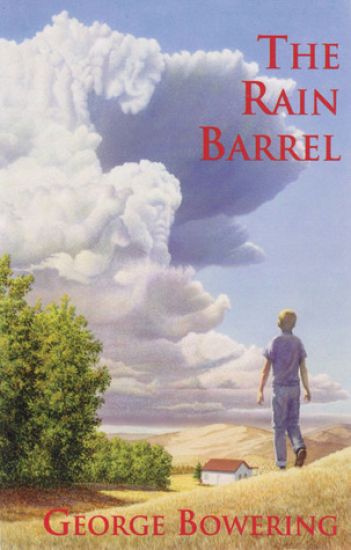
The Rain Barrel

The Rain Barrel

George Bowering

Talonbooks
1994
pokkari
Here are twenty-one user-friendly tales, set in the Okanagan Valley, Austria, Washington, Nanaimo, the Yukon, Iceland, Germany, the future -- and Daphne's Lunch Diner. The Rain Barrel is George Bowering's first collection of short stories since 1983. Ten years in the making, these stories display Bowering's meticulous attention to the details of his craft and his enormous sympathy for the increasingly precarious predicament of the twentieth-century reader.
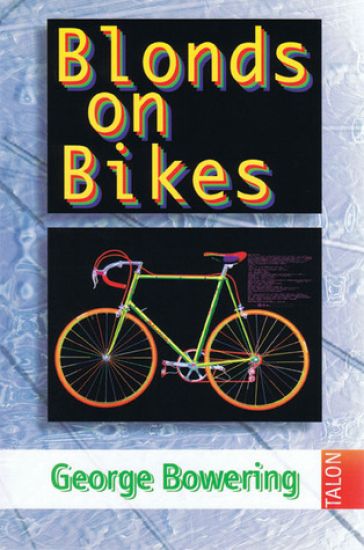
Blonds on Bikes

Blonds on Bikes

George Bowering

Talonbooks
1997
pokkari
Blonds on Bikes is George Bowering's first book of poetry since Urban Snow was published by Talonbooks in 1992. Characteristic of Bowering's other work, this book is largely made up of sequences. The longest one, the title poem, is a composition of daily riffs during an autumn in Denmark and Italy. "Pictures" is an album of verbal portraits by a husband and wife who see differently. There is a series of tributes to other writers on special occasions. Sometimes a short lyric sticks its head up. Whatever the form, Bowering is more interested in sound than he is in ground, more interested in wit than he is in shovels. If you read carefully, you might get a little scared. If you want "one of the last great masters who can use language to impose an individual yet universal order on the perceived world," dont get your hopes up. Look out for air & the knives in the air--
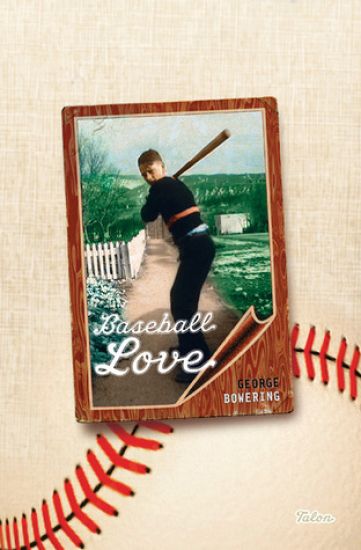
Baseball Love

Baseball Love

George Bowering

Talonbooks
2006
pokkari
Having written books in practically every genre, George Bowering is often introduced as someone who adores baseball, yet ironically he did not begin this book about the game until he was appointed Canada's first Poet Laureate for 2002--04. This picaresque memoir of a road trip with his fiancee through the storied ballparks of a poet's youthful dreams is built on the bargain of fiction--that the narration of someone else's life requires the listener or reader to fill in the blanks of what we know is out there, somewhere in the world, but which takes place at such a great distance of time and space from us that we can only imagine it to be real.Beginning with the exquisite charm of listening in on Bowering as a youthful sports reporter in his home town of Oliver in 1948, "the greatest year in human history," moving through the brash hubris of his career as a star player--reporter in the Kosmic League of the 1970s, to staring down the bittersweet foul line of the Twilight League of the twenty--first century, Baseball Love is a book about Bowering"s life in love and the game, played with a consummate craft and skill into the paradise of what we can only ever imagine to be real, and leavened at all times by the conscious and playfully ironic chatter of the infield. Its provenance uncertain, the diamond in the ballpark--where no cars are allowed to drive, where time stands still unless there's an out and where one adheres to the rules governing behavior in the yard--is the quintessential North American vision of paradise: a walled garden in the midst of the dark satanic mills of blind industrial progress and the chaos of the everyday in the exploited wilderness that surrounds it.
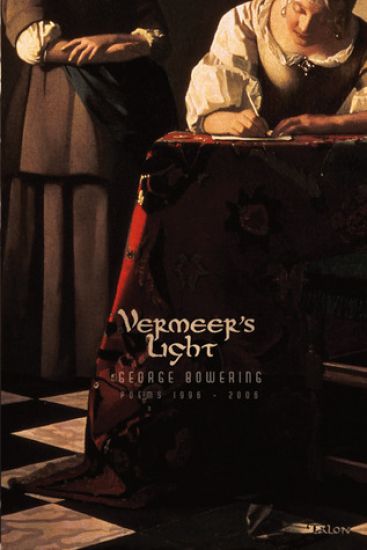
Vermeer's Light

Vermeer's Light

George Bowering

Talonbooks
2007
pokkari
George Bowering has always maintained many of his poems are germinated in secret ways--secrets he has, until now, assiduously kept to himself. In suddenly giving most of those secrets away, Vermeer's Light, much of it written while Bowering was "in office" as Canada's first Poet Laureate, constitutes an extraordinary gesture of generosity from a poet to his readership who has so honoured him. Its alphabet series A, You're Adorable, by "Ellen Field," a pseudonym Bowering often used in the 1990s; Imaginary Poems for AMB, addressed to his late wife Angela; He Is Not, a micro-translation of Shelley's Adonais; Q&A, which dares to take on the most fundamental questions of the human condition with level-headed honesty and wit--the list of revelations and the pyrotechnics of Bowering's craft presented here are spellbinding. But the greatest astonishment about this celebratory collection from a poet at the height of his powers is that it contains all eight variations of "Grandfather," Bowering's most anthologized poem to date, set into an essay, Rewriting My Grandfather, like eight jewels in a crown at the end of the book.It is here that the poet presents his readers with a voyage of discovery; that the buried treasure of his invisible but adamantine craft is to be found; and the gift of entrance into how George Bowering creates his work is revealed.
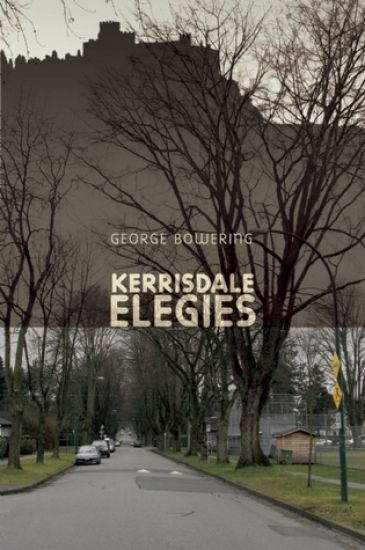
Kerrisdale Elegies

Kerrisdale Elegies

George Bowering

Talonbooks
2008
pokkari
It is extraordinary that one can take the measure of how radically cultural sensibilities can change throughout a century by a careful reading of only two texts--in this case Rainer Maria Rilke's Duino Elegies, written in the midst of the First World War, and George Bowering's brilliant response to Rilke's call, the Kerrisdale Elegies, composed in the midst of the Cold War. Rilke's poem begins and ends with a modernist appeal to the transcendent. It opens with; "Who, if I were to scream, would then hear me, among the angelic orders ...," and ends with a nostalgic evocation of the muse of grief attendant at the spectacle of the sacrifice of youth; "we who aspire to an ascendant fortune, are overcome by astonishment at the fortunate's fall." [Rilke's italics] Compare to Bowering's opening; "If I did complain, who among my friends would hear?" and his closing; "The single events that raise our eyes and stop our time are saying goodbye, lover, goodbye." Bowering's Kerrisdale Elegies are a profoundly compelling illustration of Pound's instruction to all translators--to "make it new."In the intertextuality of these two great masterworks is to be found the birth of a post-modern writing that is self-aware, where the other is discovered in the process of the writer writing, and is not a referent, neither secular nor divine, outside of the text itself, and therefore ultimately estranged from both the writer and the reader. Williams' dictum, too, that writers should write "no ideas but in things" so thoroughly infuses Bowering's Kerrisdale Elegies, that while they are an exact equivalent to Rilke's emblematic masterpiece--separated as they are by three generations of one of the most tumultuous centuries in human history--they are not a translation, but a living, vibrant transformation of the work.
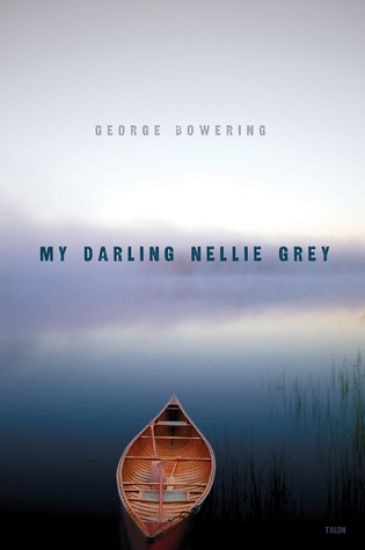
My Darling Nellie Grey

My Darling Nellie Grey

George Bowering

Talonbooks
2010
pokkari
In December 2005, stalled on a novel he was writing, George Bowering thought he needed a challenge. By the end of the year he had made a New Year's resolution: write a poem a day for the 365 days of 2006. While working on Crows in the Wind, in January, he decided each monthly sequence should have a rule: something for the writing to attend to. So for February, each day's piece had to have one sentence and two stanzas, then off he went; inventing ten further formal monthly compositional frames. As it happened, 2006 became fraught with personal challenges for Bowering--including a second marriage and a death in his new family--but he kept going, never cheating. The result of this uncompromising personal and formal discipline is one of the most fascinating books of poetry ever written. Initially lacking a "subject," the book's metanarrative almost inevitably took the shape of an exquisite poetic autobiography that is at once both intensely personal and profoundly public. In it, among many other astonishments, we discover the deeply ambiguous roots of his father's favourite folksong; we catch a ?eeting childhood glimpse of Bowering's young mother, graceful as a gazelle, frozen in mid-stride like a Keatsian art-deco statue by the poet's innocently Oedipal gaze; a complete history of Cuba in the context of US foreign policy in Latin America that gives an entirely new, but older, meaning to the date September 11; and the roots of tragedy that led to the "Balkanization" of Yugoslavia.Throughout, the poet's narrative personae assume the guises of a lifetime, reeling in and out of an ever-shifting "present": a ?uid "here and now" that swirls over the gravel of a stream alive with recognitions, as all of the events of that imagined life become simultaneously present in their voices.
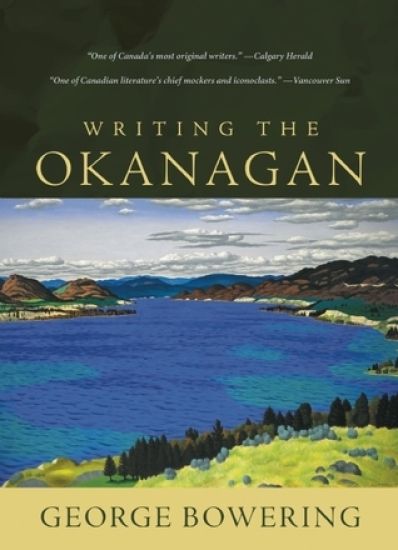
Writing the Okanagan

Writing the Okanagan

George Bowering

Talonbooks
2015
pokkari
George Bowering was born in Penticton, where his great-grandfather Willis Brinson lived, and Bowering has never been all that far from the Okanagan Valley in his heart and imagination. Early in the twenty-first century, he was made a permanent citizen of Oliver. Bowering has family up and down the Valley, and he goes there as often as he can. He has been asked during his many visits to Okanagan bookstores over the years to publish a collection of his writing about the Valley. Writing the Okanagan draws on forty books Bowering has published since 1960 -- poetry, fiction, history, and some forms he may have invented. Selections from Delsing (1961) and Sticks & Stones (1962) are here, as is "Driving to Kelowna" from The Silver Wire (1966). Other Okanagan towns, among them Rock Creek, Peachland, Vernon, Kamloops, Princeton, and Osoyoos, inspire selections from work published through the 1970s and on to 2013. Fairview, the old mining site near Oliver, is the focus of an excerpt from Caprice (1987, 2010), one volume in Bowering's trilogy of historical novels. "Desert Elm" takes as its two main subjects the Okanagan Valley and his father, who, as Bowering did, grew up there.With the addition of some previously unpublished works, the reader will find the wonder of the Okanagan here, in both prose and poetry.
Taking Measures

Taking Measures

George Bowering

Talonbooks
2020
sidottu
Taking Measures collects the major serial poems of Canada's inaugural Poet Laureate, George Bowering, from his engagement with process-based long poems in the 1960s and '70s to his continued exploration of the form in the past decade. Something of a hybrid genre, stitching short lyrics together into sequential, long (typically book-length) poems, Bowering's serial poems show him at his experimental and irreverent best. This collection includes work from each of the last six decades, offering a career-spanning sample of Bowering's oeuvre.
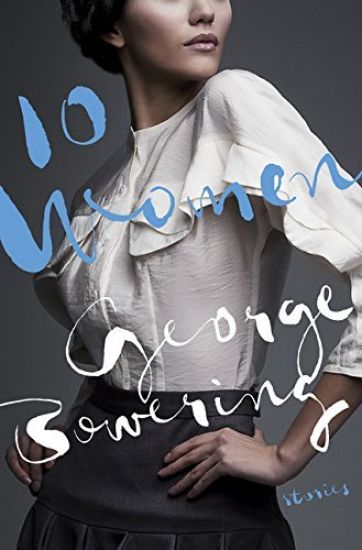
10 Women

10 Women

George Bowering

Anvil Press Publishers Inc
2015
nidottu
Ten Women is a new collection of short fiction from one of Canada's preeminent writers. Each of these stories offers us a portrait of a woman with whom the author may or may not have had either an intimate and/or a meaningful relationship. You can't really tell for sure. Depending on your proclivities, some of them might even seem pretty hot - like the lurid fantasies that illustrate the covers of pulp fiction novels, the ethereal intellectual beauties that emanate from poetic fields of asphodels, or the petit bourgeois housewives that litter Alice Munro stories, these ten characters remind us that for every fetish there's a partner. Praise for 10 Women: "the maestro is at it again" (The Vancouver Sun) "This is a rarity in [short story] collections; an elegantly structured book with a central theme general enough to let the author run totally amok while maintaining a satisfying sense of unity overall." (BC BookLook) "The contents page is a list of ten names. The personalities that emerge are unforgettable. 10 Women is word punch spiked with an intoxicating brand of comedy, and every woman in it is fortified with dizzying power shots. Memorable phrases linger beyond the morning after."(Foreword Reviews)
Good Morning Poems: A Start to the Day from Famous English-Language Poets
Canadian literary legend George Bowering lays bare his process as reader and lover of poetry in this curated collection of poems to be read in the morning. In a series of deeply astute and conversational essays, two-time Governor General's Award winner and inaugural Parlimentary Poet Laureate of Canada George Bowering travels through five hundred years, give or take, of English-language literature, adding historical, political, feminist, socio-economic, anecdotal, and literary context to each poem and poet. His selection of poems ranges from the best known to the barely known, each piece treated with depth and reverence, while demonstrating his razor-sharp wit and skill as writer, critic, and reader. Recalling the work of George Saunders and Sina Queyras, in their interactions with established literature, George's insight in the poetic mind is invaluable, making this is must-read collection for anyone interested in reading or writing poetry.
Mirror on the Floor

Mirror on the Floor

George Bowering

Anvil Press Publishers Inc
2014
nidottu
Mirror on the Floor was first published in 1967 by McClelland and Stewart, the first novel from a young writer named George Bowering. Now with over 100 publications to his credit, we are proud to be reissuing this Vancouver classic, Bowering's debut novel. The novel focuses on one summer in the life of UBC graduate student Bob Small, and his roommate, George Delsing, as they study, smoke cigarettes, endure tedious summer jobs, joust one another with philosophical banter and literary repartee, and strike out on near-nightly adventures in Small's "poor old over-traveled yellow Morris Minor" to the pubs and late-night diners of East Hastings and Main Street. They spend much of their time carousing and engaging in conversation with the old-timers, retired seamen, dockworkers, and unemployed loggers. And it is on one such night that Bob Small encounters a mysterious and troubled young woman outside the city lock-up. Her name is Andrea and he can't seem to shake-or understand-the inexplicable attraction he feels for her; and from this night on, like an apparition, Andrea appears everywhere: the library, the coffee houses, the bars, the street, and Bob Small is slowly and inevitably pulled into her orbit, an orbit that spins on a tragic and ever-tightening inward coil. Mirror on the Floor vividly evokes the Vancouver of the mid- to late-60s, a Vancouver where neon signs still shimmered on the rain-soaked streets of the Downtown Eastside and Granville Street bustled with movie-goers.