Kirjojen hintavertailu. Mukana 12 390 323 kirjaa ja 12 kauppaa.

Kirjahaku

Etsi kirjoja tekijän nimen, kirjan nimen tai ISBN:n perusteella.

8 kirjaa tekijältä George E. Demacopoulos

Five Models of Spiritual Direction in the Early Church

Five Models of Spiritual Direction in the Early Church

George E. Demacopoulos

University of Notre Dame Press
2006
nidottu
In late antiquity the rising number of ascetics who joined the priesthood faced a pastoral dilemma. Should they follow a traditional, demonstrably administrative, approach to pastoral care, emphasizing doctrinal instruction, the care of the poor, and the celebration of the sacraments? Or should they bring to the parish the ascetic models of spiritual direction, characterized by a more personal spiritual father/spiritual disciple relationship? Five Models of Spiritual Direction in the Early Church explores the struggles of five clerics (Athanasius, Gregory Nazianzen, Augustine of Hippo, John Cassian, and Pope Gregory I) to reconcile their ascetic idealism with the reality of pastoral responsibility. Through a close reading of Greek and Latin texts, George E. Demacopoulos explores each pastor's criteria for ordination, his supervision of subordinate clergy, and his methods of spiritual direction. He argues that the evolution in spiritual direction that occurred during this period reflected and informed broader developments in religious practices. Demacopoulos describes the way in which these authors shaped the medieval pastoral traditions of the East and the West. Each of the five struggled to balance the tension between his ascetic idealism and the realities of the lay church. Each offered distinct (and at times very different) solutions to that tension. The diversity among their models of spiritual direction demonstrates both the complexity of the problem and the variable nature of early Christianity. Scholars and students of late antiquity, the history of Christianity, and historical theology will find a great deal of interest in Five Models of Spiritual Direction in the Early Church. The book will also appeal to those who are actively engaged in Christian ministry.
Gregory the Great

Gregory the Great

George E. Demacopoulos

University of Notre Dame Press
2015
nidottu
Gregory the Great (bishop of Rome from 590 to 604) is one of the most significant figures in the history of Christianity. His theological works framed medieval Christian attitudes toward mysticism, exegesis, and the role of the saints in the life of the church. The scale of Gregory's administrative activity in both the ecclesial and civic affairs of Rome also helped to make possible the formation of the medieval papacy. Gregory disciplined malcontent clerics, negotiated with barbarian rulers, and oversaw the administration of massive estates that employed thousands of workers. Scholars have often been perplexed by the two sides of Gregory—the monkish theologian and the calculating administrator. George E. Demacopoulos's study is the first to advance the argument that there is a clear connection between the pontiff's thought and his actions. By exploring unique aspects of Gregory's ascetic theology, wherein the summit of Christian perfection is viewed in terms of service to others, Demacopoulos argues that the very aspects of Gregory's theology that made him distinctive were precisely the factors that structured his responses to the practical crises of his day. With a comprehensive understanding of Christian history that resists the customary bifurcation between Christian East and Christian West, Demacopoulos situates Gregory within the broader movements of Christianity and the Roman world that characterize the shift from late antiquity to the early Middle Ages. This fresh reading of Gregory's extensive theological and practical works underscores the novelty and nuance of Gregory as thinker and bishop.
Five Models of Spiritual Direction in the Early Church

Five Models of Spiritual Direction in the Early Church

George E. Demacopoulos

University of Notre Dame Press
2007
sidottu
In late antiquity the rising number of ascetics who joined the priesthood faced a pastoral dilemma. Should they follow a traditional, demonstrably administrative, approach to pastoral care, emphasizing doctrinal instruction, the care of the poor, and the celebration of the sacraments? Or should they bring to the parish the ascetic models of spiritual direction, characterized by a more personal spiritual father/spiritual disciple relationship? Five Models of Spiritual Direction in the Early Church explores the struggles of five clerics (Athanasius, Gregory Nazianzen, Augustine of Hippo, John Cassian, and Pope Gregory I) to reconcile their ascetic idealism with the reality of pastoral responsibility. Through a close reading of Greek and Latin texts, George E. Demacopoulos explores each pastor's criteria for ordination, his supervision of subordinate clergy, and his methods of spiritual direction. He argues that the evolution in spiritual direction that occurred during this period reflected and informed broader developments in religious practices. Demacopoulos describes the way in which these authors shaped the medieval pastoral traditions of the East and the West. Each of the five struggled to balance the tension between his ascetic idealism and the realities of the lay church. Each offered distinct (and at times very different) solutions to that tension. The diversity among their models of spiritual direction demonstrates both the complexity of the problem and the variable nature of early Christianity. Scholars and students of late antiquity, the history of Christianity, and historical theology will find a great deal of interest in Five Models of Spiritual Direction in the Early Church. The book will also appeal to those who are actively engaged in Christian ministry.
Gregory the Great

Gregory the Great

George E. Demacopoulos

UNIVERSITY OF NOTRE DAME PRESS
2022
sidottu
Gregory the Great (bishop of Rome from 590 to 604) is one of the most significant figures in the history of Christianity. His theological works framed medieval Christian attitudes toward mysticism, exegesis, and the role of the saints in the life of the church. The scale of Gregory's administrative activity in both the ecclesial and civic affairs of Rome also helped to make possible the formation of the medieval papacy. Gregory disciplined malcontent clerics, negotiated with barbarian rulers, and oversaw the administration of massive estates that employed thousands of workers. Scholars have often been perplexed by the two sides of Gregory—the monkish theologian and the calculating administrator. George E. Demacopoulos's study is the first to advance the argument that there is a clear connection between the pontiff's thought and his actions. By exploring unique aspects of Gregory's ascetic theology, wherein the summit of Christian perfection is viewed in terms of service to others, Demacopoulos argues that the very aspects of Gregory's theology that made him distinctive were precisely the factors that structured his responses to the practical crises of his day. With a comprehensive understanding of Christian history that resists the customary bifurcation between Christian East and Christian West, Demacopoulos situates Gregory within the broader movements of Christianity and the Roman world that characterize the shift from late antiquity to the early Middle Ages. This fresh reading of Gregory's extensive theological and practical works underscores the novelty and nuance of Gregory as thinker and bishop.
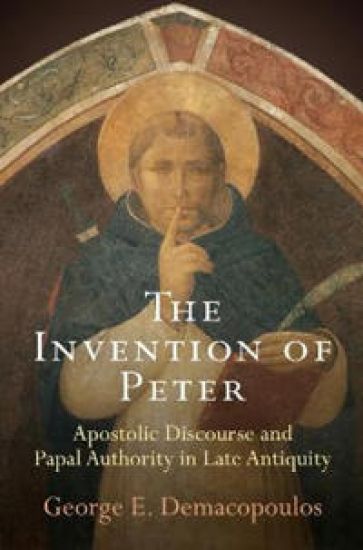
The Invention of Peter

The Invention of Peter

George E. Demacopoulos

University of Pennsylvania Press
2016
pokkari
On the first anniversary of his election to the papacy, Leo the Great stood before the assembly of bishops convening in Rome and forcefully asserted his privileged position as the heir of Peter the Apostle. This declaration marked the beginning of a powerful tradition: the Bishop of Rome would henceforth leverage the cult of St. Peter, and the popular association of St. Peter with the city itself, to his advantage. In The Invention of Peter, George E. Demacopoulos examines this Petrine discourse, revealing how the link between the historic Peter and the Roman Church strengthened, shifted, and evolved during the papacies of two of the most creative and dynamic popes of late antiquity, ultimately shaping medieval Christianity as we now know it. By emphasizing the ways in which this rhetoric of apostolic privilege was employed, extended, transformed, or resisted between the reigns of Leo the Great and Gregory the Great, Demacopoulos offers an alternate account of papal history that challenges the dominant narrative of an inevitable and unbroken rise in papal power from late antiquity through the Middle Ages. He unpacks escalating claims to ecclesiastical authority, demonstrating how this rhetoric, which almost always invokes a link to St. Peter, does not necessarily represent actual power or prestige but instead reflects moments of papal anxiety and weakness. Through its nuanced examination of an array of episcopal activity-diplomatic, pastoral, political, and administrative-The Invention of Peter offers a new perspective on the emergence of papal authority and illuminates the influence that Petrine discourse exerted on the survival and exceptional status of the Bishop of Rome.
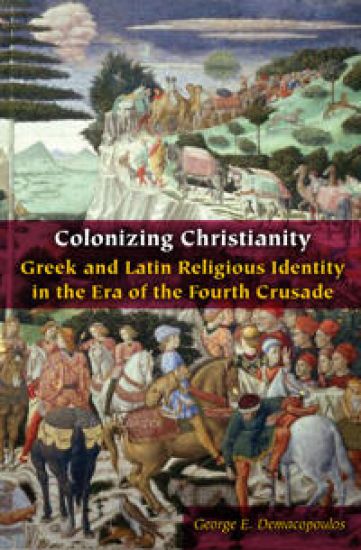
Colonizing Christianity

Colonizing Christianity

George E. Demacopoulos

FORDHAM UNIVERSITY PRESS
2019
sidottu
Colonizing Christianity employs postcolonial critique to analyze the transformations of Greek and Latin religious identity in the wake of the Fourth Crusade. Through close readings of texts from the period of Latin occupation, this book argues that the experience of colonization splintered the Greek community over how best to respond to the Latin other while illuminating the mechanisms by which Western Christians authorized and exploited the Christian East. The experience of colonial subjugation opened permanent fissures within the Orthodox community, which struggled to develop a consistent response to aggressive demands for submission to the Roman Church.
Colonizing Christianity

Colonizing Christianity

George E. Demacopoulos

Fordham University Press
2019
pokkari
Colonizing Christianity employs postcolonial critique to analyze the transformations of Greek and Latin religious identity in the wake of the Fourth Crusade. Through close readings of texts from the period of Latin occupation, this book argues that the experience of colonization splintered the Greek community over how best to respond to the Latin other while illuminating the mechanisms by which Western Christians authorized and exploited the Christian East. The experience of colonial subjugation opened permanent fissures within the Orthodox community, which struggled to develop a consistent response to aggressive demands for submission to the Roman Church.