Kirjojen hintavertailu. Mukana 11 627 220 kirjaa ja 12 kauppaa.

Kirjahaku

Etsi kirjoja tekijän nimen, kirjan nimen tai ISBN:n perusteella.

12 kirjaa tekijältä George F. Walker

Somewhere Else

Somewhere Else

George F. Walker

Talonbooks
1999
pokkari
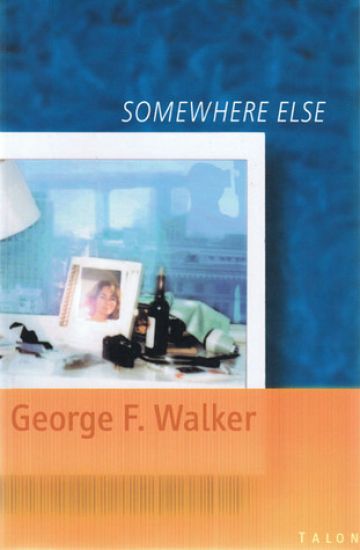
Somewhere Else contains George F. Walker's own selection of his early plays which matter; which for him have stood the test of time; which represent, as he once said, his "classical veneer." In them he honed his considerable and unique dramatic talent along "that fine line between the serious and the comic," in settings outside the North American locales of his work since the 1980s. Walker's earliest plays, absurdist dramas reminiscent of Ionesco and Beckett, climaxed with Beyond Mozambique (1974), featuring a B-movie jungle locale populated by a drug-addicted, pederastic priest, a disgraced Mountie, a porn-film starlet and a demonic ex-Nazi doctor whose wife thinks she is Olga in Chekhov's Three Sisters. Zastrozzi (1977), utilizing all the baroque conventions of Jacobean tragedy, pits its protagonist, a self-styled, Machiavellian "Master of Discipline" against the chaos of the universe in a flurry of dramatic excesses that tend toward elegant self-parody.The Chalmers Award-winning Theatre of the Film Noir (1981), a murder mystery set in wartime Paris, is the culmination of his work in the Humphrey Bogart / Raymond Chandler style, so evident in his trilogy featuring the cynical investigative reporter / private-eye, Tyrone Power. The Governor General's and Chalmers Award-winning Nothing Sacred (1988), an adaptation of Turgenev's novel, Fathers and Sons, consolidated his popular reputation outside of Canada to such a degree that the Los Angeles Times declared it "the play of the year."
The East End Plays: Part 2

The East End Plays: Part 2

George F. Walker

Talonbooks
1999
pokkari
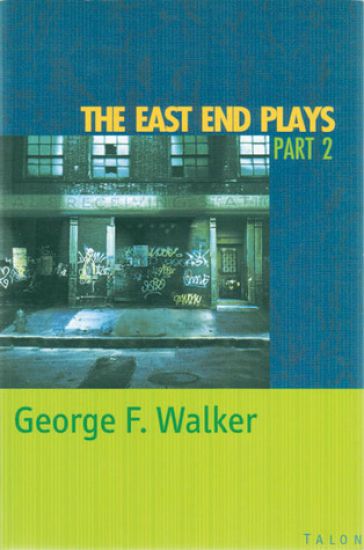
Where is the East End? It's where the sun comes up and where you bury the dead. It's where George Walker set six of his plays. It's the East End of Toronto; the Lower East Side of New York; down by the East River; East L.A.; East Vancouver. It's where you get down to the basics of beginnings and endings, and how you get from each of those ends to the other. It's where Walker's settings have "come home." From his offer of tenuous hope to the denizens of a city salvaged from the powerful and the greedy in Beautiful City (1987); to his championing of women in Love and Anger (1989); to his explorations of sex and gender issues among three young people in Tough! (1993), Walker continues his explorations of characters living in extremity in the arena of a political comedy uniquely his own.
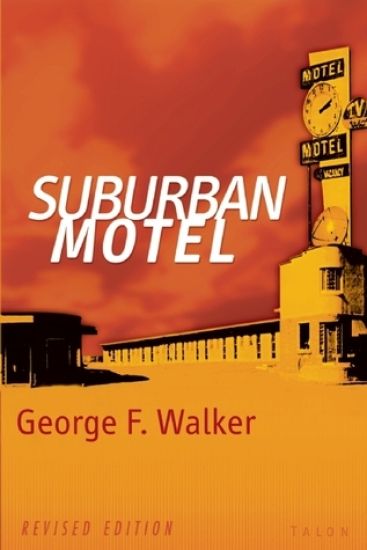
Suburban Motel

Suburban Motel

George F. Walker

Talonbooks
1999
pokkari
Something completely different from George Walker! Six plays, united only by the fact that they each take place in one and the same suburban motel room. Transients, lovers, the haunted and the hunted, the desperate and the dumb, each "strut and fret their hour upon the stage and then are heard of no more." Real, funny and heartbreaking. With an introduction by Daniel De Raey. Suburban Motel contains six plays: Problem Child, Criminal Genius, Risk Everything, Adult Entertainment, Featuring Loretta and The End of Civilization.
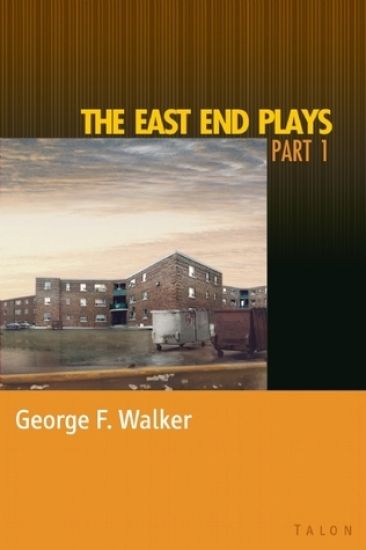
The East End Plays: Part 1

The East End Plays: Part 1

George F. Walker

Talonbooks
2000
pokkari
By the time he was writing Gossip in 1977, George Walker had already begun to shift his settings from, on the one hand, North America's colonial roots in Europe, and on the other, its fascination with other, exotically foreign locales. Yet, even in The Power Plays, Walker is still exploring the ironic and dramatic possibilities of the stereotypes (albeit, by this time, home-grown ones) that continue to provide the fertile ground of contemporary North American sensibilities. With his creation of the Governor General's Award winning Criminals in Love (1984); the Chalmers Award winning Better Living (1986); and Escape from Happiness (1991), Walker embarked on a whole new direction in his evolution as a playwright. Much less of his comic irony now relied on the recognition of character, much more now relied on the creation of character. In a very real way, George Walker had freed himself to "come home." Set in what is transparently a single neighbourhood, the East End of Toronto, these three interrelated plays were quickly collected in a volume called, naturally, The East End Plays, in 1988.From here, George Walker moved in two related directions: to a further exploration of the margins of contemporary urban life in the global village with the three plays now collected in The East End Plays Part 2 (1999); and to the continued exploration of linking plays around a single location with the wildly successful six-part Suburban Motel (1998). The original three East End Plays are here published in a completely new and revised Talonbooks edition now called The East End Plays Part 1.
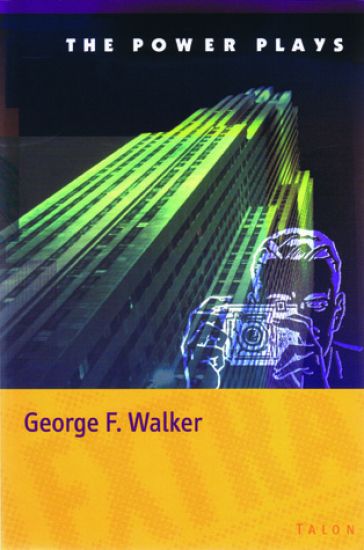
The Power Plays

The Power Plays

George F. Walker

Talonbooks
1999
pokkari
First published as a trilogy in 1986, The Power Plays contain Gossip (1977), Filthy Rich (1979), and The Art of War (1983). Completely revised and updated for this new Talonbooks edition, these three plays showcase both the development and the culmination of Walker's engagement with the film noir style.
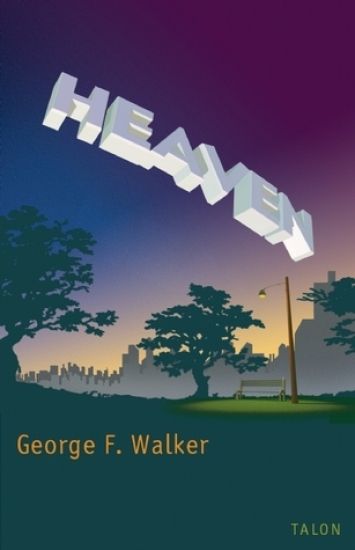
Heaven

Heaven

George F. Walker

Talonbooks
2000
pokkari
Heaven is George F. Walker's 'millennium play.' Well, sort of, if we can free ourselves from the expectation of the usual science-fiction-based projection and imposition of our current personal, cultural and spiritual values on the future of the coming millennium, considered almost mandatory for authors working in this particular genre. As usual, Walker sees things a bit differently: he intimates the future by having a very hard look at some unanswered questions from the Judeo-Christian-Muslim past which has pretty much determined the evolution of western, especially white, male-dominated civilization, for the last two thousand years. Five instantly recognizable multi-cultural characters play out their coincidental relationships in a very contemporary paradise-a park on the outskirts of a city.All of them are, in one form or another, engaged in the 'fundamental right' of the pursuit of their own happiness, whether that means acquiring life skills, improving their career prospects, working on their family relationships, increasing social justice in the world, balancing the concerns of crime and punishment or integrating more closely with what they identify as their own communities. Of course, the pursuit of these personal goals, usually considered as good and worthwhile in our society, pits each of these characters irrevocably against each other. In this comedy of how individual good intentions carried to their absurd extremes inevitably frustrate the goals of others, Walker leaves us with two unanswered questions: "What is so 'good' about our good intentions?" and, "What do we imagine our reward for them (Heaven) to be?" Wasn't it some other place, the road to which was paved with?
And So It Goes

And So It Goes

George F. Walker

Talonbooks
2011
pokkari
Newly unemployed baby boomers Gwen and Ned appear to be -completely different people: Gwen, a practical, down-to-earth Latin teacher; Ned, an impractical investment advisor constantly dreaming up new ventures for making money. But appearances can be deceiving, as their son Alex, who left home years ago, and their daughter Karen, recently diagnosed with schizophrenia, can attest. Unable to maintain the facade of their former middle-class lifestyle, Gwen and Ned search for a new life in vain, not realizing that they have become redundant--they speak dead languages. Both seek solace from the ghost of Kurt Vonnegut, but he can't help them in a world where the former universals of language and commerce no longer exist as foils for his sardonic humanism. Of all the voices she hears, those of her parents have become least relevant to Karen, because they seem to her to be concerned only with what they feel about their daughter's "condition," and not with what she is experiencing within that condition. "I'm scared," we hear Karen say as the play opens, and her fear is both justified and infectious.As the play progresses her parents discover to their horror that Karen has been living the life of a drug-addicted prostitute during her illness, lashing out at threats that aren't there, but unable to defend herself against those that ultimately result in her brutal murder. And So It Goes, a title derived from Vonnegut's signature observation on the vagaries of life, is not only an allegory of our post-literate, post-9/11 lives, in which social order has collapsed, random violence is -ubiquitous, "the authorities" have become hypocritically indifferent if not downright irrelevant to our security, and we have all become "scared," but also a paean to the human will that carries each of us through our darkest hours.
Dead Metaphor

Dead Metaphor

George F. Walker

Talonbooks
2015
pokkari
Canada's top playwright sears the page with three new darkly comic plays that denounce political culture, individualism, and the accompanying moral depravity. The title play, Dead Metaphor, examines the collision of a politician's personal and professional lives, complicated by a son's return from Afghanistan. In The Ravine, a mayoral candidate learns that his ex-wife is living in a gully nearby and wants to put a hit on him. The Burden of Self-Awareness has money at the centre of a dramatic conflict of values. Each of the three plays is populated by characters trying to navigate the increasingly blurred lines of what's right and wrong -- trying to always stay informed, alert, and ready to act for the common good. Or just to get even.
Moss Park and Tough!

Moss Park and Tough!

George F. Walker

Talonbooks
2016
pokkari
George F. Walker has been one of Canada's most prolific and popular playwrights since his career in theatre began in the early 1970s. Since that time, he has written more than twenty plays and has created screenplays for several award-winning Canadian television series, including Due South, The Newsroom, This Is Wonderland, and The Line, as well as for the film Niagara Motel (based on three plays from his Suburban Motel series). Part Kafka, part Lewis Carroll, Walker's distinctive, gritty, fast-paced comedies satirize the selfishness, greed, and aggression of contemporary urban culture. Awards and honours include appointment as a Member of the Order of Canada (2005); National Theatre School Gascon-Thomas Award (2002); two Governor General's Literary Awards for Drama (for Criminals in Love and Nothing Sacred); five Dora Mavor Moore Awards; and eight Chalmers Canadian Play Awards. Patrick McDonald is artistic director of Green Thumb Theatre, where he has directed more than seventy-five productions and overseen the commissioning and development of more than fifty new plays for children, teens, and young adults.
We the Family

We the Family

George F. Walker

Talonbooks
2016
pokkari
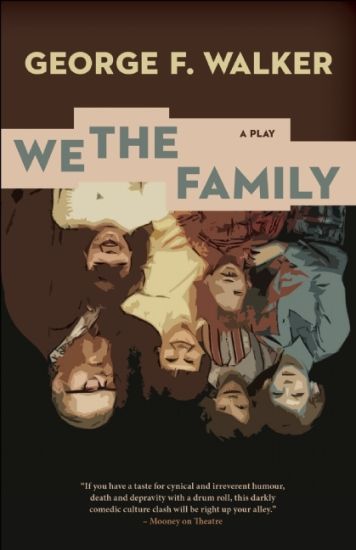
Canada's master playwright applies his trademark black humour and incredibly crisp dialogue to the family and multiculturalism. We the Family follows the ripple effects within two culturally and racially divergent families when their children wed. We the Family 's list of characters reads like an ethnic joke, which, indeed, it is, at least in part: the son of the main characters, David and Lizzie Kaplan, a Jewish--Irish Catholic mixed marriage, marries the daughter of Jenny Lee, a Chinese Canadian widow. There's also a Russian mistress, a Palestinian lover, and a glamorous, possibly fraudulent Italian psychologist, while offstage Pakistani terrorists kidnap the also-offstage honeymooning couple, then sell them to Sicilian gangsters who sell them to Russian gangsters, one of whom turns out to be the father of the Russian mistress (another family). By the end of the play, Walker has deconstructed the dysfunctional Kaplan and Lee families and family love as well.Through the play's pervading treachery, with family members and lovers betraying each other in horrifying ways, he satirizes the hypocrisy of expounding family values while behaving in viciously selfish and self-centred ways. These hyphenated Canadians certainly aren't "nice," and no amount of "sweet-and-sour matzah balls" (which the Kaplan matriarch serves at the multicultural wedding reception) can hide the nasty taste.
People Live Here

People Live Here

George F. Walker

Talon Books,Canada
2019
pokkari
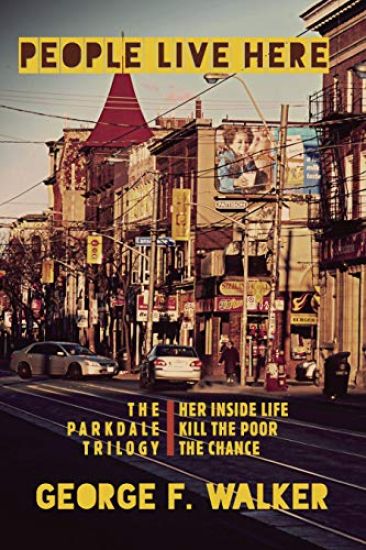
People Live Here is a collection of three exciting new plays by George F. Walker, Canada's king of black comedy and a winner of two Governor General's Literary Awards for Drama. The Chance is a funny, quirky, and suspenseful play portraying three aspiring but economically deprived women living in a working-class neighbourhood of Toronto. The serendipitous discovery of a $300,000 cheque left behind by one of Jo's one-night stands sends Jo's mother Marcie, optimistic but exhausted, and stripper Amie, Jo's friend and colleague, into a furious conjectures on how to use the money (if at all). Her Inside Life is a heartwarming story introducing Violet, an unbalanced widow under house arrest for committing a serious crime and looking to regain the respect of her daughter and her social worker, who visit regularly. The reappearance of Leo - a man Violet thought she had killed - offers an odd opportunity for the main character to show she doesn't belong in the madhouse. Kill the Poor, this collection's last chapter, is an intense comedy portraying a couple struggling for money and recuperating from a serious car accident. But what if the expected settlement changes the couple's life for the better? A hired detective and the building's custodian provide help, but the mysterious driver of the other car makes a comeback ... for the worse. Altogether, George F. Walker's People Live Here complete the Parkdale Palace trilogy of plays dealing with issues of social justice and allying heart, humour, and a contemporary reflection on human inequalities.