Kirjojen hintavertailu. Mukana 12 377 222 kirjaa ja 12 kauppaa.

Kirjahaku

Etsi kirjoja tekijän nimen, kirjan nimen tai ISBN:n perusteella.

13 kirjaa tekijältä George Lamming

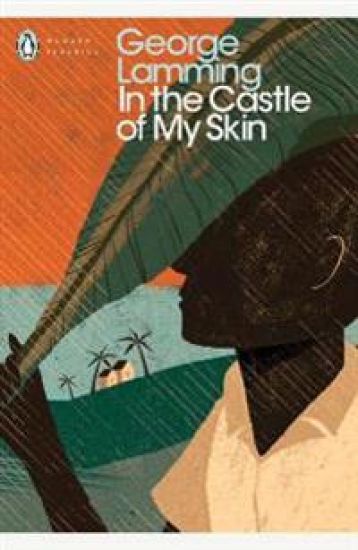
In the Castle of My Skin

In the Castle of My Skin

George Lamming

Penguin Classics
2017
pokkari
'They won't know you, the you that's hidden somewhere in the castle of your skin'Nine-year-old G. leads a life of quiet mischief crab catching, teasing preachers and playing among the pumpkin vines. His sleepy fishing village in 1930s Barbados is overseen by the English landlord who lives on the hill, just as their 'Little England' is watched over by the Mother Country. Yet gradually, G. finds himself awakening to the violence and injustice that lurk beneath the apparent order of things. As the world he knows begins to crumble, revealing the bruising secret at its heart, he is spurred ever closer to a life-changing decision. Lyrical and unsettling, George Lamming's autobiographical coming-of-age novel is a story of tragic innocence amid the collapse of colonial rule.'Rich and riotous' The Times'Its poetic imaginative writing has never been surpassed' Tribune
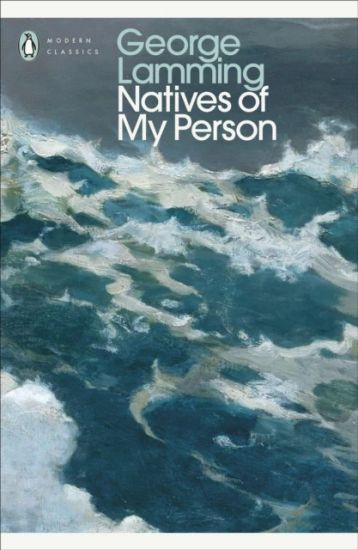
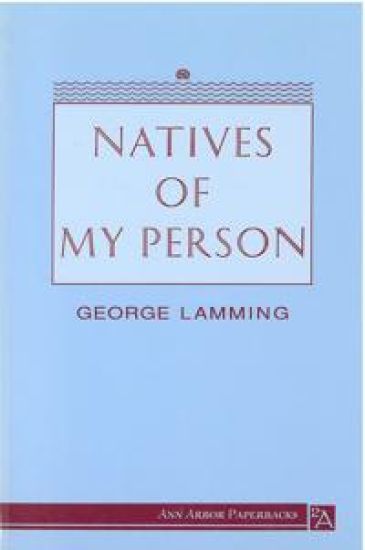
Natives of My Person

Natives of My Person

George Lamming

Outsider Editions
2026
nidottu
George Lamming--one of the Caribbean's most powerful literary voices--reimagines the age of European exploration to expose the deep scars of conquest, in a novel that Ngũgĩ wa Thiong'o, perennial contender for the Nobel Prize, called "one of the great political novels in modern 'colonial' literature" A nameless Commander sets sail under imperial orders--somewhere between the 16th and 18th centuries--to locate the fabled island of San Cristobal, a place shrouded in myth and promise. But this is no ordinary voyage. As the expedition unfolds, it becomes a mirror of the imperial mind--ambitious, fractured, haunted by its own contradictions. With poetic intensity and philosophical depth, Natives of My Person journeys far beyond the seas it charts. Through shifting perspectives and a richly layered narrative, Lamming unearths the personal and political dimensions of empire--its delusions, its violence, and the haunting legacy it leaves behind. "George Lamming is not so much a novelist as a chronicler of secret journeys to the innermost regions of the West Indian psyche . . . glittering . . .an uninhibited journey to the heart of the colonizer." --The New York Times
The Pleasures of Exile

The Pleasures of Exile

George Lamming

The University of Michigan Press
1992
nidottu
In The Pleasures of Exile, as in his other works, George Lamming embraces the intricate issues of colonization and decolonization with a canny combination of playfulness and seriousness, irony and commitment. “[It] is a reciprocal process,” Lamming observes, “to be a colonial is to be a man in a certain relation; and this relation is an example of exile.” Through a series of interrelated essays, The Pleasures of Exile explores the cultural politics and relationships created in the crucible of colonization. Drawing on Shakespeare’s The Tempest and C. L. R. James’s The Black Jacobins, as well as his own fiction and poetry, Lamming deftly locates the reader in a specific intellectual and cultural domain while conjuring a rich and varied spectrum of physical, intellectual, psychological, and cultural responses to colonialism. “My subject,” he writes, “is the migration of the West Indian writer, as colonial and exile, from his native kingdom, once inhabited by Caliban, to the tempestuous island of Prospero’s and his language. This book is a report on one man’s way of seeing.”
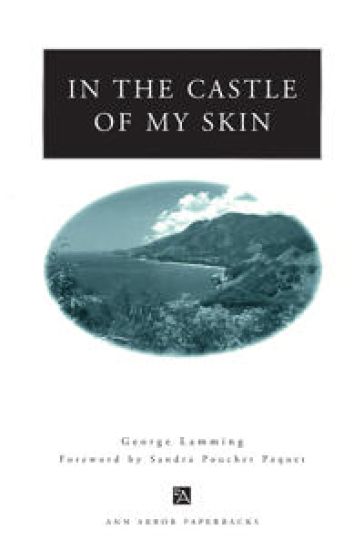
In the Castle of My Skin

In the Castle of My Skin

George Lamming

The University of Michigan Press
1992
nidottu
Nearly forty years after its initial publication, George Lamming's In the Castle of My Skin is considered a classic narrative of the Black colonial experience. This poetic autobiographical novel juxtaposes the undeveloped, unencumbered life of a small Caribbean island with the materialism and anxiety of the twentieth century.Written when Lamming was twenty-three and residing in England, In the Castle of My Skin poignantly chronicles the author's life from his ninth to his nineteenth year. Through the eyes of a young boy the experiences of colonial education, class tensions, and natural disaster are interpreted and reinterpreted, mediated through the presence of the old villagers and friends who leave for the mainland.One of the leading Black writers of the twentieth century, George Lamming is the author of numerous works exploring the colonial experience.
The Emigrants

The Emigrants

George Lamming

The University of Michigan Press
1994
nidottu
The Emigrants is an elaborately conceived novel, dense with dynamic characters and evocative details. First published in 1954, it focuses initially on the emigrant journey, then on the settling-in process. The journey by sea and subsequent attempts at resettlement provide the fictional framework for Lamming's exploration of the alienation and displacement caused by colonialism. This is the epic journey of a group of West Indians who emigrate to Great Britain in the 1950s in search of educational opportunities unattainable at home. Seeking to redefine themselves in the "mother country," an idealized landscape that they have been taught to revere, the emigrants settle uncomfortably in England's industrial cities. Within two years, ghettoization is firmly in place. The emigrants discover the meaning of their marginality in the British Empire in an environment that is unexpectedly hostile and strange. For some, alienation prompts a new sense of community, a new sense of identity as West Indians. For others, alienation leads to a crisis of confrontation with the law and fugitive status. There is a wealth of information here about the genesis of the black British community and about the cultural differences between the black British and West Indian/Caribbean.
Season of Adventure

Season of Adventure

George Lamming

The University of Michigan Press
1999
nidottu
Fola is a light-skinned middle-class girl who has been tipped out of her easy hammock of social privilege into the complex political and cultural world of her recently independent homeland, San Cristobal.'
Season of Adventure

Season of Adventure

George Lamming

The University of Michigan Press
1999
sidottu
First published in 1960, Season of Adventure details the story of Fola, a light-skinned middle-class girl who has been tipped out of her easy hammock of social privilege into the complex political and cultural world of her recently independent homeland, the Caribbean island of San Cristobal. After attending a ceremony of the souls to raise the dead, she is carried off by the unrelenting accompaniment of steel drums onto a mysterious journey in search of her past and of her identity. Gradually, she is caught in the crossfire of a struggle between people who have pawned their future to possessions and those condemned by lack of learning to a deeper truth. The music of the drums sounds throughout the novel, loud as gospel to a believer's ears, and at the end stands alone as witness to the tradition which is slowly being destroyed in the name of European values.Whether through literary production or public pronouncements, George Lamming has explored the phenomena of colonialism and imperialism and their impact on the psyche of Caribbean people. First published in 1960, Season of Adventure reveals not only these themes, but involves the reader in the analysis of the forms and discourses of resistance employed by the region's people in the course of reproducing their social existence.George Lamming was born in Barbados, resides in London and teaches regularly in American universities. He is the author of In the Castle of My Skin, Natives of my Person, The Emigrants, and The Pleasures of Exile, also available from the University of Michigan Press.
The Pleasures of Exile

The Pleasures of Exile

George Lamming

Pluto Press
2005
pokkari
'Migration in the 50s and 60s was formative for a whole generation of Caribbean writers, artists and intellectuals who, as Lamming himself says, became 'West Indian' in London. The Pleasures of Exile is simply the most poignant, eloquent, insightful and poetic set of reflections on that experience.' Stuart Hall 'The passing of more than 40 years hasn't dulled the sheer brazen confidence with which George Lamming brought a West Indian way of seeing to British life and literature.' Peter Hulme 'George Lamming is one of the most important writers in the African diaspora, and one whose work has touched illuminatingly on significant aspects of colonialism, postcolonialism, and other matters vitally important to our comprehension of the worlds in which we live.' Michael Awkward George Lamming is one of the major figures in late twentieth century literature: his novels -- including In the Castle of My Skin (1953) -- were part of the social, cultural, and political revolution of modern Black writing. The Pleasures of Exile, originally published in 1960, is Lamming's first work of non-fiction. Written during his self-imposed exile in Britain, it explores themes of identity formation. Incorporating memoirs of his own experience, Lamming draws upon Shakespeare's The Tempest and CLR James's The Black Jacobins, as well as his own fiction and poetry. He conjures a rich spectrum of physical, intellectual, psychological and cultural responses to colonialism. This new edition, with a new preface and introduction, reveals a writer far ahead of his time: written before the term 'post-colonial' was invented, the book explores issues that are central to studies of literature today, including the politics of migration, cultural hybridity and minority discourse.
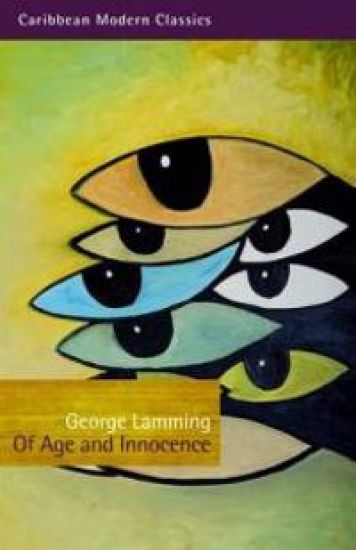
Of Age and Innocence

Of Age and Innocence

George Lamming

Peepal Tree Press Ltd
2011
nidottu
When the charismatic Isaac Shepherd returns to the island of San Christobal it is lead by an independence movement that for a time unites all the island's diverse groups – Africans, Indians and Chinese – against the colonial establishment. But each group relates in different ways to colonialism and their failure to communicate openly about those differences leads to mutual suspicions that provide their enemies with the means to destroy them. Parallel to the world of the political leaders is the tight bond between their sons, including the white son of the reactionary chief of police, and Ma Shepherd, Isaac Shepherd's mother. They are the Age and Innocence of the novel's title, though the nature of innocence is thoroughly deconstructed. In what is still one of the most insightful explorations of the nature of race and ethnicity in colonial and postcolonial societies, Lamming reaches far beneath the surface of ethnic difference into the very heart of the processes of perception, communication and coming to knowledge. In a classic novel that is tense and tragic in its denouement and throughout deeply enquiring, Lamming has written one of the half dozen most important Caribbean novels of all time.George Lamming was born in Barbados in 1927. He is the author of several of the most important Caribbean novels of all time.
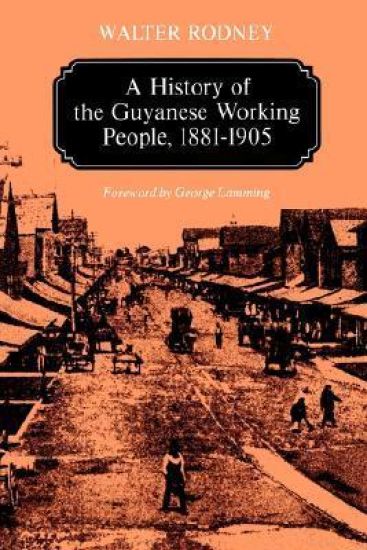
A History of the Guyanese Working People, 1881-1905

A History of the Guyanese Working People, 1881-1905

Walter Rodney; George Lamming

Johns Hopkins University Press
1981
pokkari
Completed shortly before Walter Rodney's assassination in June 1980, A History of the Guyanese Working People, 1881-1905 provides an original, well-informed, and perceptive contribution to the historiography of nineteenth-century Guyanese society. This comprehensive examination encompasses the history of African and Asian immigration into Guyana, the interaction of ethnic groups, the impact of British colonialism, economic and political constraints on the working class, and the social life of the masses. Rodney argues that the social evolution of the Guyanese working people has been guided by specific material constraints and extremely powerful external focuses from Europe, Africa, Asia, and North America. He emphasizes the destructive fragmentation of the working class along ethnic, political, and social lines, encouraged by the legacy of slavery, postslavery immigration, legal distinctions between various classes of labor, and the economic bases of the society. in contrast to the well-defined middle and upper classes, the working people appeared divided, disorganized, and leaderless. Rodney's account ends in 1905, when the hardships and frustrations of the masses exploded into violence. A History of the Guyanese Working People, 1881-1905 will stand alone as a landmark study of the profound social upheaval that characterized Guyanese society in the years following emancipation. Anyone interested in the problems of underdeveloped nations, labor control, and the after-effects of colonialism and imperialism will appreciate the significance of this work.