Kirjojen hintavertailu. Mukana 11 342 296 kirjaa ja 12 kauppaa.

Kirjahaku

Etsi kirjoja tekijän nimen, kirjan nimen tai ISBN:n perusteella.

8 kirjaa tekijältä George M. Fredrickson

The Inner Civil War

The Inner Civil War

George M. Fredrickson

University of Illinois Press
1993
nidottu
The Inner Civil War is a classic that has influenced historians' views of the Civil War and American intellectual change in the nineteenth century. This edition includes a new preface in which the author demonstrates the continuing relevance of the work and updates its interpretations.
The Comparative Imagination

The Comparative Imagination

George M. Fredrickson

University of California Press
2000
pokkari
In this collection of essays, an eminent American historian of race relations discusses issues central to our understanding of the history of racism, the role of racism, and the possibilites for justice in contemporary society. George M. Fredrickson provides an eloquent and vigorous examination of race relations in the United States and South Africa and at the same time illuminates the emerging field of comparative history--history that is explicitly cross-cultural in its comparisons of nations, eras, or social structures. Taken together, these thought-provoking, accessible essays--several never before published--bring new precision and depth to our understanding of racism and justice, both historically and for society today. The first group of essays in The Comparative Imagination summarizes and evaluates the cross-national comparative history written in the past fifty years. These essays pay particular attention to comparative work on slavery and race relations, frontiers, nation-building and the growth of modern welfare states, and class and gender relations. The second group of essays represents some of Fredrickson's own explorations into the cross-cultural study of race and racism. Included are new essays covering such topics as the theoretical and cross-cultural meaning of racism, the problem of race in liberal thought, and the complex relationship between racism and state-based nationalism. The third group contains Fredrickson's recent work on anti-racist and black liberation movements in the United States and South Africa, especially in the period since World War II. In addition, Fredrickson's provocative introduction breaks significant new intellectual ground, outlining a justification for the methods of comparative history in light of such contemporary intellectual trends as the revival of narrative history and the predominance of postmodern thought.
Big Enough to Be Inconsistent

Big Enough to Be Inconsistent

George M. Fredrickson

Harvard University Press
2008
sidottu
“Cruel, merciful; peace-loving, a fighter; despising Negroes and letting them fight and vote; protecting slavery and freeing slaves.” Abraham Lincoln was, W. E. B. Du Bois declared, “big enough to be inconsistent.” Big enough, indeed, for every generation to have its own Lincoln—unifier or emancipator, egalitarian or racist. In an effort to reconcile these views, and to offer a more complex and nuanced account of a figure so central to American history, this book focuses on the most controversial aspect of Lincoln’s thought and politics—his attitudes and actions regarding slavery and race. Drawing attention to the limitations of Lincoln’s judgment and policies without denying his magnitude, the book provides the most comprehensive and even-handed account available of Lincoln’s contradictory treatment of black Americans in matters of slavery in the South and basic civil rights in the North.George Fredrickson shows how Lincoln’s antislavery convictions, however genuine and strong, were held in check by an equally strong commitment to the rights of the states and the limitations of federal power. He explores how Lincoln’s beliefs about racial equality in civil rights, stirred and strengthened by the African American contribution to the northern war effort, were countered by his conservative constitutional philosophy, which left this matter to the states. The Lincoln who emerges from these pages is far more comprehensible and credible in his inconsistencies, and in the abiding beliefs and evolving principles from which they arose. Deeply principled but nonetheless flawed, all-too-human yet undeniably heroic, he is a Lincoln for all generations.
The Arrogance of Race

The Arrogance of Race

George M. Fredrickson

Wesleyan University Press
1989
nidottu
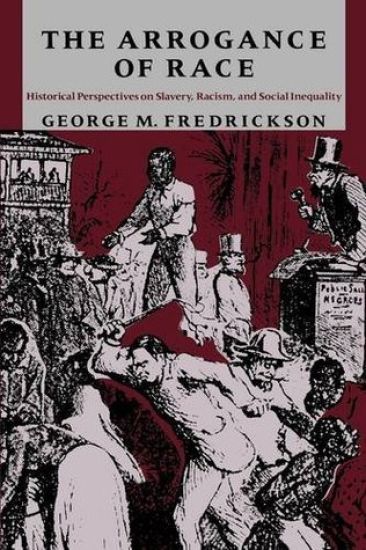
The Arrogance of Race is a significant contribution to the historiography of slavery and racism in America. George Fredrickson, one of the most respected and cogent historians of this complex and troubling subject, maintains that racism is a cultural phenomenon not a mere by-product of class conflict and colonialism. He opts for a "dualistic" rather than a more popular monolithic explanation of the tragedy of racism.
Diverse Nations

Diverse Nations

George M. Fredrickson

Paradigm
2008
sidottu
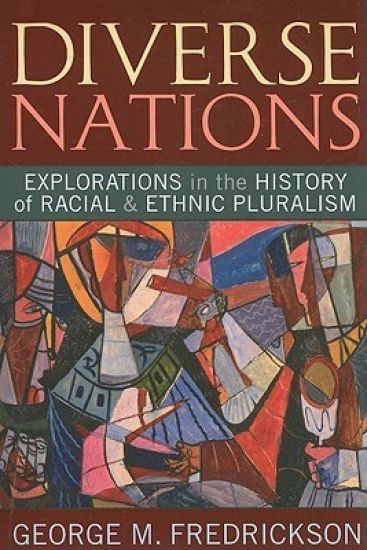
One of the world's leading historians of race relations, George Fredrickson in his newest book probes the history of racial and ethnic diversity in the United States and other parts of the world. Diverse Nations explores recent interpretations of slavery and race relations in the United States and introduces comparative perspectives on Europe, South Africa, and Brazil. Notably, the book features groundbreaking work comparing ethnoracial pluralism in France and the United States. In contrast to the similarities of race relations in the United States and South Africa, which both drew rigid domestic color lines, the United States and France have historically diverged greatly in their approaches to racial difference. Yet both are influenced by a common heritage of revolutionary republicanism, extensive immigration, and cultural pluralism. Fredrickson's rich comparisons provide stimulating new insights into the continuing impacts of slavery and beliefs about race upon our increasingly pluralistic societies.
Diverse Nations

Diverse Nations

George M. Fredrickson

Paradigm
2009
nidottu
One of the world's leading historians of race relations, George Fredrickson in his newest book probes the history of racial and ethnic diversity in the United States and other parts of the world. Diverse Nations explores recent interpretations of slavery and race relations in the United States and introduces comparative perspectives on Europe, South Africa, and Brazil. Notably, the book features groundbreaking work comparing ethnoracial pluralism in France and the United States. In contrast to the similarities of race relations in the United States and South Africa, which both drew rigid domestic color lines, the United States and France have historically diverged greatly in their approaches to racial difference. Yet both are influenced by a common heritage of revolutionary republicanism, extensive immigration, and cultural pluralism. Fredrickson's rich comparisons provide stimulating new insights into the continuing impacts of slavery and beliefs about race upon our increasingly pluralistic societies.