Kirjojen hintavertailu. Mukana 12 390 323 kirjaa ja 12 kauppaa.

Kirjahaku

Etsi kirjoja tekijän nimen, kirjan nimen tai ISBN:n perusteella.

8 kirjaa tekijältä George McGovern

Terry: My Daughter's Life-And-Death Struggle with Alcoholism
"McGovern's story is riveting as he investigates his daughter's life, reads her anguished and accusatory diaries, interviews her friends and doctors, sifts through the sordid police and medical records... a family drama of love and loss."--New York Times Rarely has a public figure addressed such difficult, intimate issues with such courage and bravery. In a moving, passionate memoir, former Senator George McGovern recalls the events leading up to his daughter Terry's death as a result of alcoholism. What McGovern learned from Terry is an unforgettable, poignant tale certain to engender controversy and compassion.
The Third Freedom

The Third Freedom

George McGovern

Rowman Littlefield Publishers
2002
pokkari
In his 1941 State of the Union address, President Franklin D. Roosevelt described a future world founded on four essential freedoms — freedom of speech, freedom of religion, freedom from want, and freedom from fear. Sixty years later, nearly 20 percent of the earth's population are still seeking the third freedom, "which," Roosevelt said, "translated into world terms, means economic understanding which will secure to every nation a healthy peacetime life for its inhabitants - everywhere in the world." In The Third Freedom, former three-term Democratic senator George McGovern describes his strategy to end world hunger in our time. When McGovern was the Democrats' nominee for president in 1972, 35 percent of the people in the world were hungry. By 1996, that figure was cut in half. Now, McGovern says, is the time to end world hunger entirely. "Ending it (hunger)," he says, "is a greater moral imperative now than ever before, because for the first time humanity has the instruments in hand to defeat this cruel enemy at a very reasonable cost." McGovern raises two central questions: first, what would it cost for the nations of the world to end hunger and second, what would be the cost if hunger is allowed to persist at its present levels? McGovern concludes, "I can think of no investment that would profit the international community more than erasing hunger from the face of the earth." We have the ability to end hunger, McGovern says, now it's just a matter of finding the leadership.
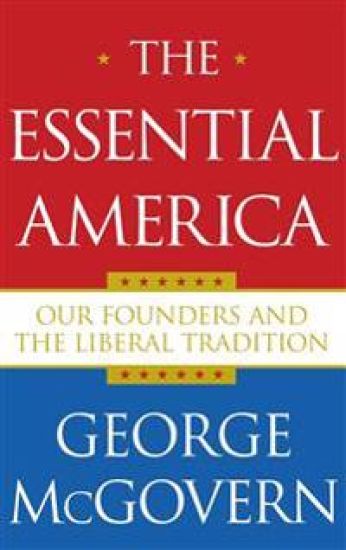
The Essential America

The Essential America

George McGovern

Simon Schuster
2009
pokkari
Liberalism is the oldest and most enduring American tradition, a philosophy and way of life we inherited from the Founding Fathers. This is the central idea of The Essential America by George McGovern, America's best-known (and most consistent) liberal. Referring us to our moral and spiritual foundations, McGovern not only presents a resounding defense of liberalism as "the most practical and hopeful compass to guide the American ship of state" but offers specific proposals for keeping the tradition vibrant. The Essential America proposes programs for feeding the world's malnourished children. Rather than sending our armies abroad, McGovern spells out policies that confront the causes of terrorism. He proposes cutting our military budget (echoing Dwight D. Eisenhower's powerful warning about the military-industrial complex). He condemns preemptive war, criticizes tax cuts for the rich, and warns against government for the powerful minority. Americans have traditionally stood for progress, generosity, tolerance, and protection of the needy, McGovern states -- as well as for multi- lateralism in foreign policy and "a decent respect for the opinions of mankind." He reminds us that while creative tension between liberalism and conservatism is the genius of American politics, it is the liberals who have been responsible for every forward step in our national history. They built "the Essential America."
Wilson Era

Wilson Era

George McGovern

Harlan Davidson Inc
1991
sidottu
Gathered in this volume are a collection of papers originally presented at a conference in honour of the American historian, held at Princeton University, USA, in May 1989. The papers highlight the breadth of Professor Link's work, focusing on historical issues of the early 20th century.
Abraham Lincoln

Abraham Lincoln

George McGovern; Arthur Meier (EDT) Schlesinger; Sean (EDT) Wilentz

Henry Holt Company Inc
2008
sidottu
Abraham Lincoln towers above the others who have held the office of president - the icon of greatness, the pillar of strength whose words bound up the nation's wounds. His presidency is the hinge on which American history pivots, the time when the young republic collapsed of its own contradictions and a new birth of freedom, sanctified by blood, created the United States we know today. His story has been told many times, but never by a man who himself sought the office of president and contemplated the awesome responsibilities that come with it. George S. McGovern - a Midwesterner, former U.S. senator, presidential candidate, veteran, and historian by training - offers his unique insight into America's sixteenth president. He shows how Lincoln sometimes went astray, particularly in his restrictions on civil liberties, but also how he adjusted his sights and transformed the Civil War from a political dispute to a moral crusade. McGovern's account reminds us why we hold Lincoln in such esteem and why he remains the standard by which all of his successors are measured.
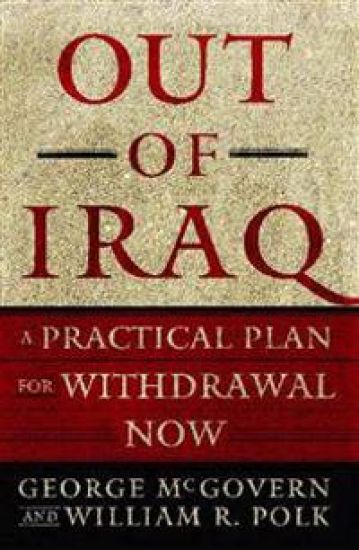
Out of Iraq: A Practical Plan for Withdrawal Now

Out of Iraq: A Practical Plan for Withdrawal Now

George McGovern; William R. Polk

SIMON SCHUSTER
2006
nidottu
Former senator George McGovern and William R. Polk, a leading authority on the Middle East, offer a detailed plan for a speedy troop withdrawal from Iraq. During the phased withdrawal, to begin on December 31, 2006, and to be completed by June 30, 2007, they recommend that the Iraq government engage the temporary services of an international stabilization force to police the country. Other elements in the withdrawal plan include an independent accounting of American expenditures of Iraqi funds, reparations to Iraqi civilians for lives lost and property destroyed, immediate release of all prisoners of war, the closing of American detention centers, and offering to void all contracts for petroleum exploration, development, and marketing made during the American occupation.
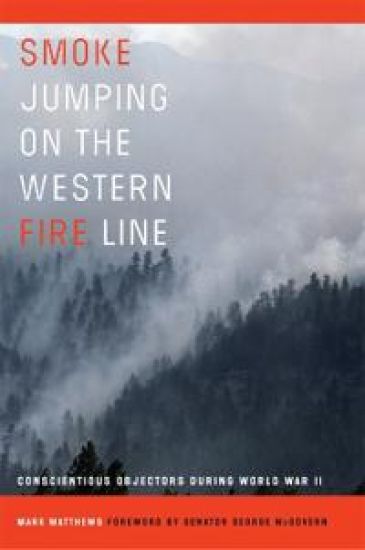
Smoke Jumping on the Western Fire Line

Smoke Jumping on the Western Fire Line

Mark Matthews; George McGovern

University of Oklahoma Press
2006
sidottu
During the Vietnam era, conscientious objectors received both sympathy and admiration from many Americans. It was not so during World War II. The pacifists who chose to sit out that war - some 72,000 men - were publicly derided as ""yellowbellies"" or extreme cowards. After all, why would anyone refuse to fight against fascism in ""the good war""?This book tells the story of one important group of World War II conscientious objectors: the men who volunteered for Civilian Public Service as U.S. Forest Service smoke jumpers. Based in Missoula, Montana, the experimental smoke-jumping program began in 1939, but before the project could expand, the war effort drained available manpower. In 1942, the Civilian Public Service volunteers stepped in. Smoke jumping soon became the Forest Service's first line of defense against wildfires in the West.Drawing on extensive interviews with World War II conscientious objectors and original documents from the period, Matthews vividly recreates the individual stories of Civilian Public Service smoke jumpers. He also assesses their collective contribution to the development of western wildfire management. By revealing an unknown dimension of American pacifism, Smoke Jumping on the Western Fire Line fills a gap in World War II history and restores the reputation of the brave men who, even in the face of public ostracism, held true to their beliefs and served their country with honor.
Smoke Jumping on the Western Fire Line

Smoke Jumping on the Western Fire Line

Mark Matthews; George McGovern

UNIVERSITY OF OKLAHOMA PRESS
2022
nidottu
During the Vietnam era, conscientious objectors received both sympathy and admiration from many Americans. It was not so during World War II. The pacifists who chose to sit out that war—some 72,000 men—were publicly derided as "yellowbellies" or extreme cowards. After all, why would anyone refuse to fight against fascism in "the good war"?This book tells the story of one important group of World War II conscientious objectors: the men who volunteered for Civilian Public Service as U.S. Forest Service smoke jumpers. Based in Missoula, Montana, the experimental smoke-jumping program began in 1939, but before the project could expand, the war effort drained available manpower. In 1942, the Civilian Public Service volunteers stepped in. Smoke jumping soon became the Forest Service's first line of defense against wildfires in the West.Drawing on extensive interviews with World War II conscientious objectors and original documents from the period, Matthews vividly recreates the individual stories of Civilian Public Service smoke jumpers. He also assesses their collective contribution to the development of western wildfire management. By revealing an unknown dimension of American pacifism, Smoke Jumping on the Western Fire Line fills a gap in World War II history and restores the reputation of the brave men who, even in the face of public ostracism, held true to their beliefs and served their country with honor.