Kirjojen hintavertailu. Mukana 11 342 296 kirjaa ja 12 kauppaa.

Kirjahaku

Etsi kirjoja tekijän nimen, kirjan nimen tai ISBN:n perusteella.

8 kirjaa tekijältä George P. Smith II

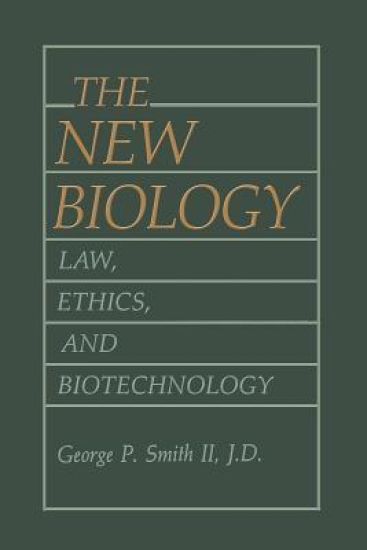
The New Biology

The New Biology

George P. Smith II

Kluwer Academic/Plenum Publishers
1989
sidottu
Improvement of man's genetic endowment by direct ac­ tions aimed at striving for the positive propagation of those with a superior genetic profile (an element of which is commonly recognized as a high intelligence quotient) or-conversely-delimitation of those with negative genetic inheritance has always remained a pri­ mary concern of the geneticist and the social engineer. Genetic integrity, eugenic advancement, and a strong genetic pool designed to eliminate illness and suffering have been the benchmarks of the "Genetic Movement" and the challenge of Orwell's Nineteen Eighty-Four. If the quality of life can in some way be either im­ proved or advanced by use of the law, then this policy must be developed and pursued. No longer does the Dostoyevskian quest to give life meaning through suf­ fering become an inescapable given. By and through the development and application of new scientific advances in the field of genetics (and especially genetic engi­ neering), the real potential exists to prevent, to a very vii Preface viii real extent, most human suffering before it ever mani­ fests itself in or through life. Freedom to undertake re­ search in the exciting and fertile frontiers of the "New Biology" and to master the Genetic Code must be nur­ tured and maintained. The search for the truth inevi­ tably prevents intellectual, social, and economic stag­ nation, as well as-ideally-frees all from anxiety and fright. Yet, there is a very real potential for this quest to confuse and confound.
Law and Bioethics

Law and Bioethics

George P. Smith II

Routledge
2013
nidottu
George P. Smith, II is a leading figure in the world of medical law and ethics. During his long career he has addressed some of the most important issues in bioethics and has contributed much original thought to debates in the field. This book celebrates his contribution to scholarship in this area and brings together his key writings in bioethics. The chapters include previously published material which has been substantially updated to reflect recent developments in medicine and law. The book covers topics such as: human rights and medical law; the allocation of resources and distributive justice; ethical relativism; science and religion; and public health emergencies. Taken as a whole, this book examines the extent to which law, medicine, economics, and bioethics interact as synergistic vectors of force in shaping and setting both personal and public responses to the complexities of biotechnology, or what has been referred to as "The New Biology." All too often, past considerations of this topic have neglected to recognise the synergistic influences of law as a catalyst for codifying contemporary values into normative standards. Professor Smith reaches the conclusion that if traditional bioethical principles are to be seen as pertinent constructs for policy making, they must be broadened through the law of public health and Human rights. Law and Bioethics: Intersections along the Mortal Coil casts law as the pivotal force in bringing stability to the ongoing debates on how to maintain bioethical relevance in decision making and in so doing, it offers an excellent overview of the current bioethical issues in medical law considered in light of recent and ongoing technological developments in medicine. This book will be of particular interest to academics and students of Law, Political Science, Philosophy and Economics.
Law and Bioethics

Law and Bioethics

George P. Smith II

Routledge
2012
sidottu
George P. Smith, II is a leading figure in the world of medical law and ethics. During his long career he has addressed some of the most important issues in bioethics and has contributed much original thought to debates in the field. This book celebrates his contribution to scholarship in this area and brings together his key writings in bioethics. The chapters include previously published material which has been substantially updated to reflect recent developments in medicine and law. The book covers topics such as: human rights and medical law; the allocation of resources and distributive justice; ethical relativism; science and religion; and public health emergencies. Taken as a whole, this book examines the extent to which law, medicine, economics, and bioethics interact as synergistic vectors of force in shaping and setting both personal and public responses to the complexities of biotechnology, or what has been referred to as "The New Biology." All too often, past considerations of this topic have neglected to recognise the synergistic influences of law as a catalyst for codifying contemporary values into normative standards. Professor Smith reaches the conclusion that if traditional bioethical principles are to be seen as pertinent constructs for policy making, they must be broadened through the law of public health and Human rights. Law and Bioethics: Intersections along the Mortal Coil casts law as the pivotal force in bringing stability to the ongoing debates on how to maintain bioethical relevance in decision making and in so doing, it offers an excellent overview of the current bioethical issues in medical law considered in light of recent and ongoing technological developments in medicine. This book will be of particular interest to academics and students of Law, Political Science, Philosophy and Economics.
The New Biology

The New Biology

George P. Smith II

Springer-Verlag New York Inc.
2013
nidottu
Improvement of man's genetic endowment by direct ac­ tions aimed at striving for the positive propagation of those with a superior genetic profile (an element of which is commonly recognized as a high intelligence quotient) or-conversely-delimitation of those with negative genetic inheritance has always remained a pri­ mary concern of the geneticist and the social engineer. Genetic integrity, eugenic advancement, and a strong genetic pool designed to eliminate illness and suffering have been the benchmarks of the "Genetic Movement" and the challenge of Orwell's Nineteen Eighty-Four. If the quality of life can in some way be either im­ proved or advanced by use of the law, then this policy must be developed and pursued. No longer does the Dostoyevskian quest to give life meaning through suf­ fering become an inescapable given. By and through the development and application of new scientific advances in the field of genetics (and especially genetic engi­ neering), the real potential exists to prevent, to a very vii Preface viii real extent, most human suffering before it ever mani­ fests itself in or through life. Freedom to undertake re­ search in the exciting and fertile frontiers of the "New Biology" and to master the Genetic Code must be nur­ tured and maintained. The search for the truth inevi­ tably prevents intellectual, social, and economic stag­ nation, as well as-ideally-frees all from anxiety and fright. Yet, there is a very real potential for this quest to confuse and confound.
Legal and Healthcare Ethics for the Elderly

Legal and Healthcare Ethics for the Elderly

George P. Smith II

Taylor Francis Inc
1996
sidottu
Increasingly, legislators at the state and federal levels of government are forced to evaluate and act upon the unique problems presented by an aging American public. A domino effect has occurred, evoking concern in educational circles to deal with the varied, complex issues associated with the "new" gerontology. This expanded focus brings in not only mental and public health delivery issues, but reaches and impacts on the social sciences, ethics, law and medicine as well as public policy. In response to these matters, Legal and Healthcare Ethics for the Elderly provides a balanced analytical presentation of the complicated socio-legal, medico-ethical and political perspectives which interact with gerontology as a field of study. In a straightforward and unambiguous style, it covers information on access and financing healthcare, the ethics of rationing healthcare and the inevitable link to the quality of life, guardianship issues in a nursing home setting, informed consent, living wills and durable powers of attorney, elder abuse, and death with dignity. The economics of care giving is charted and directed by the sometimes harsh realities of the marketplace. Thus, the various philosophical and ethical dilemmas which confront the process of aging are examined here both from a micro- and from a macro-economic perspective. This book exemplifies that it is vitally important to be educated now, to be prepared for the future and thereby make informed decisions - for both ourselves and our loved ones.
Legal and Healthcare Ethics for the Elderly

Legal and Healthcare Ethics for the Elderly

George P. Smith II

Taylor Francis Inc
1996
nidottu
Increasingly, legislators at the state and federal levels of government are forced to evaluate and act upon the unique problems presented by an aging American public. A domino effect has occurred, evoking concern in educational circles to deal with the varied, complex issues associated with the "new" gerontology. This expanded focus brings in not only mental and public health delivery issues, but reaches and impacts on the social sciences, ethics, law and medicine as well as public policy. In response to these matters, Legal and Healthcare Ethics for the Elderly provides a balanced analytical presentation of the complicated socio-legal, medico-ethical and political perspectives which interact with gerontology as a field of study. In a straightforward and unambiguous style, it covers information on access and financing healthcare, the ethics of rationing healthcare and the inevitable link to the quality of life, guardianship issues in a nursing home setting, informed consent, living wills and durable powers of attorney, elder abuse, and death with dignity. The economics of care giving is charted and directed by the sometimes harsh realities of the marketplace. Thus, the various philosophical and ethical dilemmas which confront the process of aging are examined here both from a micro- and from a macro-economic perspective. This book exemplifies that it is vitally important to be educated now, to be prepared for the future and thereby make informed decisions - for both ourselves and our loved ones.
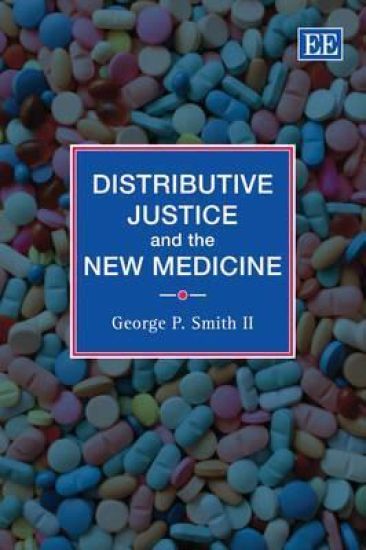
Distributive Justice and the New Medicine

Distributive Justice and the New Medicine

George P. Smith II

Edward Elgar Publishing Ltd
2008
sidottu
Is the advancement of scientific knowledge and the development of biomedical technologies - known as the 'New Medicine' - desirable? George P. Smith asks this fundamental question while also confronting the distribution of these scarce medical resources. Law, economics, medical science, philosophy and ethics all coalesce in this discussion of how to structure normative standards of conduct that will improve the quality of human life. The author begins by examining various economic constructs as aids for achieving a fair and equitable delivery of health care services. He then assesses their level of practical application and evaluates the costs and benefits to society of pursuing the development and use of the 'New Medicine'. The book ends with a case study of organ and tissue transplantation that illustrates the implementation of distributive justice. The author concludes that as long as clinical medicine maintains its focus on healing and alleviating suffering among patients, a point of equilibrium will be reached that advances the common good. This timely and compelling exploration will be a must-read for scholars, researchers, policymakers and all those interested in advances in medical technology and the issues surrounding access to health care.
Distributive Justice and the New Medicine

Distributive Justice and the New Medicine

George P. Smith II

Edward Elgar Publishing Ltd
2010
nidottu
Is the advancement of scientific knowledge and the development of biomedical technologies - known as the 'New Medicine' - desirable? George P. Smith asks this fundamental question while also confronting the distribution of these scarce medical resources. Law, economics, medical science, philosophy and ethics all coalesce in this discussion of how to structure normative standards of conduct that will improve the quality of human life. The author begins by examining various economic constructs as aids for achieving a fair and equitable delivery of health care services. He then assesses their level of practical application and evaluates the costs and benefits to society of pursuing the development and use of the 'New Medicine'. The book ends with a case study of organ and tissue transplantation that illustrates the implementation of distributive justice. The author concludes that as long as clinical medicine maintains its focus on healing and alleviating suffering among patients, a point of equilibrium will be reached that advances the common good. This timely and compelling exploration will be a must-read for scholars, researchers, policymakers and all those interested in advances in medical technology and the issues surrounding access to health care.