Kirjojen hintavertailu. Mukana 11 433 028 kirjaa ja 12 kauppaa.

Kirjahaku

Etsi kirjoja tekijän nimen, kirjan nimen tai ISBN:n perusteella.

5 kirjaa tekijältä George Prochnik

Heinrich Heine

Heinrich Heine

George Prochnik

Yale University Press
2021
sidottu
A rich, provocative, and lyrical study of one of Germany’s most important, world-famous, and imaginative writers “A concise, fast-paced biography of the German poet, critic, and essayist. . . . A discerning portrait of the writer and his times.”—Kirkus Reviews “Prochnik provides a jaunty narrative of Heine’s schooldays in Bonn and Göttingen, journalistic career in Berlin, and twenty-five-year exile in Paris, detailing his literary feuds, scraps with censors, and unwavering belief in political liberty.”—New Yorker Heinrich Heine (1797–1856) was a virtuoso German poet, satirist, and visionary humanist whose dynamic life story and strikingly original writing are ripe for rediscovery. In this vividly imagined exploration of Heine’s life and work, George Prochnik contextualizes Heine’s biography within the different revolutionary political, literary, and philosophical movements of his age. He also explores the insights Heine offers contemporary readers into issues of social justice, exile, and the role of art in nurturing a more equitable society. Heine wrote that in his youth he resembled “a large newspaper of which the upper half contained the present, each day with its news and debates, while in the lower half, in a succession of dreams, the poetic past was recorded fantastically like a series of feuilletons.” This book explores the many dualities of Heine’s nature, bringing to life a fully dimensional character while also casting into sharp relief the reasons his writing and personal story matter urgently today.
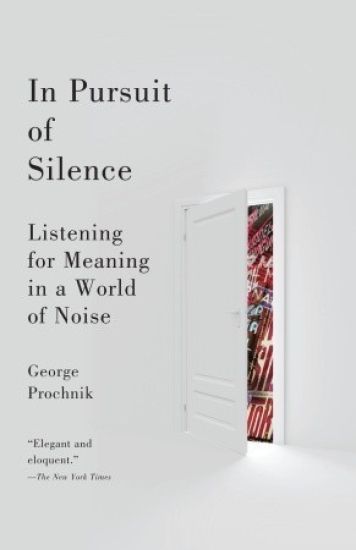
In Pursuit of Silence: Listening for Meaning in a World of Noise
An "elegant and eloquent" (New York Times) exploration of the frontiers of noise and silence, and the growing war between them. Between iPods, music-blasting restaurants, earsplitting sports stadiums, and endless air and road traffic, the place for quiet in our lives grows smaller by the day. In Pursuit of Silence gives context to our increasingly desperate sense that noise pollution is, in a very real way, an environmental catastrophe. Traveling across the country and meeting and listening to a host of incredible characters, including doctors, neuroscientists, acoustical engineers, monks, activists, educators, marketers, and aggrieved citizens, George Prochnik examines why we began to be so loud as a society, and what it is that gets lost when we can no longer find quiet.
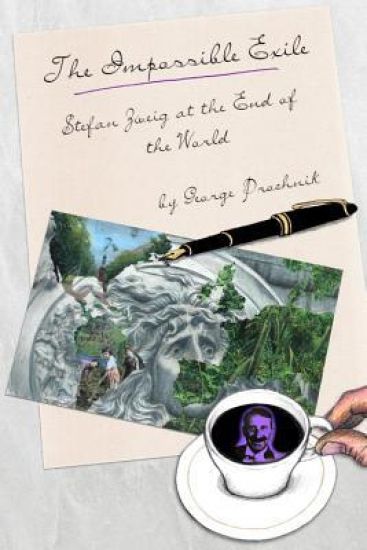
The Impossible Exile: Stefan Zweig at the End of the World
**Winner of the National Jewish Book Award for Biography** Now in paperback, the biography of Austrian writer Stefan Zweig, the inspiration behind The Grand Budapest Hotel, Wes Anderson's award-winning film By the 1930s, Stefan Zweig had become the most widely translated living author in the world. His novels, short stories, and biographies were so compelling that they became instant best sellers. Zweig was also an intellectual and a lover of all the arts, high and low. Yet after Hitler's rise to power, this celebrated writer who had dedicated so much energy to promoting international humanism plummeted, in a matter of a few years, into an increasingly isolated exile--from London to Bath to New York City, then Ossining, Rio, and finally Petr polis--where, in 1942, in a cramped bungalow, he killed himself. The Impossible Exile tells the tragic story of Zweig's extraordinary rise and fall while it also depicts, with great acumen, the gulf between the world of ideas in Europe and in America, and the consuming struggle of those forced to forsake one for the other. It also reveals how Zweig embodied, through his work, thoughts, and behavior, the end of an era--the implosion of Europe as an ideal of Western civilization.
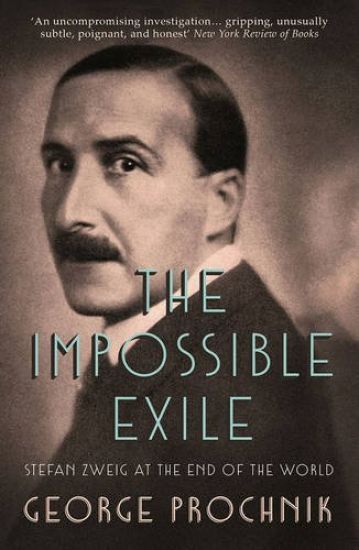
The Impossible Exile

The Impossible Exile

George Prochnik

Granta Books
2015
nidottu
By the 1930s, Stefan Zweig, born to an affluent Jewish family in Vienna, had become the most widely translated living author in the world. His novels, short stories, and biographies became instant bestsellers, and his cultural patronage, his generosity, and his literary connections, were legendary. In 1934, following Hitler's rise to power, Zweig left Vienna for England, then New York, and, finally, Petrópolis, a suburb of Rio de Janeiro. With the destruction of the cultural milieu of pre-Nazi Europe, Zweig's life in exile became increasingly isolated. In 1942 he and his wife, Lotte Altmann, were found dead. They had committed suicide, just after Zweig had completed his famous autobiography, The World of Yesterday. The Impossible Exile tells the mesmerizing and tragic story of Zweig's extraordinary rise and fall, the gulf between the world of ideas in Europe and in America, and the alienation of the refugees forced into exile. Zweig embodied and witnessed the end of an era: the great Central European civilization of Vienna and Berlin.
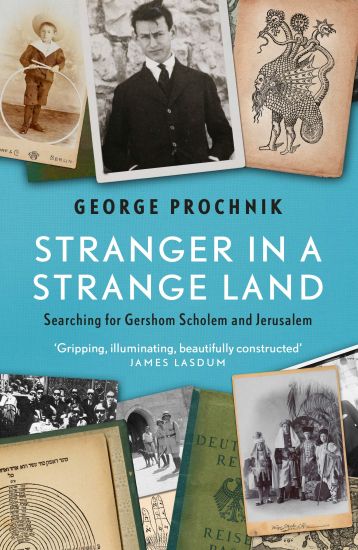
Stranger in a Strange Land

Stranger in a Strange Land

George Prochnik

Granta Books
2018
nidottu
Gershom Scholem, the great humanist thinker and founder of modern Kabbalah, is all but forgotten today. But here, in a biography as daring and inquisitive as its subject, George Prochnik goes in search of Scholem, restoring the reputation of a vital intellectual and finding in his work a vision with the power to reinvigorate contemporary religious and political thought. Tracing Scholem's life from his upbringing in Berlin, where he experienced a close and transformative friendship with Walter Benjamin, Prochnik reveals how Scholem's frustration with the bourgeois ideology of Germany during WWI led him to discover mystic Judaism, Kabbalah, and, finally, Zionism. But having emigrated to what was to become Israel, Scholem again found himself a 'stranger in a strange land', ill at ease with a prevailing conservative form of Zionism. Prochnik follows Scholem to the modern Holy Land - only to find that he too is disillusioned by the state politics he encounters. But through his profound study of Scholem and his own experience of Jerusalem, Prochnik not only questions the ideological and religious constructs of Jerusalem, but finds an ethical way forward, showing how a new form of pluralism might energize Jewish thought.