Kirjojen hintavertailu. Mukana 12 411 057 kirjaa ja 12 kauppaa.

Kirjahaku

Etsi kirjoja tekijän nimen, kirjan nimen tai ISBN:n perusteella.

30 kirjaa tekijältä George Steiner

George Steiner

George Steiner

George Steiner

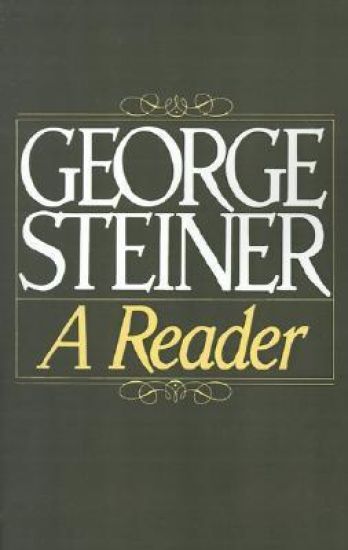
Oxford University Press Inc
1987
nidottu
As an incisive and provocative critic of literature, language, and culture, George Steiner has acquired an international reputation and a devoted following. "He scatters bright ideas everywhere," writes The New York Times Book Review, "and they are sure to be picked up." This volume presents a rich sampling of Steiner's ideas, including selections from his seminal books The Death of Tragedy, After Babel, Tolstoy or Dostoevsky, and Language and Science. Aside from pointing to work that lies ahead, this anthology offers a rich retrospective of the intellectual ground Steiner has already covered. Whether discussing Marxist literary theory, the significance of Tolstoy, or the problems of treating sexual material in literature, Steiner's writings give us the pleasure of watching an astute and nimble mind constantly at work.
Darling, Yours Always: The WWII Letters of Peggy and George Steiner, Volume I, 2nd edition
The first volume of Peggy and George Steiner's wartime letters written from 1941-1943. This second edition includes updated information about George's stateside service thanks to the discovery of George's wartime portfolio of documents, including a copy of his military records, by one of his grandsons.
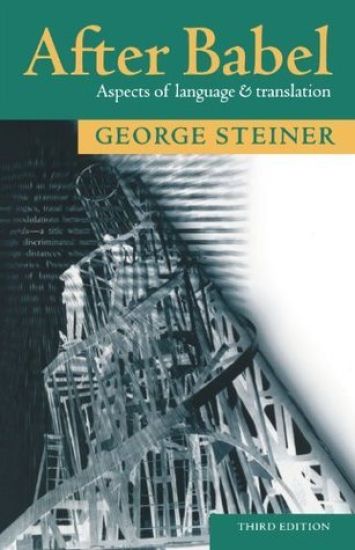
After Babel

After Babel

George Steiner

Oxford University Press
1998
nidottu
`Translation has long needed a champion, and at last in George Steiner it has found a scholar who is a match for the task.' Sunday Times First published in 1975, After Babel constituted the first systematic investigation of the theory and processes of translation since the eighteenth century. In mapping out its own field, it quickly established itself as both controversial and seminal, and gave rise to a considerable, and still-growing, body of secondary literature. Even today, with its status as a modern classic beyond question, many of the books insights remain provocative and challenging. For the second edition of After Babel, George Steiner entirely revised the text, added new and expanded notes, provided a substantially updated bibliography (including much Russian and Eastern European material), and wrote a new preface setting the book in the present context of hermeneutics, poetics, and translation studies. `Steiner's subject is extravagantly rich and he ponders it on the most generous scale...his language and his ideas display even-handedness, seriousness without heaviness, learning without pedantry, and sober charm.' New Yorker
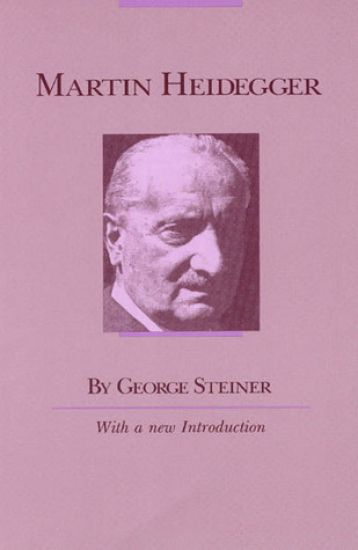
Martin Heidegger

Martin Heidegger

George Steiner

University of Chicago Press
1991
nidottu
With characteristic lucidity and style, Steiner makes Heidegger's immensely difficult body of work accessible to the general reader. In a new introduction, Steiner addresses language and philosophy and the rise of Nazism. "It would be hard to imagine a better introduction to the work of philosopher Martin Heidegger."—George Kateb, The New Republic
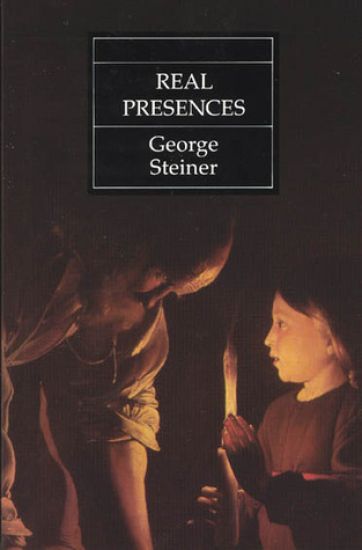
Real Presences

Real Presences

George Steiner

University of Chicago Press
1991
pokkari
Can there be major dimensions of a poem, a painting, a musical composition created in the absence of God? Or, is God always a real presence in the arts? Steiner passionately argues that a transcendent reality grounds all genuine art and human communication."A real tour de force. . . . All the virtues of the author's astounding intelligence and compelling rhetoric are evident from the first sentence onward."--Anthony C. Yu, "Journal of Religion"
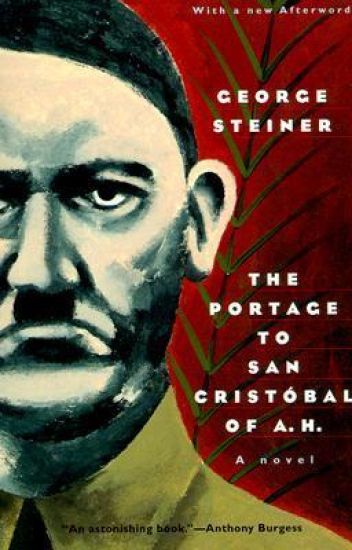
The Portage to San Cristobel of A.H.

The Portage to San Cristobel of A.H.

George Steiner

University of Chicago Press
1999
nidottu
Thirty years after World War II, Israeli Nazi-hunters, some of whom lost relatives in the gas chambers of Nazi Germany, find a silent old man in the Amazon jungle. He is Adolf Hitler. The narrative that follows is an exploration of the nature of guilt, vengeance, language and the power of evil.
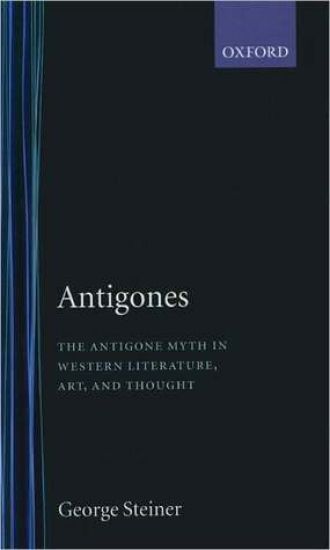
Antigones

Antigones

George Steiner

Yale University Press
1996
pokkari
According to Greek legend, Antigone, the daughter of Oedipus, secretly buried her brother in defiance of the order of Creon, king of Thebes. Sentenced to death by Creon, she forestalled him by committing suicide. The theme of the conflict between Antigone and Creon-between the state and the individual, between man and woman, between young and old-has captured the Western imagination for more than 2000 years. George Steiner here examines the far-reaching legacy of this great classical myth. He considers its treatment in Western art, literature, and thought-in drama, poetry, prose, philosophic discourse, political tracts, opera, ballet, film, and even the plastic arts. A study in poetics and in the philosophy of reading, Antigones leads us to look again at the influence the Greek myths exercise on twentieth-century culture.
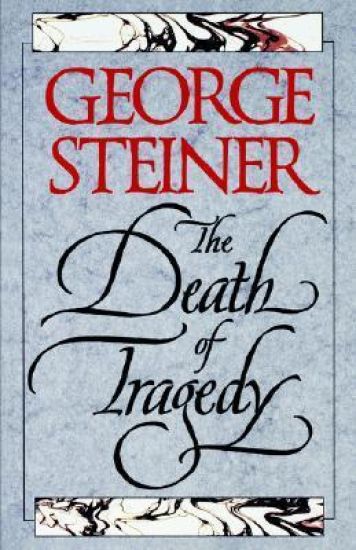
The Death of Tragedy

The Death of Tragedy

George Steiner

Yale University Press
1996
pokkari
""This book is important--and portentous--for if it is true that tragedy is dead, we face a vital cultural loss. . . . The book is bound to start controversy. . . . The very passion and insight with which he writes about the tragedies that have moved him prove that the vision still lives and that words can still enlighten and reveal.""-R.B. Sewall, New York Times Book Review
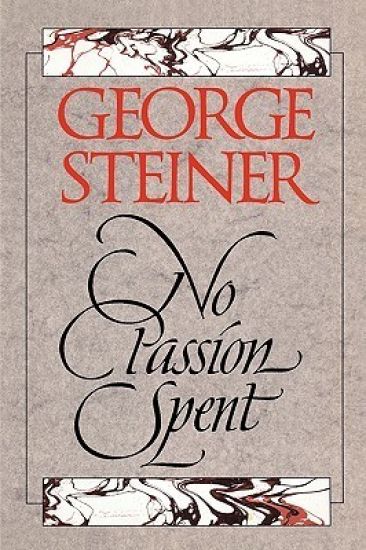
No Passion Spent: Essays 1978-1995

No Passion Spent: Essays 1978-1995

George Steiner

YALE UNIVERSITY PRESS
1998
nidottu
George Steiner is one of the preeminent essayists and literary thinkers of our era. In this remarkable book he concerns himself with language and the relation of language to literature and to religion. Written during a period when the art of reading and the status of a text have been threatened by literary movements that question their validity and by computer technology, Steiner's essays affirm the primacy of reading in the classical sense. Steiner covers a wide range of subjects, from the Hebrew Bible, Homer, and Shakespeare to Kafka, Kierkegaard, Simone Weil, Husserl, and Freud. The theme of Judaism's tragic destiny winds through his thinking, in particular as he muses about whether Jewish scripture and the Talmud are the Jew's true homeland, the parallels between the "last supper" of Socrates and the Last Supper of Jesus, and the necessity for Christians to hold themselves accountable for their invective and impotence during the Holocaust.
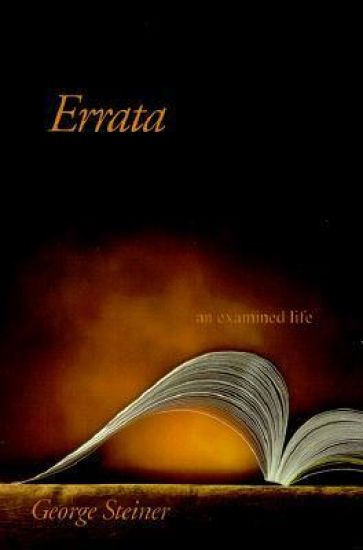
Errata: An Examined Life

Errata: An Examined Life

George Steiner

YALE UNIVERSITY PRESS
1999
nidottu
George Steiner, one of the great literary minds of our century, here relates the story of his own life and the ways that people, places, and events have colored the central ideas and themes of his work. Brilliant and witty, his memoir reveals Steiner's thoughts on the meaning of the western tradition and its philosophic and religious premises. Selected as a 1998 Notable Book of the Year by the New York Times Book Review "One of our great literary and cultural critics reflects on his life and the themes that have aroused his passion. . . . A beautifully written and intensely stimulating book."-Kirkus Reviews "No prominent critic shows us better why the great books matter and how to bring to our reading of them what concentration and awareness we're capable of."-Stephen Goode, Washington Times "This intriguing and thoughtful book is, and is not, Steiner's autobiography. Writing about his ideas comes more naturally to him than writing about his lived experience."-Victoria Glendinning, The Telegraph "A minor literary masterpiece."-Scott Stossel, Boston Phoenix Winner of the Truman Capote Lifetime Achievement Award in Literary Criticism in 1999 George Steiner was recently Lord Weidenfeld Visiting Professor of Comparative Literature at Oxford University. He reviews for the Times Literary Supplement and other American and European journals. He is the author of numerous books that have been translated into a dozen languages.
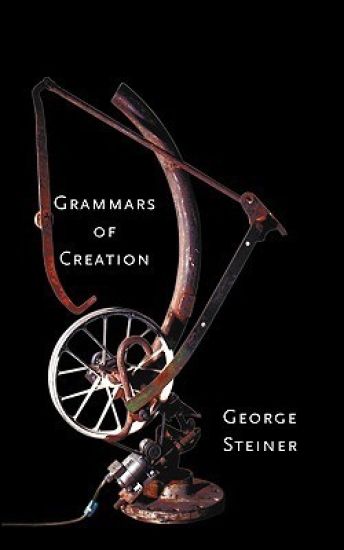
Grammars of Creation

Grammars of Creation

George Steiner

Yale University Press
2002
nidottu
"We have no more beginnings," George Steiner begins in this, his most radical book to date. A far-reaching exploration of the idea of creation in Western thought, literature, religion, and history, this volume can fairly be called a magnum opus. He reflects on the different ways we have of talking about beginnings, on the "core-tiredness" that pervades our end-of-the-millennium spirit, and on the changing grammar of our discussions about the end of Western art and culture. With his well-known elegance of style and intellectual range, Steiner probes deeply into the driving forces of the human spirit and our perception of Western civilization's lengthening afternoon shadows. Roaming across topics as diverse as the Hebrew Bible, the history of science and mathematics, the ontology of Heidegger, and the poetry of Paul Celan, Steiner examines how the twentieth century has placed in doubt the rationale and credibility of a future tense-the existence of hope. Acknowledging that technology and science may have replaced art and literature as the driving forces in our culture, Steiner warns that this has not happened without a significant loss. The forces of technology and science alone fail to illuminate inevitable human questions regarding value, faith, and meaning. And yet it is difficult to believe that the story out of Genesis has ended, Steiner observes, and he concludes this masterful volume of reflections with an eloquent evocation of the endlessness of beginnings.
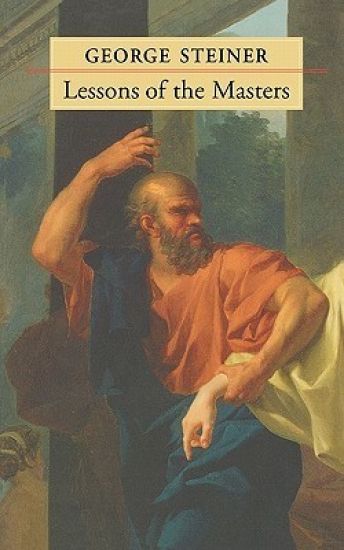
Lessons of the Masters

Lessons of the Masters

George Steiner

Harvard University Press
2005
nidottu
When we talk about education today, we tend to avoid the rhetoric of "mastery," with its erotic and inegalitarian overtones. But the charged personal encounter between master and disciple is precisely what interests George Steiner in this book, a sustained reflection on the infinitely complex and subtle interplay of power, trust, and passions in the most profound sorts of pedagogy. Based on Steiner's Norton Lectures on the art and lore of teaching, Lessons of the Masters evokes a host of exemplary figures, including Socrates and Plato, Jesus and his disciples, Virgil and Dante, Heloise and Abelard, Tycho Brahe and Johann Kepler, the Baal Shem Tov, Confucian and Buddhist sages, Edmund Husserl and Martin Heidegger, Nadia Boulanger, and Knute Rockne.Pivotal in the unfolding of Western culture are Socrates and Jesus, charismatic masters who left no written teachings, founded no schools. In the efforts of their disciples, in the passion narratives inspired by their deaths, Steiner sees the beginnings of the inward vocabulary, the encoded recognitions of much of our moral, philosophical, and theological idiom. He goes on to consider a diverse array of traditions and disciplines, recurring throughout to three underlying themes: the master's power to exploit his student's dependence and vulnerability; the complementary threat of subversion and betrayal of the mentor by his pupil; and the reciprocal exchange of trust and love, of learning and instruction between master and disciple. Forcefully written, passionately argued, Lessons of the Masters is itself a masterly testament to the high vocation and perilous risks undertaken by true teacher and learner alike.
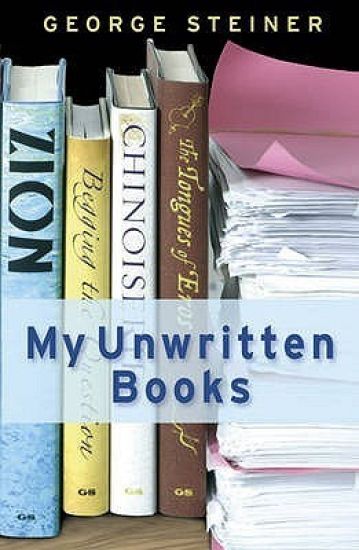
My Unwritten Books

My Unwritten Books

George Steiner

Weidenfeld Nicolson
2009
pokkari
George Steiner, the eminent professor of English at Cambridge and Geneva universities, has outlined seven books he has never written, but has always wanted to write, in seven sections.In this fiercely original and audacious work, George Steiner tells of seven books which he did not write. Because intimacies and indiscretions were too threatening. Because the topic brought too much pain. Because its emotional or intellectual challenge proved beyond his capacities.The actual themes range widely and defy conventional taboos: the torment of the gifted when they live among, when they confront, the very great; the experience of sex in different languages; a love for animals greater than for human beings; the costly privilege of exile; a theology of emptiness.Yet a unifying perception underlies this diversity. The best we have or can produce is only the tip of the iceberg. Behind every good book, as in a lit shadow, lies the book which remained unwritten, the one that would have failed better.
My Unwritten Books

My Unwritten Books

George Steiner

New Directions Publishing Corporation
2014
pokkari
Steiner did not write the books because intimacies and indiscretions were too threatening. Because the topic brought too much pain. Because its emotional or intellectual challenge proved beyond his capacities.The actual themes range widely and defy conventional taboos: the torment of the gifted when they live among the very great; the experience of sex in different languages; Zionism; a more intense love for animals than for human beings; the costly privilege of exile; a theology of emptiness.
The Poetry of Thought

The Poetry of Thought

George Steiner

New Directions Publishing Corporation
2012
sidottu
With his hallmark forceful discernment, George Steiner presents in The Poetry of Thought his magnum opus: an examination of more than two millennia of Western culture, staking out his claim for the essential oneness of great thought and great style. Sweeping yet precise, moving from essential detail to bracing illustration, Steiner spans the entire history of philosophy in the West as it entwines with literature, finding that, as Sartre stated, in all philosophy there is a hidden literary prose. The poetic genius of abstract thought, Steiner believes, is lit, is made audible. Argument, even analytic, has its drumbeat. It is made ode. What voices the closing movements of Hegel s Phenomenology better than Edith Piaf s non de non, a twofold negation which Hegel would have prized? This essay is an attempt to listen more closely.
The Poetry of Thought

The Poetry of Thought

George Steiner

New Directions Publishing Corporation
2014
nidottu
With his hallmark discernment, George Steiner presents in The Poetry of Thought his magnum opus, staking out his claim for the essential oneness of great thought and great style. Steiner spans the entire history of Western philosophy as it entwines with literature, finding that, as Sartre stated, in all philosophy there is "a hidden literary prose."