Kirjojen hintavertailu. Mukana 12 016 292 kirjaa ja 12 kauppaa.

Kirjahaku

Etsi kirjoja tekijän nimen, kirjan nimen tai ISBN:n perusteella.

23 kirjaa tekijältä Georges Duby

The Age of the Cathedrals

The Age of the Cathedrals

Georges Duby

University of Chicago Press
1983
pokkari
Although individuals create works of art, these works are also the product of a particular time and place. In "The Age of the Cathedrals, " French historian Georges Duby offers a sweeping survey of the changing mentalities of the Middle Ages as these changes are reflected in the art and architecture of the period. The result is a richly textured portrait of another age and a provocative essay on the relationship between art and society.
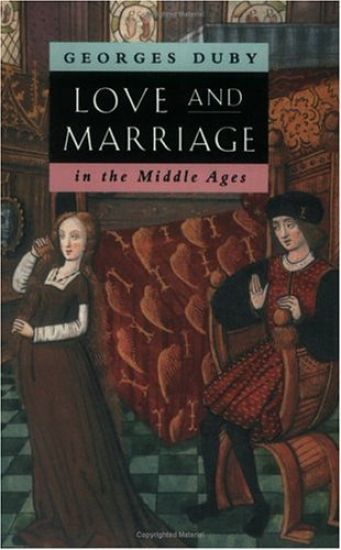
Love and Marriage in the Middle Ages

Love and Marriage in the Middle Ages

Georges Duby

University of Chicago Press
1996
nidottu
Preeminent medieval scholar Georges Duby argues that the structure of sexual relationships took its cue from the family and from feudalism-both bastions of masculinity-as he reveals the role of women, what they represented, and what they were in the Middle Ages. Beautifully written in Duby's characteristically nuanced and powerful style, this collection is an ideal entree into Duby's thinking about marriage and the diversities of love, spousal decorum, family structure, and their cultural context in bodily and spiritual values. Love and Marriage in the Middle Ages will be of great interest to students in social and cultural history, medieval and early modern history, and women's studies, as well as those interested in the nature of social life in the Middle Ages. Georges Duby (1919-1996) was a member of the Acad mie fran aise and for many years held the distinguished chair in medieval history at the Coll ge de France. His books include The Three Orders; The Age of Cathedrals; The Knight, the Lady, and the Priest; Love and Marriage in the Middle Ages; and History Continues, all published by the University of Chicago Press.
Women of the Twelfth Century

Women of the Twelfth Century

Georges Duby

University of Chicago Press
1998
nidottu
Georges Duby's account of 12th-century women is based on the genre that commemorated the virtues of noblewomen who had died and the role they came to play in the history of their lineage. From these genealogical works a picture emerges of the lives these women led, the values they held, and the way in which they were viewed by the ecclesiastical and chivalric writers who immortalized them. The first section of the text outlines the ways in which the dead - in both memory and legend - served to bond noble society in the 12th century, Drawing on the "Gesta" by Dudo of Saint Quentin, the second section reflects on the roles that wives, concubines, and other women played during times of war and in the great exchanges of power that established the grand lineages of the Middle Ages. The final part of the book reconstructs women as wives, mothers and widows through the work of Lambert, Priest of Ardres.
Women of the Twelfth Century

Women of the Twelfth Century

Georges Duby

University of Chicago Press
1998
nidottu
This volume studies the relationship between the Church and women in 12th century Europe, by which time the Church had begun to see the evolving roles and expectations of women as serious matters, resulting in a wide range of clerical writings. From drawing on these writings the text describes how women were thought to embody particular sins such as sorcery, disobedience and licentiousness. It analyzes Eve's role in man's fall from grace and the reasoning behind the view that women are unstable, curious, frivolous creatures. It is also noted how these charges are levelled against women even as praise is heaped upon them for the conventional virtues they exhibit in their roles as wives and mothers.
The Chivalrous Society

The Chivalrous Society

Georges Duby

University of California Press
1981
pokkari
"Georges Duby in productivity and originality stands at the forefront of active medievalists in France and in the world. The present collection contains 15 of his short articles, most but not all of which appear in English for the first time...Of capital interest are his several essays that explore the evolution of nobility, knighthood, the noble family, and the ideals of chivalry across the central Middle Ages. They are both a summary and the point of departure of current research into the medieval aristocracy ...Indispensable."--Choice "[A] valuable collection. The title is exact. But it is no coffee-table account of courtly life eked out with colour photos of an author's subsidized holiday. It is an interlocking series of studies about the structure of families, the nature of knighthood and nobility, changes of attitudes towards kinship, and the influence of new clerical ideas ...Duby shows us noble families becoming specifically knightly, acquiring heritable toponymies, clustering round the patrimony, emphasizing the male line and the eldest born save when the female is an heiress, and in the course of time forming a homogeneous noble class whose members by St. Louis's age, whatever else they are, are gentilhommes. Passion is not spent, but canalized against the enemies of Christ. The discrete themes of undergraduate medieval history are in reality one complex whole: land, wives, dynasty war, celibacy, vows, pilgrimage, crusade, nobility."--Times Literary Supplement "Duby's researches in medieval agrarian and social history have established him as one of the leading international authorities in those areas. This volume brings together 15 of his most significant articles. The book represents the best of 'the new history."'--Library Journal
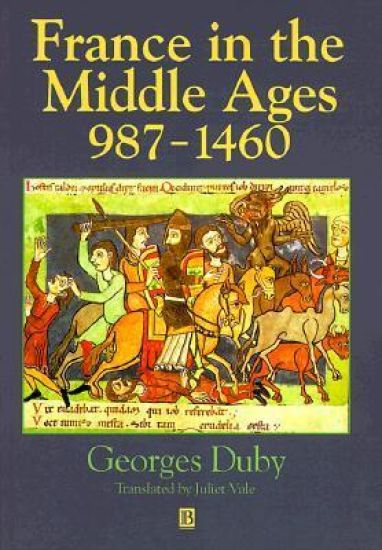
France in the Middle Ages 987-1460

France in the Middle Ages 987-1460

Georges Duby

Blackwell Publishers
1993
nidottu
In this book, now available in paperback, he examines the history of France from the rise of the Capetians in the mid-tenth century to the execution of Joan of Arc in the mid-fifteenth. He takes the evolution of power and the emergence of the French state as his central themes, and guides the reader through complex - and, in many respects, still unfamiliar, yet fascinating terrain. He describes the growth of the castle and the village, the building blocks of the new Western European civilization of the second millenium AD.
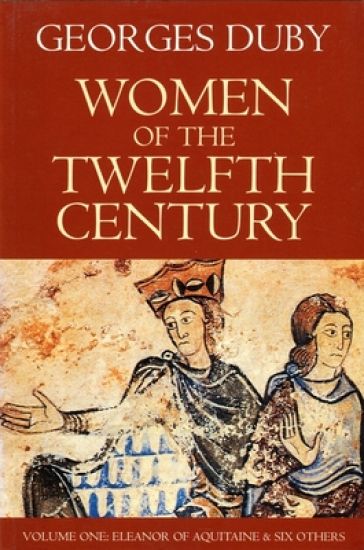
Women of the Twelfth Century, Eleanor of Aquitaine and Six Others
This is an engaging account of the lives of high-born women in the Middle Ages, by one of the foremost historians in Europe. Focusing on France in the twelfth century, Duby recreates the image of women that the men of high society made for themselves. Using written evidence from the period - official texts written by men, all intended for public consumption and reading aloud - he tells the story of six very different women. These women - fictional and real, religious and secular - range from famous historical figures such as Eleanor of Aquitaine and H&eacutelo&iumlse, through Mary Magdalen, whose cult grew throughout the twelfth century, to Soredamors and Fenice, the heroines of Clig&egraves, the romance of Chr&eacutetien de Troyes. Duby sets all of these women within their historical context, using their personalities to explore the characteristics of female existence during this period. He discusses relations between the sexes, including marriage and different types of love, and shows how women were feared, mistrusted and, sometimes, admired by men. He vividly reconstructs the French nobility's system of values, examining the place assigned to women within this system. He argues that men's attitudes to women began to change in the twelfth century and that women began imperceptibly to extricate themselves from masculine power. This important book - the first of three volumes on women in the Middle Ages - will be of interest to a wide readership.
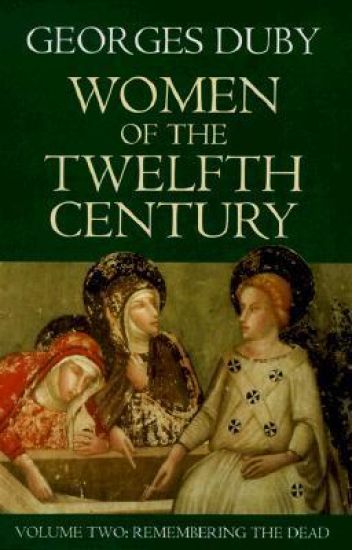
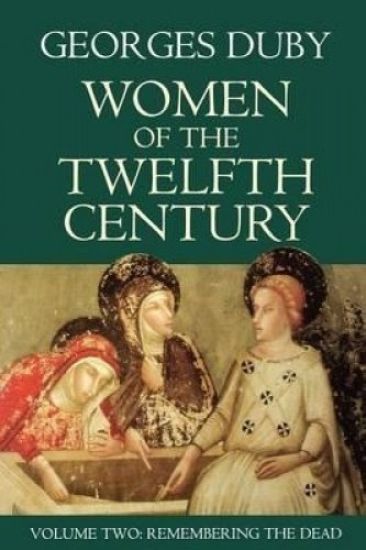
Women of the Twelfth Century, Remembering the Dead
In this volume, one of the greatest medieval historians of our time continues his rich and illuminating enquiry into the lives of twelfth-century women. Georges Duby bases his account here on a twelfth-century genre which commemorated the virtues of noblewomen who had died, and the roles they had played in the history of their lineage. From these genealogical works a vivid picture emerges of the lives these women led, the values they held, and the way in which they were viewed by the priest and knights who wrote about them. The first section outlines the way in which the dead, and the memory and tales of the dead, served to bond noble society in the twelfth century. The second draws on the Gesta, written by Dudo of Saint Quentin, and reflects on what it tells us about the roles ascribed to wives and concubines and women, in war and in power. The third and final section reconstructs women as wives, mothers and widows through the work of Lambert, Priest of Ardres. This book is part of a three-volume work on women in the Middle Ages. It will be of great interest to students and researchers in medieval history, social history and women's history.
Women of the Twelfth Century, Eve and the Church
In Women of the Twelfth Century: Eve and the Church, Georges Duby concerns himself with the relationship between women and the church, examining the ways in which women were viewed from a Christian point of view. By the twelfth century, the Church had begun to take the role and expectations of women seriously, and the clerical writings discussed in this work address the particular issues that emerged from this development. In the first chapter, "The Sins of Women", Duby concentrates on the sins deemed to be particular to women (amongst others these include sorcery, disobedience, and licentiousness) and focuses especially on the male fear of female sexuality and magic. The second chapter is based on twelfth-century commentaries on the chapters in Genesis dealing with Eve's role in the fall from grace in the Garden of Eden. Interpreting these writings, and the earlier writings upon which they were based, Duby shows how they reflect the reasoning behind the view held of women as unstable, curious, and frivolous creatures. The third section is based on letters written by clerics to women of noble status and nuns. Here, while the charges of instability and frivolousness are once again levelled at women, their praise is also sung for their marital and motherly values. The final section concentrates solely on the most famous text of this period by Andreas Capellanus (De Amore), and sets it within the context of the supposed twelfth-century discovery of love and the courtly love tradition. As the third and last part of Duby's three-volume study of the lives of French noblewomen of the twelfth century, this book confirms the author as one of the greatest historians of the Middle Ages. It will be of great interest to students and researchers of medieval history and women's history, as well as anyone interested in the historical relationship between women and the Church.
Women of the Twelfth Century, Eleanor of Aquitaine and Six Others
This is an engaging account of the lives of high-born women in the Middle Ages, by one of the foremost historians in Europe. Focusing on France in the twelfth century, Duby recreates the image of women that the men of high society made for themselves. Using written evidence from the period - official texts written by men, all intended for public consumption and reading aloud - he tells the story of six very different women. These women - fictional and real, religious and secular - range from famous historical figures such as Eleanor of Aquitaine and H&eacutelo&iumlse, through Mary Magdalen, whose cult grew throughout the twelfth century, to Soredamors and Fenice, the heroines of Clig&egraves, the romance of Chr&eacutetien de Troyes. Duby sets all of these women within their historical context, using their personalities to explore the characteristics of female existence during this period. He discusses relations between the sexes, including marriage and different types of love, and shows how women were feared, mistrusted and, sometimes, admired by men. He vividly reconstructs the French nobility's system of values, examining the place assigned to women within this system. He argues that men's attitudes to women began to change in the twelfth century and that women began imperceptibly to extricate themselves from masculine power. This important book - the first of three volumes on women in the Middle Ages - will be of interest to a wide readership.
Women of the Twelfth Century, Remembering the Dead
In this volume, one of the greatest medieval historians of our time continues his rich and illuminating enquiry into the lives of twelfth-century women. Georges Duby bases his account here on a twelfth-century genre which commemorated the virtues of noblewomen who had died, and the roles they had played in the history of their lineage. From these genealogical works a vivid picture emerges of the lives these women led, the values they held, and the way in which they were viewed by the priest and knights who wrote about them. The first section outlines the way in which the dead, and the memory and tales of the dead, served to bond noble society in the twelfth century. The second draws on the Gesta, written by Dudo of Saint Quentin, and reflects on what it tells us about the roles ascribed to wives and concubines and women, in war and in power. The third and final section reconstructs women as wives, mothers and widows through the work of Lambert, Priest of Ardres. This book is part of a three-volume work on women in the Middle Ages. It will be of great interest to students and researchers in medieval history, social history and women's history.
Women of the Twelfth Century, Eve and the Church
In Women of the Twelfth Century: Eve and the Church, Georges Duby concerns himself with the relationship between women and the church, examining the ways in which women were viewed from a Christian point of view. By the twelfth century, the Church had begun to take the role and expectations of women seriously, and the clerical writings discussed in this work address the particular issues that emerged from this development. In the first chapter, "The Sins of Women", Duby concentrates on the sins deemed to be particular to women (amongst others these include sorcery, disobedience, and licentiousness) and focuses especially on the male fear of female sexuality and magic. The second chapter is based on twelfth-century commentaries on the chapters in Genesis dealing with Eve's role in the fall from grace in the Garden of Eden. Interpreting these writings, and the earlier writings upon which they were based, Duby shows how they reflect the reasoning behind the view held of women as unstable, curious, and frivolous creatures. The third section is based on letters written by clerics to women of noble status and nuns. Here, while the charges of instability and frivolousness are once again levelled at women, their praise is also sung for their marital and motherly values. The final section concentrates solely on the most famous text of this period by Andreas Capellanus (De Amore), and sets it within the context of the supposed twelfth-century discovery of love and the courtly love tradition. As the third and last part of Duby's three-volume study of the lives of French noblewomen of the twelfth century, this book confirms the author as one of the greatest historians of the Middle Ages. It will be of great interest to students and researchers of medieval history and women's history, as well as anyone interested in the historical relationship between women and the Church.
History of Paris in Painting

History of Paris in Painting

Georges Duby

Abbeville Press Inc.,U.S.
2009
sidottu
"Paris is a moveable feast," Ernest Hemingway once proclaimed. The city of light, or the city of love, Paris is indeed a feast for the senses. Paris's rich history has been justly captured by the many artists sheltered by its garrets and supported by its patrons for centuries. Finally the story and grandeur of this beautiful city are revealed in this luxurious slipcased volume. The over 300 full-colour illustrations, including four breathtaking gatefolds, present Paris from its days as a medieval city on the Ile de la Cité, in the middle of the Seine River, through the tumultuous days of the French Revolution, to the Haussmannization of Paris, when much of the city was razed to make way for broad boulevards emanating from the Arc de Triomphe. The rich heritage of painting in Paris is broadly represented in this collection. Home of the Académie des Beaux-Arts, Paris nurtured generations of French artists and displayed their work in the Salon. As the Impressionists broke with the authoritarian standards of the Academy, Parisian art became even more diverse and increasingly abstract-a trend that continued through the 20th century. The History of Paris in Painting honours this celebrated city and its famous monuments by presenting readers with an artistic feast that will make anyone fall in love with Paris again and again.
Early Growth of the European Economy

Early Growth of the European Economy

Georges Duby

Cornell University Press
1978
pokkari
The techniques and insights of modern social science are applied to early medieval history in this extraordinary work. Professor Duby offers a chronological account of the European economy from its primitive beginnings, through a period when an extensive trading community developed, to an era when circulation of money and urban growth came to overshadow agricultural activities. Drawing on his extensive knowledge of the history of the countryside, particularly the French countryside, he has authoritatively identified the moving forces behind economic behavior and economic growth in the early Middle Ages.
Medieval Marriage

Medieval Marriage

Georges Duby

Johns Hopkins University Press
1991
pokkari
Eminent French social historian Georges Duby identifies the twelfth century as a crucial turning point in the development of the institution of marriage in Western civilization. His study of medieval marriage is a worthy successor to the exploration of social attitudes begun by Philippe Aries and continued by Fernand Braudel.