Kirjojen hintavertailu. Mukana 12 016 292 kirjaa ja 12 kauppaa.

Kirjahaku

Etsi kirjoja tekijän nimen, kirjan nimen tai ISBN:n perusteella.

8 kirjaa tekijältä Gerald Gaus

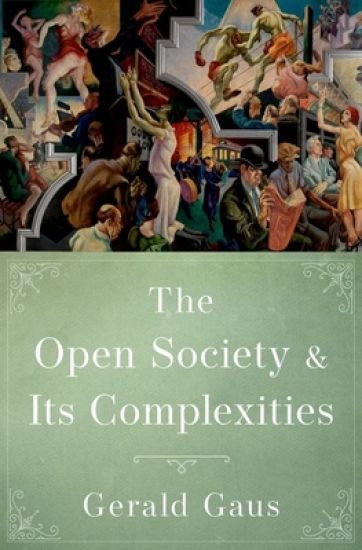
The Open Society and Its Complexities

The Open Society and Its Complexities

Gerald Gaus

Oxford University Press Inc
2021
sidottu
A mere two decades ago it was widely assumed that liberal democracy and the Open Society it created had decisively won their century-long struggle against authoritarianism. Although subsequent events have shocked many, F.A. Hayek would not have been surprised that we are in many ways disoriented by the society we have created. As he understood it, the Open Society was a precarious achievement in many ways at odds with our deepest moral sentiments. His path-breaking analyses argued that the Open Society runs against our evolved attraction to "tribalism" that the Open Society is too complex for moral justification; and that its self-organized complexity defies attempts at democratic governance. In his final, wide-ranging book, Gerald Gaus critically reexamines Hayek's analyses. Drawing on diverse work in social and moral science, Gaus argues that Hayek's program was manifestly prescient and strikingly sophisticated, always identifying real and pressing problems. Yet, Gaus maintains, Hayek underestimated the resources of human morality and the Open Society to cope with the challenges he perceived. Gaus marshals formal models and empirical evidence to show that our Open Society is grounded on moral foundations of human cooperation originating in our distant evolutionary past, but has built upon them a complex and diverse society that requires us to rethink both the nature of moral justification and the meaning of democratic self-governance. In these fearful, angry and inwardly-looking times, when political philosophy has itself become a hostile exchange between ideological camps, The Open Society and Its Complexities shows how moral and ideological diversity, so far from being the enemy of a free and open society, can be its foundation.
Political Concepts And Political Theories
The study of the physical world had its origins in philosophy, and, two-and-one-half millennia later, the scientific advances of the twentieth century are bringing the two fields closer together again. So argues Lawrence Sklar in this brilliant new text on the philosophy of physics.Aimed at students of both disciplines, Philosophy of Physics is a broad overview of the problems of contemporary philosophy of physics that readers of all levels of sophistication should find accessible and engaging. Professor Sklar's talent for clarity and accuracy is on display throughout as he guides students through the key problems: the nature of space and time, the problems of probability and irreversibility in statistical mechanics, and, of course, the many notorious problems raised by quantum mechanics.Integrated by the theme of the interconnectedness of philosophy and science, and linked by many references to the history of both disciplines, Philosophy of Physics is always clear, while remaining faithful to the complexity and integrity of the issues. It will take its place as a classic text in a field of fundamental intellectual importance.
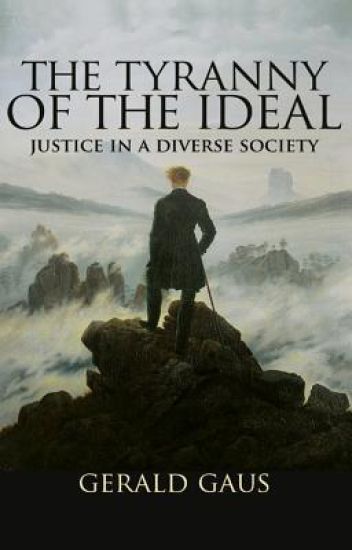
The Tyranny of the Ideal

The Tyranny of the Ideal

Gerald Gaus

PRINCETON UNIVERSITY PRESS
2016
sidottu
In his provocative new book, The Tyranny of the Ideal, Gerald Gaus lays out a vision for how we should theorize about justice in a diverse society. Gaus shows how free and equal people, faced with intractable struggles and irreconcilable conflicts, might share a common moral life shaped by a just framework. He argues that if we are to take diversity seriously and if moral inquiry is sincere about shaping the world, then the pursuit of idealized and perfect theories of justice--essentially, the entire production of theories of justice that has dominated political philosophy for the past forty years--needs to change. Drawing on recent work in social science and philosophy, Gaus points to an important paradox: only those in a heterogeneous society--with its various religious, moral, and political perspectives--have a reasonable hope of understanding what an ideally just society would be like. However, due to its very nature, this world could never be collectively devoted to any single ideal. Gaus defends the moral constitution of this pluralistic, open society, where the very clash and disagreement of ideals spurs all to better understand what their personal ideals of justice happen to be. Presenting an original framework for how we should think about morality, The Tyranny of the Ideal rigorously analyzes a theory of ideal justice more suitable for contemporary times.
The Tyranny of the Ideal

The Tyranny of the Ideal

Gerald Gaus

Princeton University Press
2019
pokkari
In his provocative new book, The Tyranny of the Ideal, Gerald Gaus lays out a vision for how we should theorize about justice in a diverse society. Gaus shows how free and equal people, faced with intractable struggles and irreconcilable conflicts, might share a common moral life shaped by a just framework. He argues that if we are to take diversity seriously and if moral inquiry is sincere about shaping the world, then the pursuit of idealized and perfect theories of justice—essentially, the entire production of theories of justice that has dominated political philosophy for the past forty years—needs to change.Drawing on recent work in social science and philosophy, Gaus points to an important paradox: only those in a heterogeneous society—with its various religious, moral, and political perspectives—have a reasonable hope of understanding what an ideally just society would be like. However, due to its very nature, this world could never be collectively devoted to any single ideal. Gaus defends the moral constitution of this pluralistic, open society, where the very clash and disagreement of ideals spurs all to better understand what their personal ideals of justice happen to be.Presenting an original framework for how we should think about morality, The Tyranny of the Ideal rigorously analyzes a theory of ideal justice more suitable for contemporary times.
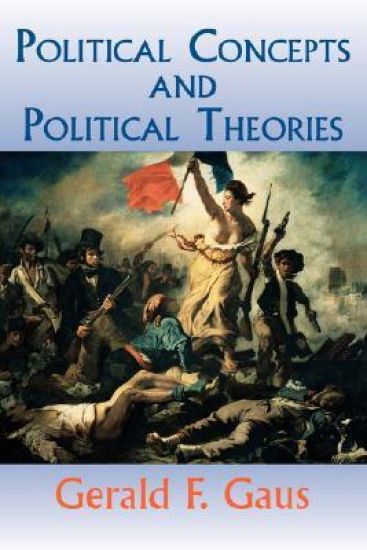
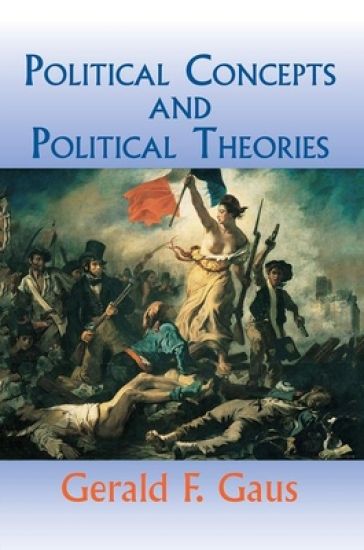
Political Concepts And Political Theories

Political Concepts And Political Theories

Gerald Gaus

Westview Press Inc
2000
nidottu
Political Concepts and Political Theories introduces political theory by focusing on enduring disputes about the nature of freedom, power, equality, justice, democracy, and authority. The first part of the book examines the nature of these disputes. It clarifies what we are disagreeing about when we offer different interpretations of political concepts, and why our disagreements about them are so difficult to resolve. Providing accessible accounts of the views of Plato, Wittgenstein, and recent theorists such as Gallie, Gaus argues that our interpretation of a political concept such as liberty is not freestanding but linked to our understandings of power, equality, justice, democracy, and other values. To understand a particular political concept, Gaus argues, we must place it in a political theory, which constitutes a system of such concepts. The second part of the book examines the ways in which liberal, socialist, and conservative thinkers have interpreted these enduring political concepts. Gaus considers a wide range of classical and contemporary advocates of these theories.Political Concepts and Political Theories presents in an accessible way an innovative approach to the analysis of political concepts and the study of political theory. As such, it will be of interest both to those looking at political concepts and political theories for the first time, as well as to scholars who have already examined these issues.
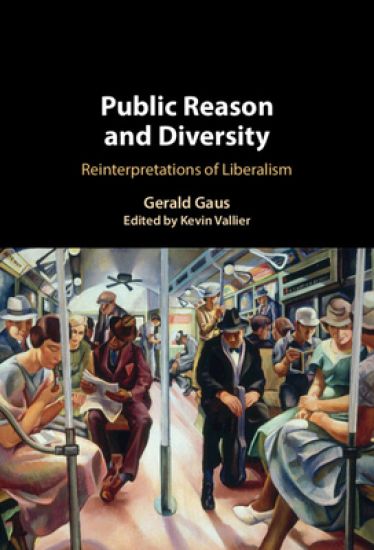
Public Reason and Diversity

Public Reason and Diversity

Gerald Gaus

Cambridge University Press
2024
pokkari
Gerald Gaus was one of the leading liberal theorists of the late twentieth and early twenty-first centuries. He developed a pioneering defence of the liberal order based on its unique capacity to handle diversity and disagreement, and he presses the liberal tradition towards a principled openness to pluralism and diversity. This book brings together Gaus's most seminal and creative essays in a single volume for the first time. It also covers a broad span of his career, including essays published shortly before his death, and topics including reasonable pluralism, moral rights, public reason, and the redistributive state. The volume makes accessible the work of one of the most important recent liberal theorists. Many readers will find it of value, especially those in political philosophy, political science, and economics.
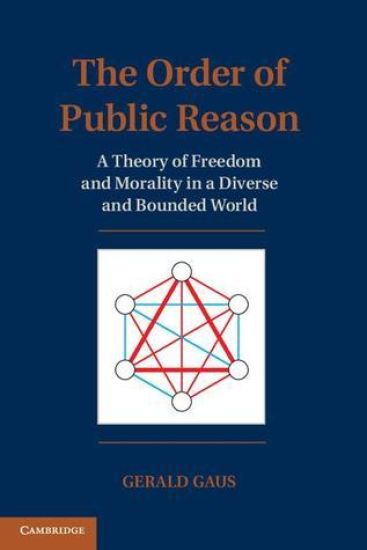
The Order of Public Reason

The Order of Public Reason

Gerald Gaus

Cambridge University Press
2012
pokkari
In this innovative and important work, Gerald Gaus advances a revised and more realistic account of public reason liberalism, showing how, in the midst of fundamental disagreement about values and moral beliefs, we can achieve a moral and political order that treats all as free and equal moral persons. The first part of this work analyzes social morality as a system of authoritative moral rules. Drawing on an earlier generation of moral philosophers such as Kurt Baier and Peter Strawson as well as current work in the social sciences, Gaus argues that our social morality is an evolved social fact, which is the necessary foundation of a mutually beneficial social order. The second part considers how this system of social moral authority can be justified to all moral persons. Drawing on the tools of game theory, social choice theory, experimental psychology and evolutionary theory, Gaus shows how a free society can secure a moral equilibrium that is endorsed by all, and how a just state respects, and develops, such an equilibrium.
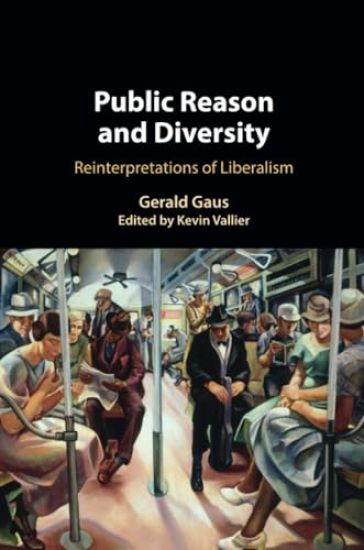
Public Reason and Diversity

Public Reason and Diversity

Gerald Gaus

Cambridge University Press
2022
sidottu
Gerald Gaus was one of the leading liberal theorists of the late twentieth and early twenty-first centuries. He developed a pioneering defence of the liberal order based on its unique capacity to handle diversity and disagreement, and he presses the liberal tradition towards a principled openness to pluralism and diversity. This book brings together Gaus's most seminal and creative essays in a single volume for the first time. It also covers a broad span of his career, including essays published shortly before his death, and topics including reasonable pluralism, moral rights, public reason, and the redistributive state. The volume makes accessible the work of one of the most important recent liberal theorists. Many readers will find it of value, especially those in political philosophy, political science, and economics.