Kirjojen hintavertailu. Mukana 12 016 292 kirjaa ja 12 kauppaa.

Kirjahaku

Etsi kirjoja tekijän nimen, kirjan nimen tai ISBN:n perusteella.

47 kirjaa tekijältä Gerald Horne

The Gerald Horne Reader

The Gerald Horne Reader

Gerald Horne

OR Books
2024
pokkari
I Dare Say: A Gerald Horne Reader is a timely and essential collection of the many works of Professor Gerald Horne—a historian who has made an indelible impact on the study of US and international history. Horne approaches his study of history as a deeply politically engaged scholar, with an insightful and necessarily partisan stance, critiquing the lasting reverberations of white supremacy and all its bedfellows—imperialism, colonialism, fascism and racism—which continue to wreak havoc in the United States and abroad to this day. Drawing on a career that spans more than four decades, The Gerald Horne Reader will showcase the many highlights of Horne’s writings, delving into discussions of the United States and its place on the global stage, the curation of mythology surrounding titans of 20th Century African American history like Malcolm X, and Horne’s thoughts on pressing international crises of the 21st Century including the war in Afghanistan during the early 2000s, and the war in Ukraine which erupted in February 2022. As we continue to observe the chaos of our current times, I Dare Say: A Gerald Horne Reader foregrounds a firmly rooted, consistent analysis of what has come to pass—and provides illuminating insight that better informs where we may be headed, and outlines what needs to be done to stem the tide of growing fascism across the Western world.

Black Revolutionary

Black Revolutionary

Gerald Horne

University of Illinois Press
2013
sidottu
A leading African American Communist, lawyer William L. Patterson (1891–1980) was instrumental in laying the groundwork for the defeat of Jim Crowby virtue of his leadership of the Scottsboro campaign in the 1930s. In this watershed biography, historian Gerald Horne shows how Patterson helped to advance African American equality by fostering and leveraging international support for the movement. Horne highlights key moments in Patterson's global activism: his early education in the Soviet Union, his involvement with the Scottsboro trials and other high-profile civil rights cases of the 1930s to 1950s, his 1951 "We Charge Genocide" petition to the United Nations, and his later work with prisons and the Black Panther Party. Through Patterson's story, Horne examines how the Cold War affected the freedom movement, with civil rights leadership sometimes disavowing African American leftists in exchange for concessions from the U.S. government. He also probes the complex and often contradictory relationship between the Communist Party and the African American community, including the impact of the FBI's infiltration of the Communist Party. Drawing from government and FBI documents, newspapers, periodicals, archival and manuscript collections, and personal papers, Horne documents Patterson's effectiveness at carrying the freedom struggle into the global arena and provides a fresh perspective on twentieth-century struggles for racial justice.
The Rise and Fall of the Associated Negro Press

The Rise and Fall of the Associated Negro Press

Gerald Horne

University of Illinois Press
2017
sidottu
For nearly fifty years, the Chicago-based Associated Negro Press (ANP) fought racism at home and grew into an international news organization abroad. At its head stood founder Claude Barnett, one of the most influential African Americans of his day and a gifted, if unofficial, diplomat who forged links with figures as diverse as Jawaharlal Nehru, Zora Neale Hurston, and Richard Nixon. Gerald Horne weaves Barnett's fascinating life story through a groundbreaking history of the ANP, including its deep dedication to Pan-Africanism. An activist force in journalism, Barnett also helped send doctors and teachers to Africa, advised African governments, gave priority to foreign newsgathering, and saw the African American struggle in global terms. Yet Horne also confronts Barnett's contradictions. A member of the African American elite, Barnett's sympathies with black aspirations often clashed with his ethics and a powerful desire to join the upper echelons of business and government. In the end, Barnett's activist success undid his work. Horne traces the dramatic story of the ANP's collapse as the mainstream press, retreating from Jim Crow, finally covered black issues and hired African American journalists.Revelatory and entertaining, The Rise and Fall of the Associated Negro Press tells the story of a forgotten pioneer and the ambitious black institution he created.
Black Revolutionary

Black Revolutionary

Gerald Horne

University of Illinois Press
2013
nidottu
A leading African American Communist, lawyer William L. Patterson (1891–1980) was instrumental in laying the groundwork for the defeat of Jim Crowby virtue of his leadership of the Scottsboro campaign in the 1930s. In this watershed biography, historian Gerald Horne shows how Patterson helped to advance African American equality by fostering and leveraging international support for the movement. Horne highlights key moments in Patterson's global activism: his early education in the Soviet Union, his involvement with the Scottsboro trials and other high-profile civil rights cases of the 1930s to 1950s, his 1951 "We Charge Genocide" petition to the United Nations, and his later work with prisons and the Black Panther Party. Through Patterson's story, Horne examines how the Cold War affected the freedom movement, with civil rights leadership sometimes disavowing African American leftists in exchange for concessions from the U.S. government. He also probes the complex and often contradictory relationship between the Communist Party and the African American community, including the impact of the FBI's infiltration of the Communist Party. Drawing from government and FBI documents, newspapers, periodicals, archival and manuscript collections, and personal papers, Horne documents Patterson's effectiveness at carrying the freedom struggle into the global arena and provides a fresh perspective on twentieth-century struggles for racial justice.
The Rise and Fall of the Associated Negro Press

The Rise and Fall of the Associated Negro Press

Gerald Horne

University of Illinois Press
2017
nidottu
For nearly fifty years, the Chicago-based Associated Negro Press (ANP) fought racism at home and grew into an international news organization abroad. At its head stood founder Claude Barnett, one of the most influential African Americans of his day and a gifted, if unofficial, diplomat who forged links with figures as diverse as Jawaharlal Nehru, Zora Neale Hurston, and Richard Nixon. Gerald Horne weaves Barnett's fascinating life story through a groundbreaking history of the ANP, including its deep dedication to Pan-Africanism. An activist force in journalism, Barnett also helped send doctors and teachers to Africa, advised African governments, gave priority to foreign newsgathering, and saw the African American struggle in global terms. Yet Horne also confronts Barnett's contradictions. A member of the African American elite, Barnett's sympathies with black aspirations often clashed with his ethics and a powerful desire to join the upper echelons of business and government. In the end, Barnett's activist success undid his work. Horne traces the dramatic story of the ANP's collapse as the mainstream press, retreating from Jim Crow, finally covered black issues and hired African American journalists.Revelatory and entertaining, The Rise and Fall of the Associated Negro Press tells the story of a forgotten pioneer and the ambitious black institution he created.
Class Struggle in Hollywood, 1930-1950

Class Struggle in Hollywood, 1930-1950

Gerald Horne

University of Texas Press
2001
pokkari
As World War II wound down in 1945 and the cold war heated up, the skilled trades that made up the Conference of Studio Unions (CSU) began a tumultuous strike at the major Hollywood studios. This turmoil escalated further when the studios retaliated by locking out CSU in 1946. This labor unrest unleashed a fury of Red-baiting that allowed studio moguls to crush the union and seize control of the production process, with far-reaching consequences.This engrossing book probes the motives and actions of all the players to reveal the full story of the CSU strike and the resulting lockout of 1946. Gerald Horne draws extensively on primary materials and oral histories to document how limited a "threat" the Communist party actually posed in Hollywood, even as studio moguls successfully used the Red scare to undermine union clout, prevent film stars from supporting labor, and prove the moguls' own patriotism.Horne also discloses that, unnoticed amid the turmoil, organized crime entrenched itself in management and labor, gaining considerable control over both the "product" and the profits of Hollywood. This research demonstrates that the CSU strike and lockout were a pivotal moment in Hollywood history, with consequences for everything from production values, to the kinds of stories told in films, to permanent shifts in the centers of power.
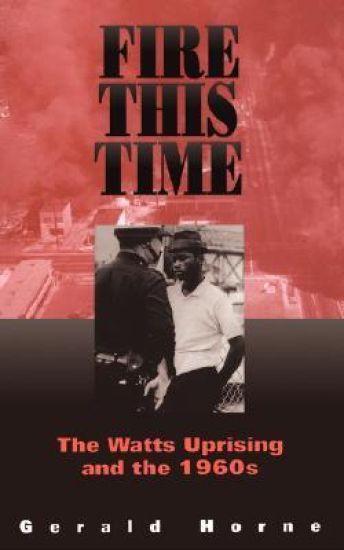
Fire This Time

Fire This Time

Gerald Horne

Da Capo Press Inc
1997
pokkari
In August 1965 the predominantly black neighbourhood of Watts in Los Angeles erupted in flames and violence following an incident of police brutality. The official death toll was thirty-four property losses reached hundreds of millions of dollars but the political results were even more profound. The civil rights movement was placed on the defensive as the image of rioting blacks in the West replaced the image of meek and angelic protestors in the South. A white backlash ensued that led directly to Ronald Reagan's election as governor of California in 1966.This is the first comprehensive treatment of the uprising, its causes, and its aftermath, and is based on hundreds of oral histories and unprecedented archival research. With a cast that includes Ronald Reagan, Tom Bradley, Martin Luther King, Jr., Edmund G. Brown, the NAACP, the Black Panthers, the Nation of Islam, and thousands of blacks and whites, Fire This Time is a compelling account of an event that changed the face of racial justice in America.
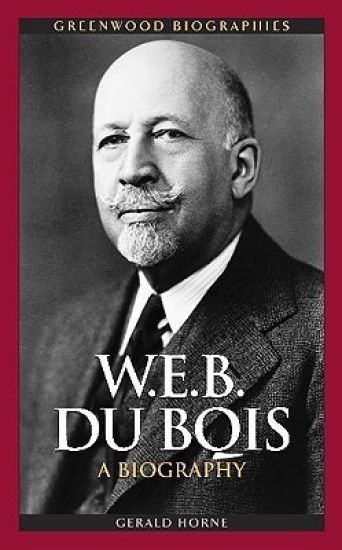
W.E.B. Du Bois

W.E.B. Du Bois

Gerald Horne

Greenwood Press
2009
sidottu
This biography of W.E.B. Du Bois gives full measure to his entire life, including his controversial final decades.This revealing biography captures the full life of W.E.B. Du Bois—historian, sociologist, author, editor—a leader in the fight to bring African Americans more fully into the American landscape as well as forceful proponent of them leaving America altogether and returning to Africa.Drawing on extensive research, Gerald Horne, a leading authority on Du Bois and a versatile and prolific scholar in his own right, offers a fully rounded portrait of this accomplished and controversial figure, including the often overlooked final decades without which no portrait of Du Bois could be complete. The book also highlights Du Bois's relationships with and influence upon other leading civil rights activists both during, and subsequent to, his extraordinarily long life, including Booker T. Washington, Frederick Douglas, Marcus Garvey, Martin Luther King, Malcolm X, and Jesse Jackson.Includes extensive use of original materials, including Du Bois’ correspondence and writingsOffers a chronology of key personal and historic events during Du Bois’ life (1868-1963)
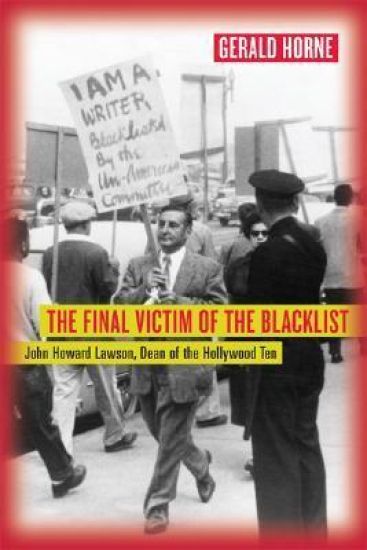
The Final Victim of the Blacklist

The Final Victim of the Blacklist

Gerald Horne

University of California Press
2006
pokkari
Before he attained notoriety as Dean of the Hollywood Ten - the blacklisted screenwriters and directors persecuted because of their varying ties to the Communist Party - John Howard Lawson had become one of the most brilliant, successful, and intellectual screenwriters on the Hollywood scene in the 1930s and 1940s, with several hits to his credit including "Blockade", "Sahara", and "Action in the North Atlantic". After his infamous, almost violent, 1947 hearing before the House Un-American Activities Committee, Lawson spent time in prison and his lucrative career was effectively over. Studded with anecdotes and based on previously untapped archives, this first biography of Lawson brings alive his era and features many of his prominent friends and associates, including John Dos Passos, Theodore Dreiser, F. Scott Fitzgerald, Charles Chaplin, Gene Kelly, Edmund Wilson, Ernest Hemingway, Humphrey Bogart, Dalton Trumbo, Ring Lardner, Jr., and many others. Lawson's life becomes a prism through which we gain a clearer perspective on the evolution and machinations of McCarthyism and anti-Semitism in the United States, on the influence of the left on Hollywood, and on a fascinating man whose radicalism served as a foil for launching the political careers of two Presidents: Richard Nixon and Ronald Reagan. In vivid, marvelously detailed prose, "Final Victim of the Blacklist" restores this major figure to his rightful place in history as it recounts one of the most captivating episodes in twentieth century cinema and politics.
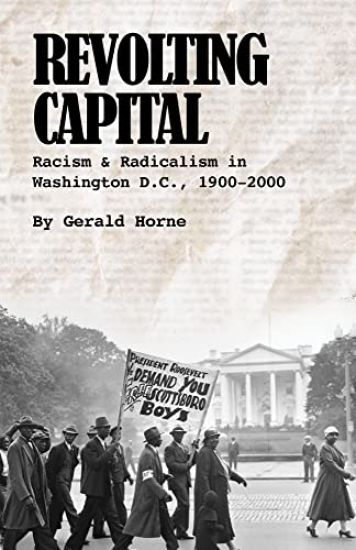
Revolting Capital

Revolting Capital

Gerald Horne

INTERNATIONAL PUBLISHERS CO INC.,U.S.
2023
pokkari
There is a fundamental contradiction in U.S. Imperialism: the capital of this empire for decades has had a majority Black population, which-in turn-has created favorable conditions not only for the erosion of the pestilence that is racism but the flourishing of the antidote that is radicalism. In this sweeping history, Gerald Horne traces this phenomenon over a century, in a book which should be understood and studied by all anti-imperialist and progressive forces. This relatively small metropolis also has influenced profoundly its neighbors in Maryland and Virginia, especially in the potent area of labor organizing.
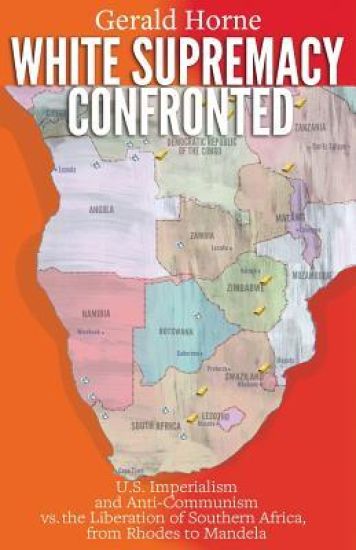
White Supremacy Confronted

White Supremacy Confronted

Gerald Horne

International Publishers Co Inc.,U.S.
2019
pokkari
Based upon exhaustive research in all presidential libraries from Hoover to Clinton, the voluminous archives of the African National Congress ANC] at Fort Hare University in South Africa, along with allied archives of the NAACP, the Ford and Rockefeller fortunes, etc., this is the most comprehensive account to date of the entangled histories of apartheid and Jim Crow that culminated in 1994 with the election of Nelson Mandela as president in Pretoria.The author traces in detail the close ties between e.g. Mandela, Robeson, and Du Bois--among others--and how their working in tandem with the socialist camp (particularly the Soviet Union and Cuba) was the deciding factor (along with the struggles of Africans and their allies on both sides of the Atlantic) in compelling the reluctant retreat of the comrades-in-arms: apartheid and Jim Crow. However, weeks after the collapse of the Berlin Wall the apartheid regime chose to free Mandela and to legalize the ANC and its close ally, the South African Communist Party--while anticommunism, a major ideological weapon of the ruling class in Washington and Pretoria alike, surged--putting the Mandela government in a weakened position in the prelude to the nation's first democratic elections in 1994 and thereafter.Also detailed in these riveting pages are the allied struggles in Namibia, Angola, Zimbabwe, Congo, Tanzania, Zambia and Mozambique, along with the massive solidarity movement in the U.S.--particularly among unions and students--that contributed mightily to victory.This is a story well worth studying as we continue to combat anticommunism--and struggle for socialism.
White Supremacy Confronted

White Supremacy Confronted

Gerald Horne

INTERNATIONAL PUBLISHERS CO INC.,U.S.
2019
sidottu
Based upon exhaustive research in all presidential libraries from Hoover to Clinton, the voluminous archives of the African National Congress ANC] at Fort Hare University in South Africa, along with allied archives of the NAACP, the Ford and Rockefeller fortunes, etc., this is the most comprehensive account to date of the entangled histories of apartheid and Jim Crow that culminated in 1994 with the election of Nelson Mandela as president in Pretoria.The author traces in detail the close ties between Nelson Mandela, Paul Robeson, and W.E.B. Du Bois--among others--and how their working in tandem with the socialist camp (particularly the Soviet Union and Cuba) was the deciding factor (along with the struggles of Africans and their allies on both sides of the Atlantic) in compelling the reluctant retreat of the comrades-in-arms: apartheid and Jim Crow. However, weeks after the collapse of the Berlin Wall the apartheid regime chose to free Mandela and to legalize the ANC and its close ally, the South African Communist Party--while anticommunism, a major ideological weapon of the ruling class in Washington and Pretoria alike, surged--putting the Mandela government in a weakened position in the prelude to the nation's first democratic elections in 1994 and thereafter.Also detailed in these riveting pages are the allied struggles in Namibia, Angola, Zimbabwe, Congo, Tanzania, Zambia and Mozambique, along with the massive solidarity movement in the U.S.--particularly among unions and students--that contributed mightily to victory. This is a story well worth studying as we continue to combat anticommunism--and struggle for socialism.
Black Liberation / Red Scare

Black Liberation / Red Scare

Gerald Horne

International Publishers Co Inc.,U.S.
2021
pokkari
Black Liberation/Red Scare is a study of an African American Communist leader, Ben Davis, Jr. (1904-64). Though it examines the numerous grassroots campaigns that he was involved in, it is first and foremost a study of the man and secondarily a study of the Communist party from the 1930s to the 1960s. By examining the public life of an important party leader, Gerald Horne uniquely approaches the story of how and why the party rose and fell. Ben Davis, Jr., was the son of a prominent Atlanta publisher and businessman who was also the top African American leader of the Republican party until the onset of the Great Depression. Davis was trained for the black elite at Morehouse, Amherst, and Harvard Law School. After graduating from Harvard, he joined the Communist party, where he remained as one of its most visible leaders for thirty years. In 1943, after being endorsed by his predecessor, Adam Clayton Powell, Jr., he was elected to the New York City Council from Harlem and subsequently reelected by a larger margin in 1945. Davis received support from such community figures as NAACP leader Roy Wilkins, boxer Joe Louis, and musician Duke Ellington. While on the council Davis fought for rent control and progressive taxation and struggled against transit fare hikes and police brutality. With the onset of the Red Scare and the Cold War, Davis-like the Communist party itselfwas marginalized. The Cold War made it difficult for the U.S. to compete with Moscow forthe hearts and minds of African Americans while they were subjected to third-classcitizenship at home. Yet in return for civil rights concessions, African American organizationssuch as the NAACP were forced to distance themselves from figures such as Ben Davis. In1949 he was ousted unceremoniously (and perhaps illegally from the City Council. He wasput on trial, jailed in 1951, and not released until 1956, when the civil rights movement wasgathering momentum. His friendship with the King family, based upon family ties in Atlanta, was the ostensible cause for the FBI surveillance of Dr. Martin Luther King, Jr.COINTEL-PRO, the counterintelligence program of the FBI, which was aimed initially atthe CPUSA, made sure to keep a close eye on Davis as well. But when the civil rightsmovement reached full strength in the 1960s Davis's controversial appearances at collegecampuses helped to set the stage for a new era of activism at universities.Davis died in 1964. According to Horne, the time has now come when he, along with his good friend Paul Robeson and W. E. B. DuBois, should be regarded as a premier leader of African- Americans and the U.S. Left during the twentieth century.
Black Liberation / Red Scare

Black Liberation / Red Scare

Gerald Horne

INTERNATIONAL PUBLISHERS CO INC.,U.S.
2021
sidottu
Black Liberation/Red Scare is a study of an African American Communist leader, Ben Davis, Jr. (1904-64). Though it examines the numerous grassroots campaigns that he was involved in, it is first and foremost a study of the man and secondarily a study of the Communist party from the 1930s to the 1960s. By examining the public life of an important party leader, Gerald Horne uniquely approaches the story of how and why the party rose and fell. Ben Davis, Jr., was the son of a prominent Atlanta publisher and businessman who was also the top African American leader of the Republican party until the onset of the Great Depression. Davis was trained for the black elite at Morehouse, Amherst, and Harvard Law School. After graduating from Harvard, he joined the Communist party, where he remained as one of its most visible leaders for thirty years. In 1943, after being endorsed by his predecessor, Adam Clayton Powell, Jr., he was elected to the New York City Council from Harlem and subsequently reelected by a larger margin in 1945. Davis received support from such community figures as NAACP leader Roy Wilkins, boxer Joe Louis, and musician Duke Ellington. While on the council Davis fought for rent control and progressive taxation and struggled against transit fare hikes and police brutality. With the onset of the Red Scare and the Cold War, Davis-like the Communist party itselfwas marginalized. The Cold War made it difficult for the U.S. to compete with Moscow forthe hearts and minds of African Americans while they were subjected to third-classcitizenship at home. Yet in return for civil rights concessions, African American organizationssuch as the NAACP were forced to distance themselves from figures such as Ben Davis. In1949 he was ousted unceremoniously (and perhaps illegally from the City Council. He wasput on trial, jailed in 1951, and not released until 1956, when the civil rights movement wasgathering momentum. His friendship with the King family, based upon family ties in Atlanta, was the ostensible cause for the FBI surveillance of Dr. Martin Luther King, Jr.COINTEL-PRO, the counterintelligence program of the FBI, which was aimed initially atthe CPUSA, made sure to keep a close eye on Davis as well. But when the civil rightsmovement reached full strength in the 1960s Davis's controversial appearances at collegecampuses helped to set the stage for a new era of activism at universities.Davis died in 1964. According to Horne, the time has now come when he, along with his good friend Paul Robeson and W. E. B. DuBois, should be regarded as a premier leader of African- Americans and the U.S. Left during the twentieth century.
Paul Robeson

Paul Robeson

Gerald Horne

Pluto Press
2016
sidottu
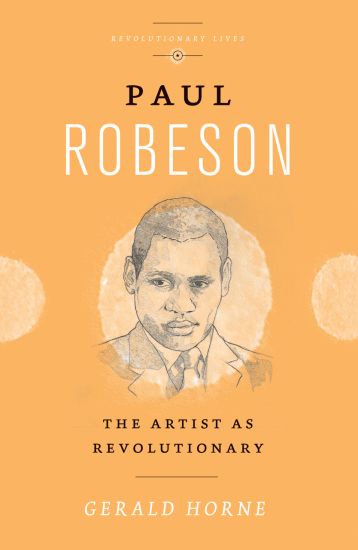
A world-famous singer and actor, a trained lawyer, an early star of American professional football and a polyglot who spoke over a dozen languages. These could be the crowning achievements of a life well-lived, yet for Paul Robeson the higher calling of social justice led him to abandon both the NFL and Hollywood and become one of the most important political activists of his generation - battling both Jim Crow and Joseph McCarthy. Gerald Horne's biography uses Robeson's remarkable and revolutionary life to tell the story of the 20th century's great political struggles: against racism, against colonialism, and for international socialism. This critical and searching account provides an opportunity for readers to comprehend the triumphs and tragedies of the revolutionary progressive movement of which Robeson was not just a part, but, perhaps, its most resonant symbol.
Paul Robeson

Paul Robeson

Gerald Horne

Pluto Press
2016
pokkari
A world-famous singer and actor, a trained lawyer, an early star of American professional football and a polyglot who spoke over a dozen languages. These could be the crowning achievements of a life well-lived, yet for Paul Robeson the higher calling of social justice led him to abandon both the NFL and Hollywood and become one of the most important political activists of his generation - battling both Jim Crow and Joseph McCarthy. Gerald Horne's biography uses Robeson's remarkable and revolutionary life to tell the story of the 20th century's great political struggles: against racism, against colonialism, and for international socialism. This critical and searching account provides an opportunity for readers to comprehend the triumphs and tragedies of the revolutionary progressive movement of which Robeson was not just a part, but, perhaps, its most resonant symbol.
Race War!

Race War!

Gerald Horne

New York University Press
2003
sidottu
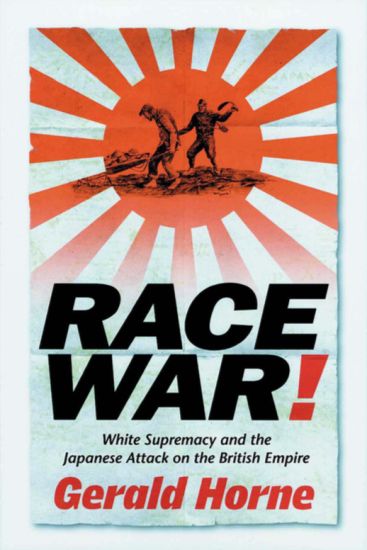
Japan's lightning march across Asia during World War II was swift and brutal. Nation after nation fell to Japanese soldiers. How were the Japanese able to justify their occupation of so many Asian nations? And how did they find supporters in countries they subdued and exploited? Race War! delves into submerged and forgotten history to reveal how European racism and colonialism were deftly exploited by the Japanese to create allies among formerly colonized people of color. Through interviews and original archival research on five continents, Gerald Horne shows how race played a key—and hitherto ignored—;role in each phase of the war. During the conflict, the Japanese turned white racism on its head portraying the war as a defense against white domination in the Pacific. We learn about the reverse racial hierarchy practiced by the Japanese internment camps, in which whites were placed at the bottom of the totem pole, under the supervision of Chinese, Korean, and Indian guards—an embarrassing example of racial payback that was downplayed by the defeated Japanese and the humiliated Europeans and Euro-Americans. Focusing on the microcosmic example of Hong Kong but ranging from colonial India to New Zealand and the shores of the U.S., Gerald Horne radically retells the story of the war. From racist U.S. propaganda to Black Nationalist open support of Imperial Japan, information about the effect of race on U.S. and British policy is revealed for the first time. This revisionist account of the war draws connections between General Tojo, Malaysian freedom fighters, and Elijah Muhammed of the Nation of Islam and shows how white racism encouraged and enabled Japanese imperialism. In sum, Horne demonstrates that the retreat of white supremacy was not only driven by the impact of the Cold War and the energized militancy of Africans and African-Americans but by the impact of the Pacific War as well, as a chastened U.S. and U.K. moved vigorously after this conflict to remove the conditions that made Japan's success possible.