
Kirjahaku
Etsi kirjoja tekijän nimen, kirjan nimen tai ISBN:n perusteella.
13 kirjaa tekijältä Gerald L Stevens
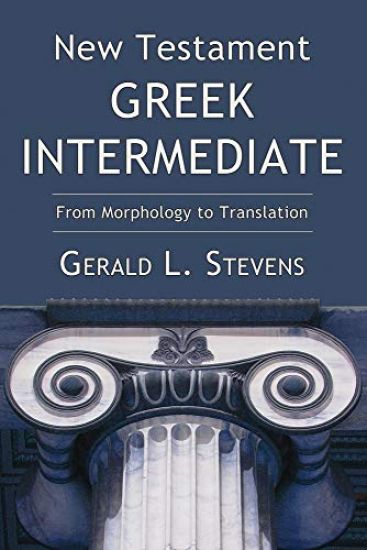
New Testament Greek Intermediate is the companion volume to New Testament Greek Primer. The Intermediate text reviews grammar, expands vocabulary, and exposes the student to more New Testament context. Grammar review intends to consolidate gains from the Primer, but deepens the discussion, adds more illustrative paradigms, and includes more syntax. Vocabulary acquisition expands the Primer's frequency base of 50 or more times down to a frequency of 15 or more times, including second aorist forms. This vocabulary acquisition is divided by frequency into seven vocabulary lists ready for seven vocabulary exams. The exercises have longer passages both to increase the student's translation stamina and to bring more contextualization to bear on the act of translation. In addition, the text includes informative illustrations and graphics, beautiful layout, full indexes, a glossary, charts, paradigms, and principal parts for even more usability. By the end of this text, the student is thoroughly prepared for Greek exegesis and advanced courses on Greek syntax.
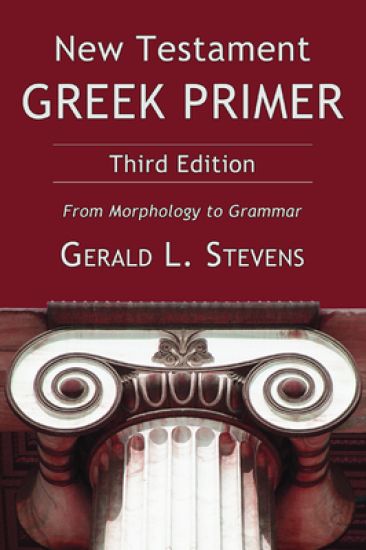
New Testament Greek Primer has established itself among Greek instructors as a popular and dependable guide to the Greek of the New Testament, appreciated for its accuracy, coverage, and well-designed exercises. Students appreciate easy-to-read explanations, English grammar bridges, user-friendly layout, and copious tables, charts, and indexes. Retaining the basic form and content, the third edition builds on this solid reputation with enhanced discussion, organization, examples, and exercises. The appendix on English grammar aids English-challenged students. Pictures from the author's extensive travel overseas illustrate the ancient Greco-Roman context of the Greek New Testament. Other resources include language lessons elaborating translation and morphology issues, convenient vocabulary reviews anticipating vocabulary exams, an answer key, and indexes of vocabulary, principal parts, paradigms, and subjects. The method is deductive and the goal focused on grammar and exegesis. An early emphasis on the noun system transitions to the principal parts of the verb, followed by moods, infinitives, and participles. Two lessons on the MI-verb system conclude the work. Examples and exercises are taken directly from the Greek New Testament.
This second edition of Stevens's presentation of Acts adds an extensive study of church traditions on Paul's death and burial. Uncovering of the sarcophagus in the Church of Saint Paul Outside the Walls yielded carbon 14 dated first- or second-century bones. In his characteristically creative way, Stevens offers an insightful proposal on why church traditions on Paul post Acts are so ambiguous and probably always will be, even with this new find. Stevens's close study of the Acts narrative analyzes Luke's post-ascension story of Jesus and challenges orthodoxies in the interpretation of Acts and Paul. Luke was the first to envision the future of the Jesus story in the Hellenist movement as this movement realizes the promise of Pentecost in Israel, preeminently epitomized in the mission of Paul, who is Luke's premier example of the God active, God resisted theme of the speech of Stephen that drives the plot of Acts and illuminates exegesis of Paul's insistence on going to Jerusalem with its dramatic conclusion in the shipwreck of Paul. Luke ends Acts in Rome as intended--an impressive, compelling, and thoroughly fresh reading of Acts.
This second edition of Stevens's presentation of Acts adds an extensive study of church traditions on Paul's death and burial. Uncovering of the sarcophagus in the Church of Saint Paul Outside the Walls yielded carbon 14 dated first- or second-century bones. In his characteristically creative way, Stevens offers an insightful proposal on why church traditions on Paul post Acts are so ambiguous and probably always will be, even with this new find. Stevens's close study of the Acts narrative analyzes Luke's post-ascension story of Jesus and challenges orthodoxies in the interpretation of Acts and Paul. Luke was the first to envision the future of the Jesus story in the Hellenist movement as this movement realizes the promise of Pentecost in Israel, preeminently epitomized in the mission of Paul, who is Luke's premier example of the God active, God resisted theme of the speech of Stephen that drives the plot of Acts and illuminates exegesis of Paul's insistence on going to Jerusalem with its dramatic conclusion in the shipwreck of Paul. Luke ends Acts in Rome as intended--an impressive, compelling, and thoroughly fresh reading of Acts.
Stevens invokes a powerful synthesis of recent Pauline studies by insisting the category of Israel is the hermeneutical key to all of Romans. Through Jesus the Messiah and the power of the Spirit, Paul saw fulfilled Isaiah's vision of Israel's destiny to the nations to bring the good news of salvation. Recapturing Isaiah's vision broke the spell for Paul of the Great Assembly's postexilic take on Israel. Paul's apostleship first and foremost was to Israel, not gentiles exclusively. Paul used his expose of the gospel of God in Romans to challenge believers in Rome to embrace their place in the messianic Israel of God.
Divine wrath is considered politically incorrect for a God of love, but Stevens insists coming to terms with Paul's language of wrath is imperative for understanding Paul's gospel. Half of the occurrences of the two primary terms in the New Testament are in Paul. A survey focusing on the key terms for wrath in Greek, Roman, Hebrew, Samaritan, and New Testament literature provides background to see Pauline distinctives. Rich illustrations bring discussion to life drawn from decades of the author's research overseas. Stevens challenges Dodd's divine wrath as no more than an impersonal nexus of sin and retribution by integrating wrath into a theology of grace through which God always and in everything is seeking to save.
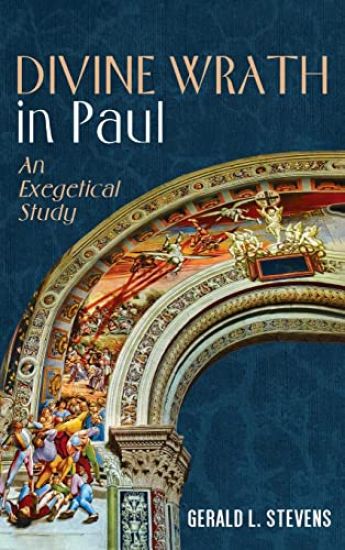
Divine wrath is considered politically incorrect for a God of love, but Stevens insists coming to terms with Paul's language of wrath is imperative for understanding Paul's gospel. Half of the occurrences of the two primary terms in the New Testament are in Paul. A survey focusing on the key terms for wrath in Greek, Roman, Hebrew, Samaritan, and New Testament literature provides background to see Pauline distinctives. Rich illustrations bring discussion to life drawn from decades of the author's research overseas. Stevens challenges Dodd's divine wrath as no more than an impersonal nexus of sin and retribution by integrating wrath into a theology of grace through which God always and in everything is seeking to save.