Kirjojen hintavertailu. Mukana 11 717 486 kirjaa ja 12 kauppaa.

Kirjahaku

Etsi kirjoja tekijän nimen, kirjan nimen tai ISBN:n perusteella.

7 kirjaa tekijältä Gerald L. Bray

The Pastoral Epistles (ITC)

The Pastoral Epistles (ITC)

Gerald L. Bray

Continuum International Publishing Group Ltd.
2019
sidottu
This commentary offers a verse-by-verse theological interpretation of the First and Second epistles to Timothy and Titus. Bray reads the letters as authoritative scripture, moving beyond questions of whether they are pseudonymous, and of whether or not they are post-apostolic, instead looking closely at how they have been understood in the life of the Church. Bray engages with the history of commentary surrounding these letters, ranging from the Fathers to contemporary theology and exegesis. He reads the epistles as the authoritative word from God to his people, and through his engagement with the history of interpretation shows the constant thread of witness and confession that unites believers across the ages. In so doing, Bray shows why the Pastoral Epistles have survived the passage of time and have retained the canonical authority that they have always enjoyed.
The Pastoral Epistles (ITC)

The Pastoral Epistles (ITC)

Gerald L. Bray

BLOOMSBURY PUBLISHING PLC
2025
nidottu
This commentary offers a verse-by-verse theological interpretation of the First and Second epistles to Timothy and Titus. Bray reads the letters as authoritative scripture, moving beyond questions of whether they are pseudonymous, and of whether or not they are post-apostolic, instead looking closely at how they have been understood in the life of the Church. Bray engages with the history of commentary surrounding these letters, ranging from the Fathers to contemporary theology and exegesis. He reads the epistles as the authoritative word from God to his people, and through his engagement with the history of interpretation shows the constant thread of witness and confession that unites believers across the ages. In so doing, Bray shows why the Pastoral Epistles have survived the passage of time and have retained the canonical authority that they have always enjoyed.
The Doctrine of God

The Doctrine of God

Gerald L. Bray

INTERVARSITY PRESS
1993
nidottu
What is theology? What is the nature of God? How should we think about the relationships among the persons of the Trinity? In a carefully reasoned style Gerald Bray distills the essence of these questions and introduces readers to a theological understanding of the personal, trinitarian existence of God. Engaging classical and contemporary theology along the way, Bray also leads us into conversation with the Eastern Orthodox tradition, where he finds valuable insights sadly neglected by evangelical theology.Here is a substantial introduction to the nature and subject of God, and a compelling call for evangelicals to renew their commitment to the solid foundation of a truly trinitarian theology.
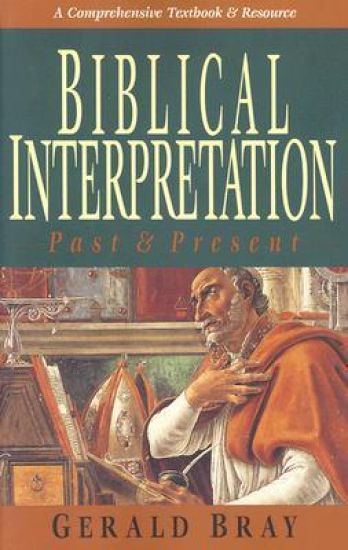
Biblical Interpretation: Past & Present

Biblical Interpretation: Past & Present

Gerald L. Bray

INTERVARSITY PRESS
2000
nidottu
Christianity Today Book of the YearNever before has there been so much scholarly effort devoted to the study of the Bible. And yet, ironically, the church is in perilous danger of forgetting its rich inheritance of biblical interpretation. With this textbook, Gerald Bray sounds the call to draw biblical interpretation back to the heart of the church. Evangelical in perspective but ecumenical in both its historical breadth and its vision of the future, Bray's work is a comprehensive guide to biblical interpretation, past and present.Bray begins by introducing basic concepts in biblical interpretation that have remained constant through the ages: divine revelation, the nature of the canon, the relation of the biblical text to the life of Christian churches, and the tensions inherent in the act of biblical interpretation. He follows this introduction with three main sections, each covering an epoch of development within the history of biblical interpretation. The first surveys the period from the ancient church to the beginnings of modern historical-critical interpretation in the Renaissance and Reformation. The second engages the rise of modern historical-critical interpretation from the late seventeenth century through the twentieth century. The third investigates current trends in biblical interpretation that seek to offer alternatives to the dominant school of historical criticism.Each section is divided into chapters focusing on periods or schools of interpretation. And, as a further aid to readers, each chapter is divided into standard subsections: an introduction to the period or school of interpretationa brief who's who of major interpreters and their worksan introduction to key critical, doctrinal or hermeneutical issuesdiscussion and illustration of principal interpretive methodsan examination of an particular book or passage that played a crucial role in biblical interpretation for the period or school under discussionBray's organizational scheme allows readers to quickly grasp the issues, methods and interpreters of each period or school and to observe how classic issues and pivotal questions have shaped the church's use of the Bible in various historical contexts. Seminarians, pastors, teachers and lay leaders will welcome Biblical Interpretation: Past and Present as an instructive guide to both the high points and the impasses of biblical interpretation. Here is history with a clear message, written out of the conviction that biblical interpretation and Christian doctrine go hand in hand.
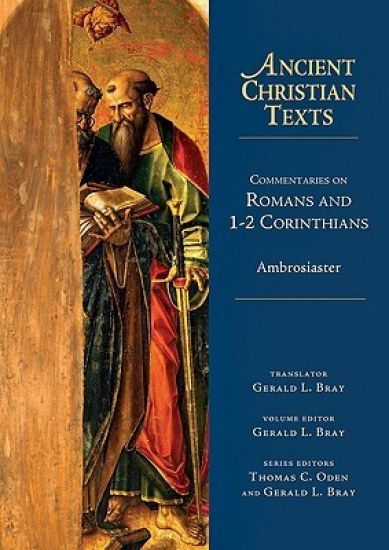
Commentaries on Romans and 1–2 Corinthians
Ambrosiaster ("Star of Ambrose") is the name given to the anonymous author of the earliest complete Latin commentary on the thirteen epistles of Paul. The commentaries were thought to have been written by Ambrose throughout the Middle Ages, but their authorship was challenged by Erasmus, whose arguments have proved decisive. Here for the first time Ambrosiaster's commentaries on Romans and the Corinthian correspondence are made available in English translation, ably translated and edited by Gerald L. Bray. The commentaries, which serve as important witnesses to pre-Vulgate Latin versions of Paul's epistles, are noteworthy in other respects as well. Ambrosiaster was a careful and thoughtful interpreter, with little use for allegory, though he employed typology judiciously. Writing during the pontificate of Damasus (366-384), he is a witness to Nicene orthodoxy and frequently comments on themes related to the Trinity, the consubstantiality of the Son, the problem of the unbelief of the Jews and the nature of human sinfulness. He had a keen eye for moral issues and often offers comments that reflect his knowledge of how the church had changed from the time of the apostles to his own day. This commentary offers a rich repository of insight into the thinking of pre-Reformation church leaders for the leaders and teachers of the church today. Ancient Christian Texts are new English translations of full-length commentaries or sermon series from ancient Christian authors that allow you to study key writings of the early church fathers in a fresh way.
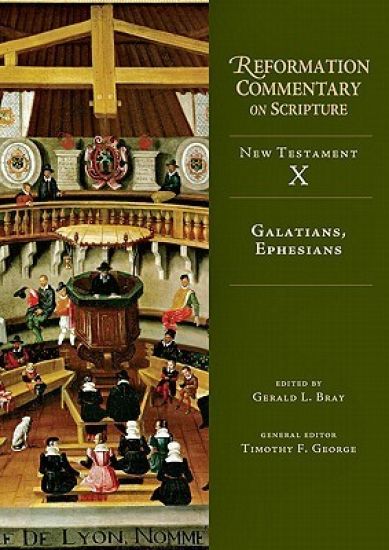
Galatians, Ephesians

Galatians, Ephesians

Gerald L. Bray

Inter-Varsity Press,US
2011
sidottu
The gospel of justification by faith alone was discovered afresh by the Reformers in the epistolary turrets of the New Testament: the letters to the Galatians and the Ephesians. At the epicenter of the exegetical revolution that rocked the Reformation era was Paul's letter to the Galatians. There Luther, Calvin, Bullinger and scores of others perceived the true gospel of Paul enlightening a situation parallel to their own times--the encroachment of false teachers and apostates upon the true teaching of salvation by grace through faith. In Ephesians, the Reformers gravitated to what they understood to be the summit of Paul's vision of salvation in Christ. Finding its source, beyond time, in the electing love of God, the Reformers disseminated the letter?s message of temporal hope for Christians living under the duress of persecution. For the Reformers, these epistles were living, capsule versions of Paul's letter to the Romans, briefs on the theological vision of the celebrated apostle. Probed and expounded in the commentaries and sermons found in this volume, these letters became the very breath in the lungs of the Reformation movements. The range of comment on Galatians and Ephesians here spans Latin, German, French, Dutch and English authors from a variety of streams within the Protestant movement. Especially helpful in this volume is Gerald Bray's editorial presentation of the development of tensions among the Reformers. The epistles of Galatians and Ephesians open up a treasure house of ancient wisdom, allowing these faithful Reformation witnesses to speak with eloquence and intellectual acumen to the church today.
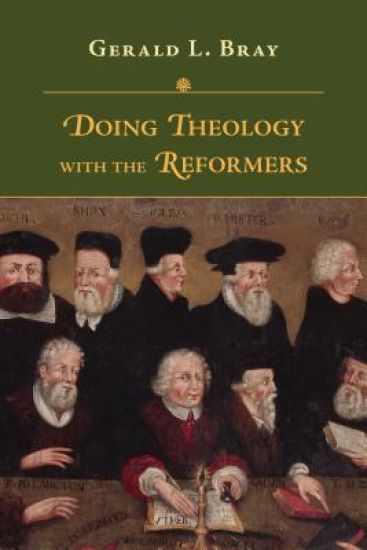
Doing Theology with the Reformers

Doing Theology with the Reformers

Gerald L. Bray

IVP Academic
2019
nidottu
The Reformation was a time of tremendous upheaval, renewal, and vitality in the life of the church. The challenge to maintain and develop faithful Christian belief and practice in the midst of great disruption was reflected in the theology of the sixteenth century. In this volume, which serves as a companion to IVP Academic's Reformation Commentary on Scripture, theologian and church historian Gerald L. Bray immerses readers in the world of Reformation theology. He introduces the range of theological debates as Catholics and Protestants from a diversity of traditions—Lutheran, Reformed, Anglican, and Anabaptist—disputed the essentials of the faith, from the authority of Scripture and the nature of salvation to the definition of the church, the efficacy of the sacraments, and the place of good works in the Christian life. Readers will find that understanding how the Reformers engaged in the theological discipline can aid us in doing theology today.