Kirjojen hintavertailu. Mukana 11 717 486 kirjaa ja 12 kauppaa.

Kirjahaku

Etsi kirjoja tekijän nimen, kirjan nimen tai ISBN:n perusteella.

3 kirjaa tekijältä Gerald L. Early

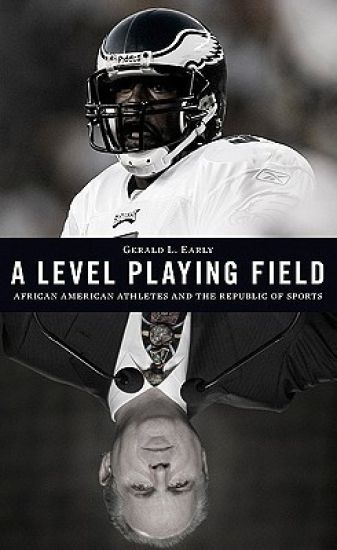
A Level Playing Field

A Level Playing Field

Gerald L. Early

Harvard University Press
2011
sidottu
As Americans, we believe there ought to be a level playing field for everyone. Even if we don’t expect to finish first, we do expect a fair start. Only in sports have African Americans actually found that elusive level ground. But at the same time, black players offer an ironic perspective on the athlete-hero, for they represent a group historically held to be without social honor.In his first new collection of sports essays since Tuxedo Junction (1989), the noted cultural critic Gerald Early investigates these contradictions as they play out in the sports world and in our deeper attitudes toward the athletes we glorify. Early addresses a half-century of heated cultural issues ranging from integration to the use of performance-enhancing drugs. Writing about Jackie Robinson and Curt Flood, he reconstructs pivotal moments in their lives and explains how the culture, politics, and economics of sport turned with them. Taking on the subtexts, racial and otherwise, of the controversy over remarks Rush Limbaugh made about quarterback Donovan McNabb, Early restores the political consequence to an event most commentators at the time approached with predictable bluster. The essays in this book circle around two perennial questions: What other, invisible contests unfold when we watch a sporting event? What desires and anxieties are encoded in our worship of (or disdain for) high-performance athletes?These essays are based on the Alain Locke lectures at Harvard University’s Du Bois Institute.
This Is Where I Came In

This Is Where I Came In

Gerald L. Early

University of Nebraska Press
2003
sidottu
The fascinating and turbulent black America of the 1960s emerges in these essays, through the lenses of dissent and its contradictions. Gerald L. Early revisits this volatile time in American history, when class, culture, and race ignited conflagrations of bitterness and hatred across the nation. The lives of three active and influential people are given special attention: Cecil B. Moore, advocate and agitator in the 'racial tinderbox' of black Philadelphia; Muhammad Ali, promoter of a 'colored' consciousness; and, Sammy Davis Jr., survivor of black vaudeville and liberator of black performers. The fiercely independent Moore, who rebuffed the black political establishment because it failed to address the concerns and needs of the majority of the black populace, used the authority of the NAACP to forge a militant, populist organization at the local level.Ali, one of the most widely recognized athletes of all time, combined protest and action to become a hero for black and 'colored' people throughout the world and became a type of ambassador to the Third World. Davis mirrored America's emancipation, confusion, and self-destructiveness, and, most important, its self-consciousness, which transcended even his remarkable accomplishments as an entertainer. As Early demonstrates, the careers and lives of Moore, Ali, and Davis illustrate and embody the ambiguity and struggle of American identity in the 1960s. Gerald L. Early is Merle Kling Professor of Modern Letters at Washington University. He also serves as Director of African and Afro-American Studies at Washington University and is the author of many books, including "The Culture of Bruising: Essays on Literature", "Prizefighting", and "Modern American Culture", and the editor of "Miles Davis" and "American Culture".
This Is Where I Came in

This Is Where I Came in

Gerald L. Early

University of Nebraska Press
2003
pokkari
The fascinating and turbulent black America of the 1960s emerges in these essays, through the lenses of dissent and its contradictions. Gerald L. Early revisits this volatile time in American history, when class, culture, and race ignited conflagrations of bitterness and hatred across the nation. The lives of three active and influential people are given special attention: Cecil B. Moore, advocate and agitator in the "racial tinderbox" of black Philadelphia; Muhammad Ali, promoter of a "colored" consciousness; and Sammy Davis Jr., survivor of black vaudeville and liberator of black performers. The fiercely independent Moore, who rebuffed the black political establishment because it failed to address the concerns and needs of the majority of the black populace, used the authority of the NAACP to forge a militant, populist organization at the local level. Ali, one of the most widely recognized athletes of all time, combined protest and action to become a hero for black and "colored" people throughout the world, and became a type of ambassador to the Third World. Davis mirrored America's emancipation, confusion, and self-destructiveness, and, most important, its self-consciousness, which transcended even his remarkable accomplishments as an entertainer. As Early demonstrates, the careers and lives of Moore, Ali, and Davis illustrate and embody the ambiguity and struggle of American identity in the 1960s.