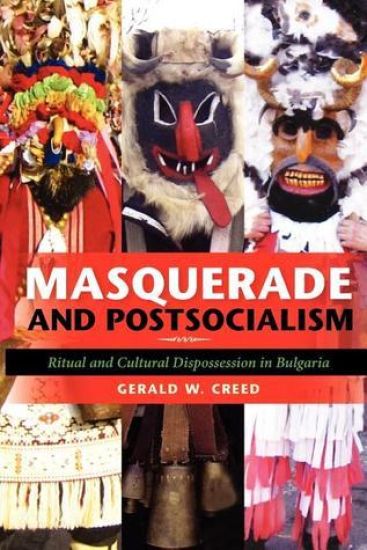
Gerald W. Creed analyzes contemporary mumming rituals in rural Bulgaria for what they reveal about life after socialism—and the current state of postsocialist studies. Mumming rituals have flourished in the post-Soviet era. Elaborately costumed dancers go from house to house demanding sustenance and bestowing blessings. Through the analysis of these rites, Creed critiques key themes in postsocialist studies, including understandings of civil society and democracy, gender and sexuality, autonomy and community, and ethnicity and nationalism. He argues that these events reveal indigenous cultural resources that could have been used both practically and intellectually to ease the postsocialist reconstruction of Bulgarian society, but were not.
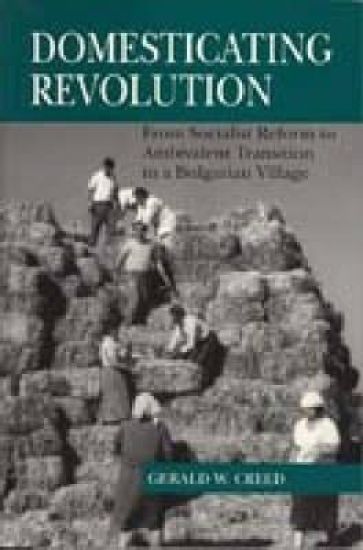
The collapse of state socialism in 1989 focused attention on the transition to democracy and capitalism in Eastern Europe. But for many people who actually lived through the transition, the changes were often disappointing. Perhaps none were more disappointed than the villagers of rural Bulgaria whose very lifestyles and identities were threatened by the transition. Domesticating Revolution explains this unexpected outcome through a detailed study of economic reform in one Bulgarian village, from the beginning of collectivization in the 1940s to decollectivization efforts in the 1990s. Gerald Creed is the only American anthropologist to have conducted extended fieldwork in a single Bulgarian village both during and after the socialist era. This work has enabled him to document the precise connections between socialist practice and postsocialist developments. He suggests that by simply doing what they could to improve their difficult lot under socialism, Bulgarian villagers gradually domesticated the socialist system. This very achievement, however, set the stage for an ambivalent transition after 1989 as villagers sought to defend their earlier gains against new threats. Ironically, they appealed to domesticated socialism in a failed effort to domesticate the transition as well. Domesticating Revolution will force scholars to rethink both their models of state socialism and their interpretations of the transition.