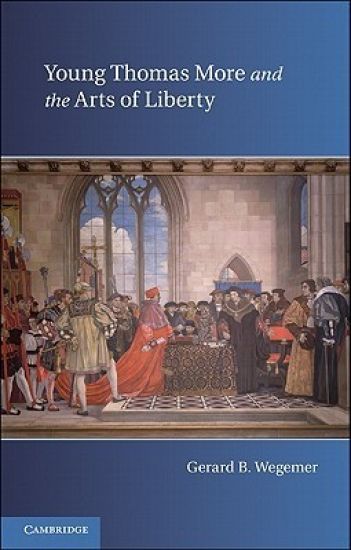
What does it mean to be a free citizen in times of war and tyranny? What kind of education is needed to be a 'first' or leading citizen in a strife-filled country? And what does it mean to be free when freedom is forcibly opposed? These concerns pervade Thomas More's earliest writings, writings mostly unknown, including his 280 poems, declamation on tyrannicide, coronation ode for Henry VIII and his life of Pico della Mirandola, all written before Richard III and Utopia. This book analyzes those writings, guided especially by these questions: Faced with generations of civil war, what did young More see as the causes of that strife? What did he see as possible solutions? Why did More spend fourteen years after law school learning Greek and immersed in classical studies? Why do his early works use vocabulary devised by Cicero at the end of the Roman Republic?
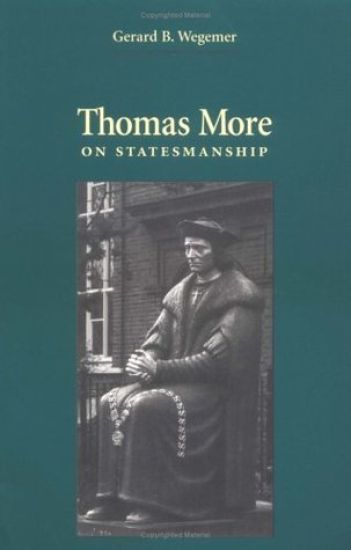
The term ""statesman"" entered the English language during the Renaissance as a result of the widespread return to the Greek and Roman classics. Sir Thomas More, who brought his careful study of Plato and Aristotle, Cicero and Augustine to bear upon his political life, contributed most to the recovery of the ancient Greco-Roman concept of the statesman. Throughout More's writings and his actions one finds a consistent and principled approach to statesmanship that emphasizes the free character of the human person and integrates classical and Christian thought with the best of England's common law tradition of self-rule. This study is the first to examine More's complete works in view of his concept of statesmanship, and, in the process, link More's humanism, his faith, and his legal and political vocations into a coherent narrative. In Part One Gerard B. Wegemer sets forth More's theory of statesmanship, drawing heavily from the entire corpus of his work. In the second part he presents More's understanding of literature and applies this understanding to his book Utopia. In Part Three he investigates the two most controversial events in More's life: his treatment of heretics and his refusal to obey his king. More presented a consistent defense of institutional arrangements now taken as basic to all democratic government: rule of law, division of power, separation of church and state, elected representation, and protected forms of free and public deliberation. He believed that the essential work of the statesman is to draw upon the nation's deepest and longest-standing consensus, as expressed in its literature and its laws, in order to govern with the people's consent. More was convinced that law, not individual persons, should rule.This book, which integrates the literature, philosophy, history, and politics of the Renaissance, will appeal across disciplines to scholars of early modern England and to anyone fascinated by the life and times of St. Thomas More. Gerard B. Wegemer is the author of Thomas More: A Portrait of Courage (1995) and has written about More and his times for such journals as Renascence, Philosophy and Rhetoric, Moreana, and The Review of Politics. He holds master's degrees in political philosophy and literature from Boston College and Georgetown respectively, and a doctorate in English literature from Notre Dame. He is associate professor of literature at the University of Dallas, and he teaches and lectures regularly on St. Thomas More. -------------------------------------------------------------------------------- ""Professor Wegemer's book is an extraordinary work of interpretation. The key to its success is a comprehensive grasp of More's life and work, rooted in a profound sympathy for the man and his goals. With a calm and confident hand, Wegemer sheds new light on More's views of statesmanship and its requirements, on the inner structure of his enigmatic and playful masterpiece Utopia, and on the guiding conceptions of his practical political life. Rarely do authors show such a capacity for leaping across the chasm of culture and years to understand the vision that makes sense of a man's life and thought.""-- Professor Christopher Wolfe, Department of Political Science, Marquette UniversityTable of ContentsIntroductionI. More's Understanding of the Statesman's Work1. Can Reason Rule the Free?2. First, Self-Rule3. Ruling Citizens: What Is Needed?II. Utopia: A Statesman's Puzzle4. Literature and the Acquisition of Political Prudence5. Utopia 1 and 2: Dramatizing Competing Philosophies of Life6. Utopia 1: Ciceronian Statesmanship7. Utopia 2: Augustinian RealistIII. Issues in More's Career as Statesman8. The Limits of Reason and the Need for Law9. Reform over Revolution: In Defense of Free
What does it mean to be a free citizen in times of war and tyranny? What kind of education is needed to be a 'first' or leading citizen in a strife-filled country? And what does it mean to be free when freedom is forcibly opposed? These concerns pervade Thomas More's earliest writings, writings mostly unknown, including his 280 poems, declamation on tyrannicide, coronation ode for Henry VIII and his life of Pico della Mirandola, all written before Richard III and Utopia. This book analyzes those writings, guided especially by these questions: Faced with generations of civil war, what did young More see as the causes of that strife? What did he see as possible solutions? Why did More spend fourteen years after law school learning Greek and immersed in classical studies? Why do his early works use vocabulary devised by Cicero at the end of the Roman Republic?
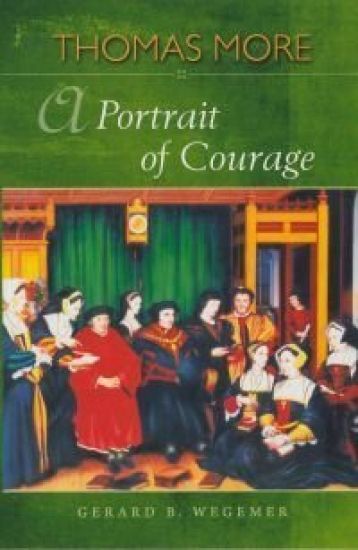
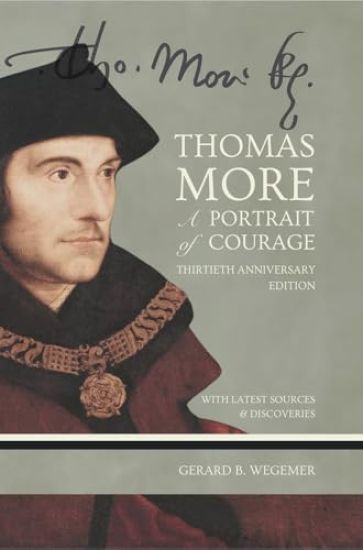
" Thomas More is more important at this moment than at any moment since his death, even perhaps the great moment of his dying; but he is not quite so important as he will be in about a hundred years' time." In 1929, G. K. Chesterton made this claim with acute perception. One of history's greatest lawyers and statesmen and most admired figures of all time, Thomas More was voted " Lawyer of the Millennium" by the Law Society of Great Britain and named " Patron of Statesmen" by John Paul II. He combined immense humanistic learning with an unequaled command of the legal and political traditions of Christendom, forging a profound philosophy of statesmanship and freedom. He possessed the virtues of an exemplary husband, father, and friend and the detachment and interior peace of a saint. He thus emerged from the first great crisis of modern tyranny-- a crisis that would claim his life-- as the model of a truly free man, whose conscience and character no despot could subvert. Thomas More was canonized in 1935 as Hitler was rising to power and the world needed an example of courage and skill in the face of the greatest of dangers. This book reveals how More prepared himself for the challenges of his life, and how he rose to the demands placed upon him. This 30th anniversary edition includes citations to Scepter's collection of Thomas More writings while incorporating updated sources and information about More's life.