Kirjojen hintavertailu. Mukana 11 342 296 kirjaa ja 12 kauppaa.

Kirjahaku

Etsi kirjoja tekijän nimen, kirjan nimen tai ISBN:n perusteella.

9 kirjaa tekijältä Gerd Ludemann

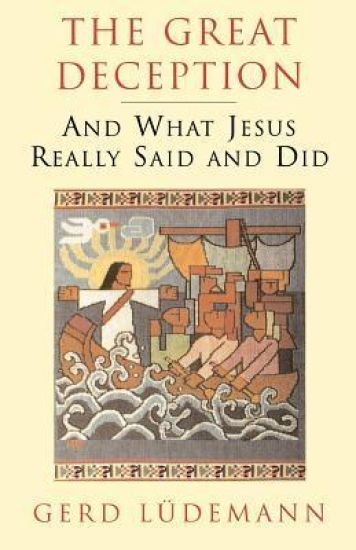
Great Deception

Great Deception

Gerd Ludemann

SCM Press
1998
nidottu
It is widely recognized by New Testament scholars that many of the sayings and actions attributed to Jesus in the Gospels do not go back to him, but have been influenced by the early church. This study calls for rigorous treatment of the Gospels and provides a radical conclusion.
Heretics

Heretics

Gerd Ludemann

Westminster/John Knox Press,U.S.
1996
nidottu
According to the commonly held view, early Christianity was a time of great harmony, and heresy emerged only at a later stage. To the contrary, Gerd Ludemann argues that the time from the first Christian communities to the end of the second century was defined by struggle by various groups for doctrinal authority. Drawing on a wealth of data, he asserts that the losers in this struggle actually represented Christianity in its more authentic, original form. Orthodoxy has been defined by the victors in this struggle and it is they who subsequently silenced alternative views and labeled them heretical. Ludemann's findings are important as well as liberating for the understanding of both Christianity and the Bible. Readers will gain a new understanding of Jesus and the early church from this compelling and controversial book.
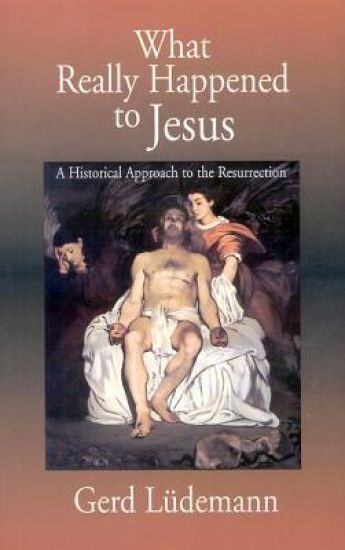
What Really Happened to Jesus

What Really Happened to Jesus

Gerd Ludemann

Westminster/John Knox Press,U.S.
1996
nidottu
Dissatisfied with what he regarded as evasive answers given by theologians and scholars about the nature of the resurrection of Jesus, Gerd Ludemann subjected the New Testament traditions to a thorough investigation. In particular, Ludemann was concerned with the story of the empty tomb and the subsequent appearance stories first related by Peter. Ludemann reaches surprising and somewhat radical conclusions. This book, written for nonspecialists, presents Ludemann's provocative conclusions. Readers will find a positive, albeit revolutionary, new way of viewing the resurrection.
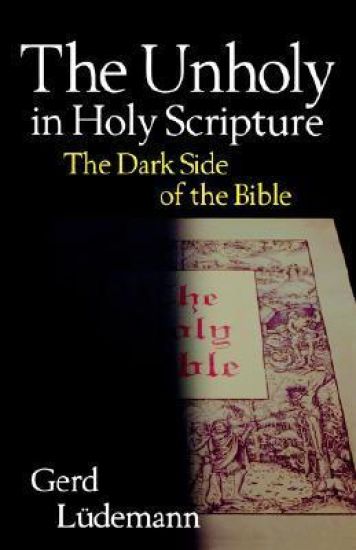
The Unholy in Holy Scripture

The Unholy in Holy Scripture

Gerd Ludemann

Westminster/John Knox Press,U.S.
1997
nidottu
The Bible is the most widely read and translated book in the world, and its influence is immeasurable. Nonetheless, according to Gerd Ludemann, its use by Christians is highly selective. Ludemann asks, what about those parts of the Bible that contain God's command to exterminate entire peoples or those texts which demonize other faiths? He focuses first on the practice of Holy War and then on the anti-Judaism of New Testament writings. He also tackles the question of how, given this destructive side of Scripture, we can continue to be Christians. In response, he points to the person of Jesus and his example.
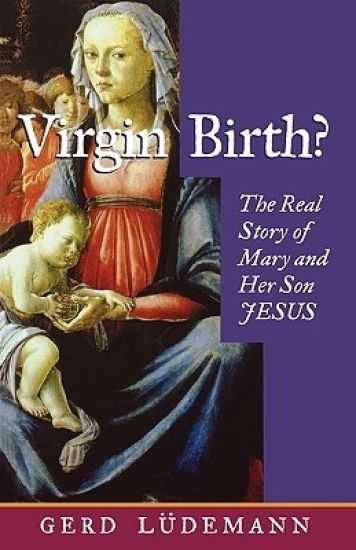
Virgin Birth?

Virgin Birth?

Gerd Ludemann

Trinity Press International
1998
nidottu
What historical realities lie behind the birth of Jesus and the description of the Holy Family by the evangelists? In this book, controversial New Testament scholar Gerd Ludemann investigates all of the references to Jesus' birth and the Holy Family in the writings of the earliest church and rival Jewish sources. He discusses what the New Testament Christmas stories set out to say, reconstructs the traditions used in them, and answers the question of what really happened at Jesus' birth. Anti-Christian polemic stigmatized Jesus as a child born out of wedlock and branded his mother a sinner. The Christian myth of the virgin birth, Professor Ludemann argues, maintains the structures of stigmatization, denying the right of women to sexual and cultural self-determination. Instead of taking Mary seriously as a woman of our time and therefore also taking seriously women in our time, he says, many churches today continue to ignore the often damaging consequences of the myth of Mary for believing men and women. Gerd Luedemann is Professor of New Testament at the University of Gottingen.
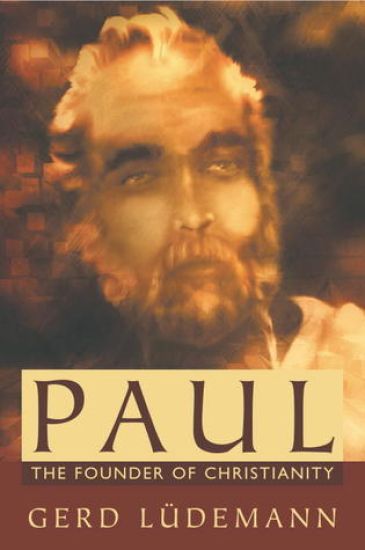
Paul

Paul

Gerd Ludemann

Prometheus Books
2002
pokkari
New Testament scholar Gerd Lüdemann continues his exploration of the life and teachings of Paul in this groundbreaking monograph, which synthesizes the research of his four previous books on Christianity's leading apostle. As the subtitle of the present work makes clear, Lüdemann comes to the conclusion that Paul should be considered not only Christianity's most influential proselytizer but in truth deserves the title of founder of the religion that ostensibly originated with Jesus of Nazareth. Though other scholars have previously made the point that Paul's interpretation of the Christian message actually obscured the original teachings of Jesus, Lüdemann goes further. His painstaking historical research shows that Paul created the major tenets of the Christianity we know today and that his theology - an original synthesis of Hebrew and Greek belief systems - differs significantly from what we now know the historical Jesus to have preached.
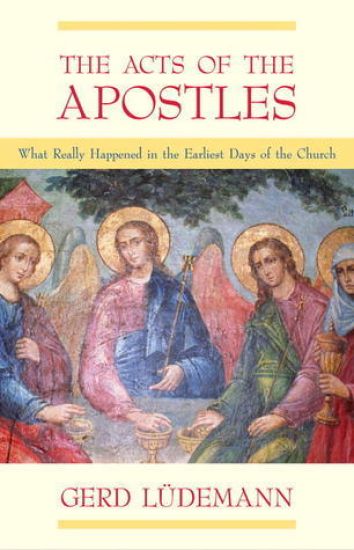
The Acts Of The Apostles

The Acts Of The Apostles

Gerd Ludemann

Prometheus Books
2005
sidottu
In Jesus After Two Thousand Years, New Testament historian Gerd Lüdemann analyzed the four traditional gospels, plus the more recently discovered Gospel of Thomas and apocryphal literature, to ascertain which of the alleged words and actions of Jesus can be judged authentic. Now in this companion volume, Lüdemann takes the same historical-critical approach to the Acts of the Apostles. Together these two in-depth studies lay the groundwork for a factually accurate history of primitive Christianity. Although many books have been published on the Acts of the Apostles, Lüdemann's work is unique in its emphasis on establishing reliable historical facts. Other scholars have delved into Acts to discover the author's theology and the purpose of his writing. By contrast, Lüdemann examines each individual section of Acts to detect whatever tradition may lie behind it. Where possible, he offers a reasoned judgment on the historical value of every event and action described in this early Christian text. For everyone with a desire to know what really happened in the earliest days of the Christian church, this volume is indispensable.
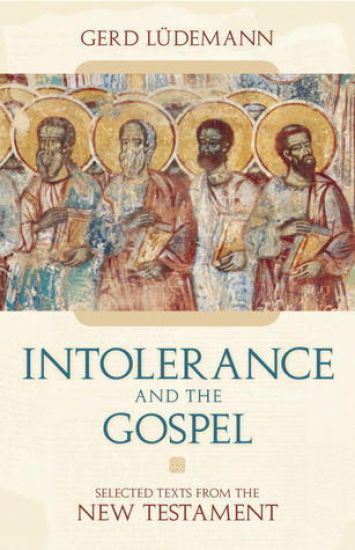
Intolerance And the Gospel

Intolerance And the Gospel

Gerd Ludemann

Prometheus Books
2007
sidottu
Contemporary Christians usually suppose that Christianity is quite congenial to the democratic ideals that are the basis of free, open Western societies. Among these ideals is freedom of religion, which encourages a broad tolerance for different belief systems. Nonetheless, a careful examination of core Christian beliefs and the history of Christianity reveal little tolerance for thinking or acting outside the orthodox Christian tradition. In this enlightening analysis of key New Testament texts, historian of early Christianity Gerd Lüdemann discusses the inherently intolerant attitude that has characterized monotheistic belief systems generally and Christianity in particular. As Lüdemann points out, Christianity evolved within the context of the pluralistic Roman Empire, which generally allowed separate belief systems as long as political allegiance to the Roman state was never questioned. Ironically, Christians inherited their essential intolerance from Judaism, whose first commandment is the expression of a jealous God: "I am the Lord your God.... Thou shalt have no other gods before me." After Christianity became the state religion of Rome, tolerance disappeared and did not reappear on the world stage until the European Enlightenment of the 18th century. Besides the discussion of these issues, Lüdemann presents a textual analysis in five chapters of some of the letters in the New Testament. In each case he translates the letter, presents textual commentary, and demonstrates how the text reflects Christian intolerance of heretics and nonbelievers. In conclusion, Lüdemann suggests that attempts to harmonize Christianity with the democratic ideal of tolerance cannot really work because there is a logical contradiction.
What Jesus Didn’t Say

What Jesus Didn’t Say

Gerd Ludemann

Polebridge Press
2011
nidottu
Biblical historians have long held that the New Testament abounds in sayings incorrectly attributed to Jesus. In order to assemble as complete a collection of authentic sayings as possible, they have, for the most part, been intent on seeing how the sayings deemed authentic are connected to one another, and attempting to picture their specific contexts.In What Jesus Didn’t Say, Gerd Lüdemann flips the coin and focuses on the inauthentic words of Jesus—not only those thought to be clear inventions, but also sayings that exhibit noteworthy alterations to their original form and intent. For his selection, he uses sayings that:are attributed to Jesus after his crucifixion presuppose a pagan rather than a Jewish audience involve situations in a post-Easter communityreflect the editorial influence of the author According to Lüdemann, the sheer abundance of inauthentic Jesus-sayings demonstrates that, soon after his sudden and dramatic death, he became the centre of a new faith. From the very beginning, Christians imagined what answers Jesus would offer to the questions that arose among them. When the words they recalled no longer seemed adequate, they revised or invented new sayings to suit the existing situation.