Kirjojen hintavertailu. Mukana 11 244 527 kirjaa ja 12 kauppaa.

Kirjahaku

Etsi kirjoja tekijän nimen, kirjan nimen tai ISBN:n perusteella.

22 kirjaa tekijältä Gerhard Richter

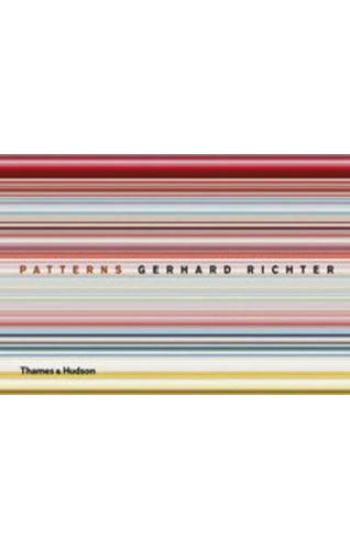
Gerhard Richter Patterns

Gerhard Richter Patterns

Gerhard Richter

Thames Hudson Ltd
2012
sidottu
Documents the author's experiment of taking an image of an original abstract painting and dividing it vertically into two. In this book, each divided part is divided again, mirrored and repeated, producing ever narrower strips, which results in patterns. It includes a total of 238 selected patterns.
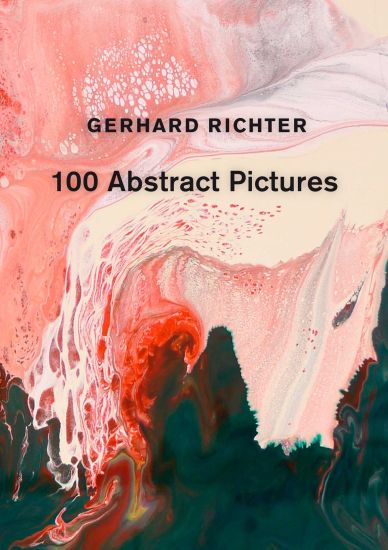
Gerhard Richter: 100 Abstract Pictures

Gerhard Richter: 100 Abstract Pictures

Gerhard Richter

David Zwirner
2023
sidottu
With a career spanning more than sixty years, the renowned painter Gerhard Richter is one of the greatest artists of the twentieth and twenty-first centuries. This book celebrates the artist’s continued dedication to experimentation and innovation.The Abstract Pictures were created when Richter, a few years ago, poured colored enamel paints onto a glass plate and allowed them to flow into one another in order to take shapes. He then captured these ephemeral moments with his camera and selected 100 of these “pictures” for inclusion in the book alongside equally abstract texts formed by randomly generated letter combinations.An artwork of its own, this intimate volume inspires both close looking and a beautiful interpretation of abstraction.
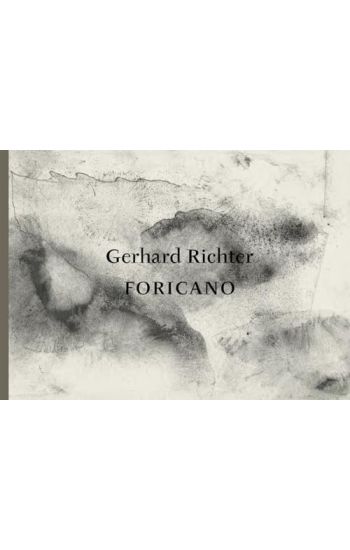
Gerhard Richter: FORICANO, 26 Drawings

Gerhard Richter: FORICANO, 26 Drawings

Gerhard Richter

David Zwirner
2024
sidottu
Gerhard Richter’s newest facsimile-like artist’s book is focused on a single work comprising twenty-six drawings in pencil and ink.“[Richter’s drawings] are of stringent individuality and recognizably by Richter’s hand, not based on their signature style but rather because they make their theme the act of drawing itself, gauging the conditions of drawing.” —Dieter SchwarzIn this new body of work, Richter combines various elements from a limited set of forms and techniques—including meandering lines, broad tonal planes applied with angled strokes of graphite, and passages of smudging, hatching, and erasure—thereby uniting choice and chance through this infinitely generative process. The resulting works on paper serve as condensed expressions, encapsulating and refining the fundamental principles that have consistently defined Richter's artistic journey. Reproduced at actual size, the drawings encourage in-depth observation as well as inspire compelling reimagining of abstraction.
Gerhard Richter: War Cut (English Edition)

Gerhard Richter: War Cut (English Edition)

Gerhard Richter

Distributed Art Publishers (DAP)
2013
sidottu
In 1988, Gerhard Richter created one of the most controversial and fascinating political painting-cycles of all time, with his Baader-Meinhof series. In 2002, he returned to the theme of media and political truth with his artist's book War Cut. For this project, Richter photographed 216 details of his abstract painting "No. 648-2" (1987), and, working on a long table over a period of several weeks, combined these 4 x 6-inch details with 165 texts on the Iraq war, published in the German Frankfurter Allgemeine Zeitung newspaper on the dates of the war's outbreak (March 20 and 21, 2003). "My method was to attach a number of texts to a number of images without having to think about whether something would be better positioned to the left or the right, above or below," Richter told an interviewer, for a New York Times feature on the publication. "I placed these images so that a connection develops in terms of colors, structures and other characteristics. . . . Some images match the cruelty and the madness described in the texts shockingly well. And others can even serve as illustrations when the texts speak of deserts and other landscapes." Originally published only in German in 2004, this long-awaited English version of this important artist's book presents Richter's powerful attempt to accommodate the extremity of war. For this edition, Richter applied the same process of text selection to The New York Times, using the same dates of the war's outbreak.
Gerhard Richter: Catalogue Raisonn , Volume 5
The second installment in Dietmar Elger's ambitious six-volume Gerhard Richter publishing project The oeuvre of Gerhard Richter (born 1932) embraces in excess of 3,000 individual works. Over a period of five decades he has created a stylistically heterogeneous, complex body of work that testifies to his status as the most important living artist of our time. Dietmar Elger, director of the Gerhard Richter Archive at the Staatliche Kunstsammlungen Dresden, has spent years researching and preparing the six-volume catalogue raisonn' that will be published through 2020. This second volume encompasses the works that Richter assigned numbers 199 to 388, covering the years 1968 to 1976. A total of over 500 paintings and sculptures are listed. Aside from the richly colored illustrations (many of them full-page), it includes full technical details, information about the artist's handwritten notes and the provenance, bibliography and exhibitions of each individual work. This information is supplemented by commentary, quotes and comparison images.
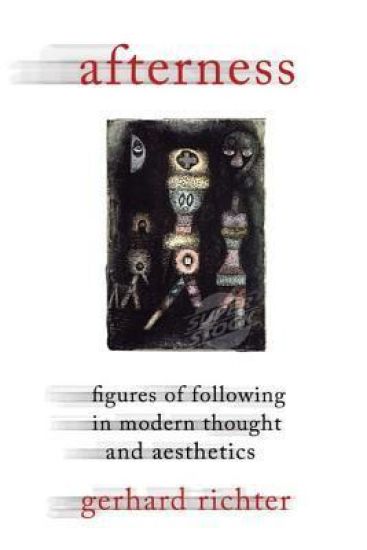
Afterness

Afterness

Gerhard Richter

Columbia University Press
2011
sidottu
Gerhard Richter's groundbreaking study argues that the concept of "afterness" is a key figure in the thought and aesthetics of modernity. It pursues questions such as: What does it mean for something to "follow" something else? Does that which follows mark a clear break with what came before it, or does it in fact tacitly perpetuate its predecessor as a consequence of its inevitable indebtedness to the terms and conditions of that from which it claims to have departed? Indeed, is not the very act of breaking with, and then following upon, a way of retroactively constructing and fortifying that from which the break that set the movement of following into motion had occurred? The book explores the concept and movement of afterness as a privileged yet uncanny category through close readings of writers such as Kant, Kafka, Heidegger, Bloch, Benjamin, Brecht, Adorno, Arendt, Lyotard, and Derrida. It shows how the vexed concepts of afterness, following, and coming after shed new light on a constellation of modern preoccupations, including personal and cultural memory, translation, photography, hope, and the historical and conceptual specificity of what has been termed "after Auschwitz." The study's various analyses--across a heterogeneous collection of modern writers and thinkers, diverse historical moments of articulation, and a range of media--conspire to illuminate Lyotard's apodictic statement that "after philosophy comes philosophy. But it has been altered by the 'after.'" As Richter's intricate study demonstrates, much hinges on our interpretation of the "after." After all, our most fundamental assumptions concerning modern aesthetic representation, conceptual discourse, community, subjectivity, and politics are at stake.
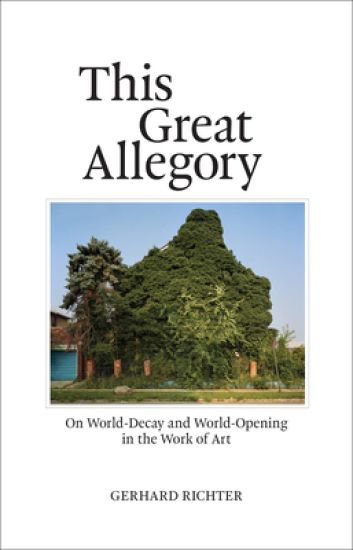
This Great Allegory

This Great Allegory

Gerhard Richter

MIT PRESS LTD
2022
nidottu
An engagement with the relation between the world in which an artwork is created--a world that perishes or decays over time--and the new world that the artwork opens up. Gerhard Richter explores the relation between two worlds: the world in which an artwork is created, that is, a world that over time perishes or decays beyond interpretive understanding, and the new world that the artwork opens up. The multiple relations between these worlds are examined in a number of central thinkers and in various modes of aesthetic production, including poetry, painting, music, film, literature, and photography. It is precisely in and through the work of art, Richter shows, that central elements of the thinking of world as world are negotiated in the most essential and moving ways. Exploring the relationship between these worlds through art and European philosophy, Richter offers bold new interpretations of Karl Marx, Friedrich Nietzsche, Martin Heidegger, Maurice Blanchot, Georges Bataille, Emmanuel Levinas, Theodor W. Adorno, Walter Benjamin, and Jacques Derrida. The book also provides stimulating new insights into the works of heterogeneous artists such as Paul Celan, Friedrich H lderlin, Werner Herzog, Arnold Sch nberg, Franz Kafka, Herman Melville, Andrew Moore, Botho Strau , Didier Eribon, and even prehistoric cave painters. In each case, Richter's readings are guided by a consideration of the conceptual constraints and singular interpretive demands imposed by the specific genre and medium.
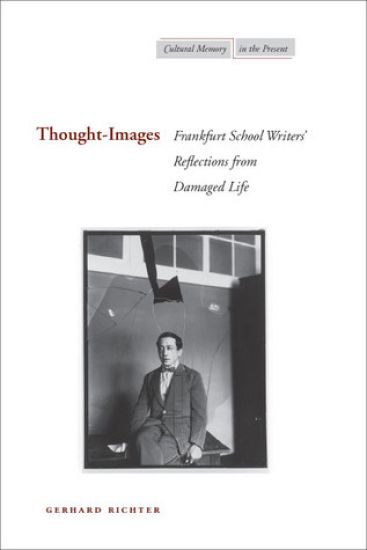
Thought-Images

Thought-Images

Gerhard Richter

Stanford University Press
2007
sidottu
In this book, Gerhard Richter explores the aesthetic and political ramifications of the literary genre of the Denkbild, or thought-image, as it was employed by four major German-Jewish writers and philosophers of the first half of the twentieth century: Theodor W. Adorno, Walter Benjamin, Ernst Bloch, and Siegfried Kracauer. The Denkbild is a poetic mode of writing, a brief snapshot-in-prose that stages the interrelation of literary, philosophical, political, and cultural insights. Richter's careful analysis of the linguistic characteristics of this mode of writing sheds new light on pivotal concerns of modernity, including the fractured cityscape, philosophical problems of modern music, the experience of exiled homelessness, and the disaster of Auschwitz. Thought-Images not only reorients our understanding of the Frankfurt School of Critical Theory in important ways but also establishes significant links between these writers and contemporary French thinkers such as Jacques Derrida.
Thought-Images

Thought-Images

Gerhard Richter

Stanford University Press
2007
pokkari
In this book, Gerhard Richter explores the aesthetic and political ramifications of the literary genre of the Denkbild, or thought-image, as it was employed by four major German-Jewish writers and philosophers of the first half of the twentieth century: Theodor W. Adorno, Walter Benjamin, Ernst Bloch, and Siegfried Kracauer. The Denkbild is a poetic mode of writing, a brief snapshot-in-prose that stages the interrelation of literary, philosophical, political, and cultural insights. Richter's careful analysis of the linguistic characteristics of this mode of writing sheds new light on pivotal concerns of modernity, including the fractured cityscape, philosophical problems of modern music, the experience of exiled homelessness, and the disaster of Auschwitz. Thought-Images not only reorients our understanding of the Frankfurt School of Critical Theory in important ways but also establishes significant links between these writers and contemporary French thinkers such as Jacques Derrida.
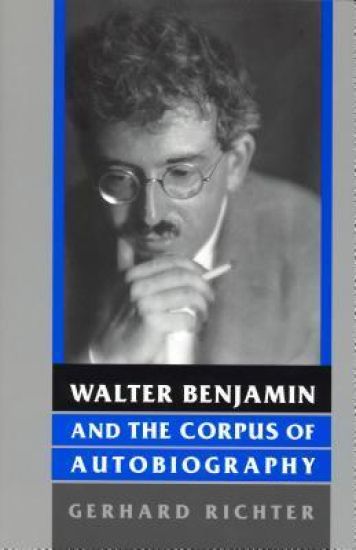
Walter Benjamin and the Corpus of Autobiography

Walter Benjamin and the Corpus of Autobiography

Gerhard Richter

Wayne State University Press
2002
nidottu
Walter Benjamin is considered one of the most significant writers and theorists in 20th-century Western culture. The author of this work shows that Benjamin's engagement with the political cannot be understood in terms of unified concepts, but rather should be understood from his language.
Thinking with Adorno

Thinking with Adorno

Gerhard Richter

Fordham University Press
2019
pokkari
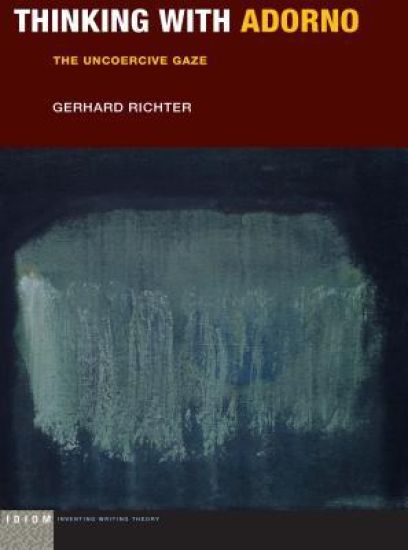
What Theodor W. Adorno says cannot be separated from how he says it. By the same token, what he thinks cannot be isolated from how he thinks it. The central aim of Richter's book is to examine how these basic yet far-reaching assumptions teach us to think with Adorno—both alongside him and in relation to his diverse contexts and constellations. These contexts and constellations range from aesthetic theory to political critique, from the problem of judgment to the difficulty of inheriting a tradition, from the primacy of the object to the question of how to lead a right life within a wrong one. Richter vividly shows how Adorno's highly suggestive—yet often overlooked—concept of the "uncoercive gaze" designates a specific kind of comportment in relation to an object of critical analysis: It moves close to the object and tarries with it while struggling to decipher the singularities and non-identities that are lodged within it, whether the object is an idea, a thought, a concept, a text, a work of art, an experience, or a problem of political or sociological theory. Thinking with Adorno's uncoercive gaze not only means following the fascinating paths of his own work; it also means extending hospitality to the ghostly voices of others. As this book shows, Adorno is best understood as a thinker in dialogue, whether with long-deceased predecessors in the German tradition such as Kant and Hegel, with writers such as Kafka, with contemporaries such as Benjamin and Arendt, or with philosophical voices that succeeded him, such as those of Derrida and Agamben.
Thinking with Adorno

Thinking with Adorno

Gerhard Richter

Fordham University Press
2019
sidottu
What Theodor W. Adorno says cannot be separated from how he says it. By the same token, what he thinks cannot be isolated from how he thinks it. The central aim of Richter's book is to examine how these basic yet far-reaching assumptions teach us to think with Adorno—both alongside him and in relation to his diverse contexts and constellations. These contexts and constellations range from aesthetic theory to political critique, from the problem of judgment to the difficulty of inheriting a tradition, from the primacy of the object to the question of how to lead a right life within a wrong one. Richter vividly shows how Adorno's highly suggestive—yet often overlooked—concept of the "uncoercive gaze" designates a specific kind of comportment in relation to an object of critical analysis: It moves close to the object and tarries with it while struggling to decipher the singularities and non-identities that are lodged within it, whether the object is an idea, a thought, a concept, a text, a work of art, an experience, or a problem of political or sociological theory. Thinking with Adorno's uncoercive gaze not only means following the fascinating paths of his own work; it also means extending hospitality to the ghostly voices of others. As this book shows, Adorno is best understood as a thinker in dialogue, whether with long-deceased predecessors in the German tradition such as Kant and Hegel, with writers such as Kafka, with contemporaries such as Benjamin and Arendt, or with philosophical voices that succeeded him, such as those of Derrida and Agamben.
Inheriting Walter Benjamin

Inheriting Walter Benjamin

Gerhard Richter

Bloomsbury Academic
2016
nidottu
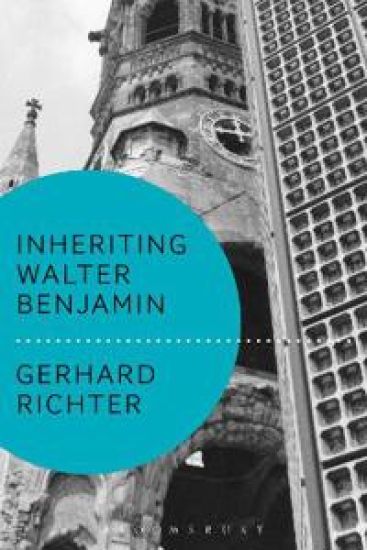
Gerhard Richter examines, in the work of Walter Benjamin, one of the central problems of modernity: the question of how to receive an intellectual inheritance. Covering aspects of Benjamin’s complex relationship to the legacies of such writers as Kant, Nietzsche, Kafka, Heidegger, and Derrida, each chapter attends to a key concern in Benjamin’s writing, while reflecting on the challenges that this issue presents for the question of inheritability and transmissibility. Both reading Benjamin and watching himself reading Benjamin, Richter participates in the act of inheriting while also inquiring into the conditions of possibility for inheriting Benjamin’s corpus today.
Inheriting Walter Benjamin

Inheriting Walter Benjamin

Gerhard Richter

Bloomsbury Academic
2016
sidottu
Gerhard Richter examines, in the work of Walter Benjamin, one of the central problems of modernity: the question of how to receive an intellectual inheritance. Covering aspects of Benjamin’s complex relationship to the legacies of such writers as Kant, Nietzsche, Kafka, Heidegger, and Derrida, each chapter attends to a key concern in Benjamin’s writing, while reflecting on the challenges that this issue presents for the question of inheritability and transmissibility. Both reading Benjamin and watching himself reading Benjamin, Richter participates in the act of inheriting while also inquiring into the conditions of possibility for inheriting Benjamin’s corpus today.
Uncontainable Legacies

Uncontainable Legacies

Gerhard Richter

Edinburgh University Press
2021
sidottu
How do our ceaseless conversations with what has passed and with those who have passed something on to us propel us into a precarious future? In a series of evocatively titled theses, including 'Wrinkles', 'Inheriting a Feeling', 'Weight of the World' and 'Making Treasures Speak', Gerhard Richter engages the quintessentially human dilemma of how to receive an intellectual, cultural or political inheritance. In dialogue with philosophers including Heraclitus, Arendt and Derrida; writers such as Montaigne, Holderlin, Kafka and Knausgaard; artists such as Michelangelo, Picasso, Anselm Kiefer and Art Spiegelman; filmmakers such as Jean-Marie Straub; scholars and scientists Freud and Einstein; and pop-cultural phenomena the rock band The Who and the Broadway play The Inheritance, Richter contemplates the problem of interpreting an inheritance that resists full transparency. Richter argues that inheriting is not the same as yearning for a former presence or nostalgically striving to preserve an identity. At once philosophical and poetic, his aphoristic theses illuminate how the constantly shifting nature of our relationship to what we inherit from others makes us who we are.
Uncontainable Legacies

Uncontainable Legacies

Gerhard Richter

Edinburgh University Press
2021
nidottu
How do our ceaseless conversations with what has passed and with those who have passed something on to us propel us into a precarious future? In a series of evocatively titled theses, including 'Wrinkles', 'Inheriting a Feeling', 'Weight of the World' and 'Making Treasures Speak', Gerhard Richter engages the quintessentially human dilemma of how to receive an intellectual, cultural or political inheritance. In dialogue with philosophers including Heraclitus, Arendt and Derrida; writers such as Montaigne, Holderlin, Kafka and Knausgaard; artists such as Michelangelo, Picasso, Anselm Kiefer and Art Spiegelman; filmmakers such as Jean-Marie Straub; scholars and scientists Freud and Einstein; and pop-cultural phenomena the rock band The Who and the Broadway play The Inheritance, Richter contemplates the problem of interpreting an inheritance that resists full transparency. Richter argues that inheriting is not the same as yearning for a former presence or nostalgically striving to preserve an identity. At once philosophical and poetic, his aphoristic theses illuminate how the constantly shifting nature of our relationship to what we inherit from others makes us who we are.
Oikonomia

Oikonomia

Gerhard Richter

De Gruyter
2005
sidottu
Der Begriff oikonomia, der griechischen Umgangssprache entnommen, wird in seinen verschiedenen Bedeutungen innerhalb der biblischen und theologischen Literatur umfassend untersucht. Erst durch den Kontext wird er zum theologischen Begriff. Oikonomia bezeichnet im Neuen Testament Gottes Walten, ohne ursprünglich mit einer Heilsvorstellung verbunden zu sein. Auch das innertrinitarische Verhältnis und das Ineinander der zwei Naturen in Christus können mit oikonomia bezeichnet werden. In der Ostkirche gehört oikonomia zu den Kennzeichen kirchlichen Handelns und findet Eingang in die byzantinische Rechtsauffassung. Ebenso hat sie Bedeutung für ökumenische Bemühungen.