Kirjojen hintavertailu. Mukana 12 386 621 kirjaa ja 12 kauppaa.

Kirjahaku

Etsi kirjoja tekijän nimen, kirjan nimen tai ISBN:n perusteella.

16 kirjaa tekijältä Gesine Manuwald

Cicero, Agrarian Speeches

Cicero, Agrarian Speeches

Gesine Manuwald

Oxford University Press
2018
sidottu
The Agrarian Speeches (Orationes de lege agraria) were delivered in January 63 BCE, just after Cicero had entered office as consul; they are his inaugural orations and therefore the first element of his consular activity. They not only provide valuable testimony for approaches to agrarian legislation in the late Republic, but also show how the new consul presented himself before the Senate and the People at the beginning of his consular year, a significant political event for which very few extensive sources remain. These speeches are also significant in demonstrating Cicero's rhetorical virtuosity and the sophistication of his political tactics in arguing against a proposal for a grand scheme of buying, selling, and allocating land put forward by the Tribune of the People, P. Servilius Rullus. Delivered in the same year as his arguably more famous orations against Catiline, they have nevertheless found less attention in modern scholarship. This edition offers a comprehensive introduction, a revised Latin text alongside a new English translation, and the first detailed commentary on the corpus, which, besides addressing numerous linguistic and textual issues, also explains the complex legal and historical situation and illustrates Cicero's sophisticated argumentative techniques. Drawing on the contemporary resurgence of academic interest in political oratory, it aims to bring these neglected speeches to a wider audience and will be particularly suitable for both scholars and students interested in Cicero, oratory, Roman law, or the history of the Roman Republic.
Cicero, Post Reditum Speeches: Introduction, Text, Translation, and Commentary
The high point in Cicero's life (according to his own assessment), his reaching the consulship at the earliest opportunity in 63 BCE and his successful confrontation of the Catilinarian Conspiracy during that year, was soon followed by a backlash, which made Cicero withdraw from Rome in 58 to 57 BCE. Upon return to Rome from this absence (traditionally called 'exile' by a term Cicero himself never uses in this context), Cicero delivered two speeches, in the Senate and before the People respectively, to express his gratitude for his recall and to establish himself again as a respected senior statesmen. This volume offers the first-full scale commentary in English, including a revised Latin text and a fresh English translation, on these speeches, which have suffered from neglect in scholarship and doubts about their authenticity. This book outlines their particular nature, the characteristics of their specific oratorical genre and their importance as documents of Cicero's techniques as an orator and of the strategies of presenting himself. In addition, the book includes the spurious speech, Pridie quam in exilium iret, that Cicero supposedly gave on the eve of his departure. Thus, offering the first proper study of this speech, this volume presents all oratorical material related to Cicero's departure from and return to Rome in a single volume and enables direct comparison between speeches now confirmed to be genuine and a later spurious speech, which also gives insights into the reception history of Cicero's works. This book will therefore be an essential tool especially for Classicists and Ancient Historians interested in Cicero, in exile literature and in the history of the Roman Republic and Roman oratory.
Roman Republican Theatre

Roman Republican Theatre

Gesine Manuwald

Cambridge University Press
2011
sidottu
Theatre flourished in the Roman Republic, from the tragedies of Ennius and Pacuvius to the comedies of Plautus and Terence and the mimes of Laberius. Yet apart from the surviving plays of Plautus and Terence the sources are fragmentary and difficult to interpret and contextualise. This book provides a comprehensive history of all aspects of the topic, incorporating recent findings and modern approaches. It discusses the origins of Roman drama and the historical, social and institutional backgrounds of all the dramatic genres to be found during the Republic (tragedy, praetexta, comedy, togata, Atellana, mime and pantomime). Possible general characteristics are identified, and attention is paid to the nature of and developments in the various genres. The clear structure and full bibliography also ensure that the book has value as a source of reference for all upper-level students and scholars of Latin literature and ancient drama.
Roman Drama

Roman Drama

Gesine Manuwald

Bristol Classical Press
2010
nidottu
Roman drama is a genre of Latin literature that was influential both in the cultural life of the ancient Romans and in the European theatre tradition. Plays of Plautus, Terence and Seneca are still very well known today; yet there were numerous works by other poets besides, though they survive only in fragmentary form. On the basis of a selection of paradigmatic sample texts by a number of Roman dramatists, this anthology provides a stimulating overview of the entire literary genre, including its various subtypes (tragedy, praetexta, comedy, togata, mime) and its historical development. To make these texts accessible to a wide readership, new English translations (on facing pages) as well as introductions to the individual excerpts and to the general context have been included. A selection of relevant testimonia provides information about the cultural background to Roman drama and ancient views on this literary genre. Paradigmatic extracts from dramas written in England between the sixteenth and twentieth centuries illustrate the continuing influence of Roman plays. Thus this anthology conveniently documents the history of an interesting and exciting literary genre from its beginnings to the modern period.
Roman Republican Theatre

Roman Republican Theatre

Gesine Manuwald

Cambridge University Press
2015
pokkari
Theatre flourished in the Roman Republic, from the tragedies of Ennius and Pacuvius to the comedies of Plautus and Terence and the mimes of Laberius. Yet apart from the surviving plays of Plautus and Terence the sources are fragmentary and difficult to interpret and contextualise. This book provides a comprehensive history of all aspects of the topic, incorporating recent findings and modern approaches. It discusses the origins of Roman drama and the historical, social and institutional backgrounds of all the dramatic genres to be found during the Republic (tragedy, praetexta, comedy, togata, Atellana, mime and pantomime). Possible general characteristics are identified, and attention is paid to the nature of and developments in the various genres. The clear structure and full bibliography also ensure that the book has value as a source of reference for all upper-level students and scholars of Latin literature and ancient drama.
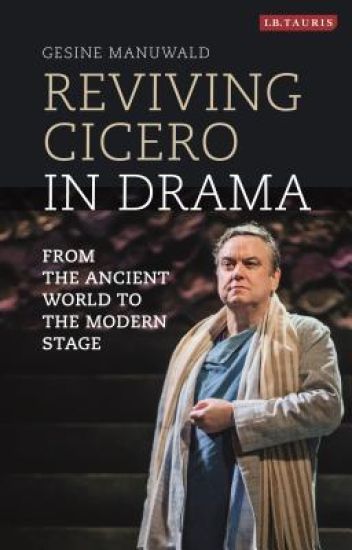
Reviving Cicero in Drama

Reviving Cicero in Drama

Gesine Manuwald

Bloomsbury Academic
2020
nidottu
The influence of Cicero is everywhere to be found. His rhetorical and philosophical writings have made an inescapable impact on the history of western culture, impressing figures such as Augustine, Jerome, Petrarch, Erasmus, Martin Luther, John Locke, David Hume, John Adams and Thomas Jefferson. Despite his wide appeal, until now no study has yet offered a comprehensive overview of ‘Cicero’ as a character in stage plays in the early modern and modern periods.The first book of its kind to discuss Cicero's reception on stage, it includes works by Ben Jonson (1611, Catiline His Conspiracy), Voltaire (1752, Rome sauvée, ou Catilina), Richard Cumberland (1761, The Banishment of Cicero), Henry Bliss (1847, Cicero, A drama) and, most recently, Mike Poulton (Imperium, adapted from the novels of Robert Harris in 2017). Through a chapter-by-chapter account of each play in turn, every oeuvre is placed in its historical and cultural context; the plots are discussed in relation to the ancient sources. These analyses demonstrate how the presentation and assessment of the figure of Cicero develop over time and how this character is exploited for varying political statements. The wealth of material in this book is vital reading for scholars of Classics, drama and literary studies as well as historians of ideas and of the early modern age.
Cicero

Cicero

Gesine Manuwald

I.B. Tauris
2014
nidottu
Marcus Tullius Cicero (106-43 BCE) introduced Romans to the major schools of Greek philosophy, forging a Latin conceptual vocabulary that was entirely new. But for all the sophistication of his thinking, it is perhaps for his political and oratorical career that Cicero is best remembered. He was the nemisis of Catiline, whose plot to overthrow the Republic he famously denounced to the Senate. He was the selfless politician who turned down the opportunity to join Julius Caesar and Pompey in their ruling triumvirate with Crassus. He was briefly Rome's leading man after Caesar's assassination in 44 BCE.And he was the great political orator whose bitter coflict with Mark Antony led to his own violent death in 43 BCE. In her authoritative survey, Gesine Manuwald evokes the many faces of Cicero as well as his complexities and seeming contradictions. She focuses on his major works, allowing the great writer to speak for himself. Cicero's rich legacy is seen to endure in the works of Quintilian and the Church Fathers as well as in the speeches of Harry S. Truman and Barack Obama.
Reviving Cicero in Drama

Reviving Cicero in Drama

Gesine Manuwald

I.B. Tauris
2018
sidottu
The influence of Cicero is everywhere to be found. His rhetorical and philosophical writings have made an inescapable impact on the history of western culture, impressing figures such as Augustine, Jerome, Petrarch, Erasmus, Martin Luther, John Locke, David Hume, John Adams and Thomas Jefferson. Despite his wide appeal, until now no study has yet offered a comprehensive overview of ‘Cicero’ as a character in stage plays in the early modern and modern periods.The first book of its kind to discuss Cicero's reception on stage, it includes works by Ben Jonson (1611, Catiline His Conspiracy), Voltaire (1752, Rome sauvée, ou Catilina), Richard Cumberland (1761, The Banishment of Cicero), Henry Bliss (1847, Cicero, A drama) and, most recently, Mike Poulton (Imperium, adapted from the novels of Robert Harris in 2017). Through a chapter-by-chapter account of each play in turn, every oeuvre is placed in its historical and cultural context; the plots are discussed in relation to the ancient sources. These analyses demonstrate how the presentation and assessment of the figure of Cicero develop over time and how this character is exploited for varying political statements. The wealth of material in this book is vital reading for scholars of Classics, drama and literary studies as well as historians of ideas and of the early modern age.
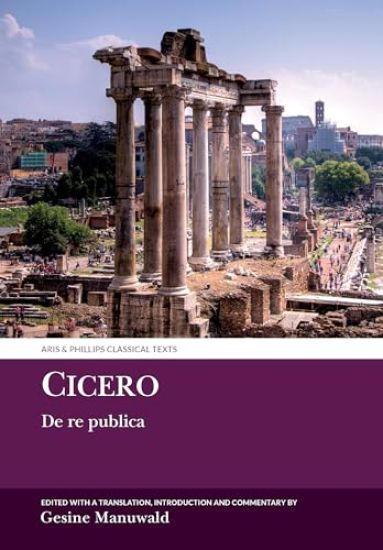
Cicero: De re publica

Cicero: De re publica

Gesine Manuwald

LIVERPOOL UNIVERSITY PRESS
2024
sidottu
This new edition of De re publica provides a revised Latin text and a new English translation of all the surviving text of Cicero’s famous work on Roman constitutional theory, as well as the testimonia relating to the production and reception of the work. Latin text and English translation are accompanied by a detailed introduction and commentary, exploring linguistic and stylistic features, questions of literary genre, the historical background and the philosophical context. This material enables a new appreciation of De re publica, an influential work in the history of political thought and important for a better understanding of the historical situation at the end of the Roman Republic and of Cicero’s development as a writer and politician.
Cicero, "Philippics" 3-9

Cicero, "Philippics" 3-9

Gesine Manuwald

De Gruyter
2007
sidottu
The Philippics form the climax of Cicero’s rhetorical achievement and political activity. Besides, these fourteen speeches are an important testimony to the critical final phase of the Roman Republic. Yet for a long time they have received little scholarly attention. This two-volume edition now provides a comprehensive scholarly commentary on Philippics 3-9, seven central speeches of the corpus. Full annotations explain the speeches in terms of linguistic, literary and historical issues (vol. 2); they are based on a revised Latin text with a facing translation into English as well as a detailed introduction dealing with problems relevant to the whole corpus; a bibliography and indices complete the edition (vol. 1). Besides a running commentary on each speech, the study shows these orations to be rhetorical constructs in a historical conflict; hence particular emphasis is placed on an analysis of Cicero’s rhetorical techniques and political strategies. The format of the commentary is also intended to present scholarly information to a wide and diverse readership.
Nero in Opera

Nero in Opera

Gesine Manuwald

De Gruyter
2013
sidottu
This book considers the story of Nero and Octavia, as told in the pseudo-Senecan Octavia and the works of ancient historiographers, and its reception in (early) modern opera and some related examples of other performative genres. In total the study assembles more than 30 performative texts (including 22 librettos), ranging chronologically from L'incoronazione di Poppea in 1642/43 until the early 20th century, and provides detailed information on all of them. In a close examination of the libretto (and dramatic) texts, the study shows the impact and development of this fascinating story from the beginnings of historical opera onwards. The volume demonstrates the various transformations of the characters of Nero and his wives and of the depiction of their relationship over the centuries, and it looks at the tension between “historical” elements and genre conventions. The book is therefore of relevance to literary scholars as well as to readers interested in the evolution of Nero’s image in present-day media.
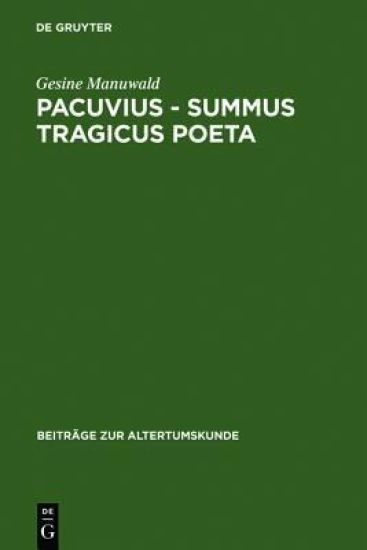
Pacuvius - summus tragicus poeta

Pacuvius - summus tragicus poeta

Gesine Manuwald

de Gruyter
2003
sidottu
In De optimo genere oratorum bezeichnet Cicero M. Pacuvius als 'summus tragicus poeta' und auch nach anderen Zeugnissen scheint er ein bekannter und beliebter Dramatiker gewesen zu sein. Aufgrund dieses Befundes wird in der vorliegenden Studie der bisher noch nicht untersuchten Fragen nach den Grunden fur eine solche Wertschatzung nachgegangen. Mit einem dem fragmentarischen Erhaltungszustand von Pacuvius' dramatischen Werken angepassten Ansatz wird versucht, prazisere Vorstellungen und Charakteristika der Tragodien zu gewinnen. Eine systematisierende Analyse von haufigeren Motiven und Handlungsstrukturen kann Indizien fur eine Gestaltung geben, die als typisch fur Pacuvius anzusehen ist, und so eine tendenzielle Bestimmung des Profils seiner Tragodien ermoglichen. Damit will die Untersuchung zu einem differenzierten Bild von Pacuvius' Dramen sowie der republikanischen Tragodie insgesamt beitragen."
Terence: Eunuchus

Terence: Eunuchus

Gesine Manuwald

BLOOMSBURY PUBLISHING PLC
2026
sidottu
Terence’s Eunuchus (first shown on stage in the second century BCE) was extremely successful at its first performance and has been influential ever since, having inspired allusions and remakes by writers and artists from the ancient world into the modern period. This success may be partly due to the fact that the play has a number of ‘Plautine’ elements, such as effective comedy and dramaturgy. At the same time, the piece includes actions that are ethically problematic at least from the point of view of a modern audience, especially the reported rape of a young woman. Thus, this drama is an intriguing example of how a comedy can present attractive entertainment and raise serious issues, both of which contribute to the continuing fascination that Terence’s Eunuchus evokes. Gesine Manuwald analyses the Eunuchus in its transmitted form as a piece of Roman Republican dramatic literature, looking at: the playwright’s role within the Roman comic tradition and his engagement with contemporary dramatists; the structure and effectiveness of the plot as well as the characterization of the protagonists and the comedy’s themes; and the extent to which these might have resonated with a contemporary audience. On this basis, aspects of the history of the play’s reception can be traced, starting in the ancient world, including the late-antique commentary on the play by Donatus, illustrations in early manuscripts as well as literary and artistic reflections in the early modern and modern periods.
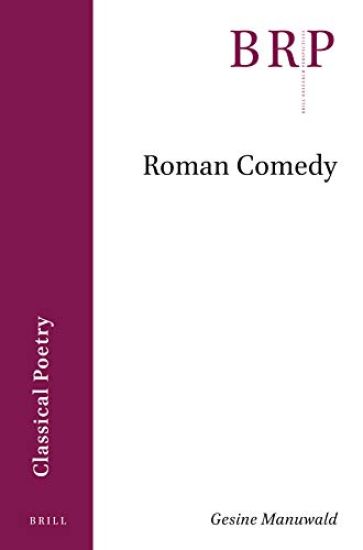
Roman Comedy

Roman Comedy

Gesine Manuwald

BRILL
2020
nidottu
This contribution by Gesine Manuwald provides an introduction to all varieties of ‘Roman comedy’, including primarily fabula palliata (‘New Comedy’, as represented by Plautus and Terence) as well as fabula togata, fabula Atellana, mimus and pantomimus. It examines the major developments in the establishment of these dramatic genres, their main characteristics, the performance contexts for them in Republican Rome, and their reception. The presentation of the key facts is accompanied by a description of the influential turns and recent trends in scholarship on Roman comedy. The essay is designed for scholars, teachers and (graduate) students who have some familiarity with Roman literature and are looking for (further) orientation in the area of Roman comedy.
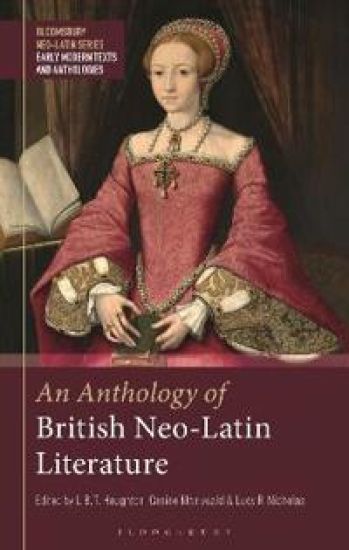
An Anthology of British Neo-Latin Literature

An Anthology of British Neo-Latin Literature

Gesine Manuwald; L. B. T. Houghton; Lucy R. Nicholas

Bloomsbury Academic
2020
sidottu
This volume offers a wide range of sample passages from literature written in Latin in the British Isles during the period from about 1500 to 1800. It includes a general introduction to and bibliography to the Latin literature of these centuries, as well as Latin texts with English translations, introductions and notes. These texts present a rich panorama of the different literary genres, styles and themes flourishing at the time, illustrating the role of Latin texts in the development of literary genres, the diversity of authors writing in Latin in early modern Britain, and the importance of Latin in contemporary political, religious and scientific debates. The collection, which includes both texts by well-known authors (such as John Milton, Thomas More and George Buchanan) and previously unpublished items, can be used as a point of entry for students at school and university level, but will also be of interest to specialists in a number of academic disciplines.
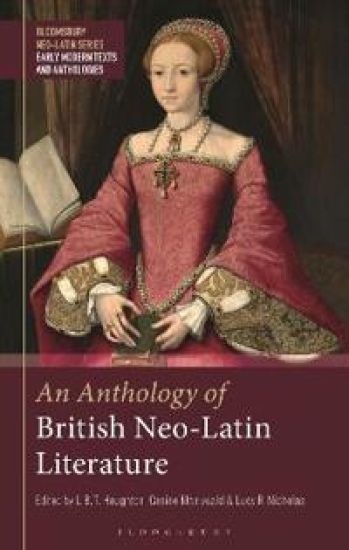
An Anthology of British Neo-Latin Literature

An Anthology of British Neo-Latin Literature

Gesine Manuwald; L. B. T. Houghton; Lucy R. Nicholas

Bloomsbury Academic
2020
nidottu
This volume offers a wide range of sample passages from literature written in Latin in the British Isles during the period from about 1500 to 1800. It includes a general introduction to and bibliography to the Latin literature of these centuries, as well as Latin texts with English translations, introductions and notes. These texts present a rich panorama of the different literary genres, styles and themes flourishing at the time, illustrating the role of Latin texts in the development of literary genres, the diversity of authors writing in Latin in early modern Britain, and the importance of Latin in contemporary political, religious and scientific debates. The collection, which includes both texts by well-known authors (such as John Milton, Thomas More and George Buchanan) and previously unpublished items, can be used as a point of entry for students at school and university level, but will also be of interest to specialists in a number of academic disciplines.