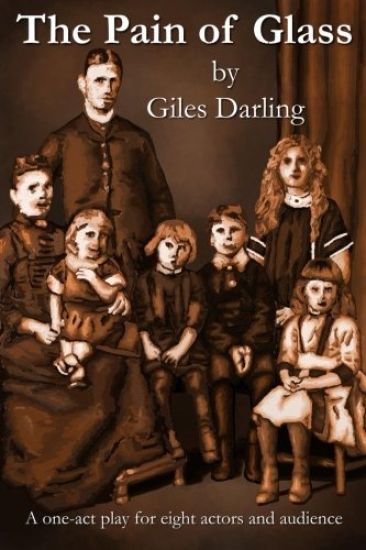
A one-act play for eight actors. Set in a courtroom in 1878 Victorian England, the play follows the trial of Mr. Jake Ashwood, a bladesmith's apprentice, for the murder of Mr. Vincent Vangilder at Mr. Vangilder's photographic studio. The counsels for the prosecution and for the defence examine and cross-examine the police constable first on the scene, then Mr. Vangilder's neighbour, Mr. Ashwood's best friend, and finally Mr. Ashwood himself. After summations by the counsels and by the judge, the audience acts as jury to decide if Mr. Ashwood is guilty or not guilty. The play has two endings depending on the verdict reached. This is a 45 minute play suitable for a small group of school children or young actors to perform. It contains lots of references and information about ordinary lives from the late 1800s.
This is a light hearted 45 minute one-act play for eight actors. Horace is a small-time smuggler in the 22nd century ferrying contraband between planets in his elderly spaceship. One day Horace is about to set off with some illicit ice cream on board when he gets some unexpected passengers who cause turmoil and let the spaceship get hijacked by two gangsters. Having successfully hidden the contraband during a surprise police inspection Horace next fears he may lose his ship and the ice cream. However, a distant relative from the future makes a surprise entrance intending to save the day. But do they succeed? This play is suitable for a small group of school children or young actors to perform. There's lots of action and sound effects.
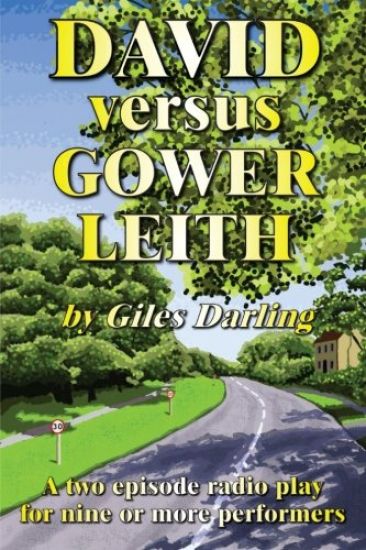
David Flea is a headstrong civil engineer who thinks that his local council has got it wrong when they repeatedly reduce speed limits in the name of improving road safety. David believes that there are better, more effective ways to make roads safer, but can he get the council to listen to him, or to take him seriously? Frustrated and repeatedly facing hurdles and opposition, David decides to stand as an independent candidate at the forthcoming local election. Will he get his voice heard? You'll have to read this light-hearted tragedy to find out. This is a two episode radio play, each episode lasting approximately 50 minutes, to be performed by at least nine actors, many playing multiple roles. It covers some controversial topics and contains moderate swear words, but should be suitable to be performed by older school children or young adults and above.
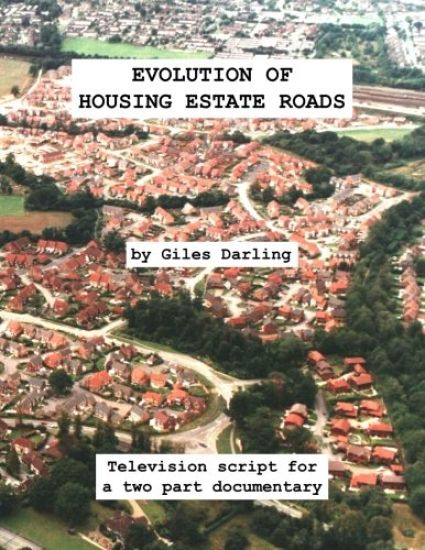
'Evolution of Housing Estate Roads' is the script for a two part television documentary that explores the past, present and future of housing estate roads in the UK, in particular why there is such variability in their layout and appearance. The programme is suited to television channels that show documentaries. It investigates an unusual topic which is relevant to today's audience because most people in the UK will at some stage of their lives live on or close to a housing estate road. It hopes to inspire the audience to look at these roads with a new interest. Using a mix of on-location to-camera speaking by two presenters (one male, one female), voice-overs to archive images and film, and informative reconstructions, the programme looks at the influences that have driven changes to housing estate layouts over the years. It begins with the Industrial Revolution which kick started mass housing as families moved from the countryside to the expanding towns to work in new factories and busy ports. Commuting over longer distances from newly built suburbs also become possible thanks to the invention of the steam engine and railways. Next, the programme looks at why housing estate roads were long and straight in the latter half of the 1800s, the dominance of the 'Garden City' layout after the First World War, the rise of the car after the Second World War (and various attempts to control vehicle speeds), and more recent concerns such as flood prevention and recycling materials. It considers advances in construction techniques in the past hundred years that occurred in response to changing circumstances, for example changes to drainage provision and to road surface materials, and explores problems caused by each generation of new car being wider than the previous, but new road widths staying roughly the same. The programme concludes by considering advances in computer software that enable more innovative housing estate layouts, and what impact future technologies like glow in the dark paints and self-driving cars could have on future housing estate roads. Housing (or the shortage of housing) is a growing political issue in the UK, and a programme about housing estate roads could tap into this topic, add to the debate, and increase public knowledge and awareness of civil engineering.