Kirjojen hintavertailu. Mukana 11 717 486 kirjaa ja 12 kauppaa.

Kirjahaku

Etsi kirjoja tekijän nimen, kirjan nimen tai ISBN:n perusteella.

8 kirjaa tekijältä Gillian Brock

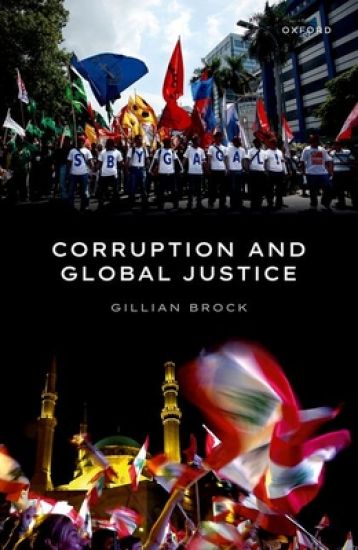
Corruption and Global Justice

Corruption and Global Justice

Gillian Brock

Oxford University Press
2023
sidottu
Corruption is a pervasive problem across the world and is regularly ranked as among the greatest global challenges. Considering the role that corruption plays in exacerbating deprivation and fuelling social tension, peaceful and just societies are unlikely to come about without tackling corruption. Addressing corruption should be a high priority for those concerned with poverty eradication, peace, security, and justice. Yet, curiously, corruption has not yet been the focus of any books by philosophers working on global justice topics. Corruption and Global Justice does so. Author Gillian Brock offers a normatively justified account of how to allocate responsibilities for addressing corruption across the many agents who can and should play a role. In order to know who should take responsibility and how they should do so, we need to understand multiple forms of corruption, the corruption risks associated with various activities, the interventions that tackle corruption effectively, and current policy and legal frameworks in place for addressing corruption. In addition, Brock proposes a new framework for navigating responsibility to address injustice, one that is action-oriented and forward-looking. Adopting an agent-empowering approach and harnessing the power of joining forces in effective collective action, Corruption and Global Justice addresses a significant global problem in a comprehensive way, providing the tools we need for progress as we collaborate to tackle this global scourge.
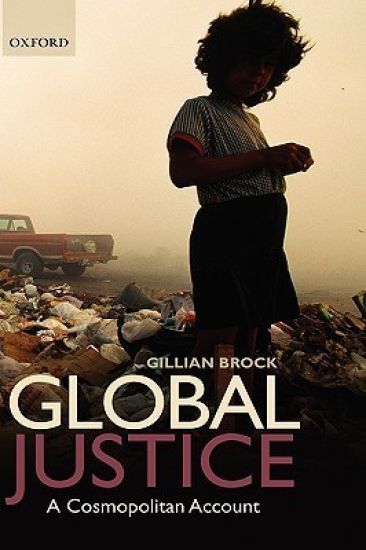
Global Justice

Global Justice

Gillian Brock

Oxford University Press
2009
sidottu
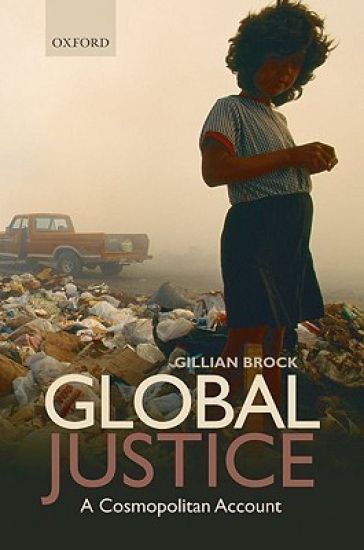
Gillian Brock develops a viable cosmopolitan model of global justice that takes seriously the equal moral worth of persons, yet leaves scope for defensible forms of nationalism and for other legitimate identifications and affiliations people have. Brock addresses two prominent kinds of skeptic about global justice: those who doubt its feasibility and those who believe that cosmopolitanism interferes illegitimately with the defensible scope of nationalism by undermining goods of national importance, such as authentic democracy or national self-determination. The model addresses concerns about implementation in the world, showing how we can move from theory to public policy that makes progress toward global justice. It also makes clear how legitimate forms of nationalism are compatible with commitments to global justice. Global Justice is divided into three central parts. In the first, Brock defends a cosmopolitan model of global justice. In the second, which is largely concerned with public policy issues, she argues that there is much we can and should do toward achieving global justice. She addresses several pressing problems, discussing both theoretical and public policy issues involved with each. These include tackling global poverty, taxation reform, protection of basic liberties, humanitarian intervention, immigration, and problems associated with global economic arrangements. In the third part, she shows how the discussion of public policy issues can usefully inform our theorizing; in particular, it assists our thinking about the place of nationalism and equality in an account of global justice.
Global Justice

Global Justice

Gillian Brock

Oxford University Press
2009
nidottu
Gillian Brock develops a viable cosmopolitan model of global justice that takes seriously the equal moral worth of persons, yet leaves scope for defensible forms of nationalism and for other legitimate identifications and affiliations people have. Brock addresses two prominent kinds of skeptic about global justice: those who doubt its feasibility and those who believe that cosmopolitanism interferes illegitimately with the defensible scope of nationalism by undermining goods of national importance, such as authentic democracy or national self-determination. The model addresses concerns about implementation in the world, showing how we can move from theory to public policy that makes progress toward global justice. It also makes clear how legitimate forms of nationalism are compatible with commitments to global justice. Global Justice is divided into three central parts. In the first, Brock defends a cosmopolitan model of global justice. In the second, which is largely concerned with public policy issues, she argues that there is much we can and should do toward achieving global justice. She addresses several pressing problems, discussing both theoretical and public policy issues involved with each. These include tackling global poverty, taxation reform, protection of basic liberties, humanitarian intervention, immigration, and problems associated with global economic arrangements. In the third part, she shows how the discussion of public policy issues can usefully inform our theorizing; in particular, it assists our thinking about the place of nationalism and equality in an account of global justice.
A Philosophy of Need

A Philosophy of Need

Gillian Brock

Cambridge University Press
2024
pokkari
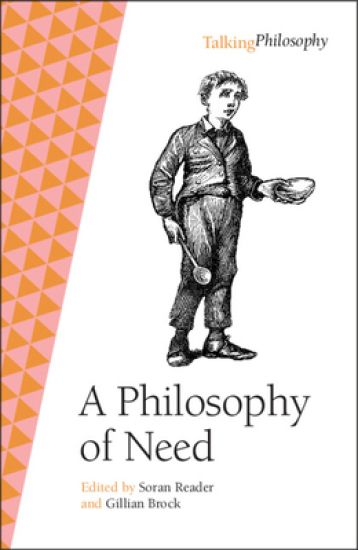
Appeals to need abound in everyday discussion. People make claims about their own needs all the time, and they do so in a way that suggests these should have a certain moral force. Needs also play an important role in contemporary popular discourse about social justice, climate change, obligations to future generations, dealing fairly with refugees, treating animals humanely, and critiques of consumerist lifestyles – to name just a few of the many examples. The idea of need is present in an increasing number of debates and domains. There is interest in need from several disciplines, not just philosophy, which also include psychology, economics, political science, social work and sociology. This volume, then, offers a fine introduction to an increasingly important concept in day-to-day life. In a new Foreword, Gillian Brock discusses the continuing significance of several innovative chapters in the book, indicating how they presaged new directions in philosophical conversation.
Justice for People on the Move

Justice for People on the Move

Gillian Brock

Cambridge University Press
2020
sidottu
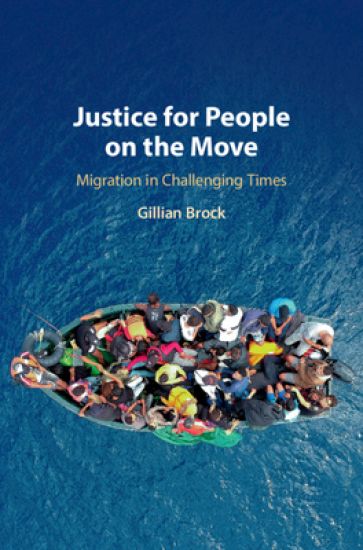
By executive order, the US adopted an immigration policy that looks remarkably similar to a Muslim ban, and threatened to deport long-settled residents, such as the so-called Dreamers. Our defunct refugee system has not dealt adequately with increased refugee flows, forcing desperate people to undertake increasingly risky measures in efforts to reach safe havens. Meanwhile increased migration flows over recent years appear to have contributed to a rise in right-wing populism, apparently driving phenomena such as Brexit and Trumpism. In this original and insightful book Gillian Brock offers answers and tools that assist us in evaluating current migration policy and in helping to determine which policies may be permissible and which are normatively indefensible. She offers a comprehensive framework for responding to the many challenges which have recently emerged, and for delivering justice for people on the move along with those affected by migration.
Justice for People on the Move

Justice for People on the Move

Gillian Brock

Cambridge University Press
2021
pokkari
By executive order, the US adopted an immigration policy that looks remarkably similar to a Muslim ban, and threatened to deport long-settled residents, such as the so-called Dreamers. Our defunct refugee system has not dealt adequately with increased refugee flows, forcing desperate people to undertake increasingly risky measures in efforts to reach safe havens. Meanwhile increased migration flows over recent years appear to have contributed to a rise in right-wing populism, apparently driving phenomena such as Brexit and Trumpism. In this original and insightful book Gillian Brock offers answers and tools that assist us in evaluating current migration policy and in helping to determine which policies may be permissible and which are normatively indefensible. She offers a comprehensive framework for responding to the many challenges which have recently emerged, and for delivering justice for people on the move along with those affected by migration.
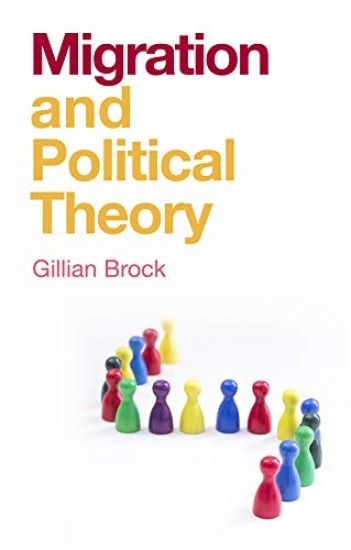
Migration and Political Theory

Migration and Political Theory

Gillian Brock

Polity Press
2021
sidottu
Migration dominates contemporary politics across the world, and there has been a corresponding surge in political theorizing about the complex issues that it raises. In a world in which borders seem to be solidifying while the number of displaced people soars, how should we think about the political and ethical implications of human movement across the globe? In this book, Gillian Brock, one of the leading figures in the field, lucidly introduces and explains the important historical, empirical, and normative context necessary to get to grips with the major contemporary debates. She examines issues ranging from the permissibility of controlling borders and the criteria that states can justifiably use to underpin their migration management policies through to questions of integration, inclusion, and resistance to unjust immigration laws. Migration and Political Theory is essential reading for any student, scholar, or general reader who seeks to understand the political theory and ethics of migration and movement in the twenty-first century.
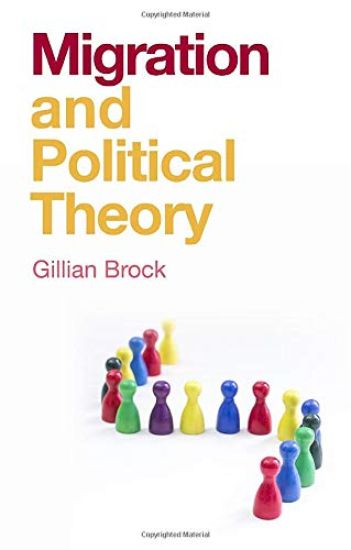
Migration and Political Theory

Migration and Political Theory

Gillian Brock

Polity Press
2021
nidottu
Migration dominates contemporary politics across the world, and there has been a corresponding surge in political theorizing about the complex issues that it raises. In a world in which borders seem to be solidifying while the number of displaced people soars, how should we think about the political and ethical implications of human movement across the globe? In this book, Gillian Brock, one of the leading figures in the field, lucidly introduces and explains the important historical, empirical, and normative context necessary to get to grips with the major contemporary debates. She examines issues ranging from the permissibility of controlling borders and the criteria that states can justifiably use to underpin their migration management policies through to questions of integration, inclusion, and resistance to unjust immigration laws. Migration and Political Theory is essential reading for any student, scholar, or general reader who seeks to understand the political theory and ethics of migration and movement in the twenty-first century.