Kirjojen hintavertailu. Mukana 11 244 527 kirjaa ja 12 kauppaa.

Kirjahaku

Etsi kirjoja tekijän nimen, kirjan nimen tai ISBN:n perusteella.

12 kirjaa tekijältä Gillian Clark

Commentary on Augustine City of God, Books 6-10

Commentary on Augustine City of God, Books 6-10

Gillian Clark

Oxford University Press
2023
sidottu
This is the second volume in a series of commentaries on Augustine's City of God (De civitate Dei). Books 6-10 are Augustine's answer to those who think that many gods should be worshipped for blessings in the life to come. In Books 1-5 he had replied to those who thought many gods should be worshipped for blessings in this mortal life; he expected this next task to be more challenging, because he must engage with outstanding philosophers who have much in common with Christians. In Books 6-10, he makes the task manageable by selecting very short extracts, all in Latin, from his target authors: on interpretations of Roman myth and cult (books 6-7) the learned Varro, Divine Matters, and Seneca On Superstition; on daimones (Books 8-9) Apuleius, On the God of Socrates, and Asclepius, ascribed to Hermes Trismegistus; on Platonist philosophy (Book 10) translated quotations from Plotinus and Porphyry. Augustine aims to show that the many gods are deceptive demons who want worship for themselves and cannot mediate between mortals and the immortal divine. Especially in Book 10, he contrasts these demons with the good angels who want us to be blessed as they are by worshipping the true God, and with the true mediator Jesus Christ who in his incarnation united humanity with God. Platonist philosophers, Augustine argues, despise the body and aspire to reach the divine by superior intellect; for ordinary people they offer only theurgy, which is dangerous magic. But Christian faith is accessible to all. The coming of Christ and the Church is revealed by the true God in divinely inspired scripture, and Christian worship unites the believer with the self-offering of Christ. Augustine is now ready to move to the second part of City of God, on the origin, course and due ends of the two cities--the city of God and the earthly city--which are intertwined in this world.
Late Antiquity

Late Antiquity

Gillian Clark

Oxford University Press
2011
nidottu
Late antiquity: decline or transformation, conflict or interaction? Late antiquity is the period (c.300 - c.800) in which barbarian invasions ended Roman Empire in Western Europe by the fifth century and Arab invasions ended Roman rule over the eastern and southern Mediterranean coasts by the seventh century. Asking 'what, where, and when' Gillian Clark presents an introduction to the concept of late antiquity and the events of its time. Not only a period of cultural clashes, political restructurings, and geographical controversies, Clark also demonstrates the sheer richness and diversity of religious life as well as the significant changes to trade, economy, archaeology, and towns. Encapsulating significant developments through vignettes, she reflects upon the period by asking the question 'How much can we recognise in the world of late antiquity?' ABOUT THE SERIES: The Very Short Introductions series from Oxford University Press contains hundreds of titles in almost every subject area. These pocket-sized books are the perfect way to get ahead in a new subject quickly. Our expert authors combine facts, analysis, perspective, new ideas, and enthusiasm to make interesting and challenging topics highly readable.
Monica

Monica

Gillian Clark

Oxford University Press Inc
2015
sidottu
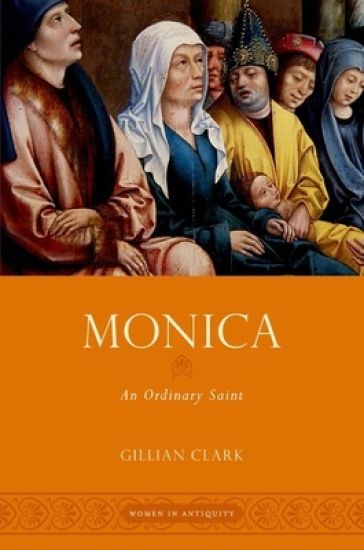
Rarely did ancient authors write about the lives of women; even more rarely did they write about the lives of ordinary women: not queens or heroines who influenced war or politics, not sensational examples of virtue or vice, not Christian martyrs or ascetics, but women of moderate status, who experienced everyday joys and sorrows and had everyday merits and failings. Such a woman was Monica--now Saint Monica because of her relationship with her son Augustine, who wrote about her in the Confessions and elsewhere. Despite her rather unremarkable life, Saint Monica has inspired a robust controversy in academia, the Church, and the Augustine-reading public alike: some agree with Ambrose, bishop of Milan, who knew Monica, that Augustine was exceptionally blessed in having such a mother, while others think that Monica is a classic example of the manipulative mother who lives through her son, using religion to repress his sexual life and to control him even when he seems to escape. In Monica: An Ordinary Saint, Gillian Clark reconciles these competing images of Monica's life and legacy, arriving at a woman who was shrewd and enterprising, but also meek and gentle. Weighing Augustine's discussion of his mother against other evidence of women's lives in late antiquity, Clark achieves portraits both of Monica individually, and of the many women like her. Augustine did not claim that his mother was a saint, but he did think that the challenges of everyday life required courage and commitment to Christian principle. Monica's ordinary life, as both he and Clark tell it, showed both. Monica: An Ordinary Saint illuminates Monica, wife and mother, in the context of the societal expectations and burdens that shaped her and all ordinary women.
Monica

Monica

Gillian Clark

Oxford University Press Inc
2015
nidottu
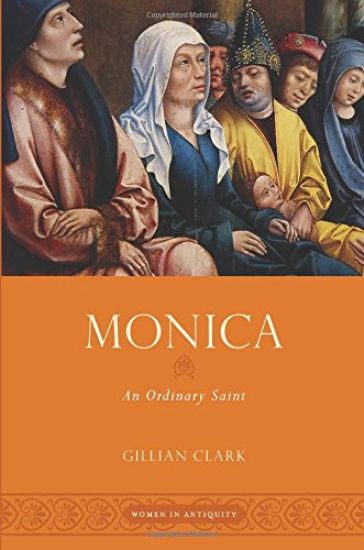
Rarely did ancient authors write about the lives of women; even more rarely did they write about the lives of ordinary women: not queens or heroines who influenced war or politics, not sensational examples of virtue or vice, not Christian martyrs or ascetics, but women of moderate status, who experienced everyday joys and sorrows and had everyday merits and failings. Such a woman was Monica--now Saint Monica because of her relationship with her son Augustine, who wrote about her in the Confessions and elsewhere. Despite her rather unremarkable life, Saint Monica has inspired a robust controversy in academia, the Church, and the Augustine-reading public alike: some agree with Ambrose, bishop of Milan, who knew Monica, that Augustine was exceptionally blessed in having such a mother, while others think that Monica is a classic example of the manipulative mother who lives through her son, using religion to repress his sexual life and to control him even when he seems to escape. In Monica: An Ordinary Saint, Gillian Clark reconciles these competing images of Monica's life and legacy, arriving at a woman who was shrewd and enterprising, but also meek and gentle. Weighing Augustine's discussion of his mother against other evidence of women's lives in late antiquity, Clark achieves portraits both of Monica individually, and of the many women like her. Augustine did not claim that his mother was a saint, but he did think that the challenges of everyday life required courage and commitment to Christian principle. Monica's ordinary life, as both he and Clark tell it, showed both. Monica: An Ordinary Saint illuminates Monica, wife and mother, in the context of the societal expectations and burdens that shaped her and all ordinary women.
Body and Gender, Soul and Reason in Late Antiquity
What does it mean to say that a human being is body and soul, and how does each affect the other? Late antique philosophers, Christians included, asked these central questions. The papers collected here explore their answers, and use those answers to ask further questions, reading Iamblichus, Porphyry, Augustine and others in their social and intellectual context. Among the topics dealt with are the following. Humans are mortal rational beings, so how does the mortal body affect the rational soul? The body needs food: what foods are best for the soul, and is it right to eat animal foods if animals are less rational than humans? The body is gendered for reproduction: are reason and the soul also gendered? Ascetic lifestyles may free our bodies from the limitations of gender and desire, so that our souls are free to reconnect with the divine; but this need must be balanced with the claims of family and society. Philosophers asked whether life in the body is exile for the soul; Christians defended their claim that body as well as soul would live after death, and even the smallest fragment of a martyr's body is proof of resurrection.
Christianity and Roman Society

Christianity and Roman Society

Gillian Clark

Cambridge University Press
2004
sidottu
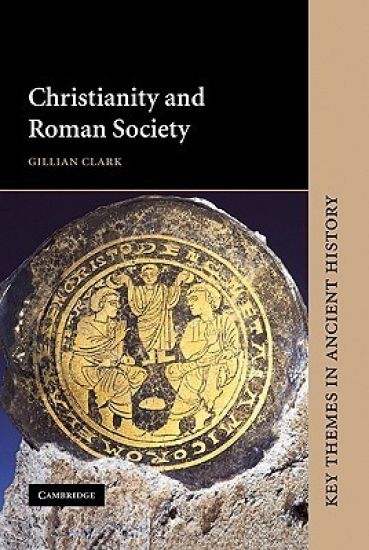
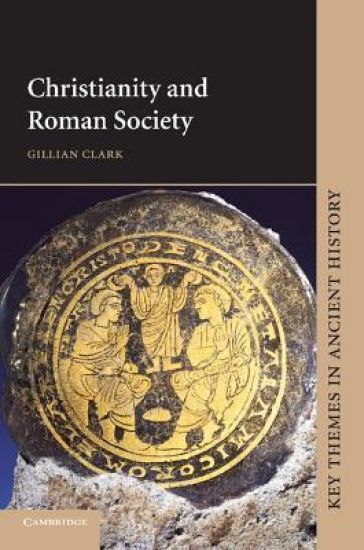
Early Christianity in the context of Roman society raises important questions for historians, sociologists of religion and theologians alike. This work explores the differing perspectives arising from a changing social and academic culture. Key issues concerning early Christianity are addressed, such as how early Christian accounts of pagans, Jews and heretics can be challenged and the degree to which Christian groups offered support to their members and to those in need. The work examines how non-Christians reacted to the spectacle of martyrdom and to Christian reverence for relics. Questions are also raised about why some Christians encouraged others to abandon wealth, status and gender-roles for extreme ascetic lifestyles and about whether Christian preachers trained in classical culture offered moral education to all or only to the social elite. The interdisciplinary and thematic approach offers the student of early Christianity a comprehensive treatment of its role and influence in Roman society.
Christianity and Roman Society

Christianity and Roman Society

Gillian Clark

Cambridge University Press
2004
pokkari
Early Christianity in the context of Roman society raises important questions for historians, sociologists of religion and theologians alike. This work explores the differing perspectives arising from a changing social and academic culture. Key issues concerning early Christianity are addressed, such as how early Christian accounts of pagans, Jews and heretics can be challenged and the degree to which Christian groups offered support to their members and to those in need. The work examines how non-Christians reacted to the spectacle of martyrdom and to Christian reverence for relics. Questions are also raised about why some Christians encouraged others to abandon wealth, status and gender-roles for extreme ascetic lifestyles and about whether Christian preachers trained in classical culture offered moral education to all or only to the social elite. The interdisciplinary and thematic approach offers the student of early Christianity a comprehensive treatment of its role and influence in Roman society.
Body and Gender, Soul and Reason in Late Antiquity

Body and Gender, Soul and Reason in Late Antiquity

Gillian Clark

Ashgate Publishing Limited
2011
sidottu
What does it mean to say that a human being is body and soul, and how does each affect the other? Late antique philosophers, Christians included, asked these central questions. The papers collected here explore their answers, and use those answers to ask further questions, reading Iamblichus, Porphyry, Augustine and others in their social and intellectual context. Among the topics dealt with are the following. Humans are mortal rational beings, so how does the mortal body affect the rational soul? The body needs food: what foods are best for the soul, and is it right to eat animal foods if animals are less rational than humans? The body is gendered for reproduction: are reason and the soul also gendered? Ascetic lifestyles may free our bodies from the limitations of gender and desire, so that our souls are free to reconnect with the divine; but this need must be balanced with the claims of family and society. Philosophers asked whether life in the body is exile for the soul; Christians defended their claim that body as well as soul would live after death, and even the smallest fragment of a martyr's body is proof of resurrection.
Tapestry: Woven by the Threads of Fate

Tapestry: Woven by the Threads of Fate

Gillian Clark

Createspace Independent Publishing Platform
2017
nidottu
The most important days of our lives are often the ones which come without warning. Although it was just another regular day that began with another annoying buzz of the early morning alarm clock for Jenny, a nurse working at the hospital her rise had already set in motion a chain of events that would change her life forever. And although her mother had always told her that every single action of a person contributed to "life's rich tapestry", Jenny could never foresee how the day's events would result in her now uncertain future. Witnessing the mugging of an old couple during her lunch break, the thief steals her bike to make a quick getaway. Shaken but taking control of the situation, the level-headed nurse consoles the couple and takes them to the police station to file a report. However a few streets down the wallet thief rides Jenny's bike straight into oncoming traffic. Hit by a car and lying in the middle of the road, in the ensuing chaos the wallet is stolen by yet another opportunistic thief as bystanders run to the mugger's aid, setting into motion a series of events that will change the lives of everyone involved forever. Shrugging the day off as a spot of bad luck, Jenny attempts to put the events behind her. However, as fate would have it her story is far from over, and it'll be sooner than she thinks before she sees the people involved in this hectic day again. In her excellent new novel, Gillian Clark weaves an intricate and interconnecting tale of destiny and fate as the lives of these strangers slowly become entwined in the pages.
Not Done, Not Done, Not Done - BURNT

Not Done, Not Done, Not Done - BURNT

Gillian Clark

Independently Published
2020
nidottu
Chef Gillian Clark is at the end of her rope. Her checkered career in food has come to a complete halt. Maybe that's not a bad thing. It seems like the business these past few years has been rubbing her the wrong way. She's lost her way and forgotten why she started cooking in the first place. She left marketing to get away from the work day that set her innards a blaze and had her reaching for antacid. Now the making and selling of food has her reaching for harder stuff-taxes are passed due, the landlord wants more rent, the customers didn't come all this way for Lobster Newburg; they want fried chicken. Moreover, she is never able to get any judge she appears before to take her side. And issues of race make her wonder who she's really cooking for. Chef Gillian Clark is beyond tearing her hair out. She's ready to jump. And as she sinks to the bottom of the Potomac River, her 20 years of life in food spills over into her semi-consciousness. Played out before the reader is this oxygen deprived look at what should have been a great career. Chef Gillian Clark is the award-winning interpreter of classic American cuisine. She achieved local celebrity as the Executive Chef and Owner of the famed and critically acclaimed, but now closed, casual fine dining restaurant, Colorado Kitchen. She regularly appears on the Food Network frying chicken with Bobby Flay or surprising Guy Fieri with a Turkey-Brie Turnover and on National Public Radio talking food and culture for Weekend Edition and as a regular commentator with the Huffington Post. Recently, Gillian thrilled food lovers. with. her memoir/cookbook, Out of the Frying Pan--detailing her rise up the food industry ranks as a single mother.
Augustine

Augustine

Gillian Clark

Bristol Phoenix Press
2005
nidottu
Augustine's 'Confessions', written at the close of the fourth century CE, is a highly significant text in the history of European culture. Augustine explains just how and why he came to abandon a successful career and the personal enjoyments of a largely secular existence to follow a life of prayer and study, leading to a true comprehension of God and the Bible. The avowed approach of this introductory book is to 'historicise' - to set Augustine's own experiences of religion, philosophy and Christian faith against the long-standing political, cultural and religious traditions of the classical world. Late antiquity saw the transformation of the classical heritage and its transmission by Christian authors. Augustine's ideas about how texts may be presented and read, how people respond to written and spoken language, find resonance in recent critical theory.The world in which Augustine lived, the structure, style and purpose of the Confessions, and the problems of rhetoric and truth posed by its author's personal search for himself are all scrutinised in this lucid introductory account. The volume also offers a useful guide to further reading.
Augustine

Augustine

Gillian Clark

Bristol Phoenix Press
2005
sidottu
Augustine's 'Confessions', written at the close of the fourth century CE, is a highly significant text in the history of European culture. Augustine explains just how and why he came to abandon a successful career and the personal enjoyments of a largely secular existence to follow a life of prayer and study, leading to a true comprehension of God and the Bible. The avowed approach of this introductory book is to 'historicise' - to set Augustine's own experiences of religion, philosophy and Christian faith against the long-standing political, cultural and religious traditions of the classical world. Late antiquity saw the transformation of the classical heritage and its transmission by Christian authors. Augustine's ideas about how texts may be presented and read, how people respond to written and spoken language, find resonance in recent critical theory.The world in which Augustine lived, the structure, style and purpose of the Confessions, and the problems of rhetoric and truth posed by its author's personal search for himself are all scrutinised in this lucid introductory account. The volume also offers a useful guide to further reading.