Kirjojen hintavertailu. Mukana 12 390 323 kirjaa ja 12 kauppaa.

Kirjahaku

Etsi kirjoja tekijän nimen, kirjan nimen tai ISBN:n perusteella.

8 kirjaa tekijältä Gillian Tett

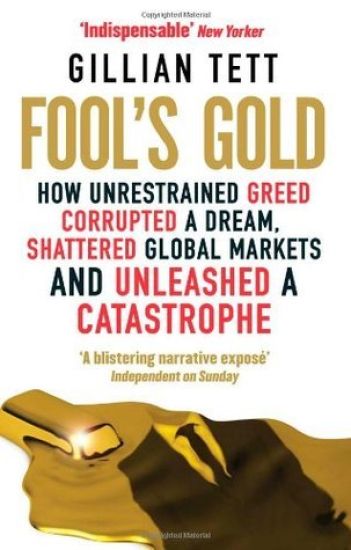
Fool's Gold

Fool's Gold

Gillian Tett

Little, Brown Book Group
2010
pokkari
* Inside the financial crisis as the bankers themseves rode the boom and fell with the crash, from the first UK journalist to predict it* Updated for this edition
Fool's Gold: The Inside Story of J.P. Morgan and How Wall St. Greed Corrupted Its Bold Dream and Created a Financial Catastrophe
From award-winning Financial Times journalist Gillian Tett, who enraged Wall Street leaders with her news-breaking warnings of a crisis more than a year ahead of the curve, Fool's Gold tells the astonishing unknown story at the heart of the 2008 meltdown. Drawing on exclusive access to J.P. Morgan CEO Jamie Dimon and a tightly bonded team of bankers known on Wall Street as the "Morgan Mafia," as well as in-depth interviews with dozens of other key players, including Treasury Secretary Timothy Geithner, Gillian Tett brings to life in gripping detail how the Morgan team's bold ideas for a whole new kind of financial alchemy helped to ignite a revolution in banking, and how that revolution escalated wildly out of control. The story begins with the intense Morgan brainstorming session in 1994 beside a pool in Boca Raton, where the team cooked up a dazzling new idea for the exotic financial product known as credit derivatives. That idea would rip around the banking world, catapult Morgan to the top of the turbocharged derivatives trade, and fuel an extraordinary banking boom that seemed to have unleashed banks from ages-old constraints of risk. But when the Morgan team's derivatives dream collided with the housing boom--and was perverted through hubris, delusion, and sheer greed by titans of banking that included Citigroup, UBS, Deutsche Bank, and Merrill Lynch--catastrophe followed. Tett's access to Dimon and the J.P. Morgan leaders who so skillfully steered their bank away from the wild excesses of others sheds invaluable light not only on the untold story of how they engineered their bank's escape from carnage, but also on how possible it was for the larger banking world, regulators, and rating agencies to have spotted, and heeded, the terrible risks of a meltdown. A tale of blistering brilliance and willfully blind ambition, Fool's Gold is both a rare journey deep inside the arcane and wildly competitive world of high finance and a vital contribution to understanding how the worst economic crisis since the Great Depression was perpetrated.
The Silo Effect: The Peril of Expertise and the Promise of Breaking Down Barriers
Award-winning journalist Gillian Tett "applies her anthropologist's lens to the problem of why so many organizations still suffer from a failure to communicate. It's a profound idea, richly analyzed" (The Wall Street Journal), about how our tendency to create functional departments--silos--hinders our work. The Silo Effect asks a basic question: why do humans working in modern institutions collectively act in ways that sometimes seem stupid? Why do normally clever people fail to see risks and opportunities that later seem blindingly obvious? Why, as Daniel Kahnemann, the psychologist put it, are we sometimes so "blind to our own blindness"? Gillian Tett, "a first-rate journalist and a good storyteller" (The New York Times), answers these questions by plumbing her background as an anthropologist and her experience reporting on the financial crisis in 2008. In The Silo Effect, she shares eight different tales of the silo syndrome, spanning Bloomberg's City Hall in New York, the Bank of England in London, Cleveland Clinic hospital in Ohio, UBS bank in Switzerland, Facebook in San Francisco, Sony in Tokyo, the BlueMountain hedge fund, and the Chicago police. Some of these narratives illustrate how foolishly people can behave when they are mastered by silos. Others, however, show how institutions and individuals can master their silos instead. "Highly intelligent, enjoyable, and enlivened by a string of vivid case studies....The Silo Effect is also genuinely important, because Tett's prescription for curing the pathological silo-isation of business and government is refreshingly unorthodox and, in my view, convincing" (Financial Times). This is "an enjoyable call to action for better integration within organizations" (Publishers Weekly).
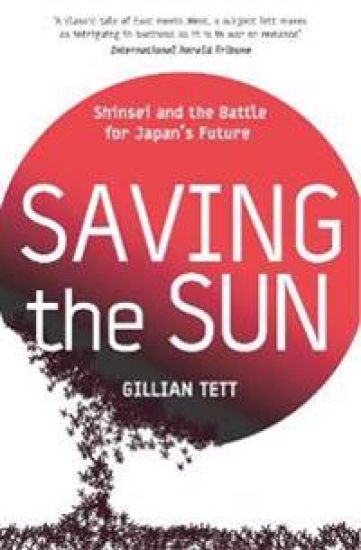
Saving The Sun

Saving The Sun

Gillian Tett

Arrow Books Ltd
2004
pokkari
'Saving the Sun' takes a bank that has been at the cutting edge of Japan's woes - Shinsei - and uses its story to analyse why Japan's economic problems are so insurmountable.
Anthro-Vision

Anthro-Vision

Gillian Tett

Cornerstone
2022
pokkari
The Times and Financial Times Book of the YearA revelatory model that explains how we buy, sell, work and live.'Absolutely brilliant.' Daniel Kahneman, author of Thinking, Fast and Slow___Meet the business anthropologists seeking to explain how we buy, sell, work and think.From supermarkets to factories, trading floors to tech firms, their methods are revealing the hidden codes that define our lives.The result is a wholly new way to see human behaviour: anthro-vision.__One of the World's Top 50 Thinkers - Prospect'This engaging book argues why more businesses (and people) should look to anthropology if they want to succeed.' Books of the Year, The Times'Will turn your world upside down in the best possible way. Fun, profound and bursting with important insights.' Tim Harford'A terrific piece of work.' Thomas Friedman'Anyone working to rebuild a more equal world will benefit from Tett's well-argued case that to solve twenty-first-century problems, we must expand our fields of vision and fill in old blind spots with new empathy.' Melinda Gates'Tett provides readers with a new intellectual framework - grounded in her deep understanding of anthropology and her path-breaking journalism - that can fundamentally transform how we approach solving society's most wicked problems . . . I cannot recommend it highly enough.' Mariana Mazzucato'In a world of volatility, uncertainty, complexity, and ambiguity, we need an antidote to tunnel vision, argues Gillian Tett. That antidote is Anthro-Vision . . . Admirers of her journalism will love this book, but they will also learn a great deal from it.' Niall Ferguson'A timely call for decision-makers to wean themselves off their dependency on big data and embrace the full complexity of human life.' Financial Times
Anthro-Vision: A New Way to See in Business and Life

Anthro-Vision: A New Way to See in Business and Life

Gillian Tett

Avid Reader Press / Simon Schuster
2021
sidottu
While today's business world is dominated by technology and data analysis, award-winning financial journalist and anthropology PhD Gillian Tett advocates thinking like an anthropologist to better understand consumer behavior, markets, and organizations to address some of society's most urgent challenges. Amid severe digital disruption, economic upheaval, and political flux, how can we make sense of the world? Leaders today typically look for answers in economic models, Big Data, or artificial intelligence platforms. Gillian Tett points to anthropology--the study of human culture. Anthropologists learn to get inside the minds of other people, helping them not only to understand other cultures but also to appraise their own environment with fresh perspective as an insider-outsider, gaining lateral vision. Today, anthropologists are more likely to study Amazon warehouses than remote Amazon tribes; they have done research into institutions and companies such as General Motors, Nestl , Intel, and more, shedding light on practical questions such as how internet users really define themselves; why corporate projects fail; why bank traders miscalculate losses; how companies sell products like pet food and pensions; why pandemic policies succeed (or not). Anthropology makes the familiar seem unfamiliar and vice versa, giving us badly needed three-dimensional perspective in a world where many executives are plagued by tunnel vision, especially in fields like finance and technology. "Fascinating and surprising" (Fareed Zararia, CNN), Anthro-Vision offers a revolutionary new way for understanding the behavior of organizations, individuals, and markets in today's ever-evolving world.
Anthro-Vision: A New Way to See in Business and Life

Anthro-Vision: A New Way to See in Business and Life

Gillian Tett

Avid Reader Press / Simon Schuster
2022
nidottu
While today's business world is dominated by technology and data analysis, award-winning financial journalist and anthropology PhD Gillian Tett advocates thinking like an anthropologist to better understand consumer behavior, markets, and organizations to address some of society's most urgent challenges.Amid severe digital disruption, economic upheaval, and political flux, how can we make sense of the world? Leaders today typically look for answers in economic models, Big Data, or artificial intelligence platforms. Gillian Tett points to anthropology--the study of human culture. Anthropologists learn to get inside the minds of other people, helping them not only to understand other cultures but also to appraise their own environment with fresh perspective as an insider-outsider, gaining lateral vision. Today, anthropologists are more likely to study Amazon warehouses than remote Amazon tribes; they have done research into institutions and companies such as General Motors, Nestl , Intel, and more, shedding light on practical questions such as how internet users really define themselves; why corporate projects fail; why bank traders miscalculate losses; how companies sell products like pet food and pensions; why pandemic policies succeed (or not). Anthropology makes the familiar seem unfamiliar and vice versa, giving us badly needed three-dimensional perspective in a world where many executives are plagued by tunnel vision, especially in fields like finance and technology. "Fascinating and surprising" (Fareed Zararia, CNN), Anthro-Vision offers a revolutionary new way for understanding the behavior of organizations, individuals, and markets in today's ever-evolving world.