Kirjojen hintavertailu. Mukana 12 016 292 kirjaa ja 12 kauppaa.

Kirjahaku

Etsi kirjoja tekijän nimen, kirjan nimen tai ISBN:n perusteella.

7 kirjaa tekijältä Gillian Whitlock

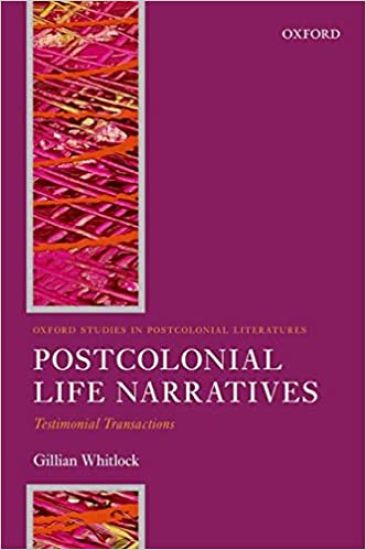
Postcolonial Life Narratives

Postcolonial Life Narratives

Gillian Whitlock

Oxford University Press
2015
nidottu
The Oxford Studies in Postcolonial Literatures series offers stimulating and accessible introductions to definitive topics and key genres and regions within the rapidly diversifying field of postcolonial literary studies in English. Postcolonial Life Narrative draws together two dynamic fields of contemporary literature and criticism, postcolonialism and life narrative, to create a new assemblage: postcolonial life narrative. Focusing in particular on testimonial narrative, from slave narrative in the late eighteenth century to contemporary Anglophone life narrative from Africa, Australia, the Caribbean, Palestine, North America, and India, this study follows texts on the move through adaptation, appropriation, and remediation. For postcolonial subjects life narrative offers extraordinary opportunities to present accounts of social injustice and oppression, of violence and social suffering. Testimonial narrative can reach across cultures to produce intimate attachments between those who testify and those who bear witness to legacies of apartheid, slavery, rape warfare, genocide, and dispossession. Thresholds of testimony are subject to change and for some, for example refugees and asylum seekers, opportunities to engage a witnessing public and inspire campaigns for social justice on their behalf are curtailed--these are the 'ends of testimony'. The production, circulation, and reception of testimonial life narrative connects directly to the most fundamental questions of who counts as human, what rights follow from this, and what makes for grievable life. Postcolonial life narrative is a dynamic field of literature and criticism, and this book presents a series of proximate readings that outline its distinctive imaginative geographies.
Postcolonial Life Narratives

Postcolonial Life Narratives

Gillian Whitlock

Oxford University Press
2015
sidottu
The Oxford Studies in Postcolonial Literatures series offers stimulating and accessible introductions to definitive topics and key genres and regions within the rapidly diversifying field of postcolonial literary studies in English. Postcolonial Life Narrative draws together two dynamic fields of contemporary literature and criticism, postcolonialism and life narrative, to create a new assemblage: postcolonial life narrative. Focusing in particular on testimonial narrative, from slave narrative in the late eighteenth century to contemporary Anglophone life narrative from Africa, Australia, the Caribbean, Palestine, North America, and India, this study follows texts on the move through adaptation, appropriation, and remediation. For postcolonial subjects life narrative offers extraordinary opportunities to present accounts of social injustice and oppression, of violence and social suffering. Testimonial narrative can reach across cultures to produce intimate attachments between those who testify and those who bear witness to legacies of apartheid, slavery, rape warfare, genocide, and dispossession. Thresholds of testimony are subject to change and for some, for example refugees and asylum seekers, opportunities to engage a witnessing public and inspire campaigns for social justice on their behalf are curtailed--these are the 'ends of testimony'. The production, circulation, and reception of testimonial life narrative connects directly to the most fundamental questions of who counts as human, what rights follow from this, and what makes for grievable life. Postcolonial life narrative is a dynamic field of literature and criticism, and this book presents a series of proximate readings that outline its distinctive imaginative geographies.
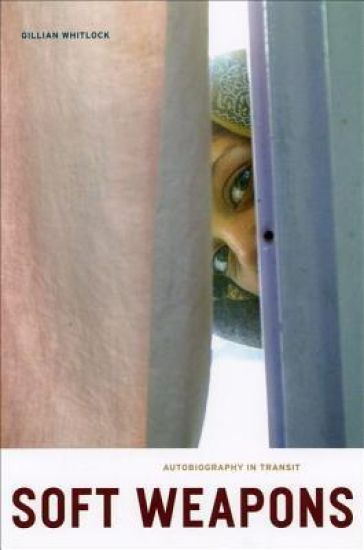
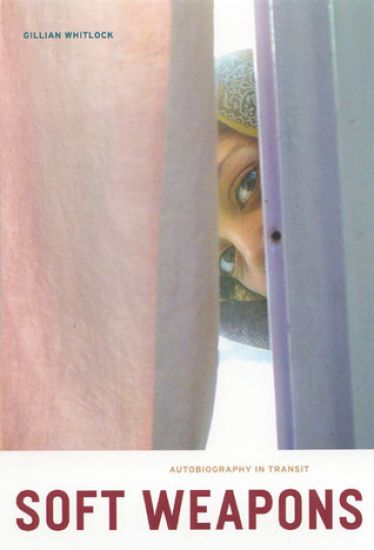
Soft Weapons

Soft Weapons

Gillian Whitlock

University of Chicago Press
2006
sidottu
Azar Nafisi’s Reading Lolita in Tehran,Marjane Satrapi’s comics, and “Baghdad Blogger” Salam Pax’s Internet diary are just a few examples of the new face of autobiography in an age of migration, globalization, and terror. But while autobiography and other genres of life writing can help us attend to people whose experiences are frequently unseen and unheard, life narratives can also be easily co-opted into propaganda. In Soft Weapons, Gillian Whitlock explores the dynamism and ubiquity of contemporary life writing about the Middle East and shows how these works have been packaged, promoted, and enlisted in Western controversies. Considering recent autoethnographies of Afghan women, refugee testimony from Middle Eastern war zones, Jean Sasson’s bestsellers about the lives of Arab women, Norma Khouri’s fraudulent memoir Honor Lost, personal accounts by journalists reporting the war in Iraq, Satrapi’s Persepolis, Nafisi’s book, and Pax’s blog, Whitlock explores the contradictions and ambiguities in the rapid commodification of life memoirs. Drawing from the fields of literary and cultural studies, Soft Weapons will be essential reading for scholars of life writing and those interested in the exchange of literary culture between Islam and the West.
Soft Weapons

Soft Weapons

Gillian Whitlock

University of Chicago Press
2006
nidottu
Azar Nafisi’s Reading Lolita in Tehran,Marjane Satrapi’s comics, and “Baghdad Blogger” Salam Pax’s Internet diary are just a few examples of the new face of autobiography in an age of migration, globalization, and terror. But while autobiography and other genres of life writing can help us attend to people whose experiences are frequently unseen and unheard, life narratives can also be easily co-opted into propaganda. In Soft Weapons, Gillian Whitlock explores the dynamism and ubiquity of contemporary life writing about the Middle East and shows how these works have been packaged, promoted, and enlisted in Western controversies. Considering recent autoethnographies of Afghan women, refugee testimony from Middle Eastern war zones, Jean Sasson’s bestsellers about the lives of Arab women, Norma Khouri’s fraudulent memoir Honor Lost, personal accounts by journalists reporting the war in Iraq, Satrapi’s Persepolis, Nafisi’s book, and Pax’s blog, Whitlock explores the contradictions and ambiguities in the rapid commodification of life memoirs. Drawing from the fields of literary and cultural studies, Soft Weapons will be essential reading for scholars of life writing and those interested in the exchange of literary culture between Islam and the West.
The Intimate Empire

The Intimate Empire

Gillian Whitlock

Continuum International Publishing Group Ltd.
2000
nidottu
By means of contextualized readings, this work argues that autobiographic writing allows an intimate access to processes of colonization and decolonization, incorporation and resistance, and the formation and reformation of identities which occurs in postcolonial space. The book explores the interconnections between race, gender, autobiography and colonialism and uses a method of reading which looks for connections between very different autobiographical writings to pursue constructions of blackness and whiteness, femininity and masculinity, and nationality. Unlike previous studies of autobiography which focus on a limited Euro American canon, the book brings together contemporary and 19th-century women's autobiographies and travel writing from Canada, the Caribbean, Kenya, South Africa, Australia and New Zealand. With emphasis on the reader of autobiography as much as the subject, it argues that colonization and resistance are deeply embedded in thinking about the self.
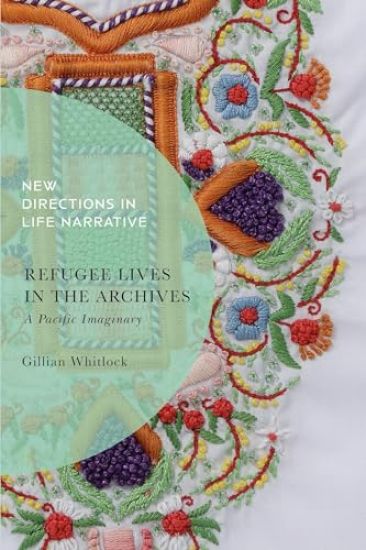
Refugee Lives in the Archives

Refugee Lives in the Archives

Gillian Whitlock

BLOOMSBURY PUBLISHING PLC
2024
sidottu
This book introduces the unique archive of letters, textiles, hand-drawn maps, emails and photographs from asylum seekers held indefinitely in offshore detention at Topside Camp, Nauru 2001-5. These artefacts introduce the distinctive and creative forms of resistance produced by asylum seekers in the remote Pacific camps on Nauru and Manus Island, and they expose their experiential histories of radical suffering and trauma. Paying due deference to the creative and aesthetic agency of these various documents and artefacts created by the undocumented here, Gillian Whitlock generates a cultural biography of the Nauru camp that humanizes those who have remained unseen and unheard, and features the activist campaigns and the political resistance that assert the agency of witnessing refugees. Structured around the collections of various artefacts exchanged between detainees and humanitarian activists, Refugee Lives in the Archives draws on emerging theories from detention centres and the asylum seekers themselves in a distinctive and expansive Pacific imaginary of refugee life narrative. Building on Whitlock’s substantial body of work in testimonial, documentary and archive practices, this book focuses on the ‘testimony of things’ and probes an approach to archival studies that moves life writing in new directions, to respond collaboratively to the diverse materiality of story-telling and exchanges in the unique and creative forms of asylum seekers’ voices, stories and epistemologies.